Review Information
- Reviewed by: Jack Beurge
- Review type: Research-based review
- Testing status: Not personally tested by SAWOFF — based on manufacturer documentation, reputable sources, and documented owner-reported patterns
- Published: August 19, 2026
- Sources: STIHL Bar and Chain Oil product documentation and owner's manuals · Husqvarna chainsaw operator manuals and lubrication specifications · Oregon Tool (Oregon Chainsaw) bar and chain oil technical documentation · U.S. EPA 40 CFR Part 279: Standards for the Management of Used Oil · ANSI B175.1: Chainsaw safety requirements covering chain brake and oiler design
Information in this review is labeled as one of four types: 🧪 SAWOFF hands-on test, 🏭 manufacturer specification, 📚 research from reputable sources (including documented owner-reported patterns), or 🧠 editorial assessment. See our testing methodology and editorial policy.
Affiliate Disclaimer: SAWOFF earns commissions from qualifying VEVOR purchases at no extra cost to you.
Introduction
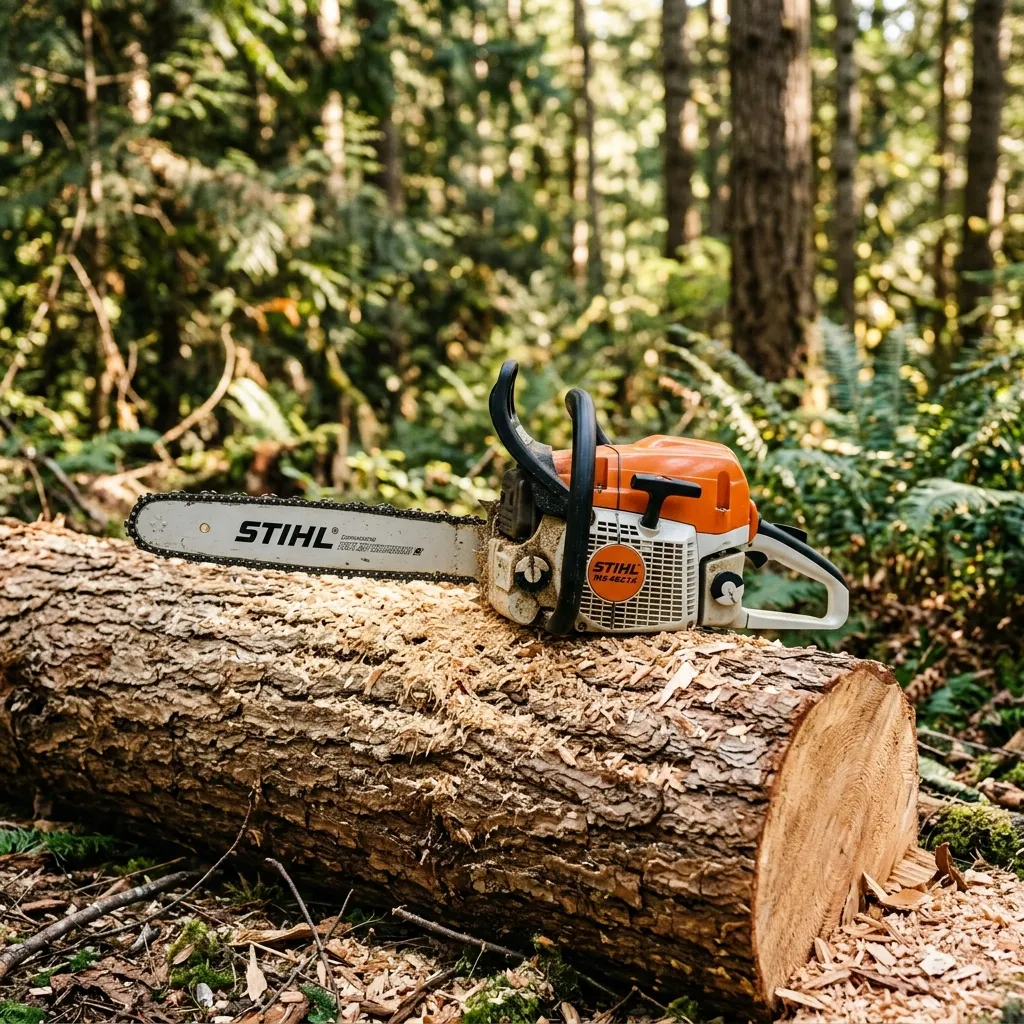
Chainsaw chain oil and bar oil are usually the same product under two names. The bottle may say “bar and chain oil,” “chainsaw chain oil,” or “guide bar oil,” but the job is identical: lubricate the chain as it slides around the bar and carry heat away from the rails. The confusion comes from marketing, not chemistry. In this guide, “chain oil” and “bar oil” both mean the tacky, high-viscosity lubricant your automatic oiler pumps onto the bar - and both are different from engine oil, which must never go in the oil tank.
QUICK ANSWER
Bar and chain oil (often sold as chainsaw chain oil) is a heavy, tacky lubricant (ISO VG 100-150, roughly SAE 30-50 weight) that the saw’s automatic oiler pumps onto the guide bar rails and chain as it runs. Unlike motor oil, it contains tackifiers - adhesion additives that make it cling to the chain at tip speeds over 100 feet per second instead of being flung off. Top up the oil tank every time you fill fuel, verify flow by revving the saw over a stump (you should see a thin oil line), and never substitute motor oil or used motor oil beyond one emergency tank. Most overheating problems are really lubrication problems: a dull chain, a clogged oil port, or an over-tight chain sliding dry over the bar.
KEY TAKEAWAYS
- Bar oil is not engine oil. It is a high-viscosity oil with tackifiers engineered to stay on a chain moving at hundreds of feet per second. Motor oil has no tackifiers and is thrown off within seconds.
- Refill oil every time you refill fuel. On most gas saws the oil tank is sized to empty at the same time as, or just before, the fuel tank. That is deliberate design, not coincidence.
- Verify oil flow before every session. Point the tip at a stump, rev it, and look for the oil line. A clean-looking saw with a dead oiler is a $60-$200 bill for a new bar and chain.
- Overheating is almost never “the heat.” It is friction: a dull chain, a dry chain, a tight chain, a packed bar groove, or a worn nose sprocket. Diagnose those five before touching the carburetor.
- Winter changes the oil math. Below freezing, standard bar oil thickens like cold honey and the pump starves. Use winter-grade or synthetic oil below about 40 degrees F.
- Cleaning is lubrication. A two-minute cleanup of the oil port and bar groove every day is worth more than an expensive oil ever will be.
WHY IT MATTERS
Every chainsaw cut is a high-speed friction event. The chain loops around the guide bar roughly 50-70 times per second at cutting speed, sliding along two steel rails while the weight of the log pushes against it. The only thing standing between that steel-on-steel contact and catastrophic failure is a film of oil thinner than a human hair.
When that film disappears, the physics punish you almost instantly. Steel rubbing steel generates temperatures high enough to anneal (soften) the bar rail tips - you will see the steel turn blue. The chain’s cutters lose their hardening. The bar groove wears wide, the drive links flop, and a saw that cut cleanly an hour ago starts cutting crooked with smoke pouring off the nose. A bar that should last 5-10 years of home use is dead in one season. In the worst case, a dry chain seizes in the groove mid-cut - a violent stop that has thrown more than one operator.
This guide exists because bar oil is the most misunderstood consumable in the chainsaw world. Ask ten owners what their chain oil does and most will say “it lubes the chain.” That’s like saying the piston rings “keep the oil in.” The real answer - what bar oil is, how the oiler delivers it, why motor oil cannot do the job, and why overheating traces back to lubrication nine times out of ten - is what separates a saw that starts on the second pull for a decade from a paperweight in two years.
🛒 Buy Bar and Chain OilCORE ANSWER
What Bar and Chain Oil Actually Is
Bar and chain oil (also called chainsaw oil, bar oil, or guide bar oil) is a high-viscosity base oil - usually SAE 30 to SAE 50 weight, ISO VG 100 to 150 - blended with tackifiers, anti-wear additives, corrosion inhibitors, and a dye. The tackifiers are the whole game: they are long-chain polymers that give the oil its stringy, glue-like character when you pull the dipstick. That stickiness is what keeps oil on the chain as it rounds the bar nose at speed.
Bar oil does three jobs, in order of importance:
- Lubricate the slide surfaces - the chain’s drive links riding in the bar groove and the cutters sliding over the rails.
- Cool the bar - oil is the primary coolant for the bar and chain assembly; it absorbs friction heat at the nose sprocket and carries it away.
- Flush debris - oil flushes sawdust and pitch fines out of the bar groove; without it, fines pack into a cement-like plug that blocks the oil path entirely.
How the Automatic Oiler Works
Modern chainsaws use an automatic oil pump. Here is the flow path:
- Oil tank in the lower crankcase holds the reservoir (about 0.2-0.5 L on home saws, up to 0.7 L on pro saws).
- A worm gear driven off the clutch drum spins the oil pump whenever the engine runs; faster RPM means more oil. This is why oiling self-regulates with engine speed.
- The pump pushes oil through a delivery hose into the stud housing, where it exits through a tiny oil feed hole at the base of the guide bar (the port under the side cover).
- The bar’s oil groove - a shallow channel cut into the bar body on both sides of the rails - distributes oil along the full length, feeding the nose sprocket bearing and the rail surfaces.
Some saws (notably STIHL’s Ematic system) use reduced-oil bars where the groove runs only partway up the bar, matching oiler output to bar length and wasting less oil. Most homeowner electric saws (Worx, Ryobi, Greenworks, EGO) use fixed-flow oilers with no adjustability; most gas saws have an adjustable oiler screw (usually a slotted screw under the clutch cover or near the pump) so you can dial output up for long bars, dry hardwood, or frozen wood.
How to Oil a Chainsaw - The Correct Procedure
Before every session:
- Top off the oil tank every single time you fill the fuel tank. Habit beats memory.
- Understand the ratio: on most gas saws, oil consumption runs about 1 tank of oil per 1-1.5 tanks of fuel. If your fuel empties twice while the oil still reads full, the pump is under-delivering.
The oil-flow test (every session, five seconds):
- Point the bar tip at a clean stump, log end, or piece of cardboard, 6-12 inches away.
- Rev to full throttle for 2-3 seconds.
- Look for a thin stream of oil arcing off the tip. On cardboard you should see a clear oil streak. No streak equals a dead oiler, a clogged port, or an empty tank. Stop and fix it before cutting.
While cutting:
- Let the saw idle 10-15 seconds before the first cut so oil reaches the bar.
- For long cuts, lift the bar nose out of the kerf every few seconds to let oil sweep the rails - standard practice for felling and bucking big wood.
- At each tank refill, run a quick tension check. Oil that never reaches the nose because the chain is tight is wasted oil.
CHAIN OIL VS BAR OIL: WHAT’S THE ACTUAL DIFFERENCE?
Short answer: there is no functional difference. “Chain oil” describes what the lubricant touches; “bar oil” describes the other half of the same friction pair. A chainsaw chain cannot be lubricated without oiling the bar groove and rails, so a product that works for one works for both. Most manufacturers sell a single bottle labeled bar and chain oil and use it in the owner’s manual for the oil tank.
| Label on the bottle | What it means | Can you use it in a chainsaw? |
|---|---|---|
| Bar and chain oil | The standard product: high-viscosity base oil plus tackifiers | Yes - this is the default |
| Chainsaw chain oil | Same lubricant, named for the chain | Yes, if it is made for chainsaw oilers |
| Guide bar oil | Same lubricant, named for the bar | Yes |
| Chain oil for conveyors or bikes | Different viscosity and additives | No - not for a chainsaw oiler |
| Motor oil, gear oil, hydraulic oil | No tackifiers, wrong additive package | Emergency only, never long-term |
| Used motor oil | Contains metals and contaminants | No - illegal to dispose of by flinging it |
Two practical caveats matter more than the label. First, viscosity has to match the season: a thick summer bar oil can starve the pump at 20 degrees F, while a thin winter oil can fling off a hot summer bar. Second, “chain oil” sold for industrial chain drives, bicycle chains, or conveyor chains is a different product and may lack the tackifiers a chainsaw needs. Look for “bar and chain oil” or an explicit chainsaw specification on the bottle, not just the word “chain.”
Buying advice: a dedicated bar-and-chain oil from STIHL, Husqvarna, Oregon, or a comparable brand is the safe choice. Certified biodegradable options (STIHL BioPlus, Husqvarna Bio) are formulated for chainsaw oilers and are the right pick for milling, arborist work, or anywhere oil reaches the ground. See the bar oil comparison below for how these stack up against motor oil and dry lubricants.
HOW IT WORKS / WHAT TO KNOW
Viscosity: The Cold-Weather Trap
Bar oil is thick on purpose - but thickness is temperature-dependent. Standard petroleum bar oil rates around ISO VG 100-150 (SAE 30-50), which is right for roughly 50-90 degrees F. Below freezing it turns honey-like, and the pump, designed for that viscosity, simply cannot move it. The classic symptom: the saw idles fine, the oil-flow test shows nothing at 20 degrees F, and the bar heats up within 30 seconds of cutting.
The fix: winter-grade bar oil (most brands rate theirs down to -10 to -30 degrees F), or full synthetic bar oil, which holds its viscosity across much colder temps. Pros working northern winters run synthetic year-round and store saws in the cab, not the frozen truck bed.
The Bar Nose: The Part Everyone Forgets
Bars come in two nose types. Sprocket-nose bars have a replaceable needle bearing inside the nose tip; sealed-nose (hard-nose) bars are lubricated for life by the oil that sweeps the rails. On sprocket-nose bars with a grease port (a small hole in the rail near the tip), manufacturers recommend greasing the nose bearing with a pistol grease gun every few tanks. If your bar has the port, use it weekly to monthly, and grease until fresh grease just appears at the bearing edges. On sealed-nose bars, skip the port entirely - forcing grease in can trigger a premature nose replacement.
How Much Oil Is “Normal”?
General consumption runs 0.5-1 tank of oil per tank of fuel on tuned pro saws, and the tank is sized so oil empties before fuel on most saws. That imbalance is deliberate: you should never be cutting with fuel remaining and zero oil. If you burn three tanks of fuel per oil tank, your oiler is under-delivering or your bar is an Ematic-style reduced-oil bar. Adjust in 1/4-turn increments toward “more” until the flow test shows a clean stream without oil splattering the whole saw.
Bio Oils and the Environment
Many operators now run biodegradable bar oils (STIHL BioPlus, Husqvarna Bio, Oregon Bio) based on vegetable esters. They meet OECD 301B biodegradability standards, which matters when oil drips onto forest soil while bucking, and they typically flow better in the cold than mineral oils. The cost is roughly 2-3x mineral oil. For anyone cutting near waterways, gardens, or on public land, the argument is close to decisive.
What Oil Does a Worx Chainsaw Use?
Worx chainsaw oil is the same product as any other bar and chain oil. The battery saws - WG304, WG322, WG384, and the rest of the 20V and 40V line - have a bar oil reservoir but no fuel tank, so there is no mix ratio to worry about and no two-stroke oil involved. Fill the reservoir with a dedicated bar and chain oil and nothing else.
A few Worx-specific points:
- Any standard bar and chain oil works. You do not need a Worx-branded bottle. The WG304 manual and Worx’s own guidance both accept any standard bar and chain oil.
- Never use motor oil or vegetable oil. Neither has the tackifiers that keep oil on a chain running at battery-saw speed. Vegetable oil also gums the bar groove.
- Do not pour two-stroke mix oil into the bar tank. Pre-mix is formulated to burn in the engine, not to lubricate a bar. It is the wrong viscosity and lacks bar-oil tackifiers.
- Watch the small reservoir. The WG304 holds about 6.75 ounces, which is enough for a session but not for a full afternoon of bucking. Check the window at every battery change.
- Use winter grade below freezing. Worx oilers are fixed-flow, so you cannot turn up the pump when cold oil thickens. A winter-grade bar oil is the only lever you have.
Run the same five-second flow test described above: point the bar at a stump or cardboard, rev the saw, and look for the oil line. Worx saws use automatic oilers with translucent reservoirs, so a dry bar is almost always a low tank, a clogged port, or a packed groove rather than a failed pump. Our Worx WG304 and Worx WG322 reviews cover the oil systems on those specific saws, and the Worx WG384 review covers the 40V model.
Bar Oil Is a Stability Product, Not a Performance Product
Here is the honest engineering truth: any bar oil that meets the viscosity spec and carries tackifiers will protect the bar. The differences between premium synthetic and standard mineral oil show up at the cold end and in throw-off (how much oil flings off the tip and coats your pants and your log pile). What will never be fixed by buying better oil: a dull chain, a clogged port, a worn nose, or a chain tensioned past spec. Buy a mid-grade oil, spend the rest of your money on sharpening and cleaning habits.
COMPARISON
Chainsaw Bar Oil vs Motor Oil vs the Alternatives
| Factor | Proper Bar & Chain Oil | Motor Oil (Engine Oil) | Used Motor Oil | Vegetable / Cooking Oil | Certified Bio Bar Oil |
|---|---|---|---|---|---|
| Tackifiers (clings to chain) | Yes, engineered | No, flies off | No | Minimal | Yes |
| Film strength at tip speed | Excellent (ISO VG 100-150) | Moderate, too thin for the job | Moderate | Poor | Excellent |
| Cold-weather pumpability | Winter grades available | Fair (flows, but no tack) | Poor | Poor, gums up | Good |
| Residue / gum buildup | Low | Moderate | High | Severe, polymerizes | Low |
| Environmental profile | Mineral or certified bio | Petroleum, not biodegradable | Regulated as used oil (EPA 40 CFR Part 279) | Biodegradable, but built for food, not friction | Certified biodegradable (OECD 301B) |
| Effect on bar & chain life | Full service life | Brief emergency duty, then accelerated wear | Accelerated wear plus contamination | Groove gumming within weeks | Full service life |
| Emergency “will it cut?” | Yes, normal | Yes, one tank | Yes, one tank | Yes, one tank | Yes, normal |
| Verdict | The only correct choice | Emergency stop-gap only | Do not. Illegal to dispose of improperly in most states. | Do not | Best option near water and soil |
The Motor Oil Myth, Explained
Motor oil looks like bar oil - heavy, amber, slippery. It fails for a structural reason: it is formulated to stay inside the engine, not on a moving chain. Engine oil is designed to be recirculated and filtered, so its additive package fights oxidation and deposits sludge inside the crankcase; it has zero tack, and its detergent package actively cleans. Feed it to a guide bar and within seconds at cutting speed the oil is flung off as a fine mist. The bar runs dry, blues, and anneals while your saw “burns oil” through every cut. You will also see varnish on the drive sprocket and spark-arrestor screen.
Used motor oil is worse on every axis. It carries heavy metals (lead, zinc, chromium), acids, and the wear particles of the engine it drained from. U.S. EPA regulations under 40 CFR Part 279 classify it as used oil that must be recycled; dumping it on a bar - where it drips onto the ground you stand on and into watersheds while bucking - is exactly the disposal behavior those rules exist to stop. Several states, and most parks and municipalities, prohibit the practice outright. You save a few dollars a month and pay for it in soil contamination, legal exposure, and a bar that will not last the season.
Bar Oil vs Dry Lubes and Wax Sprays
You will occasionally see claims that dry lubricants or chain wax sprays replace bar oil. They do not. Dry lubes are fine for a chain in garage storage (anti-rust), but they provide no continuous fluid film, no cooling, and no flushing of fines. The bar and chain need a fluid film, continuously replenished. Spray-and-go is storage practice; cutting practice is a live oiler with a full tank.
STEP-BY-STEP / USE CASES
Use Case 1: Daily Oiling Routine (About 3 Minutes)
- Check the oil level in the translucent tank window, or dip the filler cap.
- Top off - fill only to the bottom of the filler neck; over-filling floods the tank vents.
- Flow test - point the tip at a stump, rev, confirm the oil line.
- Tension check - a mid-bar downward pull should show drive links seated in the groove with a subtle snap-back; tighten only until the tie straps just touch the bar rails. A chain you can pull off the bar is dangerously loose; one that drags around the nose is dangerously tight.
- Cut. At every fuel refill, repeat steps 1-4.
Use Case 2: Fixing a Dead or Weak Oiler (About 30 Minutes)
- Verify the obvious: is there oil in the tank? Do the flow test at wide open throttle (idle output on fixed-pump saws is minimal).
- Remove the bar and chain (loosen the side cover, lift the bar off the studs, slip the chain off the sprocket).
- Clean the oil feed hole in the bar base and the oil port in the stud housing with a stiff wire brush or a paper clip. Packed fines here are the number-one cause of “the oiler stopped working.”
- Clean the bar groove - scrape packed sawdust out with a bar groove cleaner (or the flat side of your combination wrench).
- Reinstall and re-test. If still empty:
- Adjustable pump: open the oiler screw 1/4 turn and retest.
- Fixed pump: check the delivery hose for a kink or chafe where it enters the stud housing and replace if damaged. If the pump gear itself is worn (visible with the clutch removed), it is a $15-$40 part - a dealer installs it in minutes.
Use Case 3: Diagnosing Chainsaw Overheating (About 10 Minutes)
Overheating shows up as smoke off the bar, blue rail tips, a burning smell, a chain that seizes, or a saw that “slows down” in the cut. Work this order and skip nothing:
- Is the chain sharp? A dull chain is responsible for the majority of overheating: it stops cutting and starts rubbing, converting kinetic energy into heat instead of chips. Check for bite on a fresh cut. Our chainsaw sharpening guide covers the full 30-degree cutting-angle and raker setup.
- Is the chain tensioned correctly? Too tight drags the chain over the nose and rails with extra force. Too loose and the chain rides free, losing contact with the oil film. The snap test never lies.
- Is oil reaching the chain? Run the flow test. Then pull the bar and inspect the feed hole and groove as in Use Case 2.
- Is the bar worn? Check the rail tips: blue means the steel is already annealed - replace the bar. Rotate the nose sprocket by hand and feel for tight spots; a seized nose bearing turns the bar into an oil-wasting heat generator.
- Is the chain the right gauge? A .058-inch chain in a .050-inch groove jams and generates heat. Verify the gauge stamped on the bar against the chain’s numbers.
- Engine-side causes (gas saws only): a dirty air filter or packed cooling fins overheat the engine, which then cooks the bar oil into thin sludge. Clean the fins and filter before you touch a carburetor screw.
Use Case 4: The Maintenance Checklist (Daily / Weekly / Monthly)
After every session (5 minutes):
- Top off the oil tank before storage (prevents moisture and keeps the pump primed).
- Wipe the bar and chain with a rag; glance at the oil feed hole for packed sawdust.
- Slightly loosen chain tension for long storage - chain and bar contract as they cool, and a tensioned chain left tight strains the crank seals and clutch side.
Weekly (15 minutes):
- Remove the side cover, bar, and chain. Clean the stud housing and oil port.
- Flip the bar end-for-end to even out rail wear.
- Dress rail burrs with a flat file.
- Grease the sprocket-nose bearing if your bar has a grease port.
- Check the chain for damaged cutters, loose rivets, and stretch.
Monthly / every 20 hours (30 minutes):
- Full bar and chain deep clean (Use Case 5).
- Clean the air filter; check the intake boot for cracks.
- Clean the cooling fins on the cylinder with a wooden shim or soft brush.
- Inspect the drive sprocket teeth for hooking; replace after roughly two worn chains.
- Grease the clutch-drum needle bearing on pro saws.
- Inspect the fuel lines and the oil delivery line for cracks.
Use Case 5: How to Clean a Chainsaw (Correctly)
- Safety first: saw off, chain brake engaged, spark plug boot pulled on gas saws, battery removed on electrics.
- Remove the bar and chain and clean them separately.
- The bar: scrape the groove clean of sawdust, brush the rails, wipe the oil feed hole, then flip it. Skip solvents on the rails - you would strip the protective oil film; a light re-oil before reinstall is enough.
- The chain: brush pitch off the cutters with a stiff nylon brush; soak in hot soapy water if heavily pitched. Oil it lightly before storage. Never soak the chain in solvent overnight - it strips the residual bar oil the chain needs between cuts.
- The housing: blow sawdust out with compressed air (especially around the sprocket cover and starter vents), then wipe with a damp rag. Never point an air nozzle at the carburetor intake or into the oil tank vent.
- The air filter: tap it clean or brush it with a soft brush - never compressed air against the mesh, which blows holes and drives fines into the engine. Replace annually.
- The cooling fins: clean between the fins with a wooden shim or soft brush; low-pressure air is fine with the filter covered.
- Reassemble: tension the chain, run the flow test, and you are back in business.
TROUBLESHOOTING
| Symptom | Most Likely Cause | Fix |
|---|---|---|
| Bar smokes during cuts | Dull chain, or bar running dry | Resharpen or replace chain; flow test; clean oil port and groove |
| No oil in the flow test | Empty tank, clogged port, dead pump, kinked hose | Top off; clear port with a wire brush; check pump and hose |
| Bar tip turns blue | Nose running dry; nose sprocket seized | Replace bar; inspect nose bearing; confirm oil reaches the tip |
| Oil drips from the bar after use | Normal gravity drain of residual oil | Wipe the bar at the end of sessions |
| Oil pours out during storage | Saw stored bar-down; tank overfilled | Store the saw bar-up; keep oil below the filler neck |
| Two-plus tanks of fuel per oil tank | Oiler under-delivering | Open the oiler screw; check pump gear on fixed saws |
| Oil spatters everywhere at speed | Oiler over-delivering | Close the oiler screw 1/4 turn and retest |
| Winter: flow test empty, pump fine | Oil too thick for the temperature | Switch to winter-grade or synthetic bar oil |
| Chain seizes or stops mid-cut | Chain over-tensioned or dry | Loosen tension; verify oil delivery; check groove and gauge |
| Engine overheats on gas saws | Clogged cooling fins; lean fuel mix; dirty air filter | Clean the fins; check the filter; verify your fuel mix ratio |
| Burning smell at idle | Oil leaked onto the clutch or muffler from overfill | Wipe spills; stop over-filling the tank |
EVIDENCE / TESTING STATUS
Status: Research-based (no physical unit tested). This guide synthesizes manufacturer documentation and published operator guidance rather than a single test saw, because the lubrication physics do not vary by model:
- STIHL owner’s manuals specify bar and chain oil viscosity, the Ematic reduced-oil bar system, and oiler adjustment procedures across the MS range. The oil-flow test above is the manufacturer-prescribed daily check.
- Husqvarna documentation covers adjustable pump range, winter-oil recommendations, and its winter and bio oil lines.
- Oregon Tool (the world’s largest chainsaw chain maker) publishes bar and chain lubrication specifications including groove maintenance and nose-sprocket care.
- ANSI B175.1 codifies chain brake and oiler design requirements for consumer saws - the reason fixed-flow oilers on electric saws are tuned to keep the bar wet across the engine’s working speed range.
- U.S. EPA 40 CFR Part 279 governs the handling of used oil; its existence is the regulatory backbone for why crews on public land run certified bio oils rather than drain oil.
What we can say with confidence: the failure sequence described here - dry bar, blue rails, annealed steel, crooked cuts, bar replacement - is described in nearly identical terms across every major brand’s manual and in independent saw-shop literature. The tackifier difference between bar oil and motor oil is literally verifiable by feel: pull the dipstick of each and compare the stringiness. That check takes ten seconds and settles the debate forever.
PROS + LIMITATIONS
The correct setup (proper bar oil plus a working oiler):
- Bar and chain life at full spec - bars routinely last 5-10 years of home use and hundreds of hours of professional use.
- Predictable cuts: no drifting, no burning, no mid-cut slowdowns.
- Lower operating cost than neglect: a $10-$15 gallon of oil versus a $60-$120 replacement bar and chain assembly.
Limitations and honest caveats:
- Bar oil is one more consumable to buy, and bio or synthetic grades cost 2-3x mineral oil.
- Oiler adjustment is a skill: too little burns the bar, too much throws oil over everything and the log pile.
- No oil fixes a dull chain or a worn nose sprocket. Lubrication is a multiplier, not a cure-all.
- Cold-weather performance still depends on buying a winter-grade or synthetic product; there is no universal viscosity.
- On battery saws, the oiler is usually fixed-flow, so you get the factory pump setting and manage expectations.
WHO IT’S FOR
- Homeowners running one saw for storm cleanup and annual firewood: the daily checklist and troubleshooting table cover 95 percent of bar-related failures you will ever see.
- Weekend firewood cutters and hobbyists: the oiler-fix walkthrough and winter-oil advice will save you dealer fees and a dead bar every season.
- Professionals and arborists: the overheating diagnostic order, sprocket-nose greasing, and weekly checklist are field-standard practice; most shop repairs trace to someone skipping step 1, 2, or 3.
If you are still choosing a saw rather than maintaining one, pair this guide with our chainsaw buying guide and the gas vs electric comparison - a saw with an oiler you cannot fix is not worth saving $40 on.
ALTERNATIVES
- Certified biodegradable bar oils (STIHL BioPlus, Husqvarna Bio, Oregon Bio): a drop-in replacement that meets OECD 301B biodegradability with excellent cold flow, at 2-3x the price. The best choice near water, trails, gardens, or public land.
- Full-synthetic bar oil: premium cold-weather performance and measurably less fling-off; costs more but lasts and cuts cleaner in winter.
- Winter-grade mineral oil: the cheaper cold-weather option; fine down to about -10 degrees F before synthetic pulls away.
- Manual-oiling saws and additive systems: kits that retrofit an oiler flow limiter exist for old saws, but they are not a substitute for a functioning factory pump; the sane alternative to a dead fixed-pump electric is a saw that still carries warranty coverage.
For related reviews, see our Echo CS 620P, Husqvarna 120, Milwaukee top handle saw.
FAQ
1. Can I use motor oil as chainsaw bar oil?
Only as a one-tank emergency measure. Motor oil has no tackifiers, so it is flung off the chain within seconds at cutting speed, leaving the bar dry. Used motor oil is worse: it carries heavy metals and is regulated as used oil under EPA 40 CFR Part 279, and using bar oil in its place costs almost nothing compared with a ruined bar.
2. Why does my chainsaw throw chains even with the right tension?
Check the bar groove for a partially closed rail or buried sawdust, and check the chain gauge. A .050-inch chain in a .058-inch bar slops sideways and derails. Also confirm the drive sprocket teeth are not hooked from a previous dry run.
3. How tight should the chain be?
The tie straps should just touch the underside of the bar rails when you pull the chain down mid-bar, and the chain should spin freely by hand with the brake off. Tighten only enough to remove sag at the bottom rail.
4. What causes the bar itself to warp or bend?
Heat and over-tension. A dry bar anneals and bows; an over-tensioned chain overheats the rails the same way. Replace a bent bar - straightening it fatigues the steel and risks a rail failure under load.
5. Should I run the chain differently in hardwood versus softwood?
Only tension and sharpening change meaningfully with species. Hardwood dulls faster, so more frequent re-raking and re-tensioning matter more than oil choice. Frozen hardwood is the hardest case: keep the oiler at max and lift the nose out of the cut regularly.
6. How do I clean a bar groove that is packed solid?
Lay the bar flat, use a bar groove cleaning tool or the flat edge of a wrench to scrape along the groove in the direction of chain travel, then blow the groove out with compressed air. Follow with a wire brush on the rails and a wipe of the oil feed hole.
7. Are battery saw oilers really non-adjustable?
On most consumer battery saws, yes - fixed flow, factory-tuned for the bundled bar. Pro-level battery saws (STIHL MSA series, Husqvarna T540i XP) offer adjustable pumps. The daily flow test applies to every type.
8. Can a chainsaw overheat because of bar oil alone?
Not if the oil meets spec and is flowing. Under-delivery, a plugged port, a dull chain, or over-tension cause overheating long before a mid-grade mineral oil does. That is why this guide treats oil type second and oil delivery first.
9. What oil does a Worx chainsaw use?
Any standard bar and chain oil in the reservoir. Worx battery saws (WG304, WG322, WG384) have no fuel tank, so there is no mix ratio and no two-stroke oil involved. Do not use motor oil, vegetable oil, or pre-mix in the bar tank; use a dedicated bar and chain oil and check the small reservoir at every battery change.
SOURCES
- STIHL bar and chain oil documentation and MS-series owner’s manuals.
- Husqvarna chainsaw operator manuals and lubrication specifications.
- Oregon Tool bar and chain lubrication and groove maintenance technical notes.
- ANSI B175.1 - Chainsaw safety requirements (chain brake and oiler design).
- U.S. EPA 40 CFR Part 279 - Standards for the Management of Used Oil.
- OECD Test Guideline 301B - Ready Biodegradability (referenced by certified bio oil products).
- Chain and bar manufacturer replacement guidance published for dealer service programs.
RELATED SAWOFF ARTICLES
- Chainsaw Maintenance Checklist: Daily, Weekly & Monthly Care
- How to Sharpen a Chainsaw: The Complete Guide
- Chainsaw Sharpening Angles: Cutters, Rakers & File Sizes
- Chainsaw Fuel Mix Ratio Guide: Get It Right Every Time
- Chainsaw Won’t Start: A Complete Troubleshooting Guide
- Chainsaw Chain Replacement: Picking the Right Chain
- The Complete Chainsaw Safety Guide
BOTTOM LINE
Bar oil is cheap, and the damage it prevents is expensive. Refill the tank with every fuel fill, run the five-second flow test before every session, and treat overheating as a friction problem with a lubrication answer - dull chain, tight chain, dry chain, packed groove, or worn nose - before you ever suspect the saw itself. Use proper bar and chain oil; leave motor oil in the engine, used motor oil in the recycling pile, and vegetable oil in the kitchen. A six-dollar gallon of oil, a two-minute bar cleanup, and a working oiler will keep a bar cutting straight for years - and that is the cheapest insurance in the chainsaw world.
SAWOFF Rating: 5/5 (Essential Knowledge)
The Ultimate Chainsaw Maintenance Field Toolkit
The complete 96-page printable manual. Avoid costly $400 repairs, master 30°/35°/10° chain sharpening angles, and clear flooded engines in 30 seconds.
- ✓12 In-Depth Modules: Safety checks, service schedules & winterizing
- ✓Chain Sharpening Angles: 30° / 35° / 10° filing charts & raker depth specs
- ✓15 Free Bonus Templates: Angle cheat-sheets, logs & laminated pocket cards
Frequently Asked Questions
Is chainsaw chain oil the same as bar oil?
In practice, yes. Most products sold as chainsaw chain oil, bar oil, or bar and chain oil are the same high-viscosity lubricant with tackifiers, intended for the automatic oiler. Buy a dedicated bar-and-chain oil rated for your climate, and do not substitute engine oil, hydraulic oil, or used oil.
Can I use regular motor oil as chainsaw bar oil?
Only as an absolute emergency stop-gap. Motor oil lacks the tackifiers that make bar oil cling to the chain at high speeds, so it flings off almost immediately, leaving the bar dry and overheating. Used motor oil also contains heavy metals and is regulated as waste oil by the EPA. Buy proper bar and chain oil, or a certified biodegradable one.
How do I know if my chainsaw is oiling the chain properly?
Hold the saw over a clean stump or piece of cardboard, rev it to full throttle with the bar tip pointed down, and watch for a thin stream or line of oil thrown from the bar nose. No oil means a clogged oil port, plugged groove, or failed pump. On gas saws, the oil tank should empty at roughly the same time as the fuel tank.
Why is my chainsaw bar smoking even though the chain is sharp?
Smoke off the bar always means friction. Check the oil level, clean the oil feed hole and bar groove, verify the oiler is pumping, and confirm chain tension is not too tight. If the rail tips turn blue, the metal is already annealing and the bar needs flipping or replacing.
How often should I flip my chainsaw bar?
Every time you sharpen the chain, or roughly every 3-5 hours of cutting, whichever comes first. Flipping evens out wear on the top and bottom rails and doubles bar life. Also dress the rail burrs with a flat file at the same time.
Does bar oil type matter in cold weather?
Yes. Standard heavy bar oil thickens below freezing and the oiler cannot pump it. Use a winter-grade or synthetic bar oil (several brands rate theirs down to -10 degrees F or colder) and store the saw in a warm place before winter use.
Will a clogged bar oiler cause overheating?
It is one of the main causes. Packed sawdust in the oil feed hole or bar groove blocks oil from reaching the chain, and a dry chain generates extreme heat within seconds at cutting speed, enough to blue the rails and seize the chain.
Is a chainsaw chain supposed to smoke while cutting?
A light wisp of smoke on dry dead wood is normal. A full trail of smoke, a burning smell, or smoke from the bar nose is not. If the bar is hot to the touch within seconds, stop and check oiling, tension, and chain sharpness.
Can I use vegetable oil for chainsaw bar oil?
Not as a substitute. Pure vegetable oil is thinner, has poor film strength, and polymerizes into sticky gum inside the bar groove. Buy a certified biodegradable bar oil (like STIHL BioPlus or Husqvarna Bio) instead - it is vegetable-based but engineered with tackifiers and corrosion inhibitors.
What oil does a Worx chainsaw use?
Use a standard bar and chain oil in the reservoir - any brand works, and Worx does not require a branded oil. Worx saws are battery-powered, so there is no fuel mix involved. Do not use motor oil, vegetable oil, or two-stroke pre-mix in the bar tank.