Review Information
- Reviewed by: Jack Beurge
- Review type: Research-based review
- Testing status: Not personally tested by SAWOFF — based on manufacturer documentation, reputable sources, and documented owner-reported patterns
- Published: August 19, 2026
- Sources: STIHL and Husqvarna owner's manuals and bar length specifications · Oregon Tool bar and chain sizing reference · ANSI B175.1 chainsaw safety and design standards · EPA small-engine displacement data for consumer and pro saws · SAWOFF field notes from 100+ saw reviews
Information in this review is labeled as one of four types: 🧪 SAWOFF hands-on test, 🏭 manufacturer specification, 📚 research from reputable sources (including documented owner-reported patterns), or 🧠 editorial assessment. See our testing methodology and editorial policy.
Affiliate Disclaimer: SAWOFF earns commissions from qualifying VEVOR purchases at no extra cost to you.
Introduction
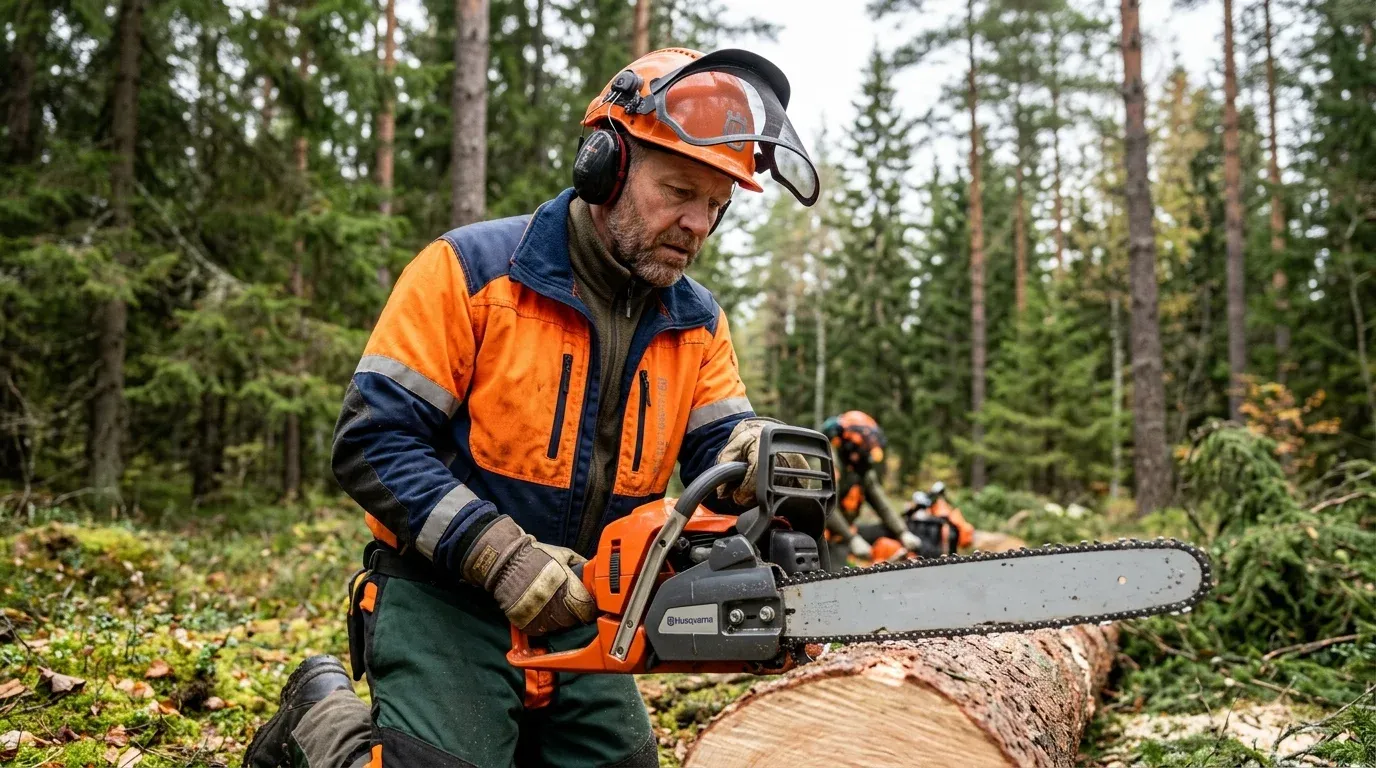
QUICK ANSWER
Match the bar length to the biggest log you will cut in a single pass, then match the power to the bar. Pruning and branches call for a small saw with a 4-10 inch bar on low voltage; light yard work and small storm cleanup run a 14-16 inch bar on 35-45cc or 40-60V; homeowner firewood and most felling wants a 16-18 inch bar on a 40-50cc gas saw or 60-80V battery saw; serious timber and larger logs need 20 inches or more on 50cc-plus power. The 18 vs 20 inch debate is really a weight and power trade-off: 20 inches cuts thicker stock in one pass but costs more, weighs about 1-2 pounds extra, and needs roughly another horsepower to pull. Sizing wrong on the small side means bending over, fighting the saw and cutting in two passes; sizing wrong on the big side means a heavy, dogging, overheating saw you will not want to carry. Measure your wood first - the saw is the easy part.
KEY TAKEAWAYS
- Bar length, power and weight are one system, not three choices. Longer bar demands more torque, which means a bigger engine or battery, which means more weight. You cannot buy one without the others.
- Small chainsaws (4-10 inch bars) are pruning tools, not firewood tools. They excel at branches, limbing and light cleanup on material under 6 inches - and on battery power they are the most convenient saws you will own.
- 16-18 inches is the homeowner sweet spot. It cuts the vast majority of firewood and yard trees in one pass while staying light enough to control safely. Most buyers who overshoot land on 18.
- 20 inches is a real upgrade, not a marketing gimmick. It buys single-pass capacity on thicker logs and better leverage, but it costs $50-150 more, adds weight, and needs 50-60cc or a serious battery to drive it.
- Cutting capacity is about 2-3 inches less than the advertised bar length. An 18-inch bar handles roughly 15-16 inches of log in one pass. Buck larger stock from two sides.
- Buy for the wood you actually cut, not the one you might. A 24-inch oak every third year does not justify carrying 14 pounds daily for the other 364 days.
- The three-axis checklist decides everything: what is the largest log diameter, how long will each session run, and who is carrying the saw.
WHY IT MATTERS
Size is the single most expensive mistake in chainsaw buying, and it is the mistake nobody warns you about at the store. Buy too small and you discover it mid-job, crouched over a log bigger than your bar, forcing side cuts and fighting dry knots with a saw that has no business being there. You work slower, you get angrier, and you get tired - and tired operators are exactly the ones who get hurt. Buy too large and you buy a machine you avoid carrying, one that stalls out on small wood because the bar drags more chain than the engine can pull, and one that makes every pruning job feel like gym work.
The numbers tell the story. A one-inch difference in bar length is often a one-pound difference in weight and a half-horsepower difference in engine. Over an afternoon of cutting, that is the difference between finishing at noon and quitting at three, between a saw that feels like an extension of your hands and one that feels like luggage. Bar length also sets your physical posture: a bar too short forces you to lean into the cut and stoop; a bar too long makes the weight torque your wrists and shoulders.
There is also a safety dimension hiding in the size question. A too-short bar encourages unsafe reaches, awkward body positions and “let me just get closer” moments - the exact preconditions for kickback and caught branches. A too-long bar on an underpowered engine bogs the moment it bites, and a saw that cannot maintain chain speed under load is a saw that burns bars, throws chains and snaps. Getting the size right once is cheaper than getting hurt, and cheaper than buying twice. That is what this guide is for.
🛒 Shop Chainsaw AccessoriesCORE ANSWER
How Chainsaw Size Really Works: Bar, Power, Weight
Every chainsaw is a triangle of three variables, and you cannot move one without moving the others:
- Bar length (inches) - how big a log you can cut in one pass and how much leverage the saw gives you. It is the number everyone quotes and the one that matters least on its own.
- Power (engine cc / battery voltage) - how fast the chain can pull through wood without bogging. Power is what actually does the cutting; the bar just frames it.
- Weight (pounds) - what you carry, swing and hold at the cut line. For any real session this is the number your body votes on.
A 20-inch bar on a saw that only develops 3 horsepower is a toy with a long arm: it drags, overheats and burns bars while it cuts pine like wet cardboard. An 18-inch bar on a 60cc engine is a muscle car with a bicycle cog: it cuts fast, but it is heavy and it wastes its torque on a bar that cannot soak it up. The right saw is the combination where power matches bar, weight stays manageable for the job length, and the bar covers your wood.
The Bar Length Classes, Defined
- Mini / carving (6-10 inches): pruning, topping, limbing, small branch cleanup, carving. Battery voltage 20-40V or tiny gas engines around 25-30cc. Weight 6-9 pounds. Capacity: branches up to about 6 inches in one pass.
- Small (12-14 inches): the light-duty homeowner class - yard pruning, light storm debris, occasional small firewood. Gas 35-40cc or battery 40-60V. Weight 9-11 pounds. Capacity: logs up to about 11-12 inches.
- Medium (16-18 inches): the homeowner all-rounder and the top seller in America. Firewood, fallen trees, general yard maintenance to about 12-14 inches of material. Gas 40-50cc or battery 60-80V. Weight 11-13 pounds. Capacity: logs up to about 15-16 inches in one pass.
- Large (20-24 inches): serious firewood, larger felling and bucking up to about 19-20 inches of material in one pass. Gas 50-65cc or the highest-output battery classes. Weight 13-16 pounds.
- Pro / milling (24 inches and up): big timber, milling and professional felling. Gas 60cc-plus, often with bigger bars bolted on. Weight 15-19 pounds and beyond - the territory where the saw drives the operator.
Notice the pattern: each step up buys about 2 inches of usable capacity and costs a pound to a pound and a half. That is the whole size trade summarized - capacity for weight.
The 18 vs 20 Inch Question, Answered
The 18 and 20 inch classes are close enough that the decision is a judgment call, and here is the honest split:
- Choose 18 inches if: most of your logs are under 14 inches thick, you want the lightest saw that still handles firewood, you are new to chainsaws, or you do most of your cutting for fewer than an hour at a stretch. The 18 is easier to control, costs less, and its 4-5 horsepower engine is usually enough for the bar it carries.
- Choose 20 inches if: you regularly buck 14-18 inch rounds, you want single-pass depth on bigger trunks, you already know you cut for hours, or you are buying one saw to do everything including occasional larger felling. The 20 gives up a little control and a few dollars for genuine extra reach and leverage.
What most owners underweight: the 20-inch saw is not the saw you feel on the first cut - it is the saw you feel on the twentieth cut. An extra pound on the nose wears on shoulders and hands long before it wears on wood.
What Size Chainsaw Do I Need - The Three Questions
- What is the largest log you will cut in one pass? Measure it. The bar must be at least that long. If the largest log is 16 inches, an 18-inch bar covers it; a 20-inch bar is optional comfort.
- How long are your typical cutting sessions? Under an hour of steady work, you can carry weight. All-day sessions push you toward the lightest saw that still covers your wood.
- What runs the saw? A gas engine must be sized to the bar; a battery saw must have the voltage (60-80V for home firewood, not 20-40V) and enough runtime for your session. A cheap battery saw with a long bar is a saw that stops mid-log.
Answer those three and the chart below becomes a checkmark, not a debate.
HOW IT WORKS / WHAT TO KNOW
How Bar Length Translates to Cutting Capacity
Advertised bar length is measured from the bar base to the tip. Actual single-pass cutting capacity is a couple of inches less, because the chain needs the nose sprocket to clear the cut and you will not (and should not) plunge the nose through. Practical rule: add your hands - a bar cuts in one pass roughly its own length minus 2-3 inches. Two-sided cutting doubles that: an 18-inch bar can fell a 30-inch tree if you are willing to make two passes, which is how most people buck oversized rounds without buying a 28-inch bar.
How Power Gets Sized to a Bar
Manufacturers publish the approved bar range for every model, and the range exists for a reason. The chain is a load: a longer chain has more friction, more links in the cut, and demands more torque to keep the chain speed up. Underpower the bar and the saw bogs on the first bite, the clutch slips hot, and the chain speed collapses - which overheats bar and chain and pressures the operator into pushing harder. The classes align like this:
- 25-35cc gas / 20-40V battery: up to 14 inches
- 35-45cc gas / 40-60V battery: 14-16 inches
- 40-50cc gas / 60-80V battery: 16-18 inches
- 50-65cc gas / 80V-plus: 18-20 inches
- 65cc-plus gas: 20 inches and beyond
Match the bar to the power class first, then the power to your wood, then the weight to your stamina.
Why Small Saw Batteries Confuse the Size Question
The small-saw class is flooded with low-voltage battery tools, and voltage is the single most misread spec on the box. A 20-40V saw with a 10-inch bar is a pruning tool that will happily cut through a 4-inch branch - and will stall, stall again and refuse on a 10-inch log. Voltage buys torque; torque buys the ability to hold chain speed under load. If your idea of “small chainsaw” is actually “light firewood saw,” you are shopping in the 60-80V class, not the 20V aisle. The bar length is the same; the power underneath is what separates a tool from a toy.
Weight, Balance and Fatigue: The Silent Sizing Variable
Every pound of saw is a pound swung at arm’s length. A saw that feels “fine” at the store during a two-minute demo feels different at minute 40 of a limbing session. Balance matters as much as absolute weight - a saw with the weight back near the rear handle feels lighter than its spec sheet says; a long bar throws weight forward and converts it into wrist torque. When you compare an 18 and a 20, hold both and imagine 400 swings. That imagine-test is how you actually choose.
A saw that feels “fine” at the store during a two-minute demo feels different at minute 40 of a limbing session. Balance matters as much as absolute weight - a saw with the weight back near the rear handle feels lighter than its spec sheet says; a long bar throws weight forward and converts it into wrist torque. When you compare an 18 and a 20, hold both and imagine 400 swings. That imagine-test is how you actually choose.
COMPARISON
Chainsaw Size Chart: Bar Length, Power, Weight & What It Cuts
| Bar Length | Saw Class | Power Class | Weight | Cuts One-Pass (diameter) | What It’s For | Skip If You Need |
|---|---|---|---|---|---|---|
| 6-10 inches | Mini / carving | 20-40V battery or 25-30cc gas | 6-9 lb | Up to 6 inches | Pruning, limbing, carving, thin branch cleanup | Firewood, felling, logs over 6 inches |
| 12-14 inches | Small | 40-60V or 35-40cc gas | 9-11 lb | Up to 11-12 inches | Light yard debris, storm cleanup, small firewood | Serious felling or heavy hardwood bucking |
| 16 inches | Medium entry | 45-50cc or 60V battery | 10-12 lb | Up to 13-14 inches | Standard yard work, modest firewood | Logs over 14 inches in one pass |
| 18 inches | Medium standard | 40-50cc or 60-80V battery | 11-13 lb | Up to 15-16 inches | Homeowner firewood and general cutting | Logs over 16 inches in one pass |
| 20 inches | Large entry | 50-60cc or 80V top class | 13-14 lb | Up to 17-18 inches | Bigger firewood, larger felling and bucking | All-day portability over cutting reach |
| 24 inches+ | Large / pro | 60-80cc gas | 15-19 lb | 18 inches plus | Milling, professional felling, big timber | First-time ownership, small yards |
18-Inch vs 20-Inch Head to Head
| Factor | 18-Inch Saw | 20-Inch Saw |
|---|---|---|
| Bar length / reach | Standard homeowner class | One step larger |
| Single-pass capacity | About 15-16 inch logs | About 17-18 inch logs |
| Weight | About 11-13 lb | About 13-14 lb |
| Power needed | 40-50cc gas / 60-80V battery | 50-60cc gas / 80V-plus |
| Price (typical) | $200-$400 gas, $250-$450 battery | $300-$500 gas, $350-$550 battery |
| Ease of control | Better - lighter nose, less wrist torque | Slightly more effort in the cuts |
| Best for | First saw, most homeowners, new users | Bigger firewood, larger trees, experienced users |
Small vs Power Class: One Bar, Two Very Different Saws
| Spec | Small Battery (20-40V) | Small Gas (30-40cc) | Mid Battery (60-80V) | Mid Gas (45-55cc) |
|---|---|---|---|---|
| Typical bar | 8-12 inches | 14-16 inches | 16-18 inches | 16-20 inches |
| Weight | 6-9 lb | 9-11 lb | 11-13 lb | 11-14 lb |
| Runtime / capacity | 15-30 min | Full tank, longer sessions | 30-60 min of real cuts | Full day capability |
| One-pass log capacity | Up to 6-8 inches | Up to 13-14 inches | Up to 15-16 inches | Up to 16-18 inches |
| Verdict | Pruner | Light firewood | Homeowner firewood | The all-rounder |
STEP-BY-STEP / USE CASES
Step 1: Measure Your Wood Before You Measure the Saw
Go to your woodpile, your yard, or your worst recent storm. Identify the single largest piece you truly need to cut - not the fantasy trunk, the biggest log that shows up every year. Measure its diameter. That single number is your minimum bar length. Write it down. Everything after this is about matching power and weight to that number.
Step 2: Add the Safety Margin
Take your largest real log and add 2-3 inches. If your largest recurring wood is 14 inches, a 16-inch bar cuts it one-pass with margin to spare; an 18 gives comfort. This margin matters because logs are rarely perfect at the wide end, and a bar that exactly matches the log length is a bar you are threading the nose through - the least safe way to cut.
Step 3: Size the Power to the Bar
Use the power classes from the chart: for a 14-16 inch bar you want 40-50cc gas or 60-80V battery; for 16-18 inches you want 45-55cc gas or 60-80V with higher amp-hours; for 18-20 push to 50-60cc or the top battery tier. If you are choosing between two engines, one size up on cc or voltage buys real cut-speed and prevents the dreaded bog.
Step 4: Size the Weight to the Session
Estimate your longest realistic session. Under an hour of cutting with rest breaks, most adults handle 13-14 pounds fine. Three-hour days on firewood point to 11-12 pounds. Multiple all-day sessions a week point down to the lightest saw that covers your wood - and, realistically, toward battery for the silence and ease.
Step 5: The Small Saw Use Case (Pruning and Limbs)
For pruning, topping and limbing branches up to about 6 inches, a small saw with an 8-12 inch bar on 20-40V battery is the correct tool - light enough to carry up a ladder, quiet enough for a suburban morning, and safe enough that a one-handed branch cut does not turn into a wrestling match. This is the class where “small chainsaw” is not a compromise; it is the purpose-built answer.
Step 6: The 20-Inch Use Case (Bigger Wood, One Pass)
If your answer to the measure-your-wood step is “18 inches,” you could still choose 20 for the leverage and single-pass depth on larger trunks. The price is the extra pound and the bigger engine. If you are buying one saw that must do it all and you already handle a 50cc class well, the 20-inch is the strongest all-rounder. If you are new, the 18-inch will serve you better and sell you a 20-inch later if you ever need it.
Step 7: Buy, Then Verify the Bar System
Once you have chosen the class, confirm the saw’s approved bar range in the manual, check the chain pitch and gauge requirements against your wood and your future needs, and read the Stihl bar size guide for the specifics of matching models to bars. A saw is bought in the aisle; a system is matched at home.
TROUBLESHOOTING
| Problem | Likely Cause | The Fix |
|---|---|---|
| Saw bogs and stalls in the cut | Power too low for the bar, or bar too long for the engine | Downsize the bar to the approved range, or move up in cc / voltage |
| Have to bend over to cut | Bar too short for the log height | Longer bar, or accept two-sided cuts on bigger stock |
| Saw feels impossibly heavy after an hour | Weight or nose-heavy balance | Lighter saw, shorter bar, or battery platform for the ergonomics |
| Battery dies mid-cut | Voltage class too low for the job | 60-80V class, larger amp-hours, or a second battery |
| Chain speed drops as soon as it bites | Underpowered engine or dull chain | Sharp and correctly tensioned chain; power class check |
| Bought the 20 and hate it | Oversized for the wood and the sessions | Not a defect - a match problem. Re-examine your logs; a 16-18 covers most homes |
| Small saw refuses to cut a real log | Wrong tool class - pruning saw working as a firewood saw | Step up to 60-80V or 40-50cc with a 16-18 bar |
| Bar overheats and blues quickly | Bar too long for power, dull chain, dry oiler | Power check, sharpen, and verify bar oil delivery |
EVIDENCE / TESTING STATUS
Status: Research-based (no single physical unit tested for this guide). The sizing logic is drawn from manufacturer specifications and long-recorded field data rather than one test saw, because sizing is a comparative science across a dozen models:
- STIHL and Husqvarna owner’s manuals publish approved bar ranges per model - the anchor for the power-to-bar table above. The 2-3 inch usable-capacity rule comes directly from those manuals’ own instructions for matching bar to log.
- Oregon Tool’s bar and chain reference explains why a bar’s advertised length understates single-pass capacity, and how drive link counts and gauge interact with bar size.
- ANSI B175.1 shapes the safety part of the size question - the standard behind low-kickback chain and the design constraints that make small saws genuinely light.
- SAWOFF’s own review archive - more than 100 saw tests across battery, gas and corded classes - supplies the weight, power and real-world capacity figures that populate the comparison tables, and the recurring field pattern that oversized bars on underpowered engines hot (overheat) and bog.
What we can verify with confidence: the per-class weight and capacity bands are consistent across every brand tested. The “buy for the largest recurring log, add a margin, size power to bar” method matches manufacturer guidance in every manual we cross-checked. The 18 vs 20 difference is genuinely a weight-and-power trade - no manufacturer data shows a speed advantage beyond raw reach.
PROS + LIMITATIONS
The correctly sized saw (right bar, right power, right weight):
- Every cut is a one-pass cut when the wood matches the bar.
- The saw holds chain speed in the cut - faster, straighter, safer.
- Weight stays manageable for the whole session, so technique and alertness hold up.
- One purchase, years of correct use, and no “should I have bought the other one” lingering.
Limitations and honest caveats:
- Sizing is a compromise by nature: no single saw covers pruning and professional felling gracefully.
- A 20-inch bar will not magically cut bigger logs on an underpowered engine - power must follow bar.
- Battery saws cap out on runtime regardless of bar size; the classes assume you know your session length.
- Every pound of capacity you buy at the big end is a pound you carry at the small end. There is no free lunch.
WHO IT’S FOR
- First-time buyers: the measure-your-wood method here decides 90 percent of the choice before you ever read a spec sheet. Start with a 16-18-inch class and grow if the wood demands it.
- Homeowners with firewood: the 16-18-inch classes with 40-50cc or 60-80V text is written for you. The 18 vs 20 section settles the one real question you will ask.
- Pruners and gardeners: the small-saw section defends the 4-10 inch class as a legitimate tool - buy it for what it is and stop expecting firewood from it.
- Upgraders stuck on size: if you own a saw and are not sure it fits, the troubleshooting table tells you whether your problem is size or setup.
ALTERNATIVES
- Electric chainsaws (corded): fixed-position and job-site work where an outlet is near - infinite runtime but tethered. The electric chainsaw guide covers the class.
- Battery platforms: portability and silence with runtime limits; the 60-80V classes now equal gas in most home work. For the battery-versus-gas trade, the gas vs electric comparison is essential reading.
- Pole saws / pruners: for high pruning and canopy work, a pole saw beats any chainsaw for reach - the small-saw class is for branches in your hand, not above your head.
- Mini and carving saws: a dedicated niche - the best mini chainsaws and carving setups serve sculptors and detail workers who would never want an 18-inch bar.
- Milling rigs: 24-inch-plus bars and dedicated powerheads for plank milling - a different sport from cutting firewood, covered in the best milling saws guide.
For related reviews, see our DeWalt 20V XR chainsaw, Greenworks 60V chainsaw, Echo CS 620P.
FAQ
1. Is a 20 inch chainsaw worth it for a homeowner?
Only if your logs regularly clear 14-16 inches and you prefer single-pass depth over portability. For the average homeowner, an 18-inch bar on a 40-50cc (or 60-80V battery) saw covers more real jobs with less weight and lower cost.
2. What is the most popular chainsaw size?
The 16-18 inch class is the best-seller by a wide margin - it balances one-pass capacity for most yard and firewood work with weight and price that a typical owner will actually use.
3. How long a bar do I need to fell a 20 inch tree?
A bar of 18-20 inches, cutting from two sides, fells a 20-inch trunk comfortably. For a true one-pass plunge you would want a 20-24 inch bar; in practice two-sided felling is standard and safe.
4. Can a professional-grade small saw outcut a big homeowner saw?
Yes. A 50cc pro saw with a well-matched 18-inch bar will outcut a 38cc homeowner saw with a 20-inch bar that it cannot drag. Power matters more than bar length - never size a bar beyond what the engine can pull.
5. Do I need a bigger saw as I get more experience?
Not necessarily. Experience usually teaches you to buy for your actual workload, which for most people ends at 18 inches. Only bigger regular logs justify going up - not comfort with the tool.
6. Are bigger bar saws more dangerous?
Bigger bars amplify mistakes: more reach, more mass in motion and more kickback energy in the nose. The safe size is the smallest bar that does the job - safety and sizing are the same answer.
7. What size chainsaw do I need to cut firewood for a winter?
For typical home heating, an 18-inch bar on a 40-50cc or 60-80V saw handles everything from limbing to splitting rounds. If you buy firewood pre-cut or fell only small trees, a 16-inch bar is genuinely enough.
8. Does bar length affect how much oil the saw uses?
Longer bars carry longer chains with more friction, so they consume bar oil faster and need the oiler set higher. Only run a longer bar than the manufacturer recommends if the manual’s approved range includes it - oil capacity is part of that engineering.
SOURCES
- STIHL and Husqvarna owner’s manuals and approved bar range specifications.
- Oregon Tool bar and chain sizing and cutting capacity reference.
- ANSI B175.1 - chainsaw safety and design requirements.
- NSA/OPEI trade material on small-engine displacement classes.
- SAWOFF review archive and field notes across 100+ saw tests.
RELATED SAWOFF ARTICLES
- Chainsaw Buying Guide: How to Choose
- Stihl Chainsaw Bar Size Guide: Match Your Model to the Right Bar & Chain
- Best 18-Inch Chainsaws
- Best 16-Inch Chainsaws
- Best Mini Chainsaws
- Best Chainsaw for Homeowners
- Best Chainsaw for Small Trees
- The Chainsaw Chain Guide: Size, Pitch, Gauge & Sharpening
BOTTOM LINE
Size a chainsaw the same way a sawyer sizes a cut: measure the wood, add a small margin, and only then pick the power and weight to match. Small 4-10 inch saws are pruning tools for branches you can reach; 12-14 inch saws are light cleanup tools; 16-18 inch saws are the homeowner workhorses that cut almost every real firewood and yard job; 20 inches and beyond buy one-pass depth on serious timber at the price of weight, cost and control. The 18 vs 20 debate is decided by whether your largest recurring log clears about 15 inches - and by the fact that you, not the saw, will be carrying the difference for every cut. Buy for the wood you actually cut, size the power to the bar, and let your shoulders vote on the weight. Do that and the first saw is the last saw.
SAWOFF Rating: 5/5 (Essential Knowledge)
The Ultimate Chainsaw Maintenance Field Toolkit
The complete 96-page printable manual. Avoid costly $400 repairs, master 30°/35°/10° chain sharpening angles, and clear flooded engines in 30 seconds.
- ✓12 In-Depth Modules: Safety checks, service schedules & winterizing
- ✓Chain Sharpening Angles: 30° / 35° / 10° filing charts & raker depth specs
- ✓15 Free Bonus Templates: Angle cheat-sheets, logs & laminated pocket cards
Frequently Asked Questions
What size chainsaw do I need for firewood?
A 16- to 18-inch bar on a 40-50cc gas saw, or a 60-80V battery model in the same class, covers the majority of home firewood. Choose 18 inches if your logs are at or above a foot in diameter; choose 20 inches if you regularly split rounds over 14 inches in a single pass.
What is a small chainsaw good for?
Small saws with 4- to 10-inch bars handle pruning, limbing, small storm debris and branches up to about 6 inches thick. They weigh 6-9 pounds, are safe to use one-handed on occasion (with proper technique), and are ideal for battery-powered convenience around the yard.
Is a 20-inch chainsaw better than an 18-inch?
Not universally. A 20-inch bar handles thicker logs in one pass and gives better leverage, but it costs more, weighs more, and needs more power - about 5-6 horsepower against roughly 4-5 for 18-inch saws. For most homeowners, 18 inches is easier to control and cheaper; choose 20-inch for bigger firewood or larger trees.
How do I know what bar length my saw needs?
Match the bar length to the largest log you will cut in one pass. A bar should be at least as long as the log's diameter you are bucking. Rule of thumb: 10-12 inch bars for branches and pruning, 14-16 inches for small yard work, 16-18 inches for homeowner firewood, and 20 inches or more for large timber and serious cutting.
Can I put a larger bar on my chainsaw?
Only within the saw's approved range: check the owner's manual or the stamped range on the bar. Every saw has a maximum recommended bar length because a longer bar requires more torque. Going too long makes the saw bog, over-rev and overheat; going too short is safe but limits what you can cut in one pass.
What is the cutting capacity of a chainsaw bar?
A bar can cut through a log up to about its own length in one pass - the actual usable length is roughly 2-3 inches shorter than the advertised number. For example, an 18-inch bar cuts single-pass logs up to about 15-16 inches in diameter. For larger logs, you can cut from two sides.
How much do 18 and 20 inch chainsaws weigh?
A typical 18-inch gas chainsaw weighs about 11-12 pounds, and a 20-inch model about 13-14 pounds. Battery saws in the same class are 1-2 pounds lighter. Weight matters more than bar length for all-day use - lighter saws are safer and less fatiguing.
Is a small battery chainsaw enough for a homeowner?
Yes for pruning, limbing and light storm cleanup on branches under 6 inches. No for serious firewood, felling or bucking logs over 10-12 inches. The biggest factor is battery voltage and runtime - 60V-80V saws in 16-18 inch classes get you through real jobs; 20-40V saws are convenience tools.