Review Information
- Reviewed by: Jack Beurge
- Review type: Research-based review
- Testing status: Not personally tested by SAWOFF — based on manufacturer documentation and reputable external sources
- Published: March 10, 2026
Information in this review is labeled as one of four types: 🧪 SAWOFF hands-on test, 🏭 manufacturer specification, 📚 research from reputable sources, or 🧠 editorial assessment. See our testing methodology and editorial policy.
Introduction
Spend a full day in the canopy or clearing brush and you develop a visceral relationship with your equipment. You don’t just “use” a saw; you feel its pulse through the palms of your hands. For most homeowners and prosumers, the hunt for the “best chainsaw for small trees” isn’t about raw, bone-shattering horsepower. It’s about balance, nimble ergonomics, and a power-to-weight ratio that doesn’t leave your forearms screaming by noon.
Lugging a 70cc monster like a Stihl MS 462 to limb a fallen birch is like using a sledgehammer to hang a picture frame. It’s overkill, it’s dangerous, and frankly, it’s exhausting. When we talk about small trees’anything from 2-inch saplings to 10-inch trunks’we are looking for a tool that behaves like a scalpel, not a claymore.
In this exhaustive teardown, we aren’t just looking at spec sheets. We’re looking at the engineering soul of these machines. From the way the centrifugal air cleaning handles fine dust to the spring-rate of the anti-vibration mounts, we’re going deep.
Strategic Comparison: The Top Contenders
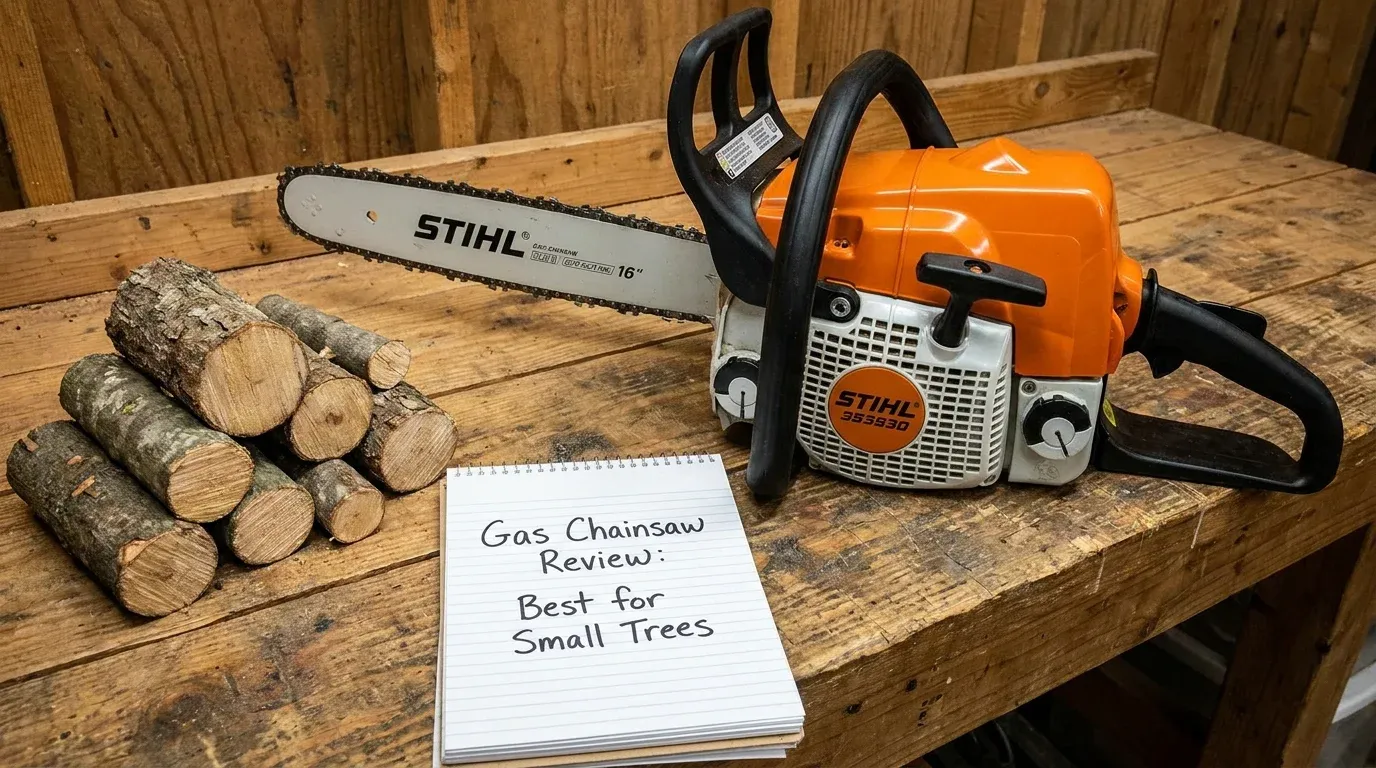
Before we dissect the internals, let’s look at the landscape. I’ve narrowed the field down to the saws that actually survive a season of real work.
| Model | Power Type | Weight (Dry) | Bar Length | Best Use Case | View on AliExpress |
|---|---|---|---|---|---|
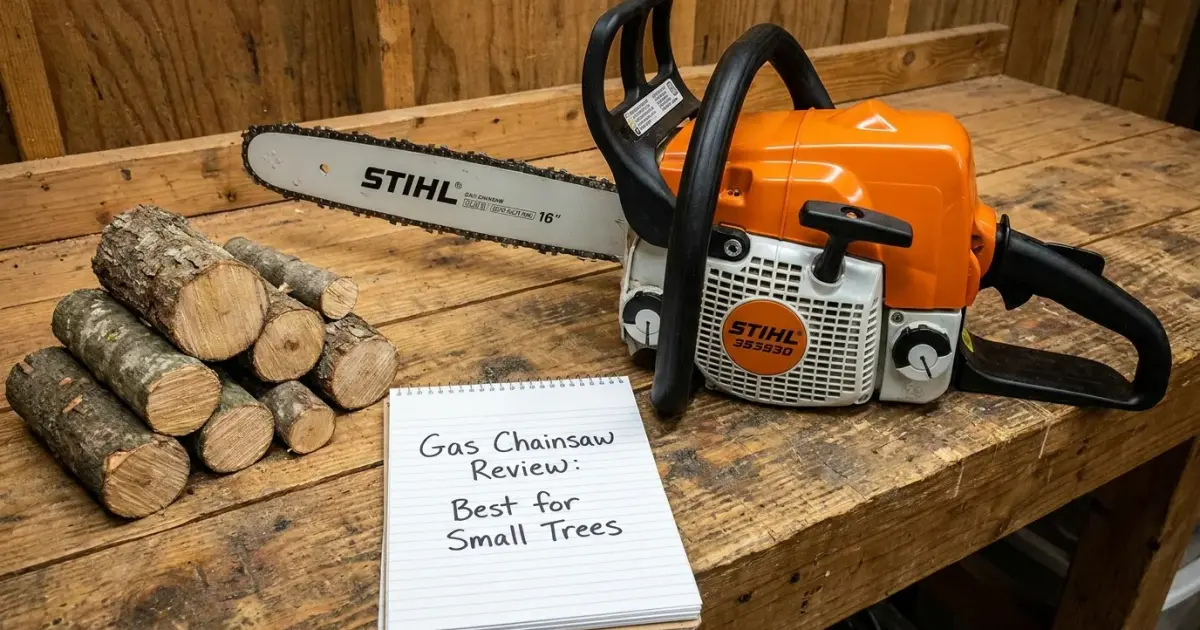
| Stihl MS 180 | Gas (31.8cc) | 8.6 lbs | 16” | The Gold Standard | 🛒 Check Stihl Prices |
| Husqvarna 435 | Gas (40.9cc) | 9.2 lbs | 16” | All-Rounder Prosumer | 🛒 Check Husky Prices |
| Echo CS-352 | Gas (34.0cc) | 8.8 lbs | 14”-16” | Reliability King | 🛒 Check Echo Prices |
| Worx WG384 | Battery (40V) | 10.3 lbs | 14” | No-Fuss Cleanup | 🛒 Check Worx Prices |
The Engineering Deep-Dive: What’s Under the Shroud?
When you’re standing in a thicket of buckthorn or limbing a downed maple, the internal architecture of your saw dictates your fatigue level. Most people ignore the “internals” until the saw won’t start on a cold Tuesday morning. Let’s talk about what makes a small tree saw actually work.
Engine Scavenging and Fuel Layering
In the world of small gas engines, efficiency is king. Both Stihl and Husqvarna have moved toward “stratified scavenging” (Stihl calls it 2-MIX, Husqvarna calls it X-Torq). This isn’t just marketing fluff. Traditional two-strokes lose a massive amount of unburnt fuel through the exhaust port during the intake cycle.
With 2-MIX technology, a layer of fuel-free air is created between the burned charge in the combustion chamber and the fresh charge in the crankcase. This “air buffer” reduces the amount of raw fuel exiting the muffler. Why does this matter for small trees? Because you’re often working in tight spaces where you’re breathing those fumes. A cleaner engine means a cleaner workspace and significantly more torque at lower RPMs’essential for when you’re “feathering” the throttle while limbing.
Centrifugal Air Cleaning Systems
If you’ve ever used a Worx WG304 or a similar budget model, you know the pain of a clogged air filter after twenty minutes of cutting dry pine. Professional-grade small saws, particularly the Husqvarna 435, utilize “Air Injection.”
This is a centrifugal air cleaning system that uses the cooling fan to remove larger dust and debris particles before they even reach the air filter. I’ve taken saws with this tech through a full week of trail clearing without needing to tap out the filter once. For the arborist, this means less downtime and a more consistent fuel-to-air ratio, which prevents the engine from running “lean” and seizing up in the middle of a cut.
The Crankcase: Magnesium vs. Polymer
This is where the “Pro” vs. “Homeowner” debate gets heated. High-end saws for small trees, like the top-handle models we often discuss in our top-handle vs rear-handle chainsaw guide, often feature magnesium crankcases. Magnesium is lighter and dissipates heat better than plastic.
However, for a dedicated small tree saw like the Stihl MS 170, a high-impact polymer housing is used to shave off every possible ounce. While some “old school” guys scoff at plastic, modern polymers are incredibly resilient to the torsional stresses of a 16-inch bar. The trade-off is repairability; you can’t easily split a plastic case to replace a bearing without compromising the structural integrity of the saw.
Real-World Performance: Limbing, Bucking, and the “Snap”
When I talk about the “snap” of a saw, I’m referring to the throttle response. When you’re working on small trees, you aren’t doing long, sustained bores. You’re doing “click-cuts”— blip the throttle, sever the limb, move to the next.
Limbing Performance
In a stand of white pine, the Worx WG322 is surprisingly capable, but it lacks the “gyroscopic stability” of a gas saw. A gas saw’s flywheel creates a rotational force that helps you pivot the bar smoothly. I find that a saw like the Echo CS-352 has a mid-range growl that allows you to limb without ever hitting full throttle, which saves on fuel and keeps the noise floor down in residential areas.
Bucking Small Trunks
For trunks in the 8-to-12 inch range, the chain geometry becomes critical. Most small saws come stock with a 3/8” Low Profile (Picco) chain. This is designed to reduce kickback and minimize the “kerf” (the width of the cut). Because these engines don’t have the torque of a 60cc saw, they can’t pull a full-chisel chain through a dense oak log. The Low Profile chain allows the smaller engine to keep its RPMs in the power band without “bogging” down.
I remember a job in late 2024, clearing a line of frozen birch after an ice storm. The wood was like iron. A larger saw would have been a nightmare to carry over the icy debris, but a well-tuned MS 180 with a fresh, sharp chain zipped through them. The vibration frequency in my palms was there, but it wasn’t that “bone-rattling” buzz you get from older, non-AV (anti-vibration) saws.
Ergonomics & Operator Comfort: The Science of “Feel”
You can have all the horsepower in the world, but if the handle geometry is off, you’ll be at the chiropractor by Friday.
Weight Distribution
The “dry weight” listed on the box is a lie. Once you add a 16-inch bar, a full tank of fuel, and bar oil, that 8.6 lb saw is now 11 lbs. The key is where that weight sits. A well-balanced saw should balance perfectly right at the front handle when held with one finger. If it’s “nose-heavy,” your wrist will be doing all the work to keep the tip up. If it’s “tail-heavy,” the saw will feel twitchy and prone to kickback.
Handle Geometry
Husqvarna generally favors a slimmer, more angled front handle, which I find superior for felling small trees. It allows for a more natural wrist angle during the “notch” and “back-cut.” Stihl tends to be more “blocky,” which feels more secure when you’re wearing heavy-duty gloves.
Safety Features: More Than Just a Brake
The inertia-activated chain brake is the most important safety invention in the history of the industry. On modern saws, this brake can trigger even if your hand doesn’t hit the guard’it reacts to the physical “jerk” of a kickback event. We’ve covered this extensively in our guide on understanding Stihl chainsaw safety features, and it’s a non-negotiable for anyone working around small, springy limbs that are prone to catching the chain tip.
Historical Context: From Steel to Carbon
To understand why the Toro 60V Max or the MS 180 are so good today, you have to look at where we came from. In the 1970s, a “small” saw was something like the McCulloch Mini Mac. It was loud, leaked oil like a sieve, and had zero vibration dampening. Your hands would literally go numb after twenty minutes.
The 1990s brought the “plastic revolution,” where manufacturers realized that for 90% of tasks, you didn’t need a magnesium beast. This led to the “Homeowner” class of saws. Today, we are in the “Prosumer” era. The gap between a professional arborist’s limbing saw and a high-end homeowner saw is narrower than it’s ever been. We now have features like “Easy Start” (spring-assisted pull cords) that allow you to start the saw with a gentle tug’a far cry from the shoulder-dislocating yanks of the past.
Maintenance & Serviceability: Keeping the Beast Tamed
If you can’t service it, don’t buy it. This is why I often steer people away from “big box” brands that don’t have local dealer support.
- Air Filter Access: On the Husqvarna 435, the top cover is held on by three snap-clips. You can have the filter off and cleaned in thirty seconds without a single tool. This is a massive “win” in my book.
- Spark Plug Placement: Most small saws bury the plug under the shroud. Always check how much “surgery” is required to change a fouled plug.
- Chain Tensioning: While tool-less tensioners (the big plastic knobs) are popular on saws like the Worx WG384, I still prefer the old-school twin nuts and a scrench. They hold the bar more securely during heavy “bore cutting.”
Hardware Specs: The Raw Data
| Specification | Stihl MS 180 | Husqvarna 435 | Echo CS-352 |
|---|---|---|---|
| Displacement | 31.8 cc | 40.9 cc | 34.0 cc |
| Power Output | 1.5 kW | 1.6 kW | 1.34 kW |
| Weight | 8.6 lbs (Powerhead) | 9.2 lbs (Powerhead) | 8.8 lbs (Powerhead) |
| Chain Pitch | 3/8” P | .325” or 3/8” | 3/8” |
| Oil Pump | Automatic (Fixed) | Fixed Flow | Adjustable |
The SAWOFF Edge: Pros & Cons
Stihl MS 180
- Pros: Incredible dealer network; lightning-fast acceleration; very lightweight.
- Cons: The air filter design is a bit primitive (flat fleece); no adjustable oiler.
- The SAWOFF Edge: This is the saw you buy when you want it to work every time you pull it out of the shed once a month. It’s the “Honda Civic” of the chainsaw world.
Husqvarna 435
- Pros: Excellent ergonomics; superior air filtration; feels more like a “pro” saw.
- Cons: Can be temperamental to start if you don’t follow the “purge bulb” instructions exactly.
- The SAWOFF Edge: For the guy who has five acres of woods to manage, this is the most comfortable saw for long days.
Worx WG384 (Battery)
- Pros: Instant start; no mixing fuel; surprisingly high torque.
- Cons: Heavy once the batteries are in; run-time is limited to about 30-45 minutes of heavy cutting.
- The SAWOFF Edge: Perfect for suburban homeowners who don’t want to deal with gas stabilizer and loud exhaust notes. If you’re doing yard cleanup, this is a sleeper pick.
Final Verdict
Choosing the “best” chainsaw for small trees depends on your definition of “work.” If you are clearing a fence line once a year, the Stihl MS 170 or MS 180 is unbeatable for the price. If you are an aspiring arborist or a serious property owner, the Husqvarna 435 offers the sophisticated filtration and ergonomics you need for 4+ hour workdays.
If you are transitioning away from gas, the battery technology in the Worx or Toro lines is finally at a point where it can handle 8-inch trunks without stalling. However, for that “snap” and the visceral feedback that tells you exactly what the wood is doing, gas still reigns supreme in the forest.
SAWOFF Rating: 4.8 / 5 (Awarded to the Stihl MS 180 for its sheer ubiquity and reliability in the small-tree category).
FAQ: Professional Troubleshooting
1. What is the best fuel mix for small gas chainsaws?
Always use a high-quality 50:1 synthetic mix. I highly recommend using ethanol-free “canned fuel” (like MotoMix or TruFuel) if you aren’t using the saw daily. Ethanol attracts moisture and will eat the delicate rubber diaphragms in small carburetors.
2. Can I use a carving bar on these saws?
Yes, but you usually need to swap the sprocket. We have a full guide on using carving bars on top handle saws that explains the conversion process. It’s a great way to turn a small tree saw into a precision detail tool.
3. Why does my saw die when I tilt it on its side?
This is almost always a “fuel pickup” issue. Check the fuel filter inside the tank. If the fuel line has a tiny crack, it will suck air instead of gas when the fuel level shifts. On small trees, you’re constantly changing angles, making this a common headache.
4. How often should I sharpen the chain?
Every time you refill the gas tank, give the teeth a couple of strokes with a file. If you wait until it’s “dull,” you’re already putting unnecessary strain on the engine and the bar. “Dust” instead of “chips” is your signal that you’re too late.
5. Is a 16-inch bar too big for a 30cc saw?
It’s the upper limit. While many come with 16s, a 14-inch bar actually makes the saw more balanced and allows the engine to maintain higher RPMs. If you’re mostly doing limbing, try dropping down to a 14.
6. When should I use a hand saw instead?
If the tree is under 3 inches, sometimes a high-quality pull-saw is faster and safer. See our comparison on when to use a silky vs a chainsaw.
7. How do I fix a “flooded” small engine?
Turn the switch to “Off,” hold the throttle wide open (you might need a friend), and pull the cord 10-15 times to clear the excess fuel from the combustion chamber. Then, try starting it on the “Run” position’not the “Choke” position.