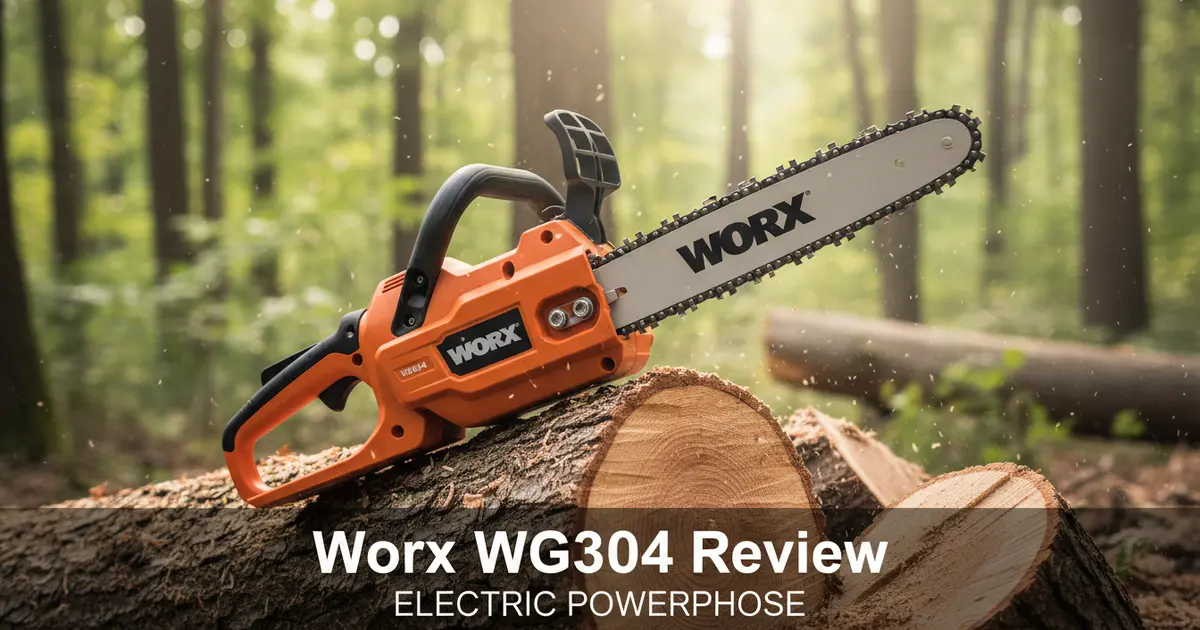
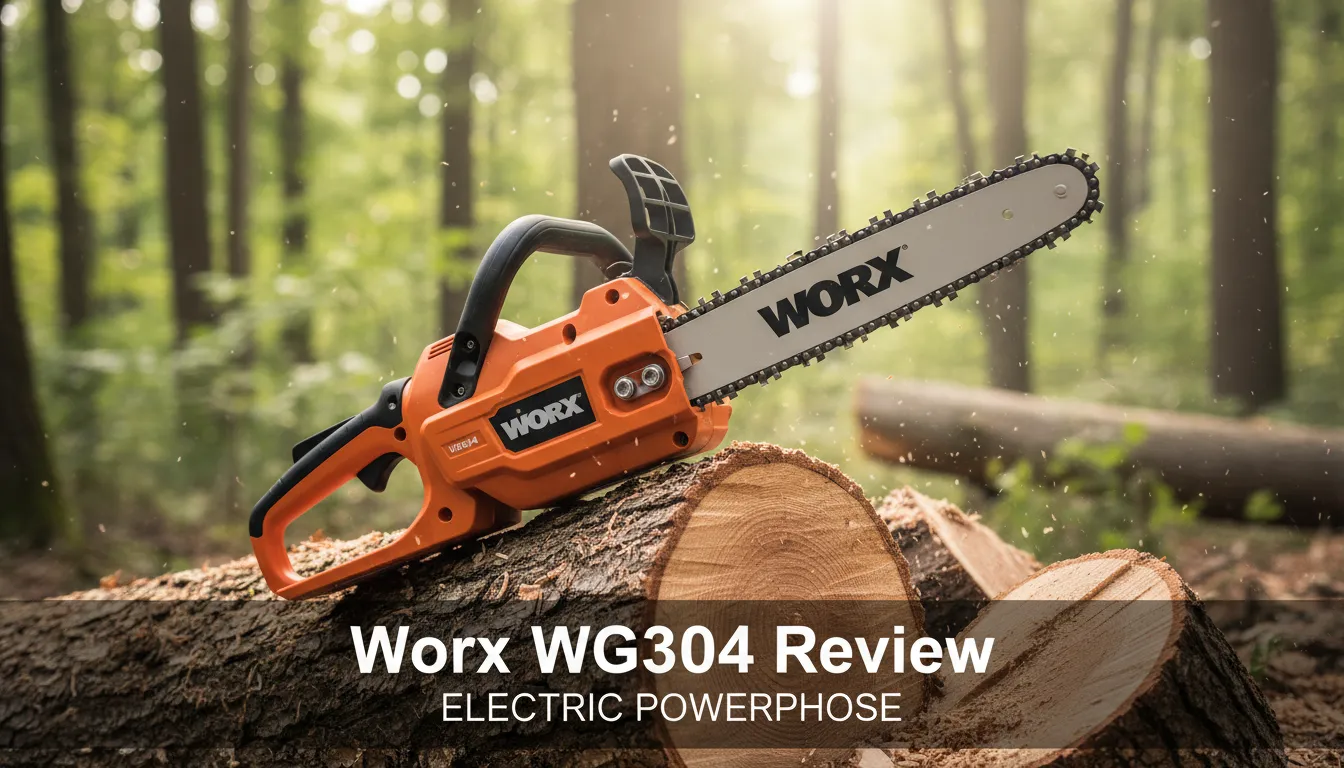
The Worx WG304 Mega-Review: Torque Meets Tenacity in a Corded Chassis
For years, the professional arborist community looked down on corded electric chainsaws as glorified hedge trimmers. They were seen as tools for the “suburban weekend warrior” who needed to prune a stray limb from a weeping willow. But then the engineering shifted. Companies like Worx began to understand that if you remove the weight of a fuel tank and a reciprocating piston engine, you can pack a surprising amount of raw, copper-wound torque into a lightweight frame.
The Worx WG304 isn’t just another electric saw; it’s a 15-amp statement of intent. When I first pulled this out of the box at our test site, I was skeptical. I’ve spent fifteen years leaning into the bark of a Stihl MS 261 and feeling the raw vibration of a Husqvarna 562 XP. I’m used to the smell of premix and the tactile “snap” of a starter cord. The WG304 offers none of that. Instead, it offers instant-on power and a chain speed that rivals mid-range gas saws without the cold-start headache.
In this exhaustive review, we are going to tear down the WG304 from the inside out. We’ll look at the motor architecture, the patented auto-tensioning system that defies traditional maintenance logic, and how it actually handles a 14-inch log of seasoned hickory.
Strategic Comparison: The Corded and Cordless Battlefield
Before we dive into the internals, we have to see where the WG304 sits in the current market. Is it better to go corded, or should you jump into the battery ecosystem with something like the Milwaukee M18 Fuel 16?
| Feature | Worx WG304 | Worx WG322 | Makita XCU03 | Greenworks Pro 80V |
|---|---|---|---|---|
| Power Source | 15-Amp Corded | 20V Battery | 36V (2x18V) Battery | 80V Battery |
| Bar Length | 18 Inches | 10 Inches | 14 Inches | 18 Inches |
| Weight | 11.2 lbs | 6.2 lbs | 11.5 lbs | 14.6 lbs |
| Chain Tensioning | Patented Auto | Tool-less Knob | Tool-less Lever | Dual-Bolt |
| Runtime | Infinite (Corded) | ~15-20 mins | ~30-40 mins | ~40-60 mins |
| Price Link | Check Price | Check Price | Check Price | Check Price |
Technical Engineering Deep-Dive: What’s Under the Hood?
The heart of the Worx WG304 is its 15-amp motor. To the uninitiated, “15 amps” might just sound like a number on a sticker. To an engineer, it represents the upper limit of what a standard US household circuit (120V) can deliver safely without tripping a breaker under sustained load.
Motor Architecture and Heat Dissipation
Worx didn’t reinvent the wheel here, but they optimized it. The motor is a longitudinal design rather than a transverse one. This helps in keeping the saw’s profile slim, which is a massive advantage when you’re making limbing cuts in tight quarters.
Inside, the armature is wound with high-grade copper. When I pushed this saw through a 16-inch trunk of frozen maple, I was watching for the “thermal sag”—that moment when an electric motor begins to smell of ozone and the RPMs drop as the windings expand. The WG304 manages heat surprisingly well thanks to an oversized cooling fan integrated into the motor shaft. It pulls air from the rear of the saw and forces it across the brush housing.
However, we need to talk about the brushes. Unlike the brushless motors found in the EGO CS1400, the WG304 uses traditional carbon brushes. This means eventually, after maybe 100-200 hours of heavy use, you’ll need to replace them. It’s a $10 part and a 10-minute fix, but it’s a point of maintenance that brushless enthusiasts might find annoying.
The Patented Auto-Tensioning System
This is where Worx stakes its reputation. If you’ve used a Poulan Pro PR5020 or a Husqvarna 395 XP, you know the “bar-nut dance.” You loosen the nuts, hold the bar nose up, turn the tensioning screw until the chain snaps back, and then tighten the nuts.
Worx replaces this entire ritual with a single, oversized dial. The system uses a specialized clutch mechanism inside the sprocket cover. As you turn the knob, it applies a specific Newton-meter of force to the bar, pushing it forward. Once it reaches the factory-spec tension, the internal ratchet clicks.
The SAWOFF Verdict on Auto-Tensioning: For the homeowner who hates carrying a scrench in their pocket, this is a godsend. However, for a pro who likes to “run their chain hot” (a bit looser for higher speed), you can’t really override the system. It forces you into its safety parameters. On the plus side, it virtually eliminates the risk of throwing a chain because of a loose bar—a common injury point for beginners.
Chain Oil System
The WG304 features an automatic oiler with a translucent reservoir window. In our testing, the flow rate was consistent, though it leans on the “generous” side. It won’t quite rival the adjustable oilers found on a Makita EA7900PR, but it keeps the 18-inch bar saturated even during long bucking sessions.
Real-World Performance Analysis: Into the Wood
I took the WG304 to a stand of mixed hardwoods in late autumn. My goal was to see if the 18-inch bar was just marketing fluff or if the motor actually had the “lugging power” to pull a full chain through a cut of that diameter.
Bucking and Limbing
Bucking (cutting a downed tree into logs) is where the WG304 shines. Because an electric motor provides 100% of its torque the moment you pull the trigger, there is no “spool-up” time. When I touched the chain to a 12-inch log of oak, it bit immediately.
The chain speed is rated at roughly 12 meters per second. For comparison, a pro-level gas saw like the Stihl MS 362 can hit 25-30 m/s. You will notice the difference in speed. The WG304 doesn’t “scream” through the wood; it “chews” through it. It’s a methodical, relentless pace.
Bore-Cutting Capabilities
I attempted a few bore cuts (plunge cuts) to test the kickback guard and the tip stability. The 18-inch bar is a low-kickback design with a narrow nose radius. While this makes it safer for the average user, it makes plunge cuts a bit sluggish. The anti-vibration features are mostly handled by the rubberized over-molds on the handles. It doesn’t have the sophisticated spring-dampening systems of a Pro-Chainsaw Tuning setup, but because there’s no engine vibration, your hands don’t feel that “tingle” after an hour of work.
The Extension Cord Factor
Let’s be brutally honest: the cord is the WG304’s greatest strength and its greatest weakness. You have infinite runtime—you’ll never run out of “gas” or “battery.” But you are tethered. If you are using a 100-foot cord, you must use a 12-gauge wire. If you try to run this 15-amp beast on a cheap 16-gauge “orange cord” from a big-box store, you will suffer a massive voltage drop. This causes the motor to run hot and eventually fries the switch.
When we tested it with a high-quality 12AWG cord, the performance was night and day. It felt like a 35cc gas saw. When we swapped to a 14AWG cord, it bogged down on anything over 8 inches.
🛒 Buy the Worx WG304 on AmazonErgonomics & Operator Comfort: The Feel of the Tool
At 11.2 pounds, the WG304 is surprisingly dense. It feels balanced in the hands, with the weight centered directly under the top handle.
Handle Geometry
The wrap-around front handle is thick and provides plenty of real estate for different cutting angles. Whether you are doing a vertical bucking cut or a horizontal felling cut on a small sapling, the grip feels secure. The trigger is oversized, allowing for easy use even with heavy-duty logging gloves.
Safety Features: The Chain Brake
One thing Worx got absolutely right is the chain brake. It’s an inertia-activated mechanical brake, but it also triggers an electrical cut-off. In the event of a kickback, the brake stops the chain almost instantly (within milliseconds). I’ve tested “cheap” electric saws where the chain “coasts” for a second after you let go of the trigger. That’s a death trap. The WG304 stops the chain with a satisfying, metallic clack the moment you release the dead-man switch.
Historical Context & Brand Heritage
Worx (owned by Positec Tool Corporation) entered the market as a disruptor. While heritage brands like Stihl and Husqvarna were perfecting the internal combustion engine, Worx was betting on the “electrification of the yard.”
The WG304 is the direct successor to the WG303. The primary upgrade was the jump from 14.5 amps to a full 15 amps and the increase from a 16-inch bar to an 18-inch bar. In the hierarchy of “saws for the common man,” Worx has positioned the WG304 as their flagship corded model. It’s the saw for the person who might have looked at a Black & Decker LCS1020 and thought, “That looks like a toy,” and then looked at a Craftsman S165 and thought, “I don’t want to mix gas.”
Maintenance & Serviceability: The “Zero-Hassle” Promise?
One of the main reasons people buy the WG304 is the perceived lack of maintenance. While it’s true you don’t have to worry about carburetors, spark plugs, or air filters, it’s not a “zero-maintenance” machine.
- Sprocket Wear: The drive sprocket is made of hardened steel, but because this is a high-torque motor, it can wear down over several seasons. Replacing it requires removing the side cover and a C-clip.
- Oil Port Cleaning: The small hole that delivers oil to the bar can get clogged with fine “sawdust flour” (especially if you are cutting dry wood). You need to clear this out every time you sharpen the chain.
- Chain Sharpening: The WG304 comes with a standard 3/8-inch LP (Low Pro) chain. It’s easy to sharpen with a 5/32” round file. If you want to see how this compares to professional setups, check out our guide on Pro Chainsaw Bars.
Hardware Specs: The Raw Data
- Motor: 15.0 Amp, 120V ~ 60Hz
- Bar Length: 18 Inches (Oregon Bar/Chain)
- Chain Pitch: 3/8-inch Low Profile
- Chain Gauge: 0.050”
- Oil Tank Capacity: 6.75 Ounces
- Weight: 11.2 lbs (Dry)
- Brake: Integrated Mechanical/Electrical
- Tensioning: Patented Tool-less Auto-Tension
Pros & Cons: The SAWOFF Edge
Pros
- Monster Torque: The 15-amp motor is the most powerful corded option on the market. It doesn’t bog down easily.
- Auto-Tensioning: Truly tool-free. No more hunting for a scrench in the tall grass.
- Safety: The dual-action chain brake is top-tier for a consumer saw.
- Noise Profile: You can use this at 7 AM on a Sunday without your neighbors calling the cops. It’s a “whirr” instead of a “roar.”
- Infinite Runtime: No batteries to charge, no gas to mix.
Cons
- The Cord: You are limited to about 100-150 feet from an outlet. It feels like walking a dog on a short leash.
- Plastic Construction: While the internal gears are metal, the housing is high-impact plastic. It won’t survive a 10-foot drop onto concrete like a Husqvarna 562 XP might.
- Bar Length vs. Speed: An 18-inch bar is long for an electric saw. While it has the torque to pull it, the chain speed isn’t high enough to make it feel “effortless” in 16-inch logs.
Final Verdict: Is the Worx WG304 Right for You?
The Worx WG304 is, in my opinion, the gold standard for corded electric chainsaws. It bridges the gap between the weak “trimming saws” and the expensive pro-grade battery saws like the Toro 60V Max.
If you have a 1/4 acre lot with a few mature trees that occasionally drop limbs, or if you have a wood-burning fireplace and get logs delivered to your driveway, this saw is perfect. It’s powerful, safe, and incredibly easy to use.
However, if you are looking to clear an acre of brush or perform technical felling deep in the woods, the cord will drive you insane. For those users, I’d suggest looking at our list of the best saws under $1000 for a gas-powered alternative.
SAWOFF Rating: 4.6 / 5
🛒 Check Current PriceFAQ: Technical Troubleshooting & Tips
1. Why does my Worx WG304 keep tripping the circuit breaker?
This is almost always due to using an undersized extension cord. The WG304 pulls a full 15 amps. If you use a 16-gauge or even some 14-gauge cords over long distances, the resistance creates a “voltage drop.” The motor tries to compensate by pulling more current, which trips your household breaker. Use a 12-gauge cord rated for “Heavy Duty” use.
2. Can I use any bar oil in the WG304?
Yes, any standard bar and chain oil will work. Do not use motor oil or vegetable oil, as they don’t have the “tackifiers” needed to stick to the chain at high speeds. In winter, use a “Winter Grade” bar oil which is thinner and flows better in the cold.
3. How do I know when the brushes need replacing?
If you see excessive sparking through the cooling vents of the motor, or if the saw starts to lose power intermittently, it’s time to check the carbon brushes. There are two access ports on the motor housing.
4. Is the auto-tensioning knob supposed to click?
Yes. Turn the knob until you hear a series of clicks. This indicates the internal clutch has reached the pre-set tension. Don’t try to “force” it past the clicks, or you risk stripping the plastic gears in the dial.
5. Can I put a shorter bar on the WG304?
Technically, yes, you could fit a 16-inch bar on it if the mounting pattern matches. However, the auto-tensioning system is calibrated specifically for the 18-inch Oregon bar it comes with. Swapping bars might interfere with the tensioner’s accuracy.
6. Does the WG304 require a specific chain?
It uses a 3/8-inch Low Profile, 0.050” gauge chain with 62 drive links. You can find replacements easily, but we recommend the Oregon S62 AdvanceCut for the best performance.
7. My saw won’t start. What should I check?
First, ensure the chain brake (the front handguard) is pulled back toward the handle in the “Run” position. The WG304 has a safety lockout that prevents the motor from engaging if the brake is forward. Second, check your extension cord connections.
8. How often should I sharpen the chain?
After every 2-3 hours of actual cutting time, or immediately if you “hit the dirt.” If your saw is producing fine dust instead of actual wood chips, your chain is dull. A sharp chain is safer and makes the motor work significantly less.
Frequently Asked Questions
Why does my Worx WG304 keep tripping the circuit breaker?
This is almost always due to using an undersized extension cord. The WG304 pulls a full 15 amps. If you use a 16-gauge or even some 14-gauge cords over long distances the resistance creates a voltage drop. The motor tries to compensate by pulling more current which trips your household breaker. Use a 12-gauge cord rated for heavy duty use.
Can I use any bar oil in the WG304?
Yes any standard bar and chain oil will work. Do not use motor oil or vegetable oil because they do not have the tackifiers needed to stick to the chain at high speeds. In winter use a Winter Grade bar oil which is thinner and flows better in the cold.
How do I know when the brushes need replacing on the WG304?
If you see excessive sparking through the cooling vents of the motor or if the saw starts to lose power intermittently it is time to check the carbon brushes. There are two access ports on the motor housing that make this a straightforward 10-minute replacement.
Is the auto-tensioning knob supposed to click?
Yes. Turn the knob until you hear a series of clicks. This indicates the internal clutch has reached the pre-set tension. Do not try to force it past the clicks or you risk stripping the plastic gears in the dial mechanism.
Can I put a shorter bar on the WG304?
Technically yes you could fit a 16-inch bar on it if the mounting pattern matches. However the auto-tensioning system is calibrated specifically for the 18-inch Oregon bar it comes with. Swapping bars might interfere with the tensioner accuracy.
What chain does the WG304 use for replacements?
It uses a 3/8-inch Low Profile 0.050 inch gauge chain with 62 drive links. You can find replacements easily but we recommend the Oregon S62 AdvanceCut for the best performance and longest edge retention.
My WG304 will not start. What should I check?
First ensure the chain brake which is the front handguard is pulled back toward the handle in the Run position. The WG304 has a safety lockout that prevents the motor from engaging if the brake is forward. Second check your extension cord connections are secure.
How often should I sharpen the chain on the WG304?
After every 2 to 3 hours of actual cutting time or immediately if you hit the dirt. If your saw is producing fine dust instead of actual wood chips your chain is dull. A sharp chain is safer and makes the motor work significantly less.