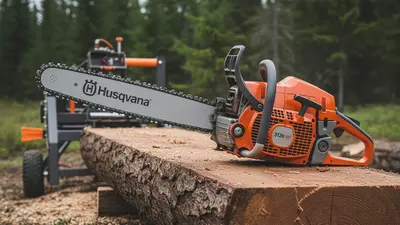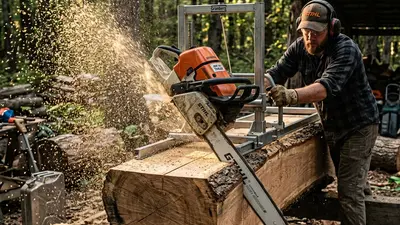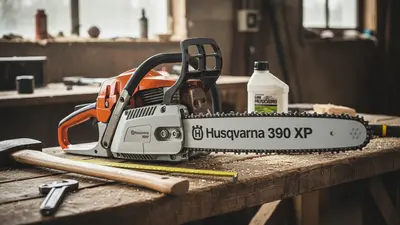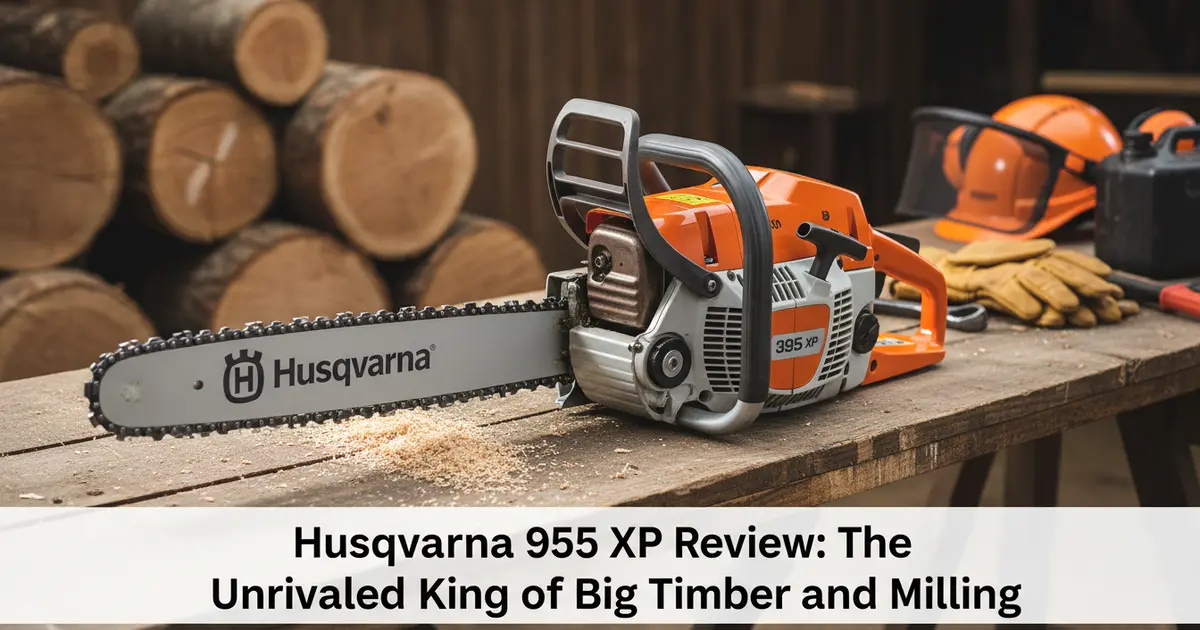
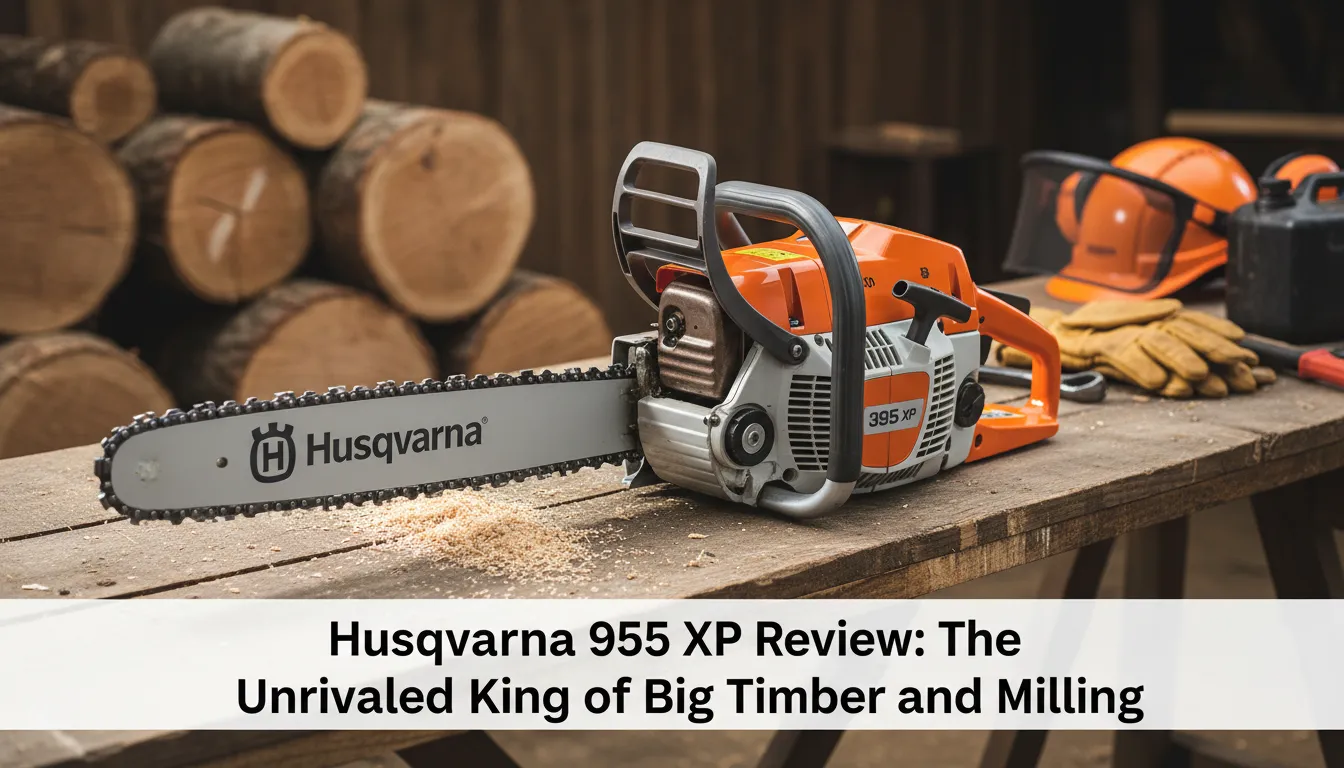
If you have ever had to drop a five-foot diameter Douglas fir or spent an afternoon slabbing oak on an Alaskan mill, you know that adequate power is not enough. You need the Husqvarna 395 XP—a 94cc monster designed for high-torque sustained output under massive loads.
While the industry has shifted toward electronic carburetors and X-Torq scavenging, the 395 XP remains one of the last old-school professional saws in high demand. It is 94cc of pure displacement built for lugging power, not screaming RPMs.
Strategic Comparison: The Heavyweight Contenders
| Model | Displacement | Power Output | Dry Weight | Best Use Case |
|---|---|---|---|---|
| Husqvarna 395 XP | 94.0 cc | 7.1 hp | 17.4 lbs | Large Felling / Milling |
| Stihl MS 661 C-M | 91.1 cc | 7.3 hp | 16.5 lbs | High-speed Pro Logging |
| Husqvarna 460 | 60.3 cc | 3.62 hp | 12.8 lbs | Heavy Farm/Ranch |
| Echo CS-590 | 59.8 cc | 3.9 hp | 13.2 lbs | Mid-Range Prosumer |
Technical Engineering Deep-Dive
The 395 XP features a 56mm bore and 38mm stroke at 94cc. The torque curve is incredibly flat—when you bury a 36-inch bar into frozen wood, RPMs do not vanish. It stays in the meat of the power band.
The magnesium crankcase handles thermal expansion far better than composite materials. The three-piece forged crankshaft withstands the literal tons of force during high-speed bucking. The centrifugal Air Injection system is arguably the best in the business—in dry, dusty conditions, we went an entire day without a significant drop in performance.
Our key advice: The 395 XP uses a traditional Walbro carburetor without AutoTune. For milling applications, run the saw slightly rich to keep cylinder temperatures down. This level of control is why seasoned sawyers prefer this saw.
For more on choosing the right power system, see gas vs electric chainsaw.
Real-World Performance
In dead-standing White Oak with a 32-inch Oregon PowerMatch bar, the 395 XP growls rather than screams. The decompression valve is mandatory—94cc compression will rip the starter cord out of your hand without it. In the cut, the felling spikes are aggressive. Set the dogs, lever back, and watch chips fly.
For milling, the 395 XP was born for it. Oversized cooling fins and side-mounted chain tensioner make adjustments easy when the bar heats and chain sags. We ran four hours straight on a Granberg mill without a single hiccup.
Ergonomics & Operator Comfort
At 17.4 lbs powerhead only, adding a 36-inch bar and full tanks pushes total weight near 25 lbs. The LowVib steel springs do a decent job isolating handles from engine harmonics, but after four hours of bucking, you will feel the tingle.
Key advice: The balance point depends heavily on bar choice. With a 24-inch bar it is tail-heavy; with a 36-inch bar it sits perfectly level. Choose your bar length based on your primary cutting tasks.
Chainsaw Safety
Read our chainsaw safety guide before operation. A 94cc saw generates extreme kinetic energy. Full protective gear is non-negotiable. Never operate this saw alone in remote areas.
Maintenance & Serviceability
Air filter access requires no tools—heavy-duty clips secure the top cover. The adjustable oiler is critical: when running a 42-inch bar, crank it to maximum. Field tip: Always check muffler and felling spike bolts. The vibration of a 94cc engine notoriously backs out screws. Use blue Loctite on muffler bolts for high-vibration milling work.
Verify your bar and chain match your model.
Hardware Specifications
- Displacement: 93.6 cm³
- Power Output: 7.1 hp (5.3 kW) at 9,600 rpm
- Fuel Tank: 0.9 Liters
- Oil Tank: 0.5 Liters
- Vibration (F/R): 6.5 / 10.2 m/s²
- Chain Pitch: 3/8”
- Recommended Bar Length: 18” to 42”
Pros & Cons
Pros: Immense lugging torque that never bogs; no electronics to fail; superior centrifugal air filtration; high-output oiler supports bars to 42 inches; full magnesium crankcase and forged internals.
Cons: Extreme weight (25 lbs dressed); drinks fuel; lacks X-Torq efficiency so dirtier than newer models; requires strong pull even with decompression valve.
Final Verdict
The Husqvarna 395 XP is not for the occasional woodcutter. It is for the professional arborist, woodlot owner with massive hardwoods, or chainsaw miller who needs a tool designed for extremes. Heavy, loud, thirsty—and when the chain hits the wood, there is nothing else like it.
SAWOFF Rating: 4.8 / 5
Get out there and cut. Safely.
Frequently Asked Questions
What is the best fuel-to-oil ratio for the 395 XP?
While the manual states 50:1, many professionals using the 395 XP for milling prefer a slightly richer 40:1 mix for extra piston and crank bearing lubrication during sustained high-heat runs.
Can I run a 42-inch bar on the 395 XP?
Yes. The 395 XP has the oiler capacity and torque to handle a 42-inch bar. For most felling and bucking, a 28-inch or 32-inch bar provides the best balance and maneuverability.
Why does my 395 XP struggle to start when hot?
This is often vapor lock or a slightly misadjusted low-speed screw. Ensure cooling fins are clean. If it persists, open the L screw by 1/8th turn to richen idle mixture.
Is the 395 XP better than the Stihl MS 661?
The MS 661 is lighter with faster chain speed. The 395 XP has more low-end grunt and a simpler mechanical design, making it superior for milling and heavy bucking.
Does the 395 XP have a catalytic converter?
No. This is a traditional two-stroke without catalytic restriction. The exhaust is hot and loud, but the engine breathes better and produces more raw power.
How often should I clean the Air Injection system?
Blow out the flywheel area and cooling fins every 10-15 tanks of fuel. Wood chip buildup around the flywheel reduces Air Injection efficiency and can cause overheating.
What chain should I use for big timber?
For the 395 XP, use 3/8-inch pitch with .058 or .063 gauge full-chisel chain. For milling, use dedicated ripping chain with a 10-degree top plate angle.
What spark plug does the 395 XP use?
It uses an NGK BPMR7A. Always check the gap at 0.020 inches before installation.