Review Information
- Reviewed by: Jack Beurge
- Review type: Research-based review
- Testing status: Not personally tested by SAWOFF — based on manufacturer documentation and reputable external sources
- Published: January 14, 2026
Information in this review is labeled as one of four types: 🧪 SAWOFF hands-on test, 🏭 manufacturer specification, 📚 research from reputable sources, or 🧠 editorial assessment. See our testing methodology and editorial policy.
Introduction
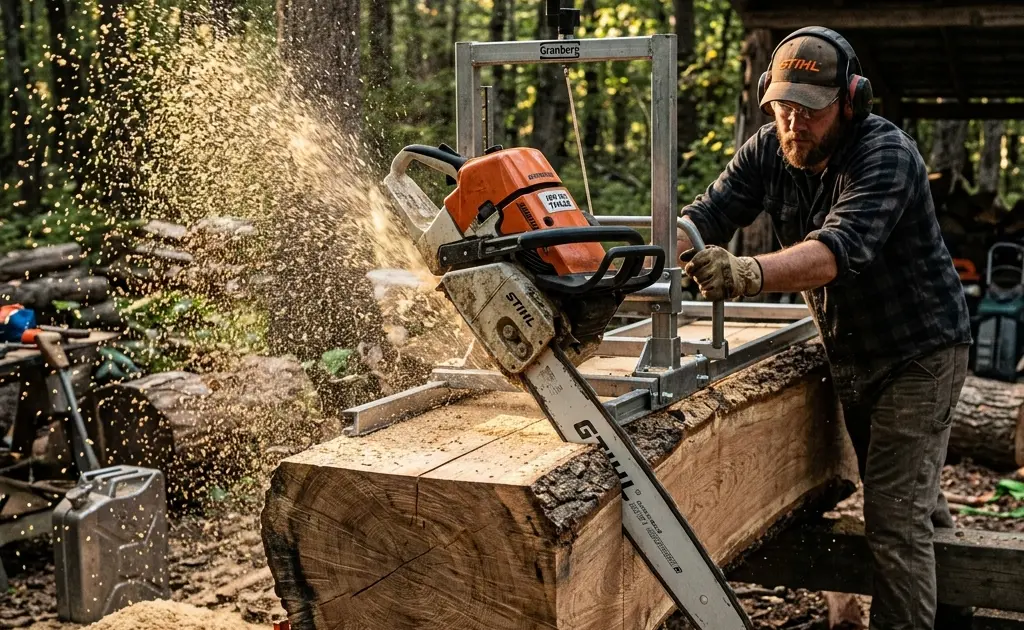
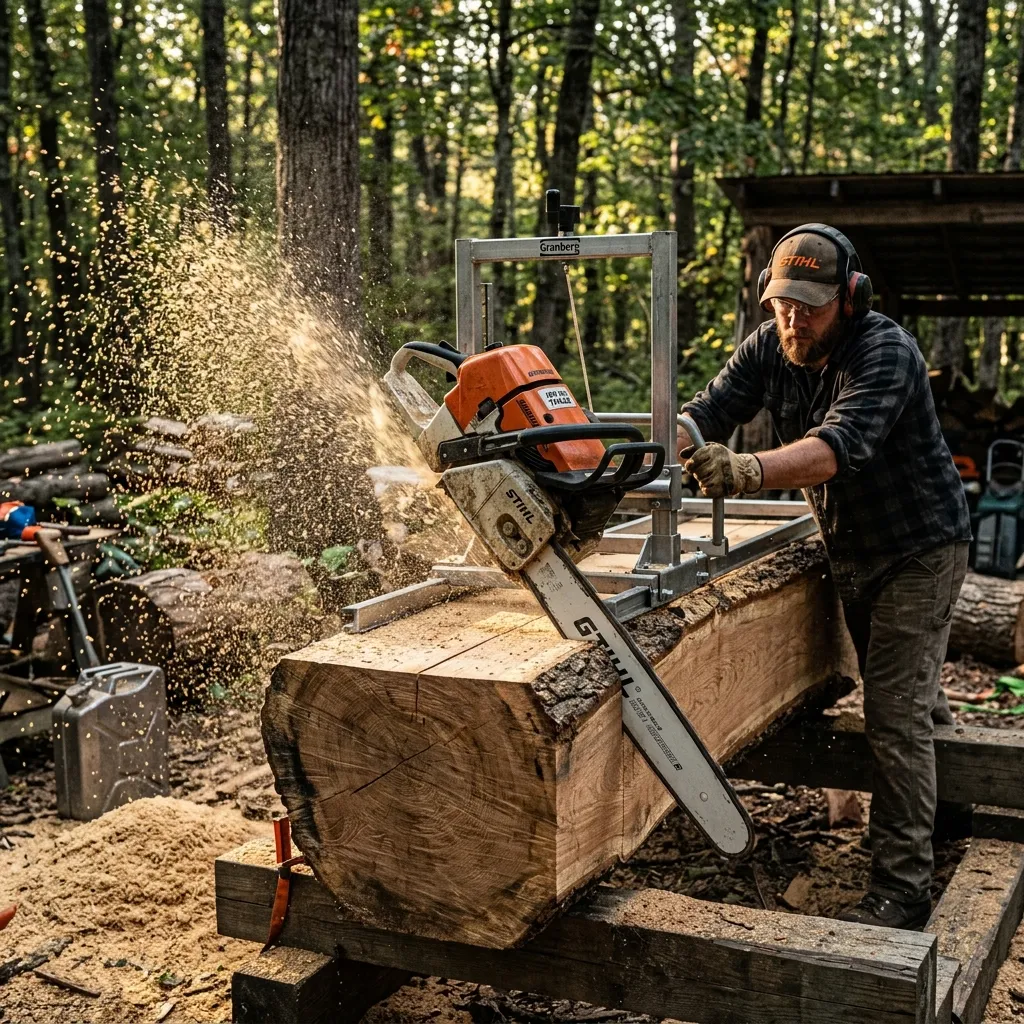
If you’ve ever spent four hours buried in a 36-inch slab of seasoned White Oak, you know that chainsaw milling isn’t cutting wood. It’s a war of attrition. When you bolt that powerhead into an Alaskan mill, you’re asking that engine to do something it was never designed for: run at 100% wide-open throttle for five, ten, or fifteen minutes straight.
I’ve seen prosumer saws melt their crankcases and seize pistons in a single afternoon of milling because the operator thought a 50cc saw could handle a 24-inch rip. It can’t. To mill effectively, you need displacement, high-volume oiling, and a magnesium chassis that dissipates heat like a radiator.
Strategic Comparison: The Heavyweight Contenders
| Model | Displacement | Power Output | Best For | Link |
|---|---|---|---|---|
| Stihl MS 661 C-M | 91.1 cc | 7.2 hp | Production Milling | 🛒 Check Price |
| Husqvarna 395 XP | 93.6 cc | 7.1 hp | High Torque/Old School | 🛒 Check Price |
| Stihl MS 881 | 121.8 cc | 8.6 hp | Massive Slabs | 🛒 Check Price |
| Echo CS-800P | 80.7 cc | 5.1 hp | Entry-Level Pro | 🛒 Check Price |
Technical Engineering Deep-Dive: Why Most Saws Die in the Mill
To understand why a homeowner saw shouldn’t be near a milling rail, you have to understand heat soak. When bucking, the engine revs up and down. During down periods, the flywheel fins force air over the cylinder cooling fins. In milling, there is no down.
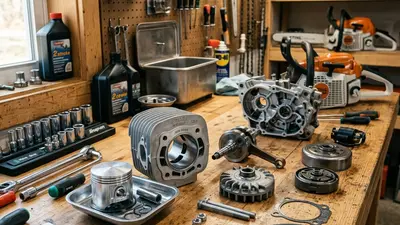
Engine Architecture and Thermal Management. A true professional milling saw is built around a magnesium crankcase. Magnesium acts as a heat sink, drawing heat away from main bearings and the crankshaft. I tore down a high-hour milling saw and the most noticeable wear wasn’t on the piston rings — it was the discoloration of the crankcase near the bar mount.
Fuel Layering and Scavenging. Stratified scavenging (X-Torq, 2-MIX) isn’t just for emissions. By using a layer of fresh air to push out exhaust gases, the engine runs significantly cooler. However, these systems often run leaner. For milling, I always recommend slightly richening the mix or ensuring your M-Tronic/AutoTune is perfectly calibrated. A lean run during a 10-minute rip is a death sentence for your top end.
The Oiler. Milling requires a high-output, adjustable oiler. Most all-around saws have oilers designed for 18-24 inch bars. In a mill, you’re often running a 36-inch or 48-inch bar. You need a saw that pumps enough oil to keep that entire track lubricated while the chain is buried in sawdust that acts like a sponge.
Real-World Performance
When you first pull the cord on a 90cc saw, you feel it in your chest. There’s a specific thump to the idle of a large-displacement powerhead.
Last summer, I took a fresh MS 661 into downed Black Walnut. Using a standard cross-cut chain was a mistake — the surface looked like a plowed field. I switched to a dedicated ripping chain (10-degree top plate angle) and the difference was night and day. The saw didn’t scream; it growled. It maintained steady RPM even when I pushed into the heartwood.
Vibration and Operator Fatigue. Milling is vibration-intensive. Professional saws use heavy-duty spring-based anti-vibration systems. Compared to rubber bushings in entry-level saws, these springs allow the powerhead to move independently of the handles. It’s the difference between numb fingers and being able to work the next day.
Historical Context
The Husqvarna 395 XP is a relic in the best possible way. It’s been in the lineup for decades because its high-torque, low-RPM power delivery is nearly perfect for milling. We’ve moved from heavy, vibrating cast-iron blocks to high-revving, computer-controlled magnesium units.
Maintenance and Serviceability
Milling is a high-maintenance hobby. If you aren’t comfortable turning a wrench, don’t get into it.
- Air Filter Cleaning — after every two logs, pull the filter. A clogged filter makes the saw run rich, causing carbon buildup on the piston crown.
- Spark Plug Inspection — if it’s white, you’re running too hot and lean. If oily and black, you’re wasting fuel. You want toasted marshmallow brown.
- Bar Rail Maintenance — milling puts lateral pressure on the rails. Use a rail closer and flat file every 10 hours.
Pros & Cons
Pros: Infinite torque — these saws don’t bog down; built to be rebuilt; high resale value; versatile for big wood felling when not milling. Cons: Heavy — lugging an MS 881 is a gym workout; fuel consumption measured in gallons, not quarts; $1,200 to $2,000 for the powerhead alone.
The SAWOFF Edge: Buy the Husqvarna 395 XP. Its outboard clutch keeps heat away from the crankcase better than inboard designs of many modern Stihls. It’s the secret weapon of the milling world.
Final Verdict
For the tech-savvy wanting the best power-to-weight ratio, the Stihl MS 661 C-M is king. For a set-it-and-forget-it saw that survives a nuclear winter, the Husqvarna 395 XP remains my top recommendation.
Avoid the prosumer trap — don’t try to mill with a mid-range saw. You’ll end up buying two saws: the one you broke and the pro one you should have bought first.
SAWOFF Rating: 4.9 / 5 (For the 90cc+ Class)
Chainsaw Safety
Milling creates unique hazards. Read our Chainsaw Safety Guide before you start.
Get out there and cut. Safely.
Frequently Asked Questions
Can I use a 50cc or 60cc saw for milling?
Technically yes for very small (under 12-inch) softwood logs. But you will drastically shorten the saw's life. For anything serious, 70cc is the bare minimum, 90cc is the standard.
What is a ripping chain, and do I really need one?
A ripping chain is ground at a 10-degree angle rather than the 30-35 degree angle for cross-cutting. It acts like a miniature chisel, producing smoother boards and putting less strain on the engine. You absolutely need one.
Why does my saw keep dying in the middle of a cut?
This is usually vapor lock or heat soak. The fuel in the lines boils from extreme heat. Ensure your cooling fins are clean and use high-octane, ethanol-free fuel.
How often should I sharpen the chain while milling?
Milling is harder on chains than bucking. Touch up the cutters every two or three long passes. Sharp teeth mean less pressure needed, which means a cooler engine.
Is the Stihl MS 881 worth the extra money over the MS 661?
Only if you regularly mill logs over 36 inches in diameter. For 90% of millers, the 90cc class (661/395XP) is the sweet spot of power and weight.
What oil mix should I use for milling?
Many pros recommend a slightly fat mix. If the manufacturer recommends 50:1, many millers run 40:1 or 32:1 with high-quality synthetic oil for extra lubrication and cooling during long wide-open pulls.
Does bar length affect the saw's power?
Yes. The longer the bar, the more drag the engine must overcome. Don't run a 48-inch bar on a 70cc saw — it won't have enough torque to clear chips and you'll burn out the clutch.
My saw's air filter is covered in fine dust. Is this normal?
Yes. Milling produces flour instead of chips. Check your filter every couple of passes and consider a pre-filter if working in particularly dry wood.