Review Information
- Reviewed by: Jack Beurge
- Review type: Research-based review
- Testing status: Not personally tested by SAWOFF — based on manufacturer documentation, reputable sources, and documented owner-reported patterns
- Published: March 22, 2026 · Updated: July 20, 2026
Information in this review is labeled as one of four types: 🧪 SAWOFF hands-on test, 🏭 manufacturer specification, 📚 research from reputable sources (including documented owner-reported patterns), or 🧠 editorial assessment. See our testing methodology and editorial policy.
Affiliate Disclaimer: SAWOFF earns commissions from qualifying VEVOR purchases at no extra cost to you.
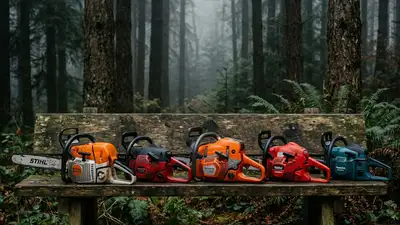
Two questions dominate every chainsaw buying conversation: Stihl vs Husqvarna — which brand wins? And gas vs electric — which type is right for you?
Both debates have real answers. Across our research and published reviews of 50+ chainsaws from both brands and both power sources, we can settle both questions here with real data and honest verdicts — no brand bias.
Quick Answer: Are Battery or Electric Chainsaws as Good as Gas?
For most homeowners — yes, buy electric. Modern 40V–60V cordless chainsaws handle everything a typical homeowner needs: firewood, storm cleanup, pruning, and small tree felling. Choose gas only if you genuinely need professional-grade power, work in remote locations without charging access, or regularly cut trees larger than 12–14 inches in diameter. Over five years, electric is almost always cheaper to run. The full data behind that verdict is below.
Gas vs Electric: Which Power Source?
Once you’ve decided on gas or electric, the second question is which brand — see the Stihl vs Husqvarna face-off at the bottom of this page.
At a Glance: Gas vs Electric
| Feature | Gas Chainsaw | Electric Chainsaw |
|---|---|---|
| Raw Power | Superior | Good–Very Good |
| Run Time | Unlimited (fill up) | Battery or cord limited |
| Portability | Go anywhere | Battery/cord restriction |
| Noise Level | 90–110 dB (very loud) | 70–85 dB (much quieter) |
| Emissions | Exhaust fumes | Zero emissions |
| Maintenance | High (fuel, plugs, carb) | Very low |
| Weight | Heavier (10–16 lbs) | Lighter (7–12 lbs) |
| Cold Start | Pull cord, choke, primer | Press button, done |
| Upfront Cost | Mid–High | Low–High (battery varies) |
| Running Cost | Gas + oil mix | Electricity only |
| Best For | Pros, remote use, large trees | Homeowners, light–medium tasks |
When to Choose Gas
Choose a gas chainsaw if you regularly fell large trees (20”+ diameter), work in remote locations without power access, need all-day non-stop cutting power, or are a professional logger or arborist.
Top Gas Pick: STIHL MS 271 Farm Boss — the most trusted homeowner gas saw on the market.
👉 See Gas Chainsaw Prices on VEVORWhen to Choose Electric
Choose an electric chainsaw if you’re a homeowner doing yard work, pruning, or firewood; want quiet operation for neighbors and HOAs; want zero maintenance headaches; are a beginner who wants something easy and safe; or care about zero emissions.
Top Electric Pick: DEWALT DCCS670X1 60V — gas-like power in a cordless package. For the full lineup of cordless and corded options, see our Best Electric Chainsaw Guide.
👉 See Electric Chainsaw Prices on VEVORThe Cost Breakdown
Gas Chainsaw Costs: Purchase $200-$700+; fuel $10-$20/month; annual maintenance $30-$80; bar oil $10-$15/year.
Electric Chainsaw Costs: Purchase $80-$450 (cordless adds battery cost); electricity is negligible; annual maintenance $5-$15; battery replacement after 3-5 years is $50-$150.
Verdict: Over 5 years, electric is almost always cheaper to run.
Noise: A Bigger Deal Than You Think
Gas chainsaws run at 95–110 decibels — hearing damage in minutes. Electric chainsaws run at 70–85 dB — about a loud vacuum cleaner. If you live in a suburban area or cut early in the morning, electric is the neighborly choice.
Maintenance Reality Check
Gas Maintenance: Mix 2-stroke fuel, clean/replace air filter every 5-10 hours, check/replace spark plug annually, adjust carburetor if rough, drain fuel for storage.
Electric Maintenance: Top up bar and chain oil, check chain tension, clean after use. That’s it.
Bonus: Stihl vs Husqvarna — Which Brand Wins?
For many buyers, the real decision isn’t gas vs electric — it’s Stihl vs Husqvarna. Here’s how the two most trusted chainsaw brands stack up across four head-to-head comparisons.
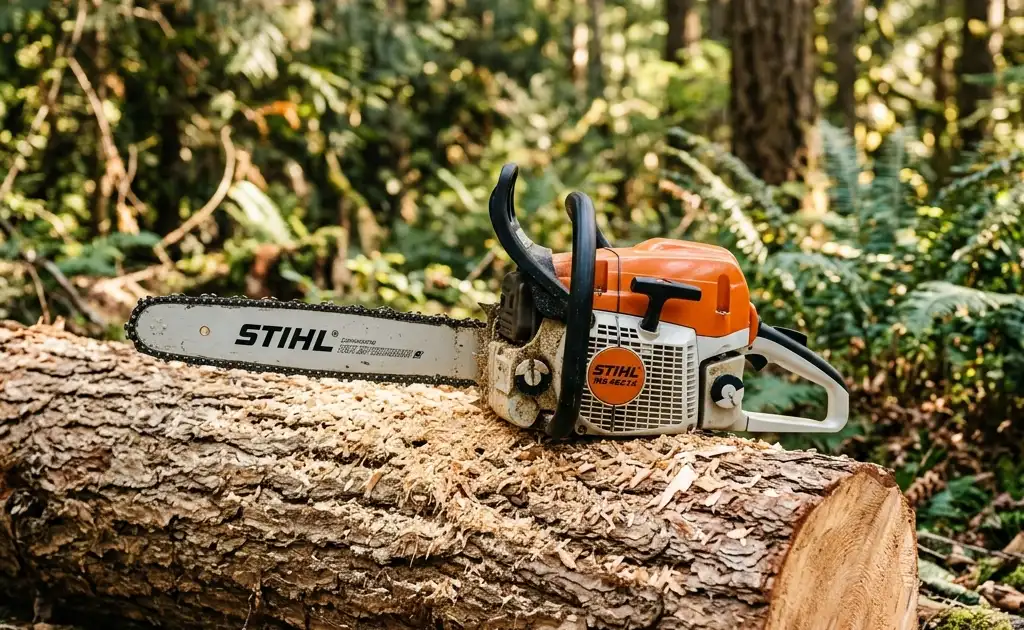
Homeowner Models: Stihl MS 170 vs Husqvarna 120 Mark II
| Feature | Stihl MS 170 | Husqvarna 120 Mark II |
|---|---|---|
| Price | ~$219 | ~$229 |
| Displacement | 30.1cc | 38.2cc |
| Power Output | 1.7 HP | 1.88 HP |
| Weight | 8.6 lbs | 10.7 lbs |
| Bar Length | 14–16” | 14–16” |
| Engine Tech | 2-MIX (Stratified) | X-Torq (Stratified) |
| Start Ease | ⭐⭐⭐⭐⭐ Excellent | ⭐⭐⭐⭐ Very Good |
| Availability | Dealer only | Lowe’s + Dealers |
Verdict: The Husqvarna 120 packs more displacement and HP for roughly the same price. But the Stihl MS 170 is lighter (8.6 lbs vs 10.7 lbs), easier to start cold, and has a deeper dealer support network in the US. For an absolute beginner — go Stihl. For someone who wants more power — go Husqvarna.
Pro Models: Stihl MS 261 C-M vs Husqvarna 550 XP Mark II
| Feature | Stihl MS 261 C-M | Husqvarna 550 XP Mark II |
|---|---|---|
| Price | ~$849 | ~$799 |
| Displacement | 50.2cc | 50.1cc |
| Power Output | 4.0 bhp | 4.0 bhp |
| Weight | 10.8 lbs | 11.7 lbs |
| Engine Tuning | M-Tronic 3.0 | AutoTune 3.0 |
| Crankcase | Magnesium | Magnesium |
Verdict: Nearly identical performance. Stihl is lighter by nearly a full pound — crucial over an 8-hour day. Husqvarna costs $50 less. If you’re a professional arborist, go with whichever brand your dealer specializes in for parts and service.
Brand Reliability
Both brands are exceptional. Stihl’s parts availability and dealer density gives it a slight edge in the US. Husqvarna’s X-Torq/AutoTune systems are arguably more refined in terms of fuel efficiency. Either saw, properly maintained, will outlast any big-box brand by years.
The Verdict
For most homeowners — buy electric.
The technology has caught up. A quality 56V-60V cordless chainsaw handles everything a typical homeowner needs: firewood, storm cleanup, pruning, small tree felling.
Buy gas only if you genuinely need professional-grade power or work in remote locations.
Chainsaw Safety
Whichever you choose, read our Chainsaw Safety Guide. Both types demand respect and proper PPE.
🛒 Shop Gas Chainsaw PartsFor related reviews, see our Stihl MS 271, Echo CS 620P, DeWalt 20V XR chainsaw. Get out there and cut. Safely.
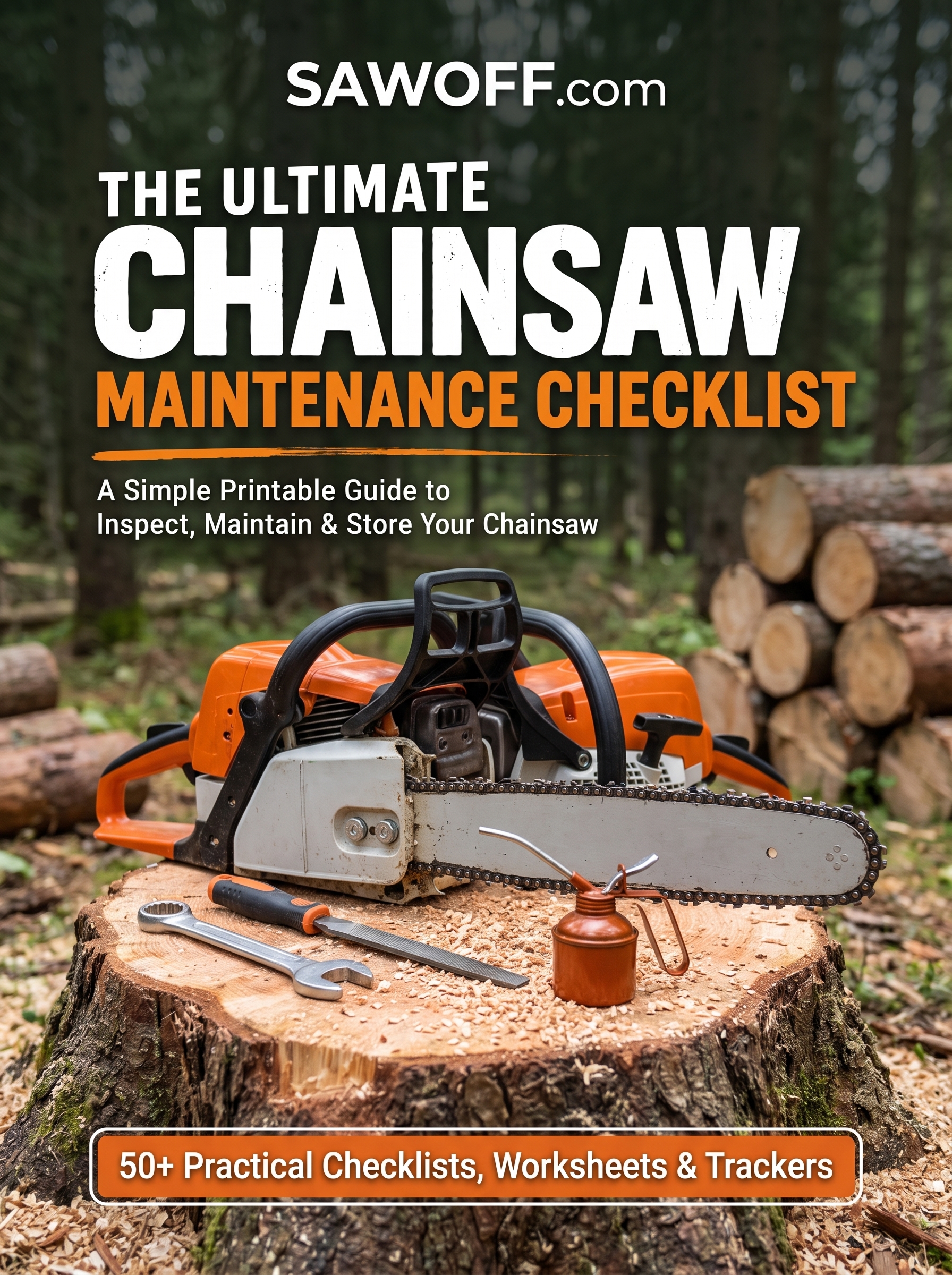
The Ultimate Chainsaw Maintenance Field Toolkit
The complete 96-page printable manual. Avoid costly $400 repairs, master 30°/35°/10° chain sharpening angles, and clear flooded engines in 30 seconds.
- ✓12 In-Depth Modules: Safety checks, service schedules & winterizing
- ✓Chain Sharpening Angles: 30° / 35° / 10° filing charts & raker depth specs
- ✓15 Free Bonus Templates: Angle cheat-sheets, logs & laminated pocket cards
Frequently Asked Questions
Is Stihl or Husqvarna better for homeowners?
Both are excellent. Stihl (MS 170/180) is slightly easier to start and has better dealer support in the US. Husqvarna (120 Mark II/130) is often easier to find at big box retailers like Lowe's. For pure ease of use, Stihl edges ahead for beginners.
Is Stihl more reliable than Husqvarna?
Both brands are among the most reliable in the industry. Stihl is renowned for its longevity in professional settings. Husqvarna's X-Torq engine technology gives it an edge in fuel efficiency and emissions. Neither brand will disappoint with proper maintenance.
Which is cheaper, Stihl or Husqvarna?
At the entry level, they are neck-and-neck. Stihl MS 170 retails around $219. Husqvarna 120 Mark II retails around $229. In the professional tier, Stihl tends to cost slightly more, though pricing varies by region and retailer.
Are electric chainsaws as good as gas?
For most homeowners, yes. Modern 40V-60V cordless chainsaws can handle firewood, storm cleanup, and even small tree felling. Gas still wins for heavy-duty logging and professional use where raw power and extended runtime are essential.
What are the disadvantages of electric chainsaws?
Limited battery runtime (30-45 minutes), less raw power compared to gas, and dependency on battery charging or power outlet access. They also can't match gas saws for very large diameter cuts.
Which is cheaper to run, gas or electric?
Over 5 years, electric is almost always cheaper to run — especially cordless. Gas requires ongoing fuel purchases, oil mix, spark plugs, air filters, and carburetor maintenance.
What size tree can an electric chainsaw cut?
A 40V-60V cordless saw can handle trees up to 12-14 inches in diameter. For anything larger, a gas saw is recommended. Bar length is the limiting factor — most electric saws top out at 16-18 inches.
![Best Electric Chainsaw 2026: 12 Cordless & Corded Picks [Tested]](/_astro/chainsaw-cover.DiHWRlur_1a9kQd.webp)