Review Information
- Reviewed by: Jack Beurge
- Review type: Research-based review
- Testing status: Not personally tested by SAWOFF — based on manufacturer documentation, reputable sources, and documented owner-reported patterns
- Published: October 19, 2026
- Sources: STIHL and Husqvarna chainsaw owner's manuals and parts diagrams · ANSI B175.1 chainsaw safety standard · Oregon Tool guide bar and saw chain technical documentation
Information in this review is labeled as one of four types: 🧪 SAWOFF hands-on test, 🏭 manufacturer specification, 📚 research from reputable sources (including documented owner-reported patterns), or 🧠 editorial assessment. See our testing methodology and editorial policy.
Affiliate Disclaimer: SAWOFF earns commissions from qualifying VEVOR purchases at no extra cost to you.
QUICK ANSWER
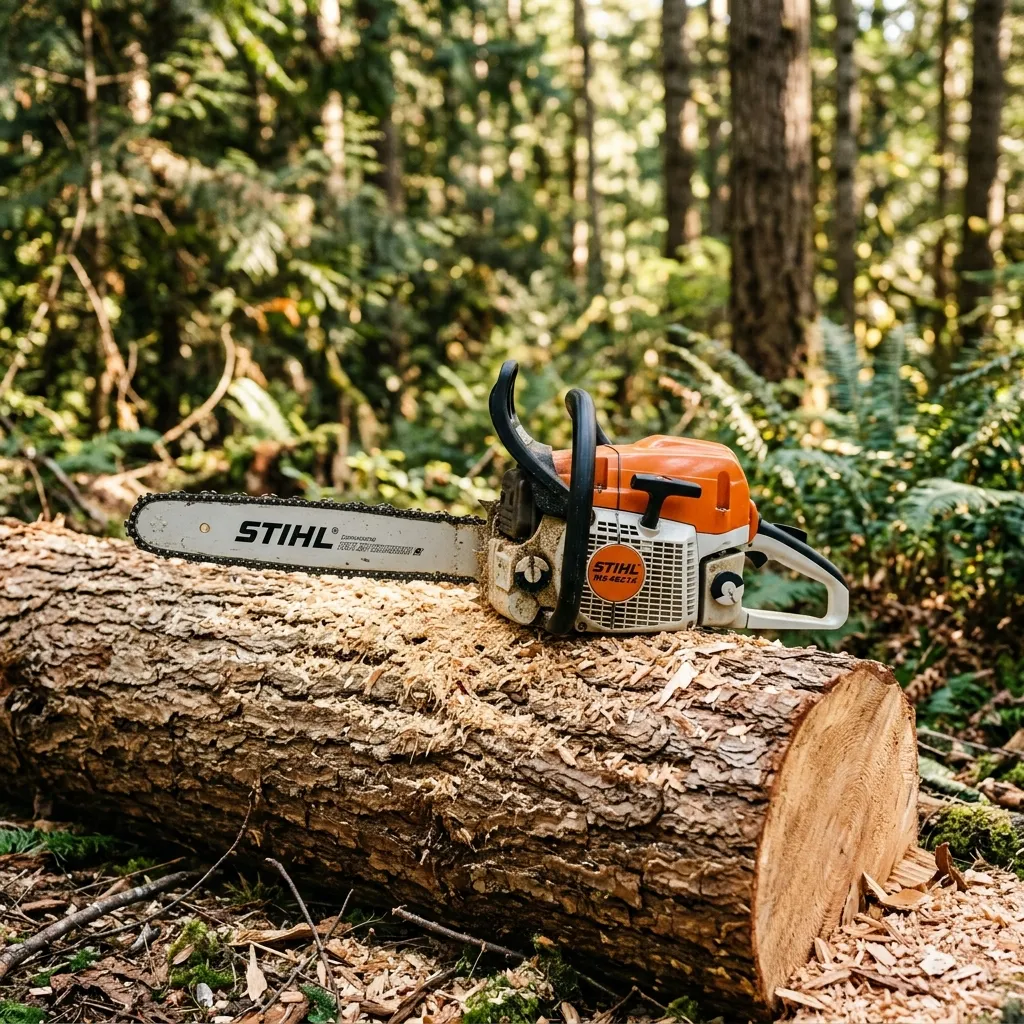
A chainsaw is built from five assemblies: the powerhead (engine, fuel and oil tanks, starter, air filter, and controls), the cutting assembly (guide bar, saw chain, and drive sprocket), the chain brake and hand guards, the anti-vibration mounts, and the bar-mounting hardware. The engine turns a centrifugal clutch that spins the drive sprocket, which pulls the chain around the guide bar. The bar supports the chain and carries oil to the rails; the chain does the cutting. Everything else either feeds the engine, controls the cut, or protects the operator.
Labeled Diagram: Parts of a Chainsaw
The Five Assemblies of a Chainsaw
1. The Powerhead
The powerhead is everything behind the bar. On a gas saw it contains the engine, fuel tank, oil tank, starter, air filter, carburetor or fuel-injection system, muffler, and ignition. On a battery saw it contains the motor, controller, and battery compartment. The powerhead also carries the handles, controls, and mounts.
2. The Cutting Assembly
The cutting assembly is the guide bar, saw chain, and drive sprocket. The sprocket pulls the chain, the bar guides it, and the chain cuts. These three parts wear together, which is why a worn sprocket will destroy a new chain and a worn bar will make a new chain cut crooked.
3. The Chain Brake and Hand Guards
The chain brake, front hand guard, and rear hand guard are safety parts. The front guard activates the brake on kickback, and the rear guard keeps your hand away from the chain if it breaks or derails. Never remove or disable these parts.
4. The Anti-Vibration System
Anti-vibration mounts isolate the engine and bar from the handles. They are rubber or spring elements, and they are the reason a modern saw does not numb your hands after 20 minutes. Worn mounts make the saw feel loose and increase vibration exposure.
5. The Bar-Mounting Hardware
The side cover, bar nuts, tensioner, and sprocket cover hold the bar and chain to the powerhead. The tensioner adjusts chain slack. The bar nuts clamp the bar in place. These are simple parts, but a stripped bar nut or a broken tensioner pin will stop the saw.
Powerhead Parts Explained
Engine (Cylinder, Piston, and Crankshaft)
The engine is a two-stroke, single-cylinder gasoline engine on most chainsaws. Fuel and air enter the crankcase, are compressed in the cylinder, and ignite from a spark plug. The piston drives the crankshaft, which drives the clutch and sprocket. Pro saws use a magnesium crankcase that can be rebuilt; homeowner saws often use a clamshell polymer or aluminum crankcase that is replaced as a unit.
Fuel Tank and Fuel Cap
The fuel tank holds the gasoline and two-stroke oil mix. Most chainsaws run 50:1, but always check the owner’s manual for your model. The fuel cap has a vent to prevent a vacuum lock. A clogged vent causes the saw to stall after a few minutes of running.
Bar Oil Tank and Oil Cap
The oil tank holds bar and chain oil. The oiler pumps it through a port in the bar mount to the bar groove. The oil tank is usually sized to empty at about the same time as the fuel tank. If your saw uses a lot more fuel than oil, check the oiler. See our bar and chain oil guide for flow testing.
Starter Assembly (Recoil Starter)
The starter is the pull-cord mechanism on the side of the powerhead. A spring-loaded pulley spins the flywheel when you pull the handle. Common failures are a frayed rope, a broken return spring, and a worn pawl. Battery saws replace the starter with a trigger and control board.
Air Filter
The air filter keeps sawdust out of the engine. Homeowner saws use a felt or foam filter; pro saws use a pleated or pre-separation filter. A dirty filter causes hard starting, poor acceleration, and piston scoring over time. Clean it after every few tanks in dusty conditions.
Carburetor or Fuel Injection
The carburetor mixes fuel and air. Adjustment screws set idle speed and high-speed mixture. M-Tronic and AutoTune systems adjust the mixture electronically, and the MS 500i uses fuel injection instead of a carburetor. If a saw will not idle or bogs under load, the carburetor or its settings are a common cause.
Muffler
The muffler quiets the exhaust and directs it away from the operator. Some mufflers contain a spark arrestor screen that must be cleaned. A clogged spark arrestor causes a loss of power and hard starting.
Spark Plug and Ignition
The spark plug ignites the fuel mixture. The ignition module controls timing. A fouled plug, a bad coil, or a loose plug boot will cause a no-start or a misfire. Check the plug gap and condition before replacing ignition parts.
Decompression Valve
Large saws have a decompression valve that releases cylinder pressure for easier starting. Press it before pulling the cord on a big saw. If the valve sticks open, the saw will run poorly or not at all.
Cutting Assembly Parts Explained
Guide Bar
The guide bar is a steel rail with a groove that the chain rides in. It has a nose sprocket at the tip, an oil hole, and a tail that mounts to the powerhead. Bars are laminated or solid, and they come in different lengths, pitches, and gauges. Flip the bar every time you sharpen to wear both rails evenly.
Bar Nose Sprocket
The nose sprocket is the small toothed wheel at the tip of the bar. It reduces friction as the chain rounds the nose. A worn or seized nose sprocket causes chain drag, heat, and breakage. Grease it if your bar has a grease hole, and replace the bar if the sprocket is loose or hooked.
Saw Chain
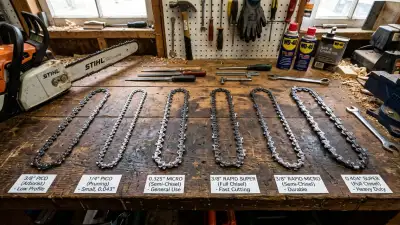
The saw chain is a loop of cutters, depth gauges, tie straps, and drive links. The cutters do the cutting, the depth gauges set the bite depth, and the drive links ride in the bar groove and engage the sprocket. Chain pitch (such as .325 inch or 3/8 inch) and gauge (such as .050 or .063 inch) must match the bar and sprocket.
Drive Sprocket
The drive sprocket is the toothed wheel on the clutch drum that pulls the chain. It wears into a hook shape over time. A worn sprocket causes chain surge, noise, and rapid chain wear. Replace the sprocket with every second or third chain on a working saw.
Centrifugal Clutch
The clutch connects the engine to the sprocket. At idle the clutch shoes retract and the chain stops. As engine speed rises, the shoes press against the clutch drum and spin the chain. A worn clutch causes the chain to creep at idle or slip under load.
Bumper Spikes (Felling Dogs)
Bumper spikes are metal teeth on the front of the powerhead. They give you a pivot point when bucking and help hold the saw steady when felling. They are standard on pro saws and optional on many homeowner models.
Control and Safety Parts
Chain Brake
The chain brake stops the chain in a fraction of a second. It is activated by the front hand guard or by inertia during kickback. Test it before every use by revving the saw briefly and pushing the guard forward; the chain should stop immediately.
Front and Rear Hand Guards
The front hand guard protects your left hand and activates the chain brake. The rear hand guard protects your right hand if the chain breaks or jumps the bar. Both are safety parts and should never be cut, bent, or removed.
Throttle Trigger and Throttle Lockout
The throttle trigger controls engine speed. The throttle lockout is a small lever on the rear handle that must be pressed before the trigger will move. It prevents accidental acceleration when you carry the saw.
Master Control Lever (Choke, Run, Stop)
The master control lever combines choke, fast idle, run, and stop on many STIHL saws. Other brands use a separate choke and kill switch. Learn the positions before you start the saw, and do not force the lever.
Kill Switch
The kill switch grounds the ignition to stop the engine. If the saw will not shut off, the switch or its wire is faulty. Test the switch before every use.
Chain Tensioner
The tensioner moves the bar forward and backward to set chain slack. It is accessed through the side cover on most saws, and some saws use a tool-free tensioner. A loose chain can derail; an over-tight chain overheats the bar and wears the sprocket.
Bar Nuts and Side Cover
The side cover holds the bar and chain to the powerhead. The bar nuts clamp the bar. Check them after the first few cuts on a new chain, because the chain stretches as it seats.
Anti-Vibration Mounts
The AV mounts are rubber or spring elements between the powerhead and the handles. They reduce vibration and fatigue. Check them for cracks or separation if the saw feels loose or vibrates more than usual.
Parts That Wear Out First
| Part | Warning sign | Typical replacement interval | Maintenance guide |
|---|---|---|---|
| Saw chain | Dull cutters, smoke, crooked cuts | After 3-6 sharpenings, or when cutters are worn back | Chainsaw sharpening guide |
| Guide bar | Worn groove, blue rails, loose nose sprocket | 1-5 years depending on use | Chainsaw chain guide |
| Drive sprocket | Hooked teeth, chain surge | Every 2-3 chains | Maintenance toolkit |
| Air filter | Hard starting, poor acceleration | Clean monthly, replace yearly | Maintenance checklist |
| Spark plug | Hard starting, misfire | Yearly or every 50 hours | Chainsaw won’t start |
| Bar oil pump | Dry chain, smoking bar | When flow drops or stops | Bar oil guide |
| AV mounts | Excess vibration, loose handles | 3-5 years | Safety guide |
How the Parts Work Together
The sequence matters when you troubleshoot. Fuel and air enter the engine, the spark plug ignites the mix, and the piston turns the crankshaft. The crankshaft drives the clutch, the clutch drives the sprocket, and the sprocket pulls the chain around the bar. The oiler pumps bar oil into the bar groove to lubricate the chain, and the chain brake stops the whole system if kickback occurs.
That chain of events explains most no-start and poor-cutting problems. If the saw starts but will not cut, the problem is usually the chain, bar, or sprocket, not the engine. If the saw cuts but overheats, the problem is usually oil flow, chain tension, or a dull chain. If the saw will not start, work backward from the spark plug to the fuel system to the air filter.
FAQ
What are the main parts of a chainsaw?
The five assemblies are the powerhead, cutting assembly, chain brake and hand guards, anti-vibration system, and bar-mounting hardware. The powerhead includes the engine, fuel tank, oil tank, starter, air filter, and controls. The cutting assembly includes the guide bar, chain, and drive sprocket.
What are the teeth on a chainsaw chain called?
The cutting teeth are called cutters. Each cutter has a top plate and side plate, with a depth gauge in front. Drive links on the inside of the loop ride in the bar groove and engage the sprocket.
What is the difference between the bar and the chain?
The bar is the steel rail that supports and guides the chain. The chain is the loop that cuts. The bar does not cut; it keeps the chain aligned and carries oil to the sliding surfaces.
What does the chain brake do?
The chain brake stops the chain almost instantly during kickback. It is activated by the front hand guard or by inertia. Test it before every use.
What is the sprocket on a chainsaw?
The drive sprocket is the toothed wheel that pulls the chain. It is driven by the centrifugal clutch and wears into a hook shape over time.
What are bumper spikes used for?
Bumper spikes give the saw a pivot point against the log and keep it stable during bucking and felling. They are standard on pro saws and optional on many homeowner saws.
How often should I replace the bar and chain?
Replace the chain when it can no longer be sharpened or the drive links are worn. Replace the bar when the groove is wide, the rails are uneven, or the nose sprocket is loose. A homeowner may get several seasons from a bar; a pro may replace one yearly.
What is the most common chainsaw part failure?
The most common issues are a dull or improperly tensioned chain, a clogged bar oil port, a worn drive sprocket, and a dirty air filter. Most are maintenance problems rather than defects.
Keep Reading
- Chainsaw maintenance toolkit - the tools that make these parts last.
- Chainsaw safety guide - chain brake, kickback, and PPE.
- Chainsaw chain guide - pitch, gauge, and fitment.
- Chainsaw sharpening guide - keep the cutters sharp.
- Chainsaw bar oil guide - oiler function and overheating.
The Ultimate Chainsaw Maintenance Field Toolkit
The complete 96-page printable manual. Avoid costly $400 repairs, master 30°/35°/10° chain sharpening angles, and clear flooded engines in 30 seconds.
- ✓12 In-Depth Modules: Safety checks, service schedules & winterizing
- ✓Chain Sharpening Angles: 30° / 35° / 10° filing charts & raker depth specs
- ✓15 Free Bonus Templates: Angle cheat-sheets, logs & laminated pocket cards
Frequently Asked Questions
What are the main parts of a chainsaw?
A chainsaw has five main assemblies: the powerhead (engine, fuel tank, oil tank, starter, air filter, and controls), the cutting assembly (guide bar, saw chain, and drive sprocket), the chain brake and hand guards, the anti-vibration mounts, and the bar-mounting hardware (side cover, bar nuts, and tensioner).
What are the teeth on a chainsaw chain called?
The cutting teeth are called cutters. Each cutter has a sharp top plate and side plate, plus a depth gauge (rakers) in front of it that controls how deep the cutter bites. Drive links on the inside of the chain ride in the bar groove and engage the sprocket.
What is the difference between the bar and the chain?
The guide bar is the steel rail that supports and guides the chain. The chain is the loop of cutters and drive links that actually cuts the wood. The bar does not cut; it keeps the chain aligned and carries oil to the sliding surfaces.
What does the chain brake do?
The chain brake stops the chain almost instantly when the front hand guard is pushed forward or when the saw experiences a sudden kickback force. It is a safety device, not a parking brake, and it should be tested before every use.
What is the sprocket on a chainsaw?
The drive sprocket is the toothed wheel on the powerhead that engages the chain's drive links and pulls the chain around the bar. It is driven by the centrifugal clutch, which engages as engine speed rises.
What are bumper spikes used for?
Bumper spikes (felling dogs) are metal teeth on the front of the powerhead. They bite into the log to give you a pivot point and keep the saw stable during bucking and felling. They are standard on pro saws and optional on many homeowner models.
How often should I replace the bar and chain?
Replace the chain when cutters can no longer be sharpened or when drive links are worn. Replace the bar when the groove is worn wide, the rails are uneven, or the nose sprocket is loose or noisy. A homeowner who sharpens regularly may get several seasons from a bar; a pro may replace one yearly.
What is the most common chainsaw part failure?
The most common failures are a dull or improperly tensioned chain, a clogged bar oil port, a worn drive sprocket, and a dirty air filter. Most of these are maintenance problems rather than manufacturing defects.