Review Information
- Reviewed by: Jack Beurge
- Review type: Research-based review
- Testing status: Not personally tested by SAWOFF — based on manufacturer documentation, reputable sources, and documented owner-reported patterns
- Published: September 9, 2026
- Manufacturer: STIHL
Information in this review is labeled as one of four types: 🧪 SAWOFF hands-on test, 🏭 manufacturer specification, 📚 research from reputable sources (including documented owner-reported patterns), or 🧠 editorial assessment. See our testing methodology and editorial policy.
The best STIHL chainsaw for most landowners is the MS 271 Wood Boss; the lighter runner-up for cordwood duty is the MS 250, and pros should skip straight to the MS 362. Every current gas model from the $200 MS 170 to the big-block MS 661 is ranked below — the best STIHL chainsaw is whichever one of these twelve matches your wood, your hands, and your drive to the dealer.
How We Ranked the STIHL Lineup
Priority one is cutting productivity per dollar on real wood — oak rounds, fence posts, storm blowdown — followed by weight you can live with, ease of service, and feature value like M-Tronic or Easy2Start. Street-price ranges are typical 2026 dealer figures. This breakdown slots into our best chainsaws of 2026 master rankings, and the brand-vs-brand question is answered in our STIHL vs Husqvarna comparison. For pricing strategy and negotiable angles, the STIHL price list and cost analysis is the deeper read.
Every STIHL Chainsaw, At a Glance
Weights are powerhead only, minus bar, chain and fuel. Chains listed as shipped on common US configurations.
| Model | cc | Power | Powerhead wt | Common bar | Chain (pitch/gauge) | Typical street |
|---|---|---|---|---|---|---|
| MS 170 | 30.1cc | 1.8 bhp | ~10.1 lb | 16” max | 3/8” Picco / .043” | ~$189–$210 |
| MS 180 | 31.8cc | 2.0 bhp | ~10.7 lb | 16” max | 3/8” Picco / .050” | ~$229–$250 |
| MS 211 C-BE | 35.2cc | 2.3 bhp | ~10.1 lb | 16” (12”–18” range) | 3/8” Picco PM3 / ~.050” | ~$370–$430 |
| MS 250 | 45.4cc | 3.0 bhp | ~10.1 lb | 16”/18” | .325” / .063” | ~$400–$460 |
| MS 271 Wood Boss | 50.2cc | 3.49 bhp | ~12.4 lb | 18” (16”–20”) | .325” RM3 or 3/8” | ~$480–$540 |
| MS 261 C-M | 50.2cc | 4.0 bhp | ~10.9 lb | 16”–20” | .325” / .063” (3/8” capable) | ~$780–$880 |
| MS 291 Farm Boss | 55.5cc | 3.45 bhp | ~12.4 lb | 18” | 3/8” or .325” | ~$540–$620 |
| MS 311 | 59cc | 4.2 bhp | ~13.7 lb | 16”–20” | 3/8” / .050”–.063” | ~$700–$780 |
| MS 362 C-M | 59cc | 4.7 bhp | ~12.3 lb | 18”/20” (to ~25”) | 3/8” RS / .063” | ~$900–$1,000 |
| MS 462 R C-M | 72.2cc | 5.9 bhp | ~13.4 lb | 20”–28” (25” typ.) | 3/8” RS3 / .050”–.063” | ~$1,150–$1,300 |
| MS 661 C-M | 91.6cc | ~7.2 bhp | ~16.3 lb | 18”–28” | 3/8” RS / .063” | ~$1,700–$1,900 |
| MSA 220 C (battery) | 36V | ~40cc-class | ~7.5 lb + battery | 14”/16” | 3/8” Picco / ~.043” | ~$549 bare / ~$700+ kit |
Honorable mention goes to the MSA 300, covered at the bottom of the ranking.
Beware the badge drift on the farm pair: recent STIHL pages attach Farm Boss branding to the 271, older US dealers use Wood Boss for the 271 and Farm Boss for the 55.5cc 291. Distinguish by displacement, not by decal.
The STIHL Lineup, Ranked
1. STIHL MS 271 Wood Boss — Best Overall
Verdict: the saw we hand to nearly every landowner who asks for “a real STIHL,” with our full MS 271 review carrying the deep-dive.
- 50.2cc, 3.49 bhp
- ~12.4 lb powerhead
- 18” default bar, 16”–20” capable
- .325” RM3 chain as shipped (3/8” options exist)
- Long-life air filter system, side tensioner
- Typically $480–$540 street
Where it earns the crown is all-day farm work: firewood, trail clearing, post oak, storm cleanup — the 271 does all of it without the vibration fatigue older farm saws delivered. The long-life filter system stretched intervals seriously; on dusty August oak-cutting days we’ve gone whole sessions without touching the filter door.
Watch-outs: unlike pro saws there is no M-Tronic to hide a marginal tune, so elevation changes demand a dealer carb adjustment; and the .325”/.063” RM3 chain is a narrower-kerf system — don’t re-bar it to 3/8” without checking drive-link counts. It’s heavier (12.4 lb) than the 250, so limbing-only users are spending for capacity they won’t use.
Bottom line: the MS 271 is the best STIHL chainsaw for the broad landowner middle — one saw, every farm job, bought once.
2. STIHL MS 250 — Runner-Up and Best Value Homeowner Saw
Verdict: the lightest serious cordwood saw STIHL makes.
- 45.4cc, 3.0 bhp
- ~10.1 lb powerhead
- 16”/18” bars, .325” pitch / .063” gauge
- Side-access chain tensioning
- Typically $400–$460 street
Best use: the homeowner who cuts 6–10 cords a year with help or patience. Rounds to about 14 inches go cleanly, and at 10.1 lb it stays honest in green oak.
Watch-outs: it shares the .325” system with the 271, so confirm the gauge stamped on the bar before ordering spares; and the fixed oiler runs through bar oil faster in hot weather than the 271’s pump. No toolless quick-tension wheel either — basic tools stay in the truck.
Bottom line: the MS 250 is the STIHL of choice under $500 for anyone who limbs back-and-forth and bucks the ocasional big round.
3. STIHL MS 362 C-M — Best Pro All-Rounder
Verdict: the classic 59cc professional, and the correct step if the 271 ever feels small, covered in the MS 362 review.
- 59cc, 4.7 bhp
- ~12.3 lb powerhead
- 18”/20” bars typical, up to ~25”
- 3/8” Rapid chain, .063” gauge
- M-Tronic engine management, HD2 filtration
- Typically $900–$1,000 street
Best use: paid felling and thinning plus big landowner projects, 20-inch and larger hardwoods. M-Tronic recalibrates for fuel quality and altitude automatically, which quietly rescues winter starts and thin-air work alike.
Watch-outs: the price sits close to double an MS 271 for one more horsepower class, so step up only when tree diameter has a pattern; and the 4.7 bhp turns 3/8” RS chain with authority that novice operators should respect — full chaps and a helmet are not optional gear at this tier.
Bottom line: among STIHL pro saws, the MS 362 is the best all-around timber saw — worth the money for anyone who earns with a saw or clears serious acreage.
4. STIHL MS 261 C-M — Best Lightweight Pro
Verdict: the slim 50cc pro that always feels lighter than its output, detailed in our MS 261 review.
- 50.2cc, 4.0 bhp
- ~10.9 lb powerhead
- 16”–20” bars
- .325” / .063” as shipped, 3/8” capable
- M-Tronic, side tensioner, reversible bumper spikes
- Typically $780–$880 street
Best use: all-day limbing, thinning, and firewood where weight trumps width. Tree crews favor the 261 for exactly the reason homeowners should: hour five of overhead reach is where lighter 30cc homeowner saws drop out of the conversation, and the 261 stays comfortable.
Watch-outs: the 4.0 bhp arrives in a narrow powerband, so chain sharpness matters more than on farm saws — a dull 261 shows its limits fast. Expect the price premium over the MS 271 for pro filtration and M-Tronic that occasional users rarely recoup.
Bottom line: the MS 261 C-M is the STIHL to own if a day’s cutting includes more hands-above-shoulder height than stumps.
5. STIHL MS 462 R C-M — Best Felling Saw
Verdict: the 72cc torque specialist for felling, MS 462 review here.
- 72.2cc, 5.9 bhp
- ~13.4 lb powerhead (lightest in its STIHL class)
- Bars 20”–28”, 25” common on the R wrap-handle
- 3/8” RS3 chain, .050”–.063” gauges
- M-Tronic, lightened slim sprocket cover
- Typically $1,150–$1,300 street
Best use: standing timber in the deep-twenties and any job where a 661’s 16-plus pounds fights the task longer than the extra cc’s reward. The wrap handle on the R gives control for angled felling back-cuts.
Watch-outs: this is a saw whose value disappears below 20-inch daily cutting; and the .050” RS3 setup clogs with gritty sawdust faster than a .063” option, so match gauge to your dirt. If most of your saw’s life is bucking, check the MS 362 first and save $250.
Bottom line: the MS 462 is the best STIHL chainsaw for hands-on timber fallers — the specialist pick in the professional line.
6. STIHL MS 661 C-M — Best for Big Timber
Verdict: the 91.6cc big block and definitive STIHL answer to 28 inches-plus hardwood (full MS 661 review).
- 91.6cc, ~7.2 bhp
- ~16.3 lb powerhead
- Bars 18”–28” (and longer on lightweight variants)
- 3/8” Rapid chain, .063” gauge
- M-Tronic, HD2 filter, decompression start
- Typically $1,700–$1,900 street
Best use: harvest-scale felling and milling where the saw never gets lugged. This is the saw for 30-inch oaks and grand fir; nothing else in the STIHL yard pulls a deep plunge cut with that indifference to resistance.
Watch-outs: the price is a down payment on a weekend; the saw needs an operator trained on reactive forces with genuine long bars; and at 16.3 lb it is the single most physically demanding saw in this ranking. Landowners who might use a 661 annually usually can’t make it pencil — rent or borrow one instead.
Bottom line: the MS 661 is the ceiling of the consumer-reachable STIHL ladder and an appropriate buy about twice a decade for most property owners.
7. STIHL MS 291 Farm Boss — Best Bigger Farm Saw
Verdict: the 55.5cc step up from the 271 chassis for users whose firewood runs big.
- 55.5cc, 3.45 bhp
- ~12.4 lb powerhead
- 18” bar common
- 3/8” or .325” chain options
- Long-life filter system
- Typically $540–$620 street
Best use: cordwood above the MS 250’s comfort and below the pro stable, on the same rugged 50cc-class family architecture as the 271 but with a heavier-muscle 55.5cc displacement. Fence-post cedar, ash, 18-inch oak all sit well within it.
Watch-outs: it weighs the same as the 271 with similar drive-line, so the performance difference is smaller than the displacement math suggests; and the 291’s historically farm-oriented specs lack M-Tronic, meaning manual tuning persists. If your closest competitor saw is the 271, cut rounds on both before the cash leaves the wallet.
Bottom line: the 291 is a good saw in a position where the 271 is already excellent — choose it when 55.5cc’s fiber-mill price spread comes up at the dealer.
8. STIHL MS 311 — Best 20-Inch Firewood Saw
Verdict: the 59cc farm saw that carries a full 20 inches of bar without drama, per the MS 311 review.
- 59cc, 4.2 bhp
- ~13.7 lb powerhead
- Bars 16”–20”
- 3/8” chain, .050”/.063” gauges
- Decompression valve, long-life filtration
- Typically $700–$780 street
Best use: property owners cutting the 16–20 inch oak tier with an occasional oversize round, without pro-tier pricing. The decompression valve and torque curve make restarts and warm-ups manageable on a cold porch.
Watch-outs: 4.2 bhp pushes a 20” bar slower than the MS 362’s 4.7 bhp, and with no M-Tronic the carburetor is a fixed-jet unit; heavy elevation shifts require a jet kit from a dealer. If you never cut beyond 18 inches, the 271 costs less and weighs less, so the 311 has to fight for its spot in the ranking.
Bottom line: the MS 311 is the correct bridge between farm saws and pro saws for mixed 20-inch wood, and the depth below 20 inches belongs to other models.
9. STIHL MS 211 C-BE — Best Light Homeowner Saw
Verdict: the 35.2cc comfort option with Easy2Start and toolless chain adjustment, mid-deck of the homeowner range for the price.
- 35.2cc, 2.3 bhp
- ~10.1 lb powerhead
- 16” typical, 12”–18” range
- 3/8” Picco PM3 chain, ~.050” gauge
- Easy2Start, Quick Chain Adjuster (C-BE features)
- Typically $370–$430 street
Best use: light and mid-duty homeowner work where the fight is in the starting, not the cutting — Easy2Start halves pull force and Quick Chain Adjust drops the screwdriver from the routine. Limb-hauling around a suburban acre plus light firewood sit right in its pocket.
Watch-outs: 35.2cc has a low ceiling in dense rounds — anything near 12-inch oak becomes a long crawl; and the Quick Chain Adjust mechanism adds a part that occasionally needs the dealer. It’s the best small STIHL only if starting difficulty is a real constraint for the user; otherwise the MS 250’s extra horsepower is the better spend at nearly the same price.
Bottom line: the MS 211 C-BE is the right Buy at the top of the small tier for older or lighter-framed operators, and a questionable sell for everyone else.
10. STIHL MS 180 — Best Small Saw for the Yard
Verdict: the classic 31.8cc homeowner workhorse, covered fully in the MS 180 review.
- 31.8cc, 2.0 bhp
- ~10.7 lb powerhead
- 16” max bar
- 3/8” Picco chain, .050” gauge
- Toolless fuel and oil caps; tensioner type varies by variant
- Typically $229–$250 street
Best use: standard suburban and small-town acre chores — hedge saplings, water-sprout limbs, occasional 10-inch rounds. The 2.0-bhp engine pulls the 16” bar honestly through pine and poplar and the powerhead weight keeps it live in longer sessions.
Watch-outs: don’t try to re-trim it as a firewood saw; with a straight weight of only 9 ounces above the MS 170, the 180 exists for the person caught daily between light pruning and real cutting. Chain brake and bar upgrades are wasted at this displacement.
Bottom line: the MS 180 is the smallest STIHL that still feels like a complete saw rather than an appliance, and it earns the price gap over the 170.
11. STIHL MS 170 — Best Budget STIHL
Verdict: STIHL’s cheapest gas saw and a genuinely useful tool for small property work (the MS 170 review says more).
- 30.1cc, 1.8 bhp
- ~10.1 lb powerhead
- 16” max bar
- 3/8” Picco chain, .043” gauge
- Manual fuel-cap design, single-lever start
- Typically $189–$210 street
Best use: kindling, trimming, camp cabins, and the user who wants the STIHL dealer tie-in on the smallest budget. It’s the saw a new chainsaw owner learns bar-drag habits on without risking a $600 machine.
Watch-outs: the .043” PM3 narrow-gauge chain is fine and thin — sharpen it gently with a file, and stock a spare chain from day one because the kerf is easy to nick on a nail. Expect no anti-vibration miracle and no quick tensioner here: hand tools stay mandatory.
Bottom line: the MS 170 is the doorway to STIHL ownership and the correct answer where $200 is the whole budget.
12. STIHL MSA 220 C — Best Battery STIHL
Verdict: the cordless that made gas-to-battery a genuine decision, documented in our STIHL battery guide.
- 36V lithium-ion platform, AP 300 battery
- ~7.5 lb powerhead (about 11–12 lb with the AP 300 installed)
- 14”/16” bars
- 3/8” Picco chain (~.043” gauge)
- Toolless chain adjuster, low-vibration mounting
- Typically $549 bare, ~$700+ with battery and charger
Best use: property work in noise-restricted neighborhoods, close-in storm limbing, and any cutting within earshot of sleeping babies. Compared to 40cc gas units the MSA 220 C closes most of the gap in softwood and most of the gap in short hardwood sessions, and STIHL calls it the most fuel-thrifty saw in its lineup to date, gas included — treat the figure as approximate rather than gospel.
Watch-outs: runtime depends heavily on wood and battery choice — replacement batteries run roughly $200–$250 each to stretch long days; cold weather cuts runtime too, and the chain collects sawdust differently than a wet-cutting gas saw. Anyone bucking more than a tank-and-a-half equivalent per session should keep a second battery stacked in the truck.
Bottom line: the MSA 220 C is the best STIHL chainsaw when silence and starting ease outrank hours-per-torque, and the easiest battery to rationalize.
Honorable Mentions: MSA 300 and the Pro Battery Frontier
The MSA 300 runs the same 36V idea in a package designed for pro arborists — appreciably faster cutting, reduced noise and vibration, at a price that isn’t yet a value for homeowners. It is the battery answer for crews working under urban decibel ordinances. Anyone between the two should know the score: the MSA 220 C is the value; the MSA 300 is the silent capability, not yet the bargain.
Which STIHL Chainsaw Fits Your Job?
| Use case | Best STIHL | Runner-up | Reason |
|---|---|---|---|
| Cordwood to 14” | MS 250 | MS 211 C-BE | 3.0 bhp at 10.1 lb |
| Farm wood to 18” | MS 271 Wood Boss | MS 291 | 3.49 bhp, long-life filter |
| 18”–20” oak | MS 311 | MS 362 | 59cc, 20” bar muscle |
| Paid timber to 20” | MS 362 C-M | MS 462 | M-Tronic torque |
| Felling 24”+ | MS 462 R C-M | MS 661 | 72.2cc at 13.4 lb |
| Big-block hardwood | MS 661 C-M | — | 91.6cc, 28”+ |
| Yard/small tasks | MS 180 | MS 170 | 2.0 bhp, 16” max |
| Quiet property work | MSA 220 C | — | ~40cc-class battery |
| All-day limbing | MS 261 C-M | MS 250 | 4.0 bhp, 10.9 lb |
Is a New STIHL Worth the Price?
The shorthand answer: yes at MS 271-class pricing, no at MS 661 pricing for a homeowner use pattern. STIHL’s dealer network is the actual value — parts, chains, tuning and warranty support in one town where big-box brands have no counter at all. Used MS 250/271 units also hold value unusually well, which blunts the first cost; our price guide and value analysis walks through the whole arithmetic model by model.
Final Verdict: Which Best STIHL Chainsaw Should You Buy?
Definite answers, buyer by buyer:
- Most landowners: MS 271 Wood Boss. One saw, one dealer, total coverage of firewood and farm tasks at $480–$540.
- Light-duty households: MS 250 for real cutting or MS 180/170 for the cheap end; the 211 C-BE when easy starting is the deciding factor.
- Timber paid work: MS 362 C-M as the daily driver, MS 462 R C-M for felling duty, MS 661 C-M only when 28-inch-plus timber is routine.
- Noise-sensitive properties: MSA 220 C with an AP 300 and a full charger kit; the MSA 300 for pro-level silent cutting.
- Anyone cross-shopping by brand: the STIHL vs Husqvarna breakdown runs these same saws against the Rancher family spec by spec.
One closing habit worth its own sentence: whatever STIHL you choose, buy two spare chains in the correct pitch and gauge for it the day you buy the saw — the whole brand promise is uptime, and a dull or missing chain is what actually buys downtime.
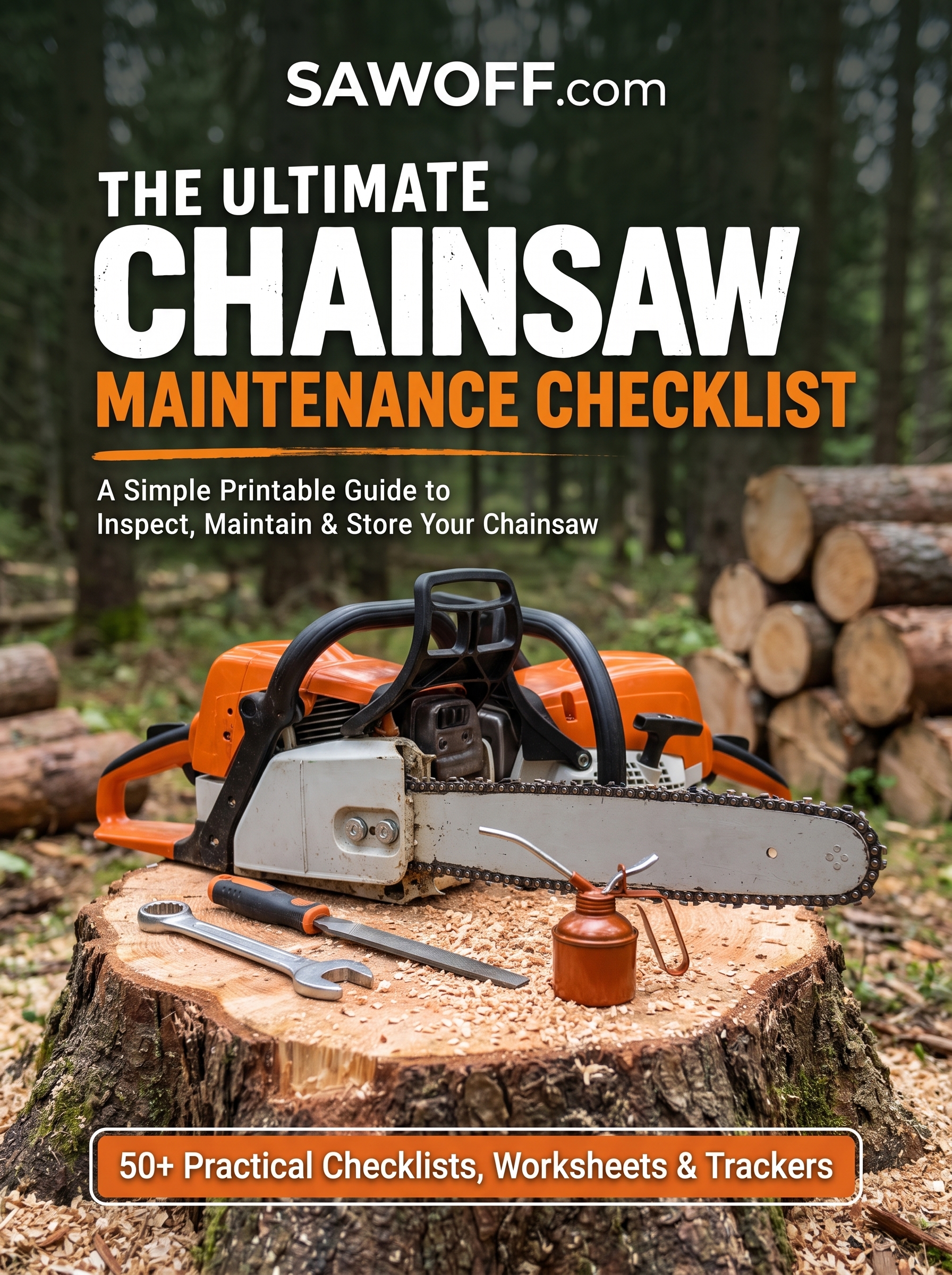
The Ultimate Chainsaw Maintenance Field Toolkit
The complete 96-page printable manual. Avoid costly $400 repairs, master 30°/35°/10° chain sharpening angles, and clear flooded engines in 30 seconds.
- ✓12 In-Depth Modules: Safety checks, service schedules & winterizing
- ✓Chain Sharpening Angles: 30° / 35° / 10° filing charts & raker depth specs
- ✓15 Free Bonus Templates: Angle cheat-sheets, logs & laminated pocket cards
Frequently Asked Questions
Is the STIHL MS 250 good enough for firewood?
Yes for most households. The MS 250 runs 45.4cc and 3.0 bhp with up to an 18-inch .325-inch-pitch bar, which happily spits rounds up to about 14-inch diameter. If oak runs 20 inches or wider, move to the MS 271 Wood Boss or MS 291.
What is the difference between the STIHL Wood Boss and Farm Boss?
Traditionally, Wood Boss is the 50.2cc MS 271 and Farm Boss is the 55.5cc MS 291 — same chassis family, bigger engine and slightly different bar and chain packages. Current STIHL product pages have shifted some Farm Boss branding to the 271 family, so verify the engine displacement on the unit rather than the badge.
Is the STIHL MS 170 powerful enough for real cutting?
For limbing, kindling and storm cleanup on small stems, yes: 30.1cc, 1.8 bhp and a 16-inch bar. For steady cordwood or anything above 12-inch oak, the MS 170 will feel underpowered — the MS 250 is the proper firewood minimum.
Does STIHL make a battery chainsaw that replaces a gas saw?
For light and mid-duty work, close: the MSA 220 C with an AP 300 battery cuts with roughly 40cc-gas-class character on a 16-inch bar, and the 36V MSA 300 serves pro crews. For sustained hardwood bucking, gas still wins on runtime and dollars per hour.
Which STIHL is closest to the Husqvarna 450 Rancher?
The MS 271 Wood Boss in the farm tier, and the lighter MS 250 in the homeowner tier. The 271 makes 3.49 bhp from 50.2cc against the 450 Rancher's 3.2 hp from the same displacement, but usually costs about $50 more street-side.
How much does a STIHL chainsaw cost in 2026?
New gas saws run from about $189 for the MS 170 up to roughly $1,850 for the big MS 661. Most landowners should expect $400 to $560 for the MS 250/271 class. STIHL sells exclusively through servicing dealers, so individual quotes swing a bit, and battery kits cost more once battery and charger are added.