Review Information
- Reviewed by: Jack Beurge
- Review type: Research-based review
- Testing status: Not personally tested by SAWOFF — based on manufacturer documentation, reputable sources, and documented owner-reported patterns
- Published: September 20, 2026
Information in this review is labeled as one of four types: 🧪 SAWOFF hands-on test, 🏭 manufacturer specification, 📚 research from reputable sources (including documented owner-reported patterns), or 🧠 editorial assessment. See our testing methodology and editorial policy.
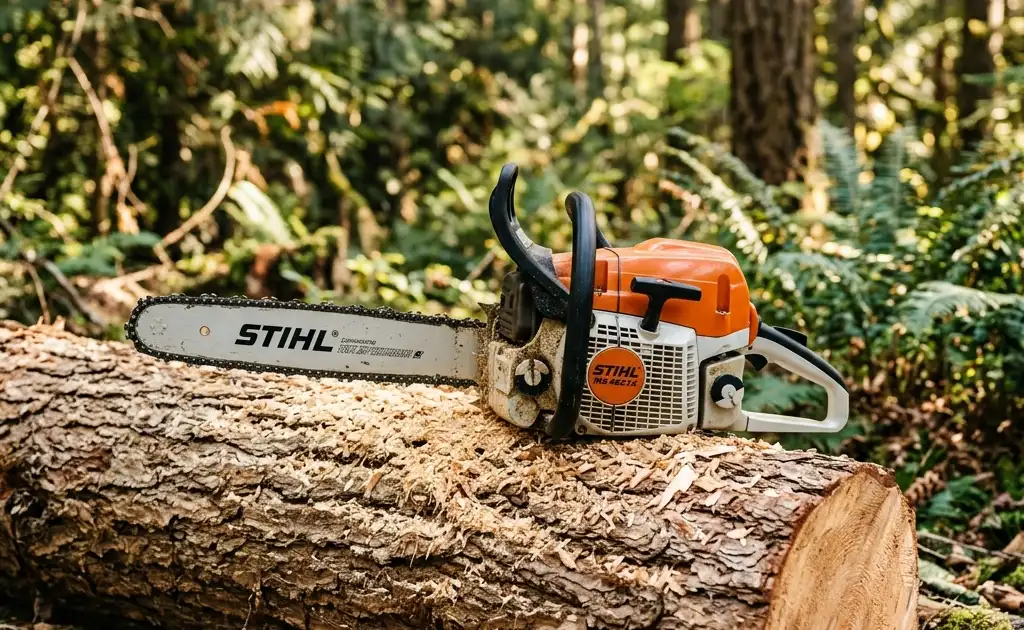
For full-time crews, the best commercial chainsaw in 2026 remains the STIHL MS 462 — a 72.2cc, roughly 5.9 hp felling saw that out-cuts anything near its price in clean timber and survives dirty logging conditions without complaints. Running 25-inch and larger daily wood? The STIHL MS 661 is the step-up. The rankings below cover both giants plus the Husqvarna, ECHO, and Makita alternatives worth your money.
Full-time work holds saws to a different standard than homeowner saws, so this roundup ignores anything built for the farm store. Every ranking position below is a saw a working crew would own twice. Our best professional chainsaws 2026 roundup covers the wider professional spread, and our overall best chainsaws 2026 pillar ranks every class together.
Master spec table: the 7 best commercial chainsaws
| Model | Displacement | Power (approx.) | Default bar | Powerhead weight | Street price (typically) |
|---|---|---|---|---|---|
| STIHL MS 462 | 72.2cc | ~5.9 hp | 20”–25” | ~13.7 lb | $1,100–$1,400 |
| STIHL MS 661 | 91.6cc | ~7.0 hp | 25” | ~14.7 lb | $1,300–$1,700 |
| Husqvarna 572 XP | 70.6cc | ~5.8 hp | 20”–24” | ~14.8 lb | $1,200–$1,500 |
| Husqvarna 562 XP Mark II | 59.8cc | ~4.7 hp | 18” | ~12.1 lb | $1,100–$1,250 |
| STIHL MS 500i | 79.2cc | ~6.6 hp | 25” | ~14.3 lb | $1,400–$1,700 |
| ECHO CS-7310P | 73.5cc | ~5.0 hp | 24” | ~13.5 lb | $1,100–$1,300 |
| Makita EA7900PR | 79cc | ~5.4 hp | 24”–28” | ~13.9 lb | $1,000–$1,300 |
What each spec means in production cutting
- Displacement above 70cc buys felling speed, not just chart bragging — 72cc-class saws bury a bar 25 inches deep and finish in the same second a 50cc climbs halfway through
- Power-to-weight separates arborist saws (562 XP Mark II) from ground-saw felling ranks (MS 462, 572 XP), and that one number decides hand fatigue over a ten-hour shift
- Bar default is a wearing part, not a limit — every saw here accepts one size up and down
One shopping warning before the rankings: professional saws are sold bare (powerhead only, usually “C” or rear-handle SKUs) far more often than homeowner saws, so a $1,200 listed price commonly becomes $1,450 once the bar, chain, and cover you actually need are added. Budget the cutting attachment into every comparison below.
Logging vs tree service vs sawmill: the bonus-saw matrix
| Buyer type | Main felling pick | Bonus saw that earns its rack space | Why the bonus earns its spot |
|---|---|---|---|
| Logging, clean 20–25in timber | STIHL MS 462 | STIHL MS 661 | Kept for the occasional 30in-class overwood and blowdown salvage; a 661 in the truck changes what contracts you can bid |
| Tree service, production thinning | Husqvarna 562 XP | STIHL MS 500i | The injection engine gives the fastest throttle response in elevated 25–28in removals where fuel quality wanders |
| Sawmill yard, bucking and salvage | STIHL MS 661 | Makita EA7900PR | An old-school carbureted 79cc saw shrugged off mill dust and dirty rounds all week; parts are basic two-stroke plumbing |
The 7 best commercial chainsaws, ranked
1. STIHL MS 462 — the standard commercial felling saw
This is the saw crews buy when the boss says “get the 462” and nobody asks a follow-up question. The 72.2cc four-port engine pulls a 25-inch bar through clean fir with almost no drama, and the low-weight clamshell design keeps it nimble in a felling notch where a 60cc-class saw feels like a toy and a 90cc-class saw feels like furniture.
- 72.2cc, roughly 5.9 hp
- About 13.7 lb powerhead — the lightest weight in the 70cc felling class
- Recommended bars 20–25 inches; 28-inch is possible but sacrifices speed
- Two-ring piston and M-Tronic adaptive carburetion rather than full injection electronics
- Typically $1,100–$1,400 street
Pros like it because the saw is fast in the cut and forgiving of operator habits. Long days in punky blowdown don’t punish it because the air filtration design survives dirty conditions better than most.
Orientation for anyone coming from the old guard: the 462 replaced the long-running MS 460 by cutting roughly a pound and a half of weight while holding the torque band. Crews who loved the 460 will recognize the 462 as the same saw that finally went on a diet.
Service and parts: this is where the MS 462 truly wins. Any STIHL dealer truck carries the common failure items, and the engine’s carb-based design means a saw stuck at a remote landing can be cleaned, thrown over, and pulled to life. See our full MS 462 review →
Bottom line: the best commercial chainsaw for most full-time fallers is the MS 462, plain and simple.
2. STIHL MS 661 — falling big wood, feller buncher logistics, salvage work
When the wood is bigger than the crew, the 91.6cc MS 661 is the sensible end of the lineup for hand falling. Roughly 7 hp, a 25-inch stock bar, and torque that holds chain speed hour after hour even when the bar is buried to the nose.
- 91.6cc, roughly 7.0 hp — the biggest STIHL running until you reach the 881
- Recommended for 25–32 inch daily wood; 36-inch bars fit but punish chain life
- Full-wrap front handle standard on most configurations
- Typically $1,300–$1,700; a genuine workshop upgrade from any smaller saw
Pros carry it for fire salvage, blowdown hours, and timber sales where a single 36-inch stem is the difference between a profitable day and a wasted one. MS 661 review broken down here →
Service note: parts cost more per piece than the 462, and 14-plus pounds across a nine-hour shift is real shoulder cost. It is a bonus saw, not a primary, for most crews — but on the right contract it pays its whole price in one week.
3. Husqvarna 572 XP — big-cc felling with AutoTune fueling
Husqvarna’s 70.6cc competitor to the 462-class is now a mature X-Torq design with AutoTune enrichment control that handles altitude and fuel quality without a tools session at the dealer. Cutting character is nearly identical to the STIHL: fast, straight, planted chains in big softwood.
- 70.6cc, roughly 5.8 hp, about 14.8 lb powerhead
- AutoTune self-calibrating fueling — fewer winter and altitude tune-ups
- Recommended bars 20–24 inches in most configurations
- Typically $1,200–$1,500
Why pros run it: the fuel economy is genuinely better than a raw 70cc carb saw, and the X-Torq engine saves a real slice of the fuel bill across a four-season production year. The 572 also earns its rank in storm felling, where hard cold starts are a daily ritual.
Service-wise, bars and chains fall in the widely stocked 3/8 format, Husqvarna’s dealer network now matches STIHL density across most of the US and Canada, and the saw’s fueling needs are simply fewer thanks to the AutoTune system.
4. Husqvarna 562 XP Mark II — the arborist rear-handle workhorse
The 59.8cc Mark II carries a lighter piston assembly, smoother anti-vibration mounts, and AutoTune refinements. Tree crews treat it as the default ground saw above the top-handle ranks; it fells 10–16 inch stems all shift and carries at 12.1 lb like nothing else in this rank.
- 59.8cc, roughly 4.7 hp, about 12.1 lb powerhead
- X-Torq with AutoTune, recommended bar 18–20 inches
- Rear-handle format built for ground work in tree-service operations
- Typically $1,100–$1,250
Buy it for the tree-service crew’s thinning contract or any long tonnage of removed limbs. It is also the transition saw for a ground hand stepping up to a first real rear-handle year. Compare Husqvarna’s full professional line →
Service and parts: chains in this class pull from the widely stocked 3/8 format, and every clutch-side wearing part is available same-day at a Husqvarna dealer. A fuel filter and air filter every forest season keeps these reliable into their tenth year. Check the chain decision against our skip-tooth chain article for pro bucking before your first 20-inch seasonal felling.
5. STIHL MS 500i — fuel-injection technology with real teeth
The MS 500i was the industry’s first production fuel-injected chainsaw, a 79.2cc engine that reports about 6.6 hp — the strongest power-to-weight in the mid-tier class. It costs money, and it rewards it. Throttle response is faster than any carbureted saw here, altitude handling is automatic, and the power in a fallen limb is addictive.
- 79.2cc, roughly 6.6 hp, about 14.3 lb powerhead
- Recommended bar 20–28 inches; 28-inch bucking is comfortable
- Injection electronics require dealer-level support, but clean shops handle every fault in minutes
- Typically $1,400–$1,700
Fit it to elevated removals where a slightly lighter big saw is exactly what you want. Buy the 462 instead if your crew values raw serviceability above throttle response — the 500i has more electronics, and electronics need a dealer that answers the phone.
One more note about altitude: crews working mountain southern pine and high-elevation hardwood report the 500i holds its power band where carbureted saws run rich or lean with every weather change. That is the injection system doing its actual job, and it is why the saw exists at all.
6. ECHO CS-7310P — the value pro felling saw at 73.5cc
ECHO’s 73.5cc pro-class saw generally prices $200–$400 below the STIHL and Husqvarna flagships while turning in nearly the same cut character in softwood. The engine is a high-output professional unit with a chromated cylinder finish and a commercial-grade clutch assembly, and the saw has earned real logging hours in the PNW as the cheap-backup-when-your-main-saw-is-snowbound workhorse.
Pros like the honest internals: a plain, durable, professional crank assembly and clutch shoe design that survives blunt impacts, with no electronics to hide a fault. Some crews deliberately keep one ECHO saw as the contractor backup in the truck for exactly that reason.
Service and parts: ECHO warranties are the strongest in the industry for commercial gear, and consumables (bars, chains, air filters) cost a notch less than genuine STIHL equivalents. Full CS-7310P review →
The honest cut-speed gap: against a 462 in clean fir, the CS-7310P gives up a small margin per cut and the difference compounds over 100 rounds a day. Crews that price their contracts on reliability rather than seconds-per-round will not miss it; production timber fallers will.
7. Makita EA7900PR — old-school reliability, plain carbureted power
The 79cc EA7900PR delivers real big-cc power with a proven workflow: a plain carburetor, a decompression valve, and the ignition/tension design Makita has shipped for over a decade. At $1,000–$1,300 it is the cheapest path to a genuine 79cc-class professional saw in the lineup.
- 79cc, roughly 5.4 hp class
- Recommended bars 24–28 inches for bucking duty
- Plain carbureted two-stroke with all-metal construction and a decompression valve
- Typically $1,000–$1,300
Pros keep it because there is nothing to learn or reprogram. Service is DIY-friendly plumbing and ignition work, and parts show up at any Makita dealer or two-stroke hardware counter. Full EA7900PR review →
The honest trade: Makita’s dealer network is thinner than STIHL’s or Husqvarna’s in rural logging country, and the engine gives up a little top-end speed against the 572 XP-class competition. If your region has a decent Makita counter, the price difference more than covers the gap.
What separates a $400 saw from a $1,000 commercial saw
- Engine internals: forged crankshaft, two-ring piston, chrome-plated cylinder walls — built around 2,000 hours of production cutting
- Weight and vibration: pro saws damp wider shocks and cut faster per pound, saving real back and hand cost over a thousand hours
- Dealer and parts depth: same-day bar, chain, and clutch parts keep a felled crew from losing a day to a thin parts shelf
- Cutting torque under load: the cheap saw stalls or browns out mid-notch; the commercial saw pulls
- Warranty: flagships universally run a one-year commercial warranty, not the two-homeowner copies
Deciding between the STIHL and Husqvarna flags? Our best STIHL chainsaws roundup and best Husqvarna chainsaws roundup rank each brand’s whole home-and-pro spread.
Which one should you buy?
Full-time logging in 20-to-25-inch timber: buy the STIHL MS 462 and never explain it to anyone. Big wood, salvage, fire crews: spend on the STIHL MS 661 first, then add a Makita EA7900PR as the mill yard backup. Tree service production work: Husqvarna 562 XP Mark II on the ground with the MS 500i as your elevated heavyweight. Budget-limited startup crews: the ECHO CS-7310P is the honest commercial saw that respects $1,100. Mixed crews at altitude: the MS 500i’s automatic fueling will feel like magic every snowy morning.
Whichever saw you pick, match it to the bar and chain plan before the first seasonal contract — our skip-tooth chain guide for pros covers the felling-side options, and the complete pro logging gear checklist keeps the PPE and accessory side of the business covered.
The Ultimate Chainsaw Maintenance Field Toolkit
The complete 96-page printable manual. Avoid costly $400 repairs, master 30°/35°/10° chain sharpening angles, and clear flooded engines in 30 seconds.
- ✓12 In-Depth Modules: Safety checks, service schedules & winterizing
- ✓Chain Sharpening Angles: 30° / 35° / 10° filing charts & raker depth specs
- ✓15 Free Bonus Templates: Angle cheat-sheets, logs & laminated pocket cards
Frequently Asked Questions
What is the best commercial chainsaw?
The STIHL MS 462 is the standard answer for full-time felling: a 72.2cc professional saw at roughly 5.9 hp and around 13.7 lb powerhead weight. It out-cuts everything near its price in clean timber, and STIHL's dealer network keeps parts moving during a season. Choose the MS 661 instead when your daily wood runs 25 inches and above.
How many cc does a professional chainsaw need?
Most production felling happens in the 60-to-75cc class, which is why the MS 462, Husqvarna 572 XP, and ECHO CS-7310P dominate. Tree service crews favor the 50-to-60cc rear-handle saws like the Husqvarna 562 XP for all-day weight savings. Anything below 50cc is a limbing or homeowner saw, not a commercial feller.
Is the STIHL MS 500i good enough to buy instead of an MS 462?
The MS 500i uses fuel injection rather than a carburetor, which gives it slightly stronger power-to-weight and faster throttle response at altitude. It costs more and needs dealer attention if the injection system ever faults. For most felling crews the carbureted MS 462 is the more practical buy; the 500i suits crews spending serious time at elevation or in high-production hardwood.
What bar length do commercial chainsaws use?
20-inch bars are the production default on 70cc-class felling saws, with 25-inch bars common on the MS 661 and 572 XP. Arborist rear-handle saws typically run 18 inches for weight and balance. Mill-yard bucking saws go longer only when the wood radius demands it, since every extra inch of bar costs speed and increases chain damage risk.
Are Husqvarna pro saws as good as STIHL pro saws?
Yes, at the 60-to-70cc class the Husqvarna 562 XP and 572 XP are genuine peers of the MS 462, with AutoTune fuel systems and strong dealer coverage. STIHL still wins the biggest-wood category with the MS 661, the MS 881, and the .404-class saws. Brand loyalty aside, both brands ask comparable parts prices, and nothing in this weight class is built badly anymore.