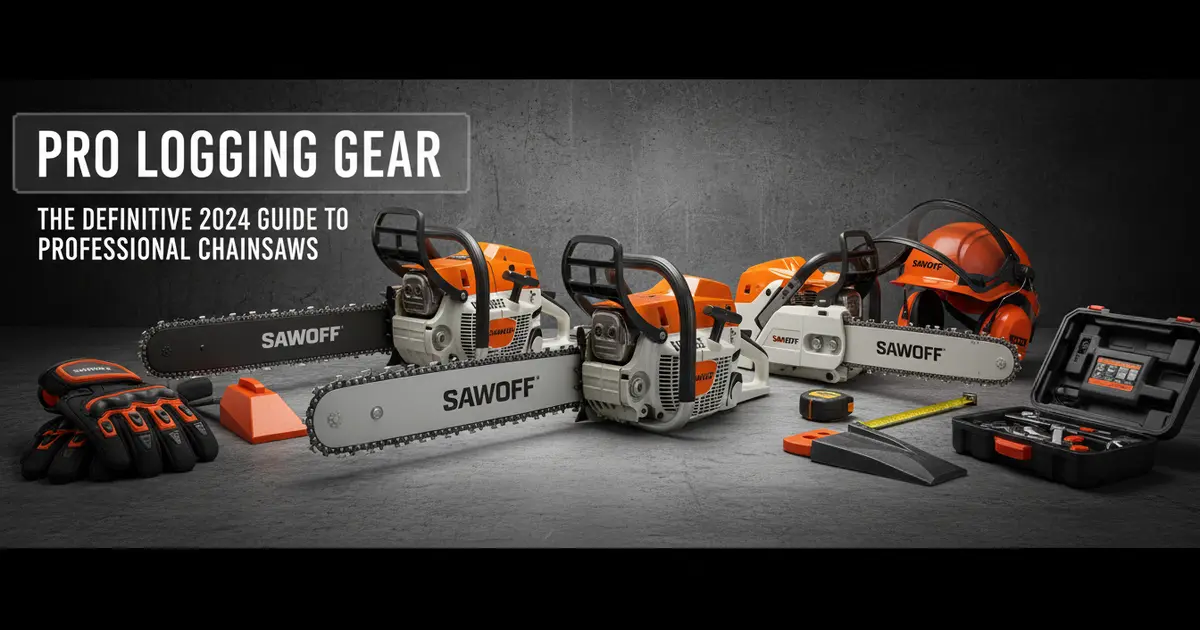
Pro Logging Gear: A Brutal, No-Nonsense Review of Professional Chainsaws
If you’ve ever spent ten hours in the woods bucking hardwood until your forearms felt like lead and your ears wouldn’t stop ringing, you know that there is a massive, unforgiving chasm between “homeowner grade” and true Pro Logging Gear. I’ve been swinging a saw for fifteen years, from the dense timber of the Pacific Northwest to the frozen oaks of New England. I’ve seen saws that look pretty on a showroom floor disintegrate after two weeks of real-world felling.
When we talk about “Pro Logging Gear,” we aren’t talking about something you buy at a big-box store to trim your hedges. We are talking about magnesium crankcases, high-performance decompression valves, and power-to-weight ratios that would make a race car engineer blush. This isn’t just a review; it’s a technical autopsy of what makes a professional saw survive the daily grind.
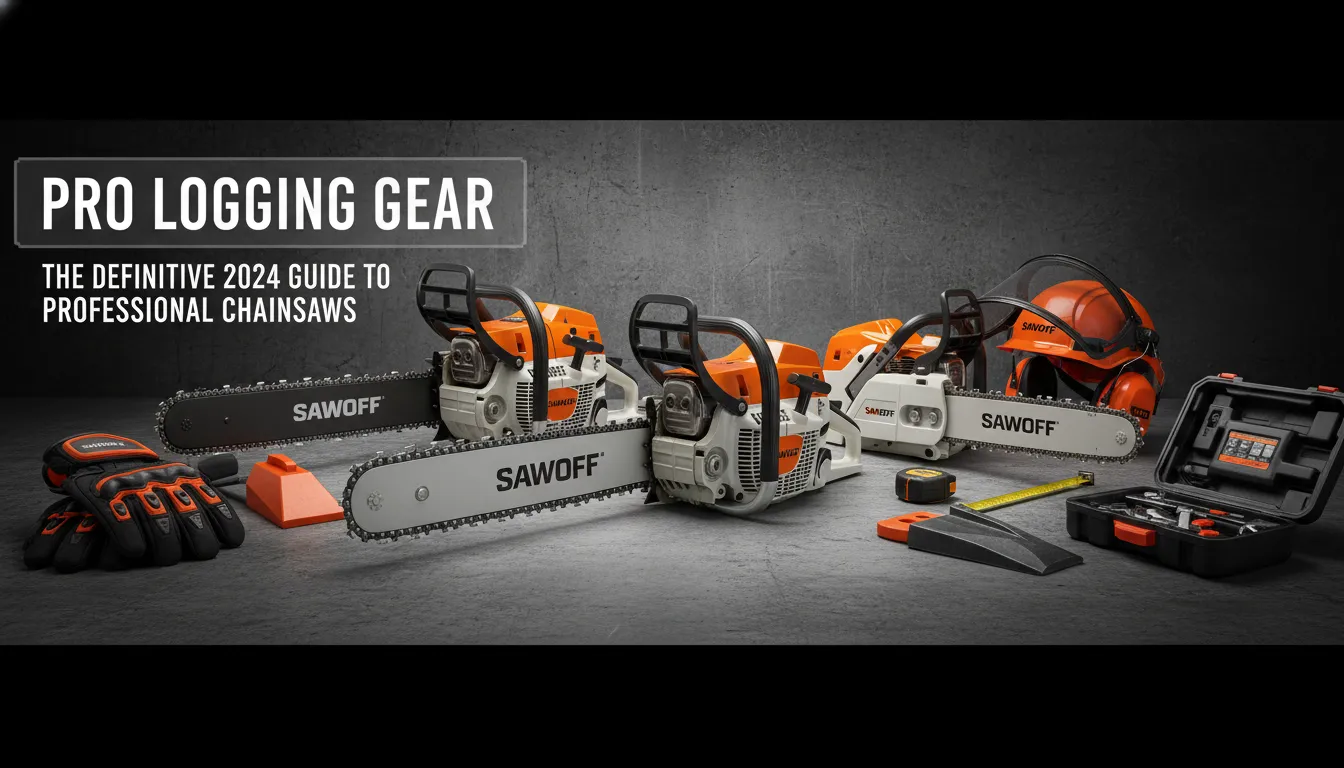
The Hierarchy of Timber: Pro Logging Gear Comparison
Before we dive into the guts of these machines, let’s look at how the top-tier professional logging saws stack up against the benchmarks we’ve tested previously at SAWOFF.
| Model | Displacement | Power Output | Weight (Powerhead) | Primary Use | Check Price |
|---|---|---|---|---|---|
| The Gold Standard | 72.2 cc | 6.0 bhp | 13.2 lbs | Heavy Felling | 🛒 View on Amazon |
| Stihl MS 261 | 50.2 cc | 4.0 bhp | 10.8 lbs | Limbing/Thinning | 🛒 View on Amazon |
| Echo CS 590 | 59.8 cc | 3.9 bhp | 13.2 lbs | Farm/Prosumer | 🛒 View on Amazon |
| Husqvarna 460 | 60.3 cc | 3.62 bhp | 12.8 lbs | Heavy Ranch Work | 🛒 View on Amazon |
Technical Engineering Deep-Dive: What’s Under the Hood?
When you pay a premium for pro logging gear, you aren’t just paying for the name. You are paying for metallurgy and fluid dynamics. Let’s break down the internals that separate the pros from the amateurs.
Magnesium vs. Plastic: The Crankcase Debate
Most consumer saws use a “clamshell” engine design where the bottom half of the crankcase is integrated into the plastic housing of the saw. That’s fine for cutting firewood once a year. But for professional logging, it’s a death sentence. True professional saws utilize a split-case magnesium design.
Why magnesium? Heat dissipation and structural rigidity. When you’re running a 32-inch bar buried in a frozen maple, the heat generated is immense. A magnesium crankcase maintains its tolerances under extreme thermal stress, ensuring that the crankshaft bearings stay perfectly aligned. If those bearings move even a fraction of a millimeter due to heat-warped plastic, your seals go, your saw leans out, and you’ve got a seized piston before lunch.
The Combustion Cycle: Scavenging and Fuel Layering
Modern professional saws have to balance EPA regulations with the raw power loggers demand. This is achieved through stratified scavenging. In a standard 2-stroke, some of the fresh fuel-air mixture escapes through the exhaust port before it can be burned.
In high-end Pro Logging Gear, a layer of fresh, fuel-free air is injected between the burnt exhaust gases and the new fuel charge. This “air buffer” pushes the exhaust out without wasting fuel. The result? 20% lower fuel consumption and significantly more torque at the top end. When I first switched to a stratified charge saw, I noticed the “grunt.” You can lean into the wood, and the engine doesn’t bog; it just digs deeper.
Filtration Systems: Centrifugal Air Cleaning
Logging is a dusty, filthy business. If you’re cleaning your air filter every two tanks of gas, you’re losing money. Pro saws use centrifugal air cleaning (often branded as “Air Injection” or “G-Force”). The cooling fan acts as a centrifuge, slinging the heavier dust and wood chips outward before they ever reach the primary filter.
On a recent job in a dry, dusty pine stand, I ran a professional-grade saw for three days straight without needing to knock the dust off the pleated HD2 filter. Comparing that to something like the Husqvarna 440, which requires much more frequent attention, the difference in uptime is staggering.
Real-World Performance: The “Log-Side” Experience
Specs on a sheet are one thing, but how does this gear feel when the chips are flying?
Bucking and Torque Delivery
I took a 70cc professional saw into a stand of downed white oak—some of the densest wood you’ll find in the Northeast. Bucking these logs into 18-inch rounds is the ultimate test of sustained torque.
The “snap” of a professional saw is unmistakable. When you blip the throttle, the chain doesn’t just move; it screams to life instantly. This is thanks to lightweight, high-silicon aluminum pistons that reduce reciprocating mass. While bucking, I found that I could apply significant downward pressure—more than I’d ever dare with an Echo CS 400—and the saw just hummed. It’s a rhythmic, visceral experience. You feel the vibration through the handles, but it’s high-frequency and dampened, not the bone-shaking rattle of a cheap saw.
Bore Cutting and Felling Precision
For professional loggers, the bore cut (or plunge cut) is a daily necessity for felling leaners or managing tension. This requires a saw with zero “bar walk” and an incredibly responsive throttle.
Because pro logging gear is balanced with the center of gravity directly under the front handle, you can pivot the saw with surgical precision. When I plunged the bar into the heart of a 30-inch fir, the anti-vibration springs absorbed the “kickback” chatter that usually plagues smaller saws. The result was a clean, level hinge that gave me total control over the direction of the fall.
Ergonomics & Operator Comfort: The 10-Hour Shift
You don’t realize how important ergonomics are until you hit the 8-hour mark. Pro logging gear is designed with “operator fatigue” as a primary engineering constraint.
Handle Geometry and Vibration Dampening
Most pro saws use a heavy-duty spring-based anti-vibration (AV) system rather than the rubber bushings found on homeowner models. Rubber degrades over time, especially when exposed to bar oil and gasoline. Springs stay consistent.
The handle sweep on a professional saw is also wider, allowing for better leverage when limbing. I’ve noticed that after a full day with a pro-grade saw, my “white finger” (Raynaud’s phenomenon) is significantly less pronounced. The heating element in some “G” or “VW” models (heated handles) is a godsend in sub-zero temperatures, keeping your blood flowing and your grip sure.
Weight Distribution: The “Swing”
A saw might weigh 13 lbs on the scale, but if it’s nose-heavy, it will feel like 20 lbs by noon. Pro logging gear is perfectly balanced so that when you hold it by the top handle, the bar sits almost level or slightly nose-up. This makes “limbing”—the process of removing branches from a felled tree—much faster. You’re swinging the saw in a pendulum motion, and a balanced machine does half the work for you.
Historical Context: The Evolution of the Professional Saw
Professional logging gear didn’t just appear out of thin air. It’s the result of decades of competition between Swedish and German engineering. In the 1970s, a “pro” saw was a heavy, vibrating monster that required a mechanic’s degree to keep running.
The introduction of electronic ignition and later, electronic fuel management (like Stihl’s M-Tronic or Husqvarna’s AutoTune), changed the game. We moved from the legendary, albeit heavy, Stihl 044 and Husqvarna 272XP to machines that are lighter, more powerful, and smarter. Today’s pro saws automatically adjust the carburetor based on altitude, fuel quality, and air filter clogging. As someone who grew up carrying a small screwdriver in my pocket to tune the “H” and “L” screws every time the weather changed, this technology feels like magic.
Maintenance & Serviceability: Built to be Fixed
One of the biggest “pro” features is that these saws are designed to be rebuilt, not replaced.
- Captive Bar Nuts: If you’ve ever dropped a bar nut in three feet of snow while changing a chain, you’ll appreciate captive nuts. They stay attached to the sprocket cover.
- External Sprockets: Many pro saws use a rim sprocket system. Instead of replacing the whole clutch drum when the teeth wear down, you just slide off a $5 rim sprocket.
- Tool-less Access: While I prefer a solid screw for the air filter cover, many pro saws now use high-tension clips that allow you to swap a filter in thirty seconds without taking your gloves off.
If you’re looking for a saw that’s easier to maintain for a casual user, you might look at the Stihl MS 250, but for the professional, the modularity of pro gear is unbeatable.
Hardware Specs: The Raw Data
For the gearheads, here is the breakdown of what constitutes a top-tier professional logging saw:
- Engine Type: 2-Stroke, Stratified Charge
- Displacement Range: 50cc (Limbing) to 120cc (Giant Timber)
- Crankcase Material: Die-cast Magnesium
- Cylinder Coating: Nikasil (Nickel Silicon Carbide) for extreme wear resistance
- Chain Pitch: .3/8-inch or .404” for heavy-duty cutting
- Oil Pump: Adjustable, gear-driven (does not pump at idle)
- Decompression Valve: Standard for easy starting
- Ignition: Digital with rev-limiter
Pros & Cons: The SAWOFF Edge
Pros:
- Unmatched Power-to-Weight: You get the most “grunt” for every pound you carry.
- Infinite Rebuildability: Every single part, from the crank to the carb, can be replaced.
- Precision Handling: Designed for professional felling techniques.
- Advanced AV Systems: Saves your joints from long-term vibration damage.
Cons:
- Prohibitive Cost: Expect to pay 2x to 3x more than a homeowner saw.
- Steep Learning Curve: These saws are powerful and unforgiving; they require professional training to operate safely.
- Fuel Sensitivity: High-performance engines require high-octane fuel and high-quality synthetic oil (I recommend a 50:1 mix with ethanol-free gas).
Final Verdict: Is Pro Logging Gear Worth It?
If you are cutting five cords of firewood a year, a pro saw is a luxury you probably don’t need. You’d be better served by a Stihl MS 271 or a Husqvarna 455 Rancher.
However, if your livelihood depends on the wood you put on the ground, or if you simply demand the absolute best tool for the job, Pro Logging Gear is the only choice. The speed, the reliability, and the sheer joy of using a perfectly tuned professional machine cannot be overstated. It is the difference between “working hard” and “working smart.”
SAWOFF Rating: 4.9 / 5
🛒 Shop Professional Logging SawsFAQ: Professional Logging Gear Technical Questions
1. Why do professional loggers use a 50:1 fuel mix?
Most modern professional saws are designed to run on a 50:1 ratio using high-quality synthetic oil. This provides the perfect balance of lubrication for high-RPM operation (13,000+ RPM) while minimizing carbon buildup on the piston crown and exhaust port.
2. Can I put a long bar on a small pro saw?
Just because it fits doesn’t mean you should. A 50cc pro saw like the Stihl MS 261 is happiest with a 16-18 inch bar. Putting a 24-inch bar on it will overtax the oil pump and lead to premature engine wear.
3. What is “M-Tronic” or “AutoTune”?
These are electronic engine management systems. They eliminate the need for manual carburetor adjustments by using a microprocessor to monitor engine speed and temperature, adjusting the fuel solenoid hundreds of times per second.
4. My pro saw won’t start when hot. What’s wrong?
This is often “vapor lock,” where the fuel in the lines turns to gas due to heat. Ensure you are using fresh, high-octane fuel. Also, check your spark plug gap; pro saws are very sensitive to ignition timing.
5. Why is my chain getting dull so fast in frozen wood?
Frozen wood is significantly harder than “green” wood. You may need to adjust your sharpening angle from the standard 30 degrees to 25 degrees to give the tooth more “meat” and durability.
6. How often should I replace the rim sprocket?
A good rule of thumb is to replace the rim sprocket every two to three chains. A worn sprocket will damage the drive links of a new chain, leading to a “hooked” profile that wastes power.
7. Is it worth buying a used professional saw?
Only if you know how to pressure and vacuum test a crankcase. A used pro saw may look fine but have a small air leak that will cause it to “lean out” and explode the first time you put it in a big log.
8. What’s the best way to clean a professional air filter?
For the heavy-duty pleated filters (like the Stihl HD2), use warm soapy water or a dedicated degreaser. Allow it to air dry completely before reinstalling. Never use compressed air at high pressure, as it can create microscopic holes in the filter media.
Frequently Asked Questions
Why do professional loggers use a 50:1 fuel mix?
Most modern professional saws are designed to run on a 50:1 ratio using high-quality synthetic oil. This provides the perfect balance of lubrication for high-RPM operation (13,000+ RPM) while minimizing carbon buildup on the piston crown and exhaust port.
Can I put a long bar on a small pro saw?
Just because it fits does not mean you should. A 50cc pro saw like the Stihl MS 261 is happiest with a 16-18 inch bar. Putting a 24-inch bar on it will overtax the oil pump and lead to premature engine wear.
What is M-Tronic or AutoTune?
These are electronic engine management systems. They eliminate the need for manual carburetor adjustments by using a microprocessor to monitor engine speed and temperature, adjusting the fuel solenoid hundreds of times per second.
My pro saw won't start when hot. What is wrong?
This is often vapor lock, where the fuel in the lines turns to gas due to heat. Ensure you are using fresh, high-octane fuel. Also, check your spark plug gap; pro saws are very sensitive to ignition timing.
Why is my chain getting dull so fast in frozen wood?
Frozen wood is significantly harder than green wood. You may need to adjust your sharpening angle from the standard 30 degrees to 25 degrees to give the tooth more meat and durability.
How often should I replace the rim sprocket?
A good rule of thumb is to replace the rim sprocket every two to three chains. A worn sprocket will damage the drive links of a new chain, leading to a hooked profile that wastes power.