Review Information
- Reviewed by: Jack Beurge
- Review type: Research-based review
- Testing status: Not personally tested by SAWOFF — based on manufacturer documentation, reputable sources, and documented owner-reported patterns
- Published: October 19, 2026
- Manufacturer: STIHL
- Sources: STIHL USA product pages and owner's manuals, 2026 model year · STIHL dealer price sheets and published U.S. retail listings, 2026 · STIHL MSA battery chainsaw specifications and AP battery system documentation
Information in this review is labeled as one of four types: 🧪 SAWOFF hands-on test, 🏭 manufacturer specification, 📚 research from reputable sources (including documented owner-reported patterns), or 🧠 editorial assessment. See our testing methodology and editorial policy.
Affiliate Disclaimer: SAWOFF earns commissions from qualifying VEVOR purchases at no extra cost to you.
QUICK ANSWER
STIHL’s 2026 gas lineup runs from the $189 MS 170 to the $2,199 MS 881, with the MS 250, MS 251, and MS 271 covering the $400 to $550 sweet spot for most homeowners and farms. Pro users step into the MS 261 C-M around $700, the MS 362 C-M and MS 400 C-M around $900 to $1,100, and the MS 462 C-M, MS 500i, and MS 661 C-M above $1,100. Battery models (MSA 140 through MSA 300) cost $300 to $800 for the bare tool and $450 to $1,000 as a kit. Prices below are typical U.S. street ranges compiled from published dealer and retail listings - STIHL does not publish a single national price, and dealers set the final number.
STIHL Chainsaw Price Chart for 2026
Every current gas model, sorted from smallest to largest. Weights are powerhead only, without bar, fuel, or oil. Bar lengths are the common dealer setups, not the absolute maximum.
| Model | Class | Displacement | Power | Weight | Common bar | Typical 2026 price |
|---|---|---|---|---|---|---|
| MS 170 | Homeowner | 30.1cc | 1.8 bhp | 10.1 lb | 16” | $189-$229 |
| MS 180 | Homeowner | 31.8cc | 2.0 bhp | 10.7 lb | 16” | $229-$269 |
| MS 180 C-BE | Homeowner | 31.8cc | 2.0 bhp | 10.8 lb | 16” | $259-$299 |
| MS 211 | Homeowner | 35.2cc | 2.3 bhp | 10.1 lb | 16” | $369-$419 |
| MS 250 | Homeowner/farm | 45.4cc | 3.0 bhp | 10.1 lb | 16”-18” | $399-$469 |
| MS 251 | Homeowner/farm | 45.6cc | 3.0 bhp | 10.8 lb | 16”-18” | $429-$499 |
| MS 271 | Farm | 50.2cc | 3.49 bhp | 12.4 lb | 16”-20” | $479-$549 |
| MS 291 | Farm | 55.5cc | 3.45 bhp | 12.4 lb | 18”-20” | $529-$619 |
| MS 311 | Farm | 59.0cc | 4.2 bhp | 13.7 lb | 16”-20” | $699-$779 |
| MS 391 | Farm | 64.1cc | 4.4 bhp | 14.1 lb | 20” | $779-$879 |
| MS 261 C-M | Pro | 50.2cc | 4.0 bhp | 10.9 lb | 16”-20” | $699-$769 |
| MS 362 C-M | Pro | 59.0cc | 4.7 bhp | 12.3 lb | 18”-25” | $899-$999 |
| MS 400 C-M | Pro | 66.8cc | 5.4 bhp | 12.8 lb | 20”-25” | $999-$1,099 |
| MS 462 C-M | Pro | 72.2cc | 5.9 bhp | 13.4 lb | 20”-28” | $1,149-$1,399 |
| MS 500i | Pro | 79.2cc | 6.6 bhp | 14.3 lb | 20”-28” | $1,399-$1,699 |
| MS 661 C-M | Pro | 91.6cc | 7.2 bhp | 16.3 lb | 25”-36” | $1,699-$1,899 |
| MS 881 | Pro | 121.6cc | 8.6 bhp | 21.8 lb | 36”-59” | $1,899-$2,199 |
Two things jump out from the chart. First, the price steps are not linear with displacement: the jump from the MS 291 to the MS 311 buys a bigger chassis and more torque, but the jump from the MS 311 to the MS 391 is mostly displacement. Second, the pro saws are not just more powerful - they use magnesium crankcases, better filtration, and serviceable components, which is why an MS 261 costs more than an MS 311 despite having fewer cc.
STIHL Chainsaw Sizes Chart by Bar Length
STIHL sizes get discussed in bar inches, but the bar is only half the decision. This chart shows which current models are commonly set up with each bar length and what that setup actually cuts. Treat the model lists as typical dealer configurations, not the absolute maximum each powerhead will pull.
| Bar length | Common STIHL models | Typical wood diameter | Best use |
|---|---|---|---|
| 12 in | MSA 140 C-B, MS 170, MS 180 | up to 6 in | Pruning, limbing, camp wood |
| 14 in | MSA 160 C-B, MS 170, MS 180, MS 211 | 6-8 in | Small firewood, yard cleanup |
| 16 in | MS 170 through MS 291, MSA 220 C-B | 8-10 in | The homeowner default |
| 18 in | MS 250, MS 251, MS 271, MS 291, MS 311, MS 261, MS 362 | 9-12 in | Best all-round firewood setup |
| 20 in | MS 271, MS 291, MS 311, MS 391, MS 261, MS 362, MS 400, MS 462, MS 500i | 10-14 in | Farm and firewood default |
| 24 in | MS 391, MS 362, MS 400, MS 462, MS 500i, MS 661 | 12-18 in | Big firewood and felling |
| 28 in | MS 462, MS 500i, MS 661, MS 881 | 14-20 in | Production felling |
| 36 in+ | MS 661, MS 881 | 18 in and up | Milling and old-growth |
The sizing rule behind the chart is simple: a bar should be about twice the diameter of the wood you buck most often, and the engine class has to match the bar. An 18-inch bar wants a 45-60cc saw, a 20-inch bar wants 50-60cc, a 24-inch bar wants 60-75cc, and anything 28 inches or longer belongs on a 90cc-class powerhead. Buying the longest bar a saw will accept is how people end up with a starved powerhead and a saw that cuts slower than the smaller model next to it.
If you are measuring an existing bar rather than shopping by model, our bar and chain measuring guide shows the called-length method, and the bar length guide goes deeper on matching bar size to wood.
STIHL Chainsaw Comparison Chart (All Models)
This side-by-side chart adds the two numbers the price chart leaves out: power-to-weight and chain pitch. Power-to-weight is the honest way to compare a homeowner saw with a pro saw, because it shows how much engine you get for the weight you carry all day.
| Model | cc | Power | Weight | Power/weight | Bar | Chain | Best for |
|---|---|---|---|---|---|---|---|
| MS 170 | 30.1 | 1.8 bhp | 10.1 lb | 0.18 | 16” | 3/8 P | Pruning, small firewood |
| MS 180 | 31.8 | 2.0 bhp | 10.7 lb | 0.19 | 16” | 3/8 P | Yard cleanup |
| MS 180 C-BE | 31.8 | 2.0 bhp | 10.8 lb | 0.19 | 16” | 3/8 P | Easy-start homeowner saw |
| MS 211 | 35.2 | 2.3 bhp | 10.1 lb | 0.23 | 16” | .325 | Light firewood |
| MS 250 | 45.4 | 3.0 bhp | 10.1 lb | 0.30 | 16”-18” | .325 | Firewood value |
| MS 251 | 45.6 | 3.0 bhp | 10.8 lb | 0.28 | 16”-18” | .325 | Hardwood firewood |
| MS 271 | 50.2 | 3.49 bhp | 12.4 lb | 0.28 | 16”-20” | .325 | Farm all-rounder |
| MS 291 | 55.5 | 3.45 bhp | 12.4 lb | 0.28 | 18”-20” | .325 | Bigger firewood |
| MS 311 | 59.0 | 4.2 bhp | 13.7 lb | 0.31 | 16”-20” | .325 | Storm and farm work |
| MS 391 | 64.1 | 4.4 bhp | 14.1 lb | 0.31 | 20” | .325 | Heavy firewood |
| MS 261 C-M | 50.2 | 4.0 bhp | 10.9 lb | 0.37 | 16”-20” | .325 | Pro thinning |
| MS 362 C-M | 59.0 | 4.7 bhp | 12.3 lb | 0.38 | 18”-25” | 3/8 | Pro all-day saw |
| MS 400 C-M | 66.8 | 5.4 bhp | 12.8 lb | 0.42 | 20”-25” | 3/8 | Fast pro firewood |
| MS 462 C-M | 72.2 | 5.9 bhp | 13.4 lb | 0.44 | 20”-28” | 3/8 | Production felling |
| MS 500i | 79.2 | 6.6 bhp | 14.3 lb | 0.46 | 20”-28” | 3/8 | Fuel-injected pro saw |
| MS 661 C-M | 91.6 | 7.2 bhp | 16.3 lb | 0.44 | 25”-36” | 3/8 | Big timber |
| MS 881 | 121.6 | 8.6 bhp | 21.8 lb | 0.39 | 36”-59” | .404 | Milling, old-growth |
The pattern is clear: homeowner and farm saws sit between 0.18 and 0.31 bhp per pound, while pro saws run 0.37 to 0.46. The MS 500i tops the lineup, which is exactly what its price and fuel-injection system promise. The MS 261 is the interesting outlier - it posts a better ratio than any farm saw at the same displacement, because the magnesium crankcase and pro porting cut weight while holding power. The MS 881 drops back to 0.39 on purpose: big saws trade ratio for torque, durability, and the ability to pull a 36-inch bar through old-growth hardwood.
Treat these ratios as manufacturer figures for comparison, not dyno results. Two saws with the same rating can feel different in the cut depending on chain, bar length, and tune.
STIHL Battery Chainsaw Prices (MSA Lineup)
The MSA saws run on STIHL’s 36V AP battery system. Bare-tool prices are for the saw only; kits add an AP battery and charger.
| Model | System | Gas-equivalent class | Weight with battery | Bar | Bare tool | Kit |
|---|---|---|---|---|---|---|
| MSA 140 C-B | 36V AP | ~25cc | 9.5 lb | 12” | $299-$349 | $449-$549 |
| MSA 160 C-B | 36V AP | ~30cc | 10.4 lb | 14” | $349-$399 | $499-$599 |
| MSA 220 C-B | 36V AP | ~40cc | 11.7 lb | 16” | $549-$599 | $699-$799 |
| MSA 300 C-O | 36V AP | ~45cc | 13.2 lb | 16”-18” | $699-$799 | $849-$999 |
Battery weight depends on which AP pack you use, so the numbers above are approximate. The MSA 300 is the only one in this group that feels close to a 45cc gas saw in sustained cutting; the MSA 140 is a pruning and cleanup tool. See our STIHL battery chainsaw guide for runtime and platform details.
MS 250 vs MS 251: The Price/Performance Anchor
The MS 250 and MS 251 are the two saws most buyers should compare first. They share the same basic 45cc-class architecture, the same .325-inch chain family, and the same 50:1 fuel mix, but they are not identical.
- MS 250: 45.4cc, 3.0 bhp, about 10.1 lb. Typically $399 to $469 with a 16- or 18-inch bar. It is the older design, still sold in many dealerships, and it has a light, simple feel that suits occasional users.
- MS 251: 45.6cc, 3.0 bhp, about 10.8 lb. Typically $429 to $499. The Wood Boss badge signals a slightly stronger low-end tune and a more modern chassis. It is the better pick if you cut hardwood or run an 18-inch bar most of the time.
Both are clamshell-engine homeowner saws, which means they are not designed to be rebuilt after a major failure. That is the trade-off for the price. If you cut more than four or five cords a year, step up to the MS 271 or MS 291 and get a more durable farm chassis. Our MS 250 review covers the real-world limits of the smaller saw.
What Each Price Tier Actually Buys
Under $300: homeowner and pruning
The MS 170, MS 180, and MS 180 C-BE are limbing and small-firewood saws. They start easily, weigh about 10 pounds, and run 16-inch bars. They are not the right tool for repeated 16-inch hardwood bucking, but they are excellent for pruning, storm cleanup, and occasional camp wood. The MS 211 adds a little displacement and an easy-start system for about $370.
$400 to $550: the homeowner sweet spot
This is where most buyers land. The MS 250 and MS 251 deliver enough torque for 12- to 16-inch logs without the weight of a farm saw. The MS 271 is the first real step up: 50.2cc, a stronger chassis, and a broad dealer support network for about $480 to $550. If you cut one to three cords a year, one of these three is the rational choice.
$550 to $900: farm, ranch, and light pro
The MS 291, MS 311, and MS 391 add displacement and weight for bigger firewood and storm work. The MS 261 C-M is the outlier here: a 50.2cc professional saw that weighs less than the MS 271 and costs more. Buy it if you want pro-grade filtration and a saw you can rebuild, not because you need more cc. The MS 362 C-M at 59cc is the classic all-day pro saw.
$1,000 and up: production and big timber
The MS 400 C-M, MS 462 C-M, MS 500i, MS 661 C-M, and MS 881 are working saws. The MS 400 is the firewood enthusiast’s upgrade, the MS 462 is the standard production felling saw, the MS 500i adds fuel injection, and the MS 661 and MS 881 handle the biggest wood. None of these make sense for a homeowner who cuts a few cords a year - the weight and cost only pay off in daily use.
How STIHL Pricing Works in 2026
STIHL sells through independent servicing dealers rather than big-box stores. That has three consequences:
- The dealer sets the final price. Manufacturer suggested prices exist, but setup fees, bar and chain upgrades, tax, and local competition change the out-the-door number.
- Promotions are seasonal. Spring and fall dealer events often include a free extra chain, a case, or a discounted second battery. Ask before you pay list price.
- Battery kits change the math. A bare MSA saw looks cheap until you add an AP battery and charger. If you already own STIHL AP batteries, the bare tool is the better buy.
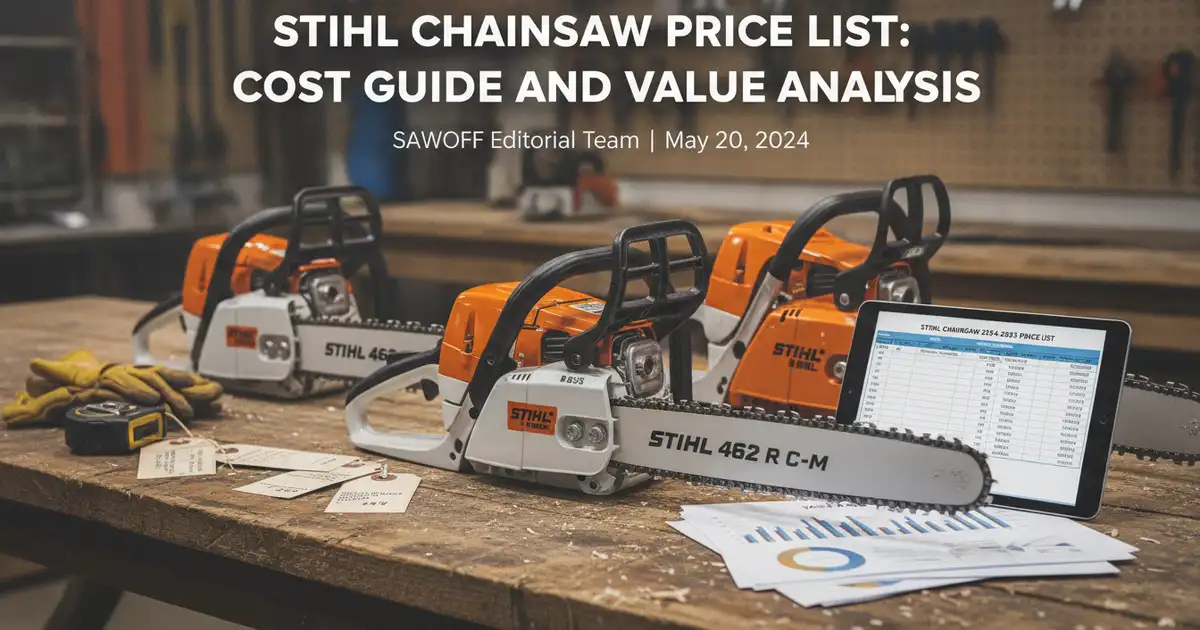
Used prices are another factor. A clean MS 261 or MS 362 typically sells for 60 to 75 percent of new, and pro saws hold value better than homeowner clamshell models. Check compression, pull the muffler and look for piston scoring, and confirm the M-Tronic or fuel-injection system has no stored faults before buying used. For used values, battery kit costs, and the full out-the-door budget, see our STIHL price list and value guide.
Which STIHL Chainsaw Should You Buy?
- First saw, light yard work: MS 170 or MS 180.
- Firewood, one to three cords a year: MS 250 or MS 251.
- Firewood, four or more cords a year: MS 271 or MS 291.
- Storm cleanup and farm work: MS 311 or MS 391.
- Professional thinning and felling: MS 261 C-M or MS 362 C-M.
- Production felling in 20- to 25-inch timber: MS 462 C-M.
- Big hardwood, milling, or old-growth: MS 661 C-M or MS 881.
- Battery-first homeowner: MSA 220 C-B, or the MSA 300 if you need the most power.
Still deciding between brands? Our STIHL vs Husqvarna comparison breaks down the matched pairs, and the STIHL buyers guide walks through bar length, chain pitch, and dealer support. If you want the full model-by-model verdicts, start with best STIHL chainsaws.
FAQ
What STIHL chainsaw size do I need?
Match the bar to the wood you cut most often, then match the engine to the bar. A 16- to 18-inch bar covers most homeowner firewood, a 20-inch bar suits 50-60cc farm saws, a 24-inch bar wants a 60-75cc saw, and 28 inches or more belongs on a 90cc-class pro powerhead. The sizes chart above lists the common model pairings for each bar length.
Which STIHL chainsaw has the best power-to-weight ratio?
The MS 500i leads the current lineup at about 0.46 bhp per pound, with the MS 462 C-M and MS 661 C-M close behind at 0.44. Pro saws generally run 0.37 to 0.46 bhp per pound, while homeowner and farm saws sit between 0.18 and 0.31. The ratio matters most when you carry the saw all day, not when you cut for an hour.
How much should I budget for a STIHL chainsaw?
Budget $250 to $350 for a light homeowner saw, $450 to $600 for a firewood saw with an extra chain and oil, and $800 to $1,200 for a pro saw before accessories. Add $150 to $250 if you choose a battery model and need a battery and charger.
Do STIHL saws go on sale?
Dealer promotions are common in spring and fall, but deep discounts are rare. The better move is to ask for a spare chain, a case, or free setup rather than a lower sticker price.
Is the MS 391 discontinued?
The MS 391 remains in the lineup in 2026, but availability varies by dealer. It sits between the MS 311 and the pro MS 362 in price and uses a larger 64.1cc engine. If your dealer cannot get one, the MS 311 or MS 362 is the next logical choice.
What chain do STIHL saws use?
Homeowner and farm saws typically use .325-inch pitch chain with .063-inch gauge. Pro saws move to 3/8-inch pitch. Always match the pitch and gauge stamped on your bar, and see our chainsaw chain guide before buying a replacement.
Where are STIHL chainsaws made?
Most STIHL gas saws sold in the U.S. are assembled at the Virginia Beach, Virginia plant, using a mix of domestic and imported parts. Some models and battery products come from STIHL plants in Germany or Austria. Check the label on the specific saw if origin matters to you.
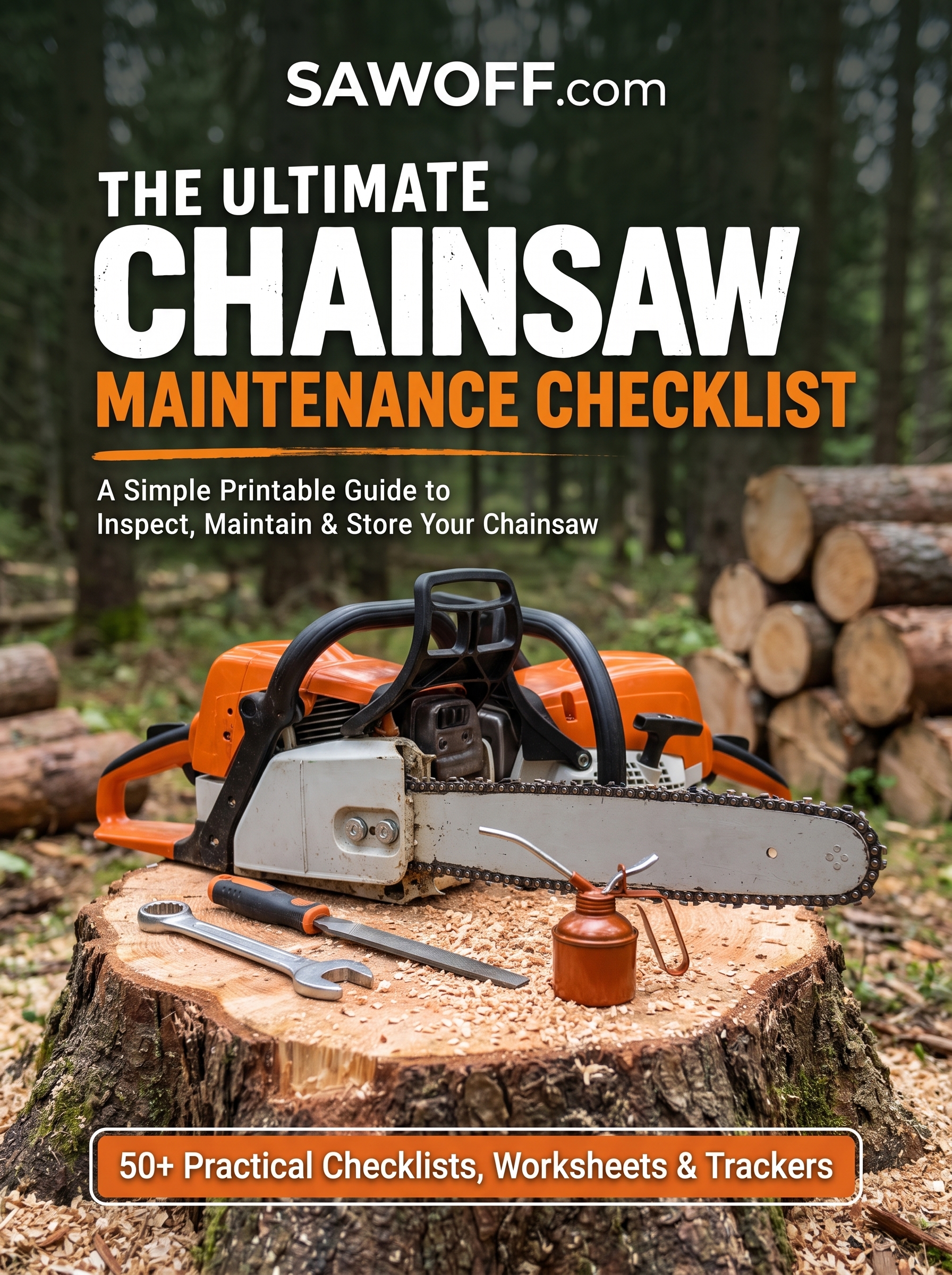
The Ultimate Chainsaw Maintenance Field Toolkit
The complete 96-page printable manual. Avoid costly $400 repairs, master 30°/35°/10° chain sharpening angles, and clear flooded engines in 30 seconds.
- ✓12 In-Depth Modules: Safety checks, service schedules & winterizing
- ✓Chain Sharpening Angles: 30° / 35° / 10° filing charts & raker depth specs
- ✓15 Free Bonus Templates: Angle cheat-sheets, logs & laminated pocket cards
Frequently Asked Questions
How much does a STIHL chainsaw cost in 2026?
Gas models run from about $189 for the MS 170 to roughly $2,199 for the MS 881. Most homeowners spend $400 to $550 on an MS 250, MS 251, or MS 271. Pro saws start near $700 for the MS 261 C-M and climb past $1,400 for the MS 500i and MS 661. Battery saws cost $300 to $800 for the bare tool, or $450 to $1,000 as a kit with battery and charger.
What is the cheapest STIHL chainsaw?
The MS 170 is the least expensive gas model at roughly $189 to $229. The MSA 140 C-B is the entry battery saw at about $299 to $349 for the bare tool, but you need an AP battery and charger if you do not already own them.
What is the difference between the MS 250 and MS 251?
The MS 250 uses a 45.4cc engine and weighs about 10.1 lb. The MS 251 Wood Boss uses a 45.6cc engine, weighs about 10.8 lb, and is tuned for a little more low-end torque. Both run 16- to 18-inch bars and .325-inch chain. The 251 is the newer homeowner/farm saw; the 250 remains a strong value where dealers still stock it.
Is the MS 271 worth it over the MS 250?
Yes if you cut several cords a year or regularly buck 14-inch-plus hardwood. The MS 271 has a 50.2cc engine, more torque, and a stronger chassis for about $80 to $100 more. For occasional limbing and small firewood, the MS 250 or MS 251 is enough.
What is the biggest STIHL chainsaw?
The MS 881 is the largest current gas model at 121.6cc and about 8.6 hp, built for milling and old-growth felling. The MS 661 C-M at 91.6cc is the largest saw most pro fallers will use day to day.
Are STIHL chainsaw prices fixed?
No. STIHL sells through independent servicing dealers, so the price you pay can vary with setup, tax, promotions, and local competition. The ranges here are typical U.S. street prices, not a guaranteed quote. Battery kits and bar upgrades move the total more than the powerhead price does.
Do STIHL battery chainsaws come with a battery?
Most MSA models are sold as bare tools. Kits include an AP battery and charger and cost roughly $150 to $250 more. If you already own AP batteries from a trimmer or blower, buy the bare tool.
Which STIHL chainsaw is best for milling?
The MS 881 is the dedicated milling saw, with the displacement and oiling capacity for long bars. The MS 661 C-M is the practical choice for occasional milling with a 25- to 36-inch bar. Both need an auxiliary oiler on the mill for bars over about 36 inches.
What STIHL chainsaw size do I need?
Match the bar to your wood: half the bar length should equal the diameter you cut most often. A 16- to 18-inch bar covers most homeowner firewood, a 20-inch bar suits farm and firewood work on 50-60cc saws, a 24-inch bar needs a 60-75cc saw, and 28 inches or more belongs on a 90cc-class pro powerhead.
Which STIHL chainsaw has the best power-to-weight ratio?
The MS 500i leads the current lineup at about 0.46 bhp per pound, followed closely by the MS 462 C-M and MS 661 C-M at 0.44. Pro saws generally run 0.37 to 0.46 bhp per pound, while homeowner and farm models sit between 0.18 and 0.31. Power-to-weight is only one factor; durability and torque still matter more for daily work.