Review Information
- Reviewed by: Jack Beurge
- Review type: Research-based review
- Testing status: Not personally tested by SAWOFF — based on manufacturer documentation, reputable sources, and documented owner-reported patterns
- Published: July 28, 2026
Information in this review is labeled as one of four types: 🧪 SAWOFF hands-on test, 🏭 manufacturer specification, 📚 research from reputable sources (including documented owner-reported patterns), or 🧠 editorial assessment. See our testing methodology and editorial policy.
Introduction
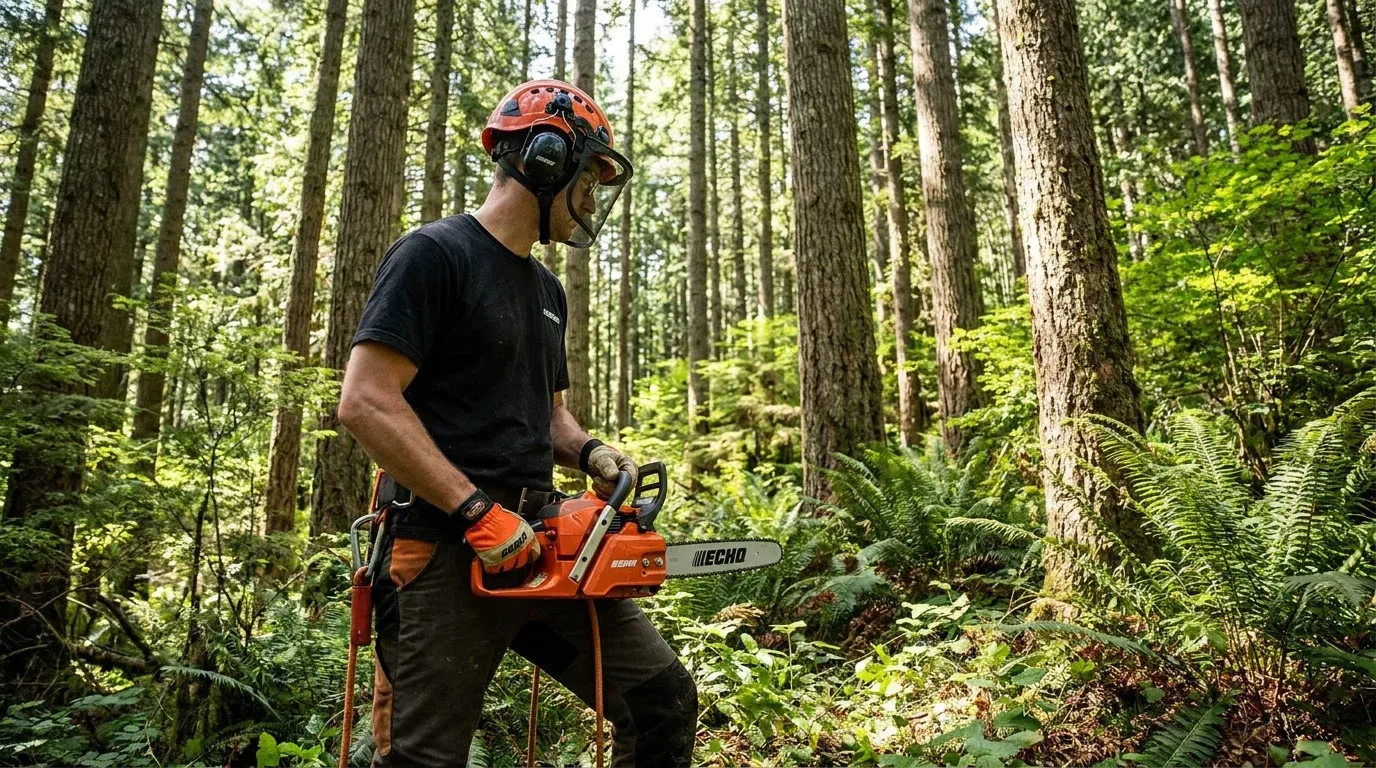
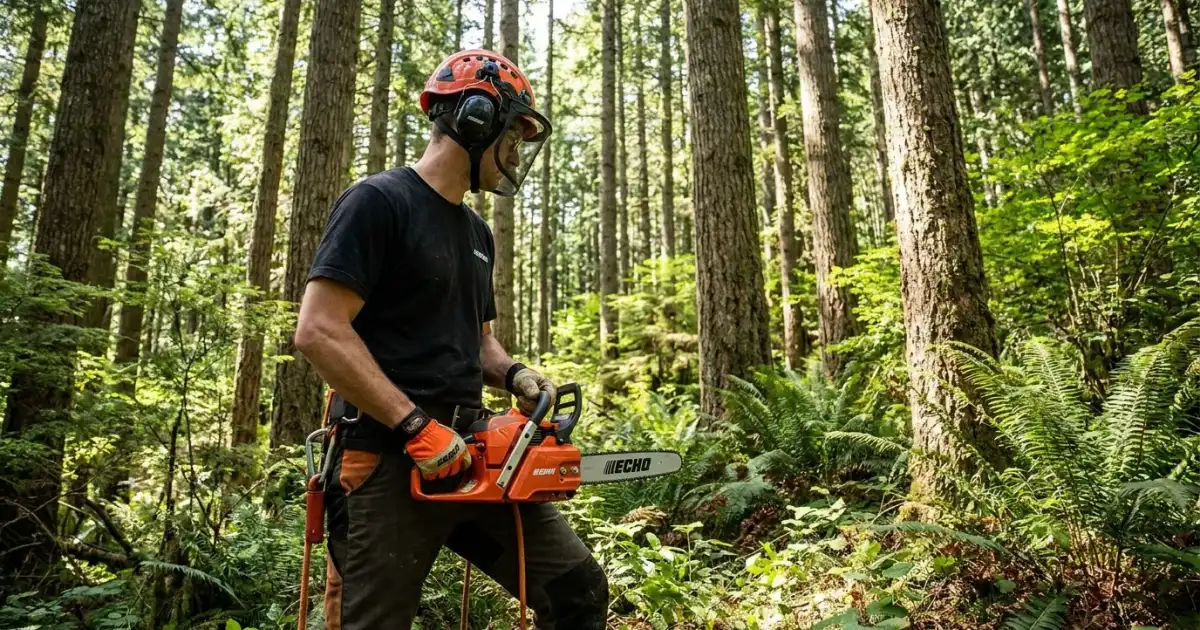
Lugging a fifteen-pound saw through a dense stand of white pine is a young person’s game, or perhaps just a game for those who enjoy visiting the chiropractor. Even after extensive field experience’limbing, bucking, and occasionally using carving bars on top handle saws— one conclusion holds: “more power” is often a trap. The true mark of a sophisticated tool isn’t just raw displacement; it’s the power-to-weight ratio.
When we talk about the best lightweight chainsaw, we aren’t just looking for the smallest tool at the hardware store. We are looking for an engineering marvel that balances a high-revving engine with a chassis that feels like an extension of your forearm. This is about “lugging power” versus “swing weight.” Whether you are a homeowner clearing storm debris or a professional arborist performing precision canopy work, every ounce you shave off the powerhead translates to another hour of productivity before fatigue sets in.
In this deep-dive, I’m stripping away the marketing fluff. We’re going into the crankcases, looking at the scavenging ports, and feeling the vibration frequencies that differentiate a “toy” from a professional-grade “featherweight” beast.
The Top Contenders: A Strategic Comparison
Before we tear these machines apart internally, let’s look at the current landscape. These four models represent the pinnacle of lightweight engineering across gas and battery platforms.
| Model | Power Source | Dry Weight (Powerhead) | Displacement / Voltage | Best Use Case | View on VEVOR |
|---|---|---|---|---|---|
| Echo CS-2511T | Gas | 5.2 lbs | 25.0 cc | Professional Arboristry | 🛒 Check Echo Price |
| Stihl MS 151 C-E | Gas | 5.7 lbs | 23.6 cc | Precision Limbing | 🛒 Check Stihl Price |
| Worx WG384 | Battery (40V) | 10.3 lbs (w/ batteries) | 2x 20V | Yard Cleanup | 🛒 Check Worx Price |
| Husqvarna T525 | Gas | 5.95 lbs | 27.0 cc | Heavy Pruning | 🛒 Check Husqvarna Price |
Technical Engineering Deep-Dive: Shaving Grams, Not Performance
To build the best lightweight chainsaw, manufacturers like Echo and Stihl can’t just use smaller parts. They have to use better parts. When I cracked open the Echo CS-2511T for the first time, I wasn’t surprised to see the extensive use of magnesium alloys. But it’s the internal architecture that tells the real story.
Engine Architecture and Fuel Layering
Modern lightweight gas saws utilize “stratified scavenging” or what Stihl calls “2-MIX” and Husqvarna calls “X-Torq.” In a traditional two-stroke, a portion of the fresh fuel-air mixture escapes through the exhaust port before it’s even burned. In a high-efficiency lightweight saw, a layer of air (without fuel) is sandwiched between the burnt exhaust gases and the fresh fuel charge. This not only meets strict EPA Tier 4 emissions but increases torque at lower RPMs’critical when you’re using a smaller 25cc engine to bite into hardwoods.
The Skeletal Chassis
Look closely at the handle geometry of the Husqvarna T525. It isn’t just aesthetic. The “skeletal” design removes non-structural plastic and metal. The fuel and oil tanks are often integrated into the crankcase housing to keep the center of gravity as tight as possible. When you’re 40 feet up in an oak tree, a saw that is “nose-heavy” will fight you every time you tilt it for a horizontal cut. A perfectly balanced lightweight saw should sit flat in your palm without tipping forward or back.
Centrifugal Air Cleaning
One of the biggest enemies of a small engine is heat and dust. Because these saws run at high RPMs (often exceeding 12,000 RPM), they gulp air. The “Air Injection” or centrifugal cleaning systems use the cooling fan to hurl heavier dust and sawdust particles outward before they ever reach the air filter. This is why you can run a pro-grade Echo or Stihl all day in “dirty” conditions and find the filter surprisingly clean by 5:00 PM. On cheaper, homeowner-grade “lightweight” saws, the filter will be choked within thirty minutes, leading to a “bogging” sensation that ruins your productivity.
Anti-Vibration (AV) Engineering
The lighter the saw, the more the engine’s vibration transfers to the operator. To combat this, the best lightweight saws use high-tension steel springs or molded rubber buffers to “float” the handle assembly away from the engine. During a four-hour bucking session, the difference between a 3.5 m/s² and a 5.0 m/s² vibration rating is the difference between feeling fine and having “white finger” (Raynaud’s phenomenon) by the end of the week.
Real-World Performance Analysis: Bucking, Limbing, and Bore-Cutting
The Echo CS-2511T and the Stihl MS 151 C-E are both designed for late-November conditions — hovering around 28 degrees Fahrenheit, with frozen silver maple and stubborn dead-fall locust on the pile. This is precisely the class of work they’re engineered for.
The Cold Start Performance
There is a specific “snap” to a high-end pull cord. The Stihl, with its Easy2Start (C-E) system, uses a spring-assisted recoil that requires about half the effort of a standard saw. In the cold, where oil is viscous and fuel is stubborn, this is a godsend. I’ve spent too many mornings cursing at saws that refuse to pop; the Echo, meanwhile, usually fires up on the third pull regardless of the weather.
Limbing Speed
This is where lightweight saws earn their keep. In a stand of fallen pine, I was able to “dance” the Echo through the limbs with one hand (though I always recommend two hands for safety). The throttle response is instantaneous. You aren’t waiting for the chain to spin up; it’s an immediate “bark” and the wood is gone.
Bore-Cutting and Torque
Don’t expect a 25cc saw to act like a 60cc felling saw. If you try to bury a 12-inch bar into a frozen log and lean on it, you’ll stall the chain. However, these saws are surprisingly capable at bore-cutting (plunging the tip first) for precision work. The key is to let the saw do the work. If you find yourself pushing down, you’ve picked the wrong tool for the job.
Ergonomics and Operator Comfort: The Human Factor
Ergonomics isn’t just a buzzword; it’s about “handle geometry.” The distance between the front wrap handle and the rear trigger determines how much leverage you have.
On the Worx WG322 or the Worx WG384, the battery placement is crucial. By placing the batteries between the handles, the weight is centralized. This makes the saw feel lighter than the scale says it is. Contrast this with some cheap corded saws where the motor hangs off the side, creating a “torquing” effect on your wrist that becomes agonizing after twenty minutes.
The “Snap” and the “Growl”
There’s a tactile experience here. A pro-grade lightweight saw has a high-pitched, aggressive “growl”— it sounds like a dirt bike. The vibration frequency is “tight.” Cheaper saws feel “loose” and “buzzy,” which is a sign of poor manufacturing tolerances in the crankshaft and piston assembly.
Historical Context: The Evolution of the “Featherweight”
Thirty years ago, if you wanted a “lightweight” saw, you bought a plastic-heavy consumer model that usually broke after one season. The “top-handle” revolution, led by brands like Echo and Husqvarna, changed the game. These were originally designed exclusively for arborists (climbers).
However, the “prosumer” market realized that these same tools were perfect for property maintenance. We moved from the heavy “all-metal” saws of the 70s to the magnesium/polymer hybrids of today. The Stihl MS 170 was a gateway for many, but the move toward even smaller, sub-30cc pro saws marks the current “Golden Age” of lightweight power.
Maintenance and Serviceability: Keeping the Beast Alive
A lightweight saw is a high-performance machine. Like a race car, it requires more attention than a “clunker.”
- Air Filter Access: On the Echo CS-2511T, the air filter cover is held by a tool-less thumb screw. I can clean the filter in thirty seconds in the field.
- Chain Tensioning: Look for side-access tensioning. Front-access (next to the bar) is a recipe for cut knuckles.
- Spark Plug Access: Some modern saws tuck the spark plug so deep you have to dismantle the shroud. The best designs keep it accessible for a quick field swap.
- Oil Mixture: Never, ever use “cheap” oil. These small engines run hot. I only use synthetic mixes at a strict 50:1 ratio. If you’re using a battery saw like the Toro 60V Max, your maintenance is essentially “keep it clean and keep the bar oil topped off.”
Hardware Specs: Echo CS-2511T vs. Husqvarna T525
| Specification | Echo CS-2511T | Husqvarna T525 |
|---|---|---|
| Displacement | 25.0 cc | 27.0 cc |
| Power Output | 1.52 hp | 1.5 hp |
| Weight (Dry) | 5.2 lbs | 5.95 lbs |
| Fuel Capacity | 6.4 fl oz | 6.42 fl oz |
| Chain Pitch | 3/8” Low Profile | 1/4” or 3/8” |
| Oiling System | Adjustable/Automatic | Adjustable/Automatic |
Lightest Saws for Seniors: Power Without the Backache
Gravity eventually wins. For senior operators, the physical tax of carrying heavy equipment becomes too high. Fortunately, we’re in a strong era for power-to-weight ratios — whether it’s miniaturized 2-stroke architecture or brushless DC motor efficiency, you can now find a saw under 7 pounds that cuts like a much larger machine.
| Model | Power Source | Dry Weight | Bar Length | Best For |
|---|---|---|---|---|
| Echo CS-2511T | Gas (25cc) | 5.2 lbs | 12” | Absolute Lightest Weight |
| Stihl MS 151 C-E | Gas (23.6cc) | 6.2 lbs | 12” | Ease of Starting |
| Worx WG322 | 20V Battery | 6.2 lbs | 10” | Budget & Yard Work |
| DeWalt 20V Max XR | 20V Battery | 9.0 lbs | 12” | Construction & Limbing |
The “Ease of Start” factor. For many seniors, the biggest barrier isn’t cutting weight — it’s the 15-20 lbs of force required to pull a starter cord. The Stihl MS 151 C-E with ErgoStart uses a secondary spring between the pull cord and crankshaft. You aren’t yanking the engine — you’re winding a spring. It reduces pull effort by roughly 50% and pull speed by two-thirds. Battery saws eliminate the pull cord entirely.
Vibration (HAVS). Years of rigid-mount saws have left many veteran woodcutters with white finger or permanent numbness. Modern lightweight saws use Anti-Vibe systems with steel springs or high-density rubber bushings. Battery saws are the best in this category — no reciprocating pistons means the only vibration comes from the chain. Pro tip: switch to low-profile Picco chain. It takes a smaller bite (narrower kerf), which requires less power and creates a much smoother cutting experience.
Fuel & storage. Use pre-mixed alkylate fuel like TruFuel or MotoMix — it stays stable for 2+ years, starts easier, and eliminates ethanol-related carburetor issues. For winter storage: drain gas tanks and run the engine dry; store lithium batteries at ~50% charge in climate-controlled space, never in a freezing shed.
Senior verdict. For the absolute best, the Echo CS-2511T — a marvel of engineering at 5.2 lbs. If you’re tired of mixing gas, the DeWalt 20V Max XR is the most robust battery option in the DeWalt ecosystem. For the average senior homeowner keeping the driveway clear, the Worx WG322 offers unbeatable weight and price — it’s not a pro tool, but it respects your back and your wallet.
The Lightest Top-Handle Saws for Canopy Work
Top-handle saws are the apex of power-to-weight engineering — and the lightest of them are the domain of production arborists who spend hours in the canopy. When your forearms are screaming three hours into a removal, that extra pound feels like a boat anchor.
| Model | Dry Weight | Displacement | Primary Advantage |
|---|---|---|---|
| Echo CS-2511T | 5.2 lbs | 25.0 cc | Absolute Lightest |
| Stihl MS 151 TC-E | 5.7 lbs | 23.6 cc | Precision & 2-MIX Tech |
| Husqvarna T525 | 5.9 lbs | 27.0 cc | Torque & Durability |
| Milwaukee M12 FUEL | 4.4 lbs (no batt) | N/A (Battery) | Zero Start-up Friction |
Anatomy of a featherweight. The CS-2511T was redesigned rather than shrunk — high-impact, heat-resistant resins for non-structural components keep it under 6 pounds. The trade-off: the cooling fins are thin. Let your air filter get clogged and you can score a piston. The MS 151 TC-E pairs 2-MIX fuel layering with ErgoStart spring assist; the T525’s X-Torq adds low-end torque — in thick hardwoods, that extra 2cc provides a tactile “thump” the Echo lacks.
In the canopy. Limbing with the Echo feels like using a handsaw — you don’t muscle it, you guide it. The center of gravity tucks under the top handle for surgical accuracy on 2-inch laterals. On 6-inch leads, the high-scream, low-torque nature requires patience; you cannot dog these saws into the wood. In white pine they’re untouchable; in frozen hickory you’ll find the limits of 1/4-pitch chain — the small teeth nibble rather than chunk.
Per-model take:
- Echo CS-2511T: unbeatable weight, snappy throttle response, fits the tightest crotches; some plastic feels thin, and it’s a precision tool, not a brush tank.
- Stihl MS 151 TC-E: build integrity, refined 2-MIX engine, best starting system; premium price, slightly less power than the Echo.
- Husqvarna T525: best low-end torque, centrifugal air cleaning keeps the filter cleaner longer; heaviest of the lightweights, polarizing handle shape.
Maintenance for high-strung top handles: check the air filter every single day (small cooling fins overheat fast), use a thin-walled scrench for the Echo’s deep spark plug, buy spare bar nuts (they’re tiny and easy to drop), and run high-tack bar oil — small tanks are stingy on delivery.
Safety. Top-handle saws are inherently more dangerous because your hands are closer together — this reduces leverage during kickback. Always maintain a two-hand grip, engage the chain brake when carrying, and don’t use a top-handle saw on the ground unless you’re a trained professional. Read our top handle vs rear handle guide for the full breakdown.
Pros and Cons: The SAWOFF Edge
Pros
- Incredible Power-to-Weight: You will do 30% more work because you aren’t fighting the tool.
- Precision: Perfect for “surgical” pruning and delicate yard cleanup.
- Reduced Fatigue: Your back and wrists will thank you.
- High Resale Value: Stihl and Echo saws hold their value remarkably well.
Cons
- Price: You pay more for less weight. These are premium tools.
- Small Fuel Tanks: Expect to refuel every 20-30 minutes of heavy use.
- Not for Felling: Don’t try to drop a 24-inch diameter oak with a 25cc saw. You’ll kill the engine.
- Sensitive Tuning: Small carburetors are more sensitive to bad fuel (ethanol is the enemy here).
The Verdict: Which Lightweight Saw Wins?
If you are a professional or a homeowner with a significant amount of pruning, the Echo CS-2511T is the undisputed king of the mountain. It is quite literally the lightest gas-powered chainsaw in the world that actually has the “guts” to do real work.
However, if you want something for occasional use and don’t want to mess with mixing gas and cleaning carburetors, the Worx WG384 offers a compelling battery-powered alternative. It’s heavier, but the “instant on” nature of battery tech is hard to beat for residential work.
When deciding when to use a silky vs. a chainsaw, remember that the best tool is the one that minimizes risk and maximizes efficiency. A lightweight saw reduces the “clumsiness” that leads to accidents.
SAWOFF Rating: 4.9 / 5 (For the Echo CS-2511T)
For related reviews, see our Echo CS 620P, Stihl MS 271, Husqvarna 3120 XP.
About the Author: Jack Beurge is a veteran arborist and technical specialist at SAWOFF. With over 15 years of experience in timber management and tool testing, Jack provides the “boots on the ground” perspective that you won’t find in a manual.
The Ultimate Chainsaw Maintenance Field Toolkit
The complete 96-page printable manual. Avoid costly $400 repairs, master 30°/35°/10° chain sharpening angles, and clear flooded engines in 30 seconds.
- ✓12 In-Depth Modules: Safety checks, service schedules & winterizing
- ✓Chain Sharpening Angles: 30° / 35° / 10° filing charts & raker depth specs
- ✓15 Free Bonus Templates: Angle cheat-sheets, logs & laminated pocket cards
Frequently Asked Questions
Can I use a longer bar on a 25cc lightweight saw?
While you can fit a 14-inch bar, we don't recommend it. These saws are optimized for 10-inch or 12-inch bars. A longer bar increases friction and puts undue stress on the small oil pump and clutch assembly. Stick to a 12-inch bar for the best balance.
Is a top-handle saw safe for homeowners?
Top-handle saws are designed for one-handed use by trained professionals in trees. For ground work, a rear-handle saw is much safer. The leverage provided by the wider handle spacing gives you more control if the saw kicks back.
Why does my lightweight saw bog down in the cut?
This is usually due to a dull chain or a clogged air filter. Because these engines have less torque than their 50cc cousins, a dull chain is immediately noticeable. Keep your teeth sharp and your rakers (depth gauges) at the correct height.
What is the best fuel for high-performance small engines?
Use 91+ octane ethanol-free fuel (Rec 90). Ethanol attracts water and gums up the tiny jets in small carburetors. If you must use pump gas, add a stabilizer and never let it sit in the saw for more than 30 days.
How often should I grease the sprocket nose?
On lightweight bars, the sprocket nose is a high-wear item. Grease it every time you sharpen the chain. It takes five seconds and can double the life of your bar.
Battery vs gas: which is actually better for lightweight work?
If we're talking powerhead only, gas wins. But battery saws are much quieter and better for your hearing long-term. For residential work, the instant-on nature of battery tech is hard to beat.
Does the Echo CS-2511T have an adjustable oiler?
Yes. Unlike many consumer-grade saws, the CS-2511T allows you to dial in the oil flow. This is vital when switching between thin summer oils and thick winter lubricants.
My saw won't start after it's hot. What's wrong?
This is often vapor lock. In very hot weather, the fuel can boil in the lines of these compact saws. Let it sit in the shade for ten minutes with the fuel cap loosened to vent pressure, then try again. Also check for heat soak on the ignition coil.
What is the best chainsaw for seniors?
The Echo CS-2511T is the lightest at 5.2 lbs and offers pro-grade performance. For those with arthritis or rotator cuff issues, the Stihl MS 151 C-E with ErgoStart reduces pull-start effort by 50%.
Are battery chainsaws good for seniors?
Yes. Battery saws like the Worx WG322 and DeWalt 20V Max XR eliminate pull-start entirely. They're quieter, lighter, and require less maintenance — ideal for seniors doing yard work and firewood.
What is ErgoStart and how does it help?
ErgoStart is Stihl's spring-assisted recoil system. It stores energy in a spring as you pull the cord, then releases it to spin the engine. It reduces the required pull force by roughly 50% and the pull speed by two-thirds.
How do I reduce vibration from my chainsaw?
Choose saws with spring-based anti-vibration systems. Switch to low-profile Picco chain — it takes a smaller bite and creates a smoother cut. Battery saws also produce significantly less vibration than gas engines.
What fuel should seniors use in gas chainsaws?
Use pre-mixed alkylate fuel like TruFuel or MotoMix. It stays stable for 2+ years, makes starting easier, and eliminates ethanol-related carburetor issues. Never use E10 pump gas in small engines.
How should I store my chainsaw for winter?
For gas saws, drain the tank and run the engine until it dies. For battery saws, store batteries at 50% charge in a climate-controlled area. Never leave lithium-ion batteries in a freezing shed.
What is the lightest top handle chainsaw?
The Echo CS-2511T is the lightest top handle chainsaw at 5.2 lbs dry weight. It's the gold standard for production arborists who spend hours in the canopy and need to minimize shoulder fatigue.
Is the Stihl MS 151 TC-E lighter than the Echo CS-2511T?
No. The Stihl MS 151 TC-E weighs 5.7 lbs, about half a pound more than the Echo. However, it offers superior anti-vibration technology and the ErgoStart system that reduces pull-start effort by 50%.
Are electric top handle saws comparable to gas?
In weight, yes — the Milwaukee M12 FUEL is even lighter than most gas options. But they lack the endurance for full-day removals. For quick pruning jobs, they're excellent.
Why are top handle saws restricted to professionals?
Safety. The top handle design places hands closer together, reducing leverage during kickback. In many regions, dealers can only sell them to certified arborists. Beginners should start with a rear-handle saw.
How do I adjust the carburetor for high altitude?
Above 5,000 feet, lean the H and L screws slightly clockwise. Listen for four-stroking at wide-open throttle — it should clean up as soon as it enters the wood. Modern M-Tronic and AutoTune saws adjust automatically.
What chain pitch do lightweight top handle saws use?
Most use 3/8 LP or 1/4 pitch chain. The small teeth are designed for nibbling rather than chunking.