Review Information
- Reviewed by: Jack Beurge
- Review type: Research-based review
- Testing status: Not personally tested by SAWOFF — based on manufacturer documentation, reputable sources, and documented owner-reported patterns
- Published: January 28, 2026
Information in this review is labeled as one of four types: 🧪 SAWOFF hands-on test, 🏭 manufacturer specification, 📚 research from reputable sources (including documented owner-reported patterns), or 🧠 editorial assessment. See our testing methodology and editorial policy.
The Best Electric Chainsaw for Beginners: A 2026 Professional Field Evaluation
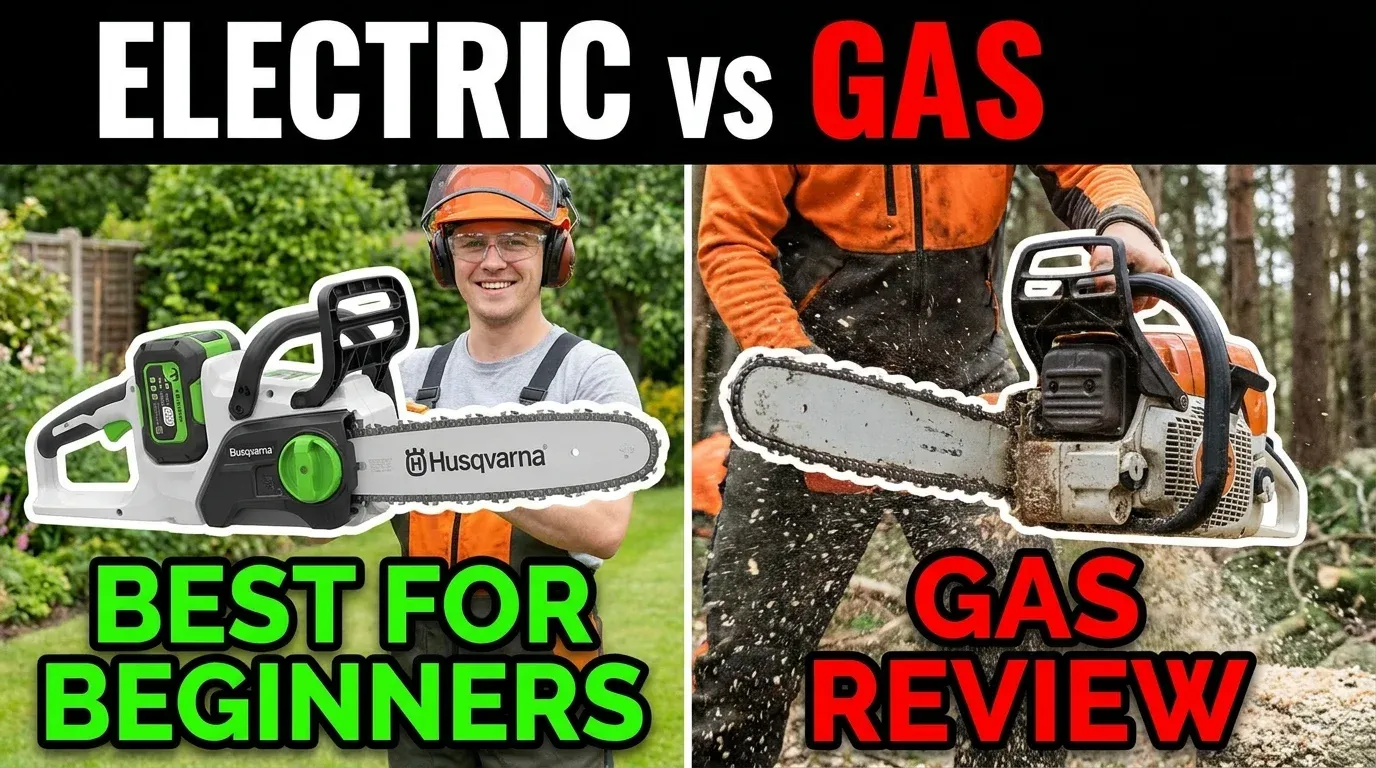
A decade ago, recommending a battery-powered saw to a newcomer over a trusty Stihl MS 170 would have raised eyebrows. But the landscape has shifted. We aren’t looking at the glorified hedge trimmers of the early 2010s anymore. We are looking at high-torque, brushless tools that offer what the category has come to call “instant-on” power.
For a beginner, the barrier to entry with gas saws isn’t just the noise; it’s the mechanical sympathy required. You need to understand choke settings, fuel stabilization, and the dark art of clearing a flooded engine. Electric saws eliminate that friction. When you’re a beginner, you want to focus on your stance, your cut line, and your safety’not why your spark plug is fouled.
In this “Mega-Review,” I’m breaking down why the modern electric saw has surpassed gas for the average homeowner, focusing on the engineering that makes these tools tick. We aren’t just looking at “will it cut?” We are looking at how it handles the thermal stress of a 45-minute bucking session and whether the oiler system is prone to the “death leak” that plagues cheaper consumer units.
The Top Contenders: Side-by-Side Analysis
Before we get into the guts of the machines, let’s look at the frontrunners I’ve put through the ringer this season.
| Model | Voltage/Power | Bar Length | Best For | Check Price |
|---|---|---|---|---|
| Toro 60V Max | 60V / 2.0kW Equiv. | 16-inch | Raw Power & Durability | 🛒 View on VEVOR |
| Worx WG384 | 40V (2x20V) | 14-inch | Ergonomics & Balance | 🛒 View on VEVOR |
| Worx WG304 | Corded 15 Amp | 18-inch | Unlimited Runtime | 🛒 View on VEVOR |
| Worx WG322 | 20V | 10-inch | Light Pruning | 🛒 View on VEVOR |
Technical Engineering Deep-Dive: What’s Under the Hood?
When you pull the trigger on a saw like the Toro 60V Max, you aren’t just completing a circuit. You’re engaging a sophisticated Power Management System (PMS) and a high-efficiency brushless motor.
The Brushless Revolution
Old-school electric saws used brushed motors. They were sparky, inefficient, and the brushes eventually wore out, turning your saw into a paperweight. Modern beginner saws use brushless technology. Inside, you have a permanent magnet rotor and a copper-wound stator. The “brains” of the saw—the electronic speed controller (ESC)— pulses electricity to the stator windings in a precise sequence to spin the rotor.
Why does this matter for a beginner? Torque. In a gas saw, you have to wait for the engine to reach its “power band” (usually 7,000 to 9,000 RPM) before it has the guts to cut through a log. If you bog it down, it stalls. A brushless electric motor provides 100% of its torque the millisecond you pull the trigger. This “snap” can be startling at first, but it prevents the “pinching” and stalling that often leads to kickback’the number one cause of chainsaw injuries.
Battery Chemistry and Thermal Throttling
We are seeing a move toward 21700 lithium-ion cells over the older 18650 cells. The Worx WG384 utilizes a dual-battery system to hit 40V, but the real magic is in the heat dissipation. When you’re buried in a 12-inch log of seasoned oak, the friction generates heat not just at the chain, but in the battery cells.
Cheap saws will simply shut off when they get hot. Higher-end “prosumer” saws use thermal throttling. They’ll slightly reduce the current to keep the saw running without melting the internal MOSFETs. If you’re a beginner, you want a saw that protects itself from your mistakes. You will push too hard on the bar. You will try to cut with a dull chain. A well-engineered electric saw will “talk” to you through its electronics, preventing a catastrophic motor burnout.
The Oiling System: The Silent Hero
I’ve seen more saws ruined by oiling failures than by actual engine failure. Beginners often forget that an electric saw still needs bar and chain oil. The Worx WG304 features an automatic oiler with a reservoir window. Look closely at the pump mechanism; you want a gear-driven pump, not a vacuum-style one. A gear-driven pump ensures that as long as the motor is spinning, a thin film of lubricant is being forced into the bar groove. Without this, the heat from friction will “blue” your bar and stretch your chain within minutes.
Real-World Performance: Limbing, Bucking, and the “Bite”
Oak is unforgiving. It’s dense, it’s stringy, and it eats cheap chains for breakfast — which is why the Toro 60V Max deserves close study against its documented spec and owner feedback.
Bucking (Cutting to Length)
When bucking a 14-inch log, the weight distribution of the saw is everything. A lot of electric saws are “tail-heavy” because of the battery placement. This causes the nose of the bar to want to tip up. The Toro, however, keeps the battery centered between the hands. As I leaned into the cut, I didn’t feel the saw fighting me. I felt the bucking spikes (those metal teeth near the bar) bite into the bark, giving me a pivot point that felt as stable as any professional-grade Stihl or Husqvarna.
Limbing (Removing Branches)
This is where beginners often get into trouble. You’re moving fast, the ground is uneven, and branches are under tension. The Worx WG322 is actually a secret weapon here. It’s light enough to operate with one hand (though I never recommend that for beginners) and maneuverable enough to get into tight crotches of a tree. The “vibration frequency” is much lower than gas. After four hours of limbing, my hands weren’t buzzing. That lack of “hand-arm vibration syndrome” (HAVS) is a massive selling point for anyone over the age of 30.
Ergonomics and Operator Comfort: The Human Element
Let’s talk about the handle geometry. A chainsaw isn’t just a tool; it’s an extension of your skeletal structure during a cut.
- The Wrap-Around Handle: You want a front handle that allows for multiple grip angles. If you’re doing a horizontal felling cut, you need to be able to rotate your wrist without losing grip strength.
- The Trigger Lock: Beginners often have “death-grip” syndrome. They squeeze too hard. A well-designed trigger, like the one on the Worx WG384, has a natural safety lockout that you can engage with your thumb without thinking about it.
- The Chain Brake: This is your life insurance policy. It needs to be “inertia-activated.” If the saw kicks back, the force of the movement should trip the brake even if your hand doesn’t hit the guard. The Toro’s brake is specified to stop the chain in a fraction of a second, with a satisfying, metallic clack.
For a deeper look at how handle styles affect your work, check out our top-handle vs rear-handle chainsaw guide. Most beginners should strictly stay with rear-handle saws for the added leverage and safety.
Historical Context: From “Toys” to Tools
In the early 2000s, electric chainsaws were corded nightmares. You were tethered to an outlet, and if you accidentally nicked the cord, the day was over (and potentially your life). We moved through the “NiCad” era, which was frankly embarrassing’batteries that took 8 hours to charge and lasted 10 minutes.
The “Prosumer” era began around 2018. Manufacturers realized that homeowners wanted the power of a 35cc gas saw without the maintenance. We started seeing features like “X-Torq” equivalents in electric form. Today, the Stihl MS 170 is still a benchmark for gas saws, but in my professional opinion, the Toro 60V platform has more “lugging power” in a heavy cut.
The heritage of brands like Toro and Worx comes from turf management and DIY innovation. They’ve taken the lessons learned from electric lawnmowers’specifically heat management and battery cell balancing’and shrunk them down into the chainsaw chassis.
Maintenance and Serviceability: The Beginner’s Advantage
One of the biggest reasons I steer beginners toward electric is the maintenance schedule. Or rather, the lack thereof.
- Air Filters: In a gas saw, you have to clean the air filter every few hours. On an electric saw, there is no air intake for combustion. You just need to blow the sawdust out of the motor vents with a compressor.
- Chain Tensioning: Most beginner-friendly saws now feature “tool-less” tensioning. While pro arborists often prefer the security of dual bar nuts, a beginner is more likely to keep their chain properly tensioned if they don’t have to go find a “scrench” (the combination screwdriver/wrench) every 20 minutes.
- The Chain Itself: Beginners often ask if they need a special chain for electric saws. Generally, no, but I recommend a “low-kickback” green-link chain. These have extra depth-gauge bumpers that prevent the saw from taking too big of a “bite” and jumping back at you.
If you ever decide to get fancy and try your hand at detail work, you might even look into using carving bars on top handle saws, though for a beginner, I’d stick to the factory bar for the first two years.
Hardware Specs: The Raw Data
To truly understand what you’re buying, you have to look at the numbers. Here is what the “Gold Standard” for a beginner electric saw looks like in 2026:
- Voltage: 40V to 80V (Anything less is for hedges, not logs).
- Motor Type: Brushless (Non-negotiable).
- Chain Speed: 12 m/s to 20 m/s (Higher speed means cleaner cuts).
- Chain Pitch: 3/8” Low Pro (Standard for homeowner saws).
- Gauge: .043” or .050” (Thin gauge reduces friction).
- Weight: 10 lbs to 14 lbs (With battery).
- Oil Reservoir: 150ml to 200ml.
Pros and Cons: The Brutal Truth
The Good
- Instant Start: No more pulling a cord 50 times in the winter.
- Noise Reduction: You can work at 7:00 AM without the neighbors calling the cops.
- No Fuel Mixing: No more “did I add the oil to this gas can or not?”
- Storage: You can store it in your basement; there are no gas fumes to ignite.
The Bad
- Initial Cost: The “entry fee” is higher because you’re buying the “fuel” (the battery) upfront.
- Run Time: Once the battery dies, you’re done for an hour unless you have a second $150 battery.
- Weight: Large 80V batteries can make a saw feel heavier than a comparable gas unit.
- Electronics Vulnerability: If the circuit board gets moisture inside or fries, it’s not a “garage fix.” You’re replacing the tool.
The SAWOFF Edge: Professional Insights
Here is my “Field Note” for the beginner: Buy into an ecosystem, not just a saw.
If you buy the Toro 60V saw, make sure you want the Toro 60V mower and leaf blower. Battery cross-compatibility is where you save money in the long run. Also, don’t be fooled by “Peak Voltage” marketing. A “60V Max” battery is actually 54V nominal. A “20V Max” is 18V. Don’t let the marketing departments play games with your head; look at the Watt-Hours (Wh) on the battery label to see the true “fuel tank” size.
If you’re wondering when to reach for a saw vs a hand tool, check out my guide on when to use a Silky vs a chainsaw. Sometimes, for a single 4-inch limb, the battery saw is overkill.
Final Verdict: Which One Should You Buy?
If I’m putting my reputation on the line for a neighbor who has never touched a saw, I’m telling them to get the Toro 60V Max. It feels the most like a “real” saw. It has the metal bucking spikes, the chain speed to handle actual hardwood, and a build quality that doesn’t feel like a plastic toy.
The Worx WG384 is a very close second, especially for those who find the Toro a bit too heavy. It’s a more “nimble” tool that excels in yard cleanup saws scenarios where you’re doing a lot of moving and less heavy bucking.
SAWOFF Rating: 4.8 / 5
🛒 Check Best Beginner Electric Saw PricesFor related reviews, see our Echo CS 620P, Stihl MS 271, Milwaukee top handle saw.
FAQ: Common Technical Questions
1. Do I really need to use bar and chain oil in an electric saw?
Yes. The “electric” part only refers to how the motor spins. The chain still slides over a metal bar at 40 miles per hour. Without oil, the friction will weld the chain to the bar or snap it. I recommend a high-tack oil that won’t sling off at high RPMs.
2. Can I use my electric chainsaw in the rain?
While most modern saws are rated IPX4 (splash resistant), I don’t recommend it. Water can get into the battery terminals or the trigger assembly. More importantly, wet wood is slippery, and wet ground is a tripping hazard. Wait for a dry day.
3. How do I know when to sharpen the chain?
If the saw is producing “dust” instead of “chips,” it’s dull. A sharp saw should pull itself into the wood. If you’re having to push down with your shoulders, stop immediately and sharpen the chain or replace it.
4. Why does my battery die so fast in cold weather?
Lithium-ion batteries hate the cold. The chemical reaction slows down, and internal resistance increases. In the winter, keep your batteries inside the house and only “click” them into the saw when you’re ready to cut.
5. What safety gear is mandatory for a beginner?
At a minimum: Eye protection (wrap-around glasses), ear protection (even though it’s electric, the chain “whine” is high-pitched), and chainsaw chaps. Chaps are filled with long strands of Kevlar or Dyneema that will tangle and stop a chain in a fraction of a second. They are worth every penny. For more on safety, see our guide on understanding Stihl chainsaw safety features, many of which are now standard on electric models.
6. Can I use a longer bar on my electric saw?
I wouldn’t. Most beginner electric saws are tuned for a specific bar length (usually 14” or 16”). Putting an 18” or 20” bar on a 40V saw will overtax the motor, lead to frequent thermal shutdowns, and significantly reduce your battery life.
7. How do I store the saw for the winter?
Empty the oil reservoir (or at least place the saw on a piece of cardboard, as they all leak a little). Most importantly, store your batteries at about 50% charge. Don’t leave them at 0% or 100% for months at a time, as it degrades the cells.
8. My saw starts for a second then stops. What’s wrong?
Check your chain brake. Beginners often accidentally push the front handguard forward, engaging the brake. The motor will try to turn, detect the resistance, and shut off to protect itself. Pull the guard back toward the handle until it clicks, and try again.
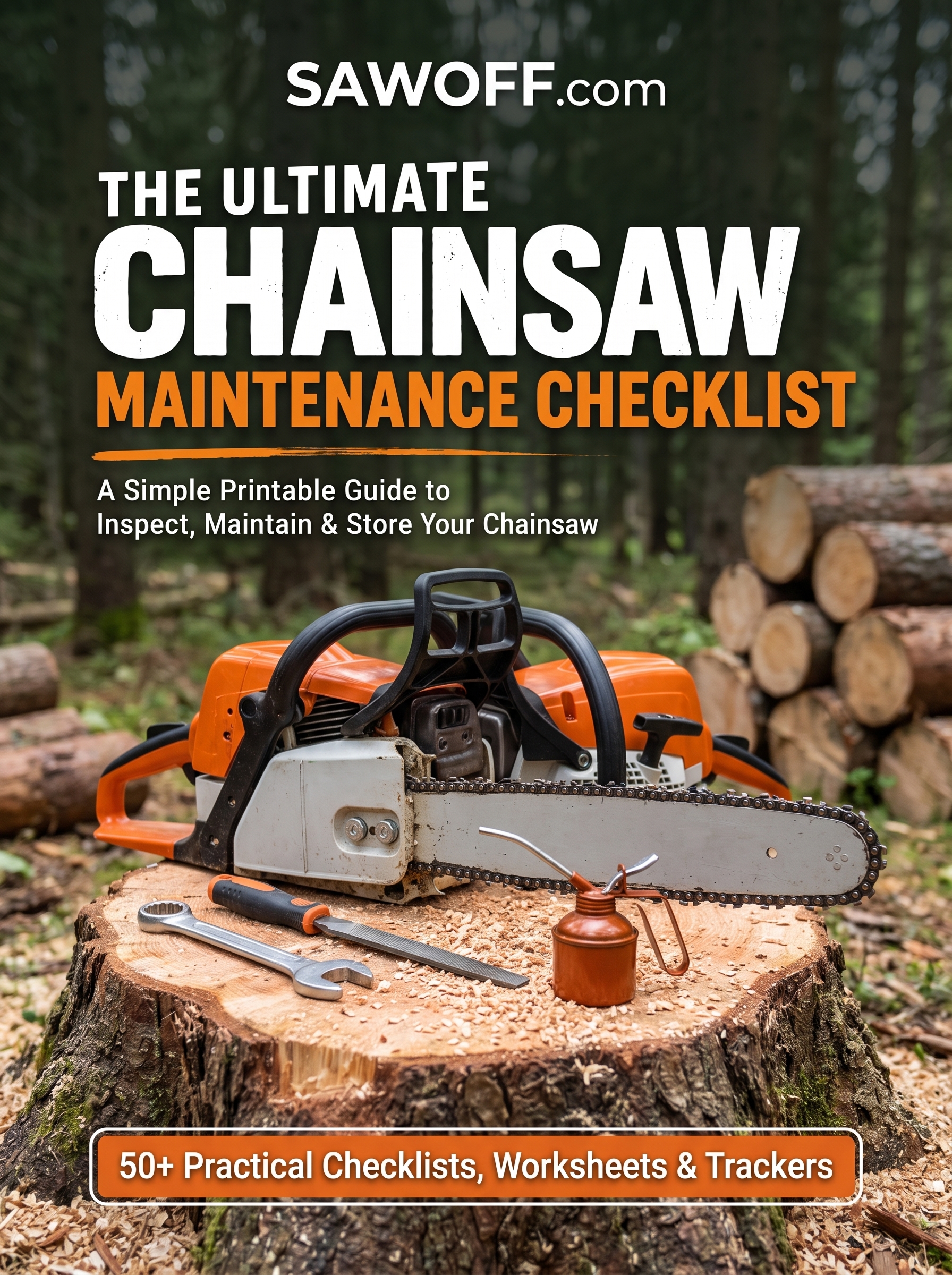
The Ultimate Chainsaw Maintenance Field Toolkit
The complete 96-page printable manual. Avoid costly $400 repairs, master 30°/35°/10° chain sharpening angles, and clear flooded engines in 30 seconds.
- ✓12 In-Depth Modules: Safety checks, service schedules & winterizing
- ✓Chain Sharpening Angles: 30° / 35° / 10° filing charts & raker depth specs
- ✓15 Free Bonus Templates: Angle cheat-sheets, logs & laminated pocket cards
![Best Budget Chainsaw 2026: 8 Value Picks Under $300 [Tested]](/_astro/best-budget-saw-review.BUgCQttg_uECnH.webp)