Review Information
- Reviewed by: Jack Beurge
- Review type: Research-based review
- Testing status: Not personally tested by SAWOFF — based on manufacturer documentation, reputable sources, and documented owner-reported patterns
- Published: September 14, 2026
- Manufacturer: Oregon
Information in this review is labeled as one of four types: 🧪 SAWOFF hands-on test, 🏭 manufacturer specification, 📚 research from reputable sources (including documented owner-reported patterns), or 🧠 editorial assessment. See our testing methodology and editorial policy.
The best chainsaw chain in 2026 is the Husqvarna X-Cut C85 (3/8 inch, .058 gauge) for pro saws, the Husqvarna X-Cut SP33G for .325 Rancher-class saws, and the Oregon 72 series for STIHL-pattern 3/8 low-profile bars. None of that matters until the chain matches your saw: pitch, gauge, and drive-link count have to line up or the chain will not fit at all.
This article is a ranked, buy-ready list of ten chains across every common pitch and gauge, with a fitment table covering the saws we write about most — Ranchers, STIHL homeowner and pro saws, and the 562 XP. For deeper background, our chainsaw chain guide explains the whole landscape.
Pitch, gauge, and drive links in plain terms
Three numbers decide whether a chainsaw chain physically fits. Pitch is the distance between rivets (measure three, divide by two). Gauge is the thickness of the drive links that ride in the bar groove. Drive-link count is the total length of the loop: the number of drive links stretched around the bar.
- Pitch — .325”, 3/8” low profile (3/8 P), 3/8”, and .404” are the four families you will shop
- Gauge — .043”, .050”, .058”, .063” is the width tolerance matching your bar groove
- Drive links — must be exact; typically 55–93 DL across 14-to-28-inch bars
Pitch and gauge quick-match table
| Pitch | Common on | Gauge options | Cutting character |
|---|---|---|---|
| 3/8” low profile (3/8 P) | STIHL MS 170/180, cordless saws, many 16-inch bars | .043, .050 | Low kickback, forgiving, slower in dense wood |
| .325” | Husqvarna 450 Rancher and mid-size homeowner saws | .050, .058 | Balanced drag and speed between 3/8 P and full 3/8 |
| 3/8” standard | 562 XP, 572 XP, MS 261, MS 661 | .050, .058, .063 | The production pro pitch: fastest in clean timber |
| .404” | 395XP, 3120 XP, big mill timber | .058, .063 | Maximum bite, heavier chain, less common today |
Gauge rule: match the bar. Thin kerf (.043) chains reduce drag on small saws and stretch battery runtime in cordless; .058 and .063 chains are the standard fit for pro bars. Wrong gauge simply will not ride the groove.
Fitment table: common saws, stock chain specs
| Saw | Stock bar | Pitch | Gauge | Drive links (stock bar) |
|---|---|---|---|---|
| Husqvarna 450 Rancher | 18” | .325 | .050 | 72 (H30-72) |
| Husqvarna 455 Rancher | 18” | 3/8 LoPro | .050 | ~68 |
| Husqvarna 460 Rancher | 20” | 3/8 LoPro | .058 | 72 |
| Husqvarna 562 XP Mark II | 18” | 3/8 | .058 | 68 (X-Cut C85) |
| Husqvarna 572 XP | 20”–24” | 3/8 | .058 | 72–84 |
| STIHL MS 170 | 16” max | 3/8 P | .043 | ~55 |
| STIHL MS 180 | 16” max | 3/8 P | .050 | ~56 |
| STIHL MS 250 | 18” | .325 | .063 | ~68 |
| STIHL MS 261 | 16”–20” | 3/8 | .050 | 60–72 |
| STIHL MS 661 | 25” | 3/8 | .063 | 84 |
Drill-down notes: the 460 Rancher also runs a 24-inch bar at about 82 DL, and the 661 stretches to 28+ inches at roughly 89–93 DL for bucking work. When in doubt, count the links on the old loop — it is the only spec with zero ambiguity. Our chainsaw chain size chart includes the extended list.
One third number hides in every loop: the rakers. Rakers (depth gauges) set how deep each cutter bites, and when a freshly filed chain wants to creep or grab, rakers are usually the culprit. Factory loops come set correctly; after two or three refiles on a flat surface, dress the rakers to spec or the chain turns aggressive in softwood. That maintenance note explains half of all “my new chain feels scary” conversations at parts counters.
The 10 best chainsaw chains, ranked
1. Husqvarna X-Cut C85 (.058, 3/8 full chisel) — best overall pro chain
Fitment: Husqvarna 562 XP Mark II (18-inch, 68 DL), 572 XP (20–24 inch, 72–84 DL).
Best use: production felling and bucking in clean timber where maximum speed and minimum filing session count.
The C85 is a full chisel, pre-stretched, factory-sharp loop with a golden tie strap so you know where each filing pass starts and stops. In oak and fir rounds it holds an edge about as long as anything available at this price and cuts visibly faster than the semi chisel alternatives below.
Sharpening: full chisel cutters demand a consistent filing angle every pass — a roller file guide helps, and a 4.8 mm round file is the common match. Skip it if your wood runs dirty: see the Oregon 72LPX pick instead.
2. Husqvarna X-Cut SP33G (.325, .050 semi chisel) — best for Rancher-class saws
Fitment: Husqvarna 450 Rancher (18-inch, 72 DL).
Best use: firewood production on a mid-size landowner saw where wood ranges from clean pine through gritty poplar.
Semi chisel cutters round the corner, which means they tolerate dust, dirt, and the occasional nail better than chisel loops — a real advantage for firewood cutting. The guarded drive links also reduce kickback tendency compared to full chisel at this size.
The SP33G is pre-stretched and comes sharp from the factory, so expect almost no break-in tightening on the first tank. On a 450 Rancher, a fresh loop plus proper tensioning turns the saw back into the machine the dealer demoed.
Sharpening: a 3/16-inch round file, standard .325 pitch. If you have been running a cheap aftermarket loop, this is the upgrade that makes the whole saw feel sharper.
3. Oregon 72LGX (3/8, .050 full chisel) — best speed-per-dollar aftermarket chain
Fitment: STIHL MS 261 (16–20 inch, 60–72 DL, .050 bars).
Best use: felling and bucking on STIHL-pattern .050-gauge bars where you want Husqvarna-level edge quality at a local-store price.
The LGX series is quick, holds an edge well, and is stocked in nearly every farm store in North America. Same-cutter character as the premium Husq loops at a friendlier price, which adds up when a season burns through a dozen loops.
One honest note: cutter hardness in the LGX runs a small step behind the X-Cut line in abrasive sandy wood, so expect slightly more frequent filing there. In clean hardwood, the difference disappears.
Sharpening: 3/16-inch or 13/64-inch round file depending on the cutter spec stamped on the box. Skip-tooth versions of the 72 series exist for dirty big-bar work — see pick 10. Our chainsaw chain types article covers cutter geometry in depth.
4. Husqvarna H48 (3/8, .058 full chisel) — the fastest-cutting Husqvarna loop
Fitment: Husqvarna 572 XP, 562 XP Mark II (matched gauge .058).
Best use: clean-timber bucking where chain speed per stroke matters more than longevity.
Compared with the C85, the H48 is a slightly coarser, faster-biting arrangement that some fallers prefer in big softwood. It dulls faster in dirty conditions, so consider it a fair-weather production loop rather than an all-round one.
Sharpening: full chisel discipline again — file every use if cutting daily. If you are building a Husq brand loyalty, our best Husqvarna chainsaws roundup pairs the loop styles with each saw.
5. Oregon 72EXL (3/8, .050 low-vibration chisel) — best comfort choice
Fitment: STIHL MS 261 and similar .050-gauge 3/8-class bars.
Best use: long all-day cutting sessions where vibration fatigue matters as much as chain speed.
The EXL series runs Oregon’s guarded, low-kickback cutter design and is one of the smoothest loops on this list. A 45-minute bucking session with the EXL leaves less hand numbness than a cheap generic loop, and the vibration savings compound over a season.
Sharpening: same file sizes as the 72LGX; factory-sharpened loops save the first session, and you copy the original cutting angle each time you refile.
6. Oregon 72LPX (3/8, .050 semi chisel) — best for dirty and punky wood
Fitment: STIHL-pattern .050-gauge 3/8 bars, including the STIHL MS 261 with its .050 bar and the Husqvarna 455 Rancher’s 18-inch 3/8 low-profile setup (about 68 DL).
Best use: storm cleanup, blowdown salvage, and punky pine where cutter corners stay rounded and resist dulling.
Semi chisel is the right answer for dirty wood. Dirt dulls sharp corners quickly; rounded corners keep cutting through sawdust-heavy rounds far longer. The 72LPX is also among Oregon’s most widely stocked loops, which matters mid-season.
Sharpening: easier and more tolerant than full chisel — a slightly reckless filing hand still produces a working edge. That forgiveness is exactly why firewood cutters love it.
7. Husqvarna H30 (.325, .050) — the stock Rancher chain
Fitment: Husqvarna 450 Rancher (18-inch, 72 DL).
Best use: like-for-like replacement of the factory loop on Rancher-class saws.
The H30 is a narrow-kerf design built around the saw’s power band, and it is the loop Husqvarna ships. It cuts well and is available everywhere. Buy it when you want no surprises; buy the SP33G (pick 2) when you want a modest upgrade in edge retention.
Sharpening: 3/16-inch round file for the .325 pitch. Our dedicated Husqvarna chainsaw chain guide lists every Rancher spec by bar length.
8. Husqvarna X-Cut S93G (3/8 low-profile, .050 semi chisel) — best homeowner chain
Fitment: Husqvarna small saws and top handles running 3/8 low-profile bars; on STIHL-pattern equivalents, see pick 9.
Best use: limbing, storm cleanup, and light firewood where kickback margins and low tool weight matter more than cutting pace.
S93G cutters are semi chisel with guarded drive links — the safest character on this list. It turns fast enough for homeowner work but will feel slow on a pro saw pushing a long bar; that is by design.
Sharpening: 5/32-inch round file for 3/8 low-profile pitch. Take the sharpening habit seriously: a dull loop on a small saw is the number-one cause of strained motors.
9. STIHL PM3 / PS / RS-RSC (3/8 P and 3/8) — best when you stay STIHL
Fitment: PM3 and PS picco chains run the 16-inch bars of the STIHL MS 170 and MS 180 (3/8 P pitch, .043 or .050 gauge). Rapid-series RS and RSC loops run full-size 3/8 bars on the MS 261 and larger. The .325-family MS 250 takes its own picco-family loop in .063.
Best use: keeping a STIHL saw on genuine STIHL chain so the cutting geometry, filing chart, and warranty support all stay OEM.
STIHL’s naming: PS is the picco semi chisel (the rough-and-ready family), PM3 the picco micro that trades a little speed for smoothness, and RS/RSC the rapid series for full-size 3/8 bars. It earns a slot here because STIHL cutter shapes are filed slightly differently from Oregon — if you switch brands on a STIHL bar, recheck your filing angles.
Sharpening: 5/32-inch round file for picco 3/8 P, 3/16-inch for the .325-family MS 250 loops. If you run a mix of brands, our best STIHL chainsaws roundup explains which OEM loops each saw was tuned around.
10. Full-skip chisel (Husqvarna X-Cut C85S, Oregon skip-tooth 72 family) — best for pro bucking on long bars
Fitment: STIHL MS 661 (25-inch, 84 DL) and Husqvarna 572 XP on 24-plus-inch bars.
Best use: 25-to-32-inch bucking and big-timber salvage where every fewer cutter saves filing time and weight.
Skip-tooth loops omit cutters at wide intervals, which reduces drag on long bars, dumps sawdust faster through deep upcuts, and keeps filing time short on 28-inch loops. The trade is rougher finishes and a chain that rewards experienced hands and punishes beginners.
Sharpening: skip faces are filed with the same round files, but square-ground and skip variants are a filing discipline of their own. Our skip-tooth chains for pros article is the deep dive if this is your world.
How long the best chainsaw chain lasts (care notes)
A $20 clean loop with a filed chain cuts like a $50 dull loop, so sharpening habit matters more than brand. File when three good pulls fail to finish a kerf, tension the chain before it dangles off the bar nose, and oil until the bar throws a visible stream. Our chainsaw chain replacement guide walks the full dressing routine, and the when-to-replace thresholds are in the maintenance checklist.
Buy loops in twos once you know your saw’s spec. A spare loop in the truck turns a dull edge from a ruined morning into a three-minute stop.
Which one should you buy?
Here is the quick decision path: if you run a pro saw (562 XP, 572 XP, or an .058-bar MS 261), buy the Husqvarna X-Cut C85. If you run a 450 Rancher, buy the X-Cut SP33G. If your saw is STIHL-pattern small or midsize in 3/8 low-profile or .050, buy the Oregon 72LGX for speed or 72LPX for dirty wood. Homeowner saws running 16-inch picco bars should stay on STIHL PM3/PS6 loops. Big-bar production bucking is the full-skip pick 10 world.
All of these exist to sharpen an already-good saw. If you are still deciding between saws themselves, our overall best chainsaws 2026 roundup ranks the field, and the model-specific reviews on this site list every stock chain spec in one table.
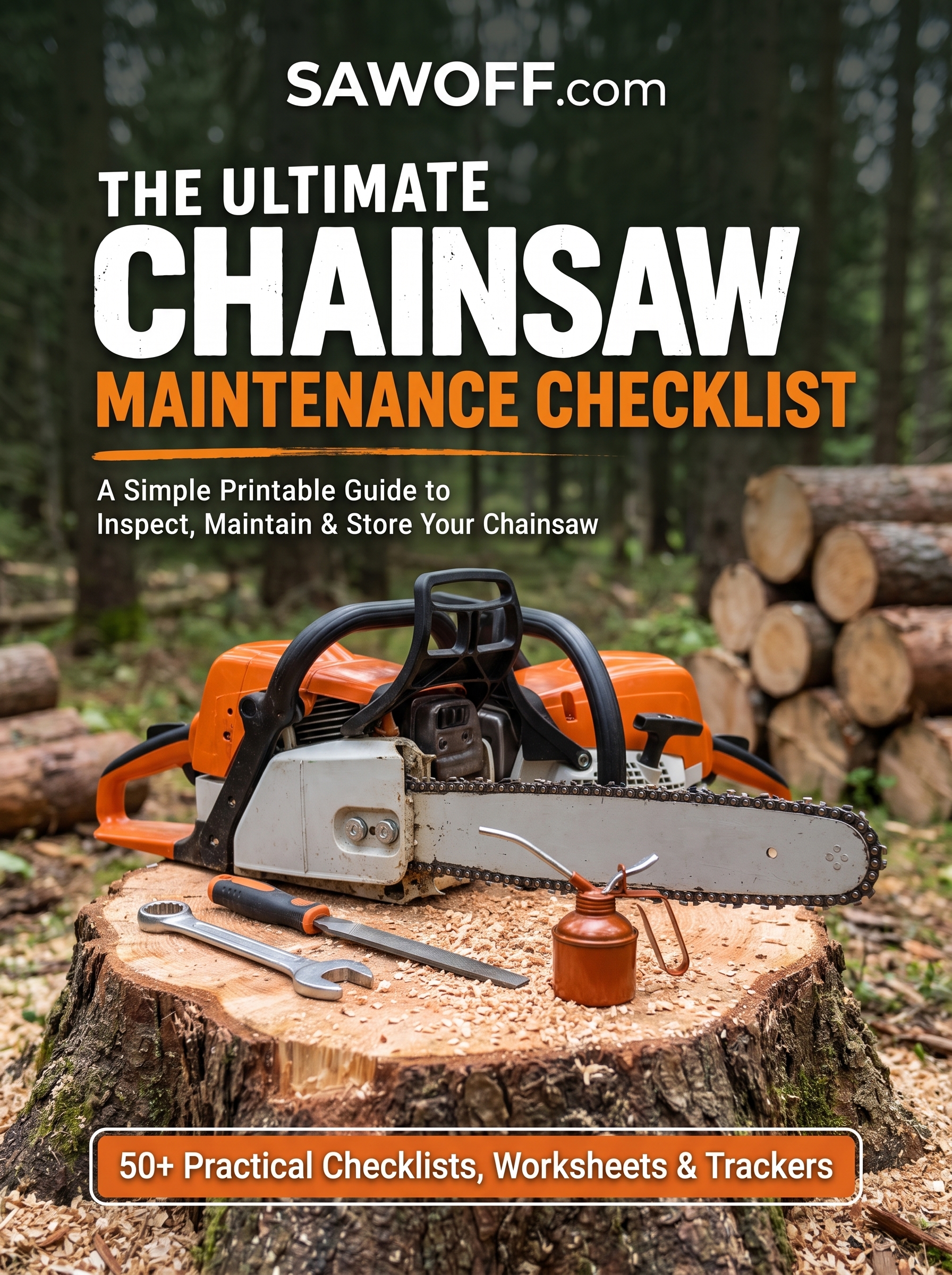
The Ultimate Chainsaw Maintenance Field Toolkit
The complete 96-page printable manual. Avoid costly $400 repairs, master 30°/35°/10° chain sharpening angles, and clear flooded engines in 30 seconds.
- ✓12 In-Depth Modules: Safety checks, service schedules & winterizing
- ✓Chain Sharpening Angles: 30° / 35° / 10° filing charts & raker depth specs
- ✓15 Free Bonus Templates: Angle cheat-sheets, logs & laminated pocket cards
Frequently Asked Questions
What chain fits a Husqvarna 450 Rancher?
The stock setup is a .325-inch pitch, .050-gauge chain with 72 drive links on the 18-inch bar (Husqvarna H30-72). Any full chisel or semi chisel .325/.050 chain cut to 72 DL will fit, including the Husqvarna X-Cut SP33G and Oregon .325-series alternatives.
Can I use a STIHL chain on a Husqvarna chainsaw?
Yes. If pitch, gauge, and drive-link count match, brand branding is irrelevant — a STIHL 3/8-inch, .050-gauge, 68-DL loop will physically run a Husqvarna 455 Rancher's 18-inch bar. One caution: cutter profiles differ slightly between brands, so after a swap run it light for the first tank and check bar and sprocket alignment.
What is the difference between .325 and 3/8 chainsaw chains?
.325 is a narrower pitch found on mid-size saws like the 450 Rancher; 3/8 is the wider pitch found on pro saws like the MS 261 and 572 XP. 3/8 cuts faster in clean wood but loads the engine more, while .325 gives less drag on a smaller powerhead. They are not interchangeable on the same saw.
How many drive links does an 18-inch chainsaw chain have?
It depends on pitch and gauge: a .325/.050 18-inch chain usually runs 72 drive links, while a 3/8 low-profile and a standard 3/8 18-inch chain both run about 68. Count links on your old chain or check the bar stamp; there is no universal number.
How do I know what pitch a chainsaw chain is?
Look for the pitch stamped into the guide bar — most OEM bars carry pitch and gauge on the tail. If nothing is stamped, measure the distance between three rivets and divide by two. A 3/8 chain has 0.375-inch rivet spacing; a .325 chain measures 0.325 inch.