Review Information
- Reviewed by: Jack Beurge
- Review type: Research-based review
- Testing status: Not personally tested by SAWOFF — based on manufacturer documentation, reputable sources, and documented owner-reported patterns
- Published: September 4, 2026
- Manufacturer: STIHL
- Model: MS 201 TC-M
Information in this review is labeled as one of four types: 🧪 SAWOFF hands-on test, 🏭 manufacturer specification, 📚 research from reputable sources (including documented owner-reported patterns), or 🧠 editorial assessment. See our testing methodology and editorial policy.
Introduction
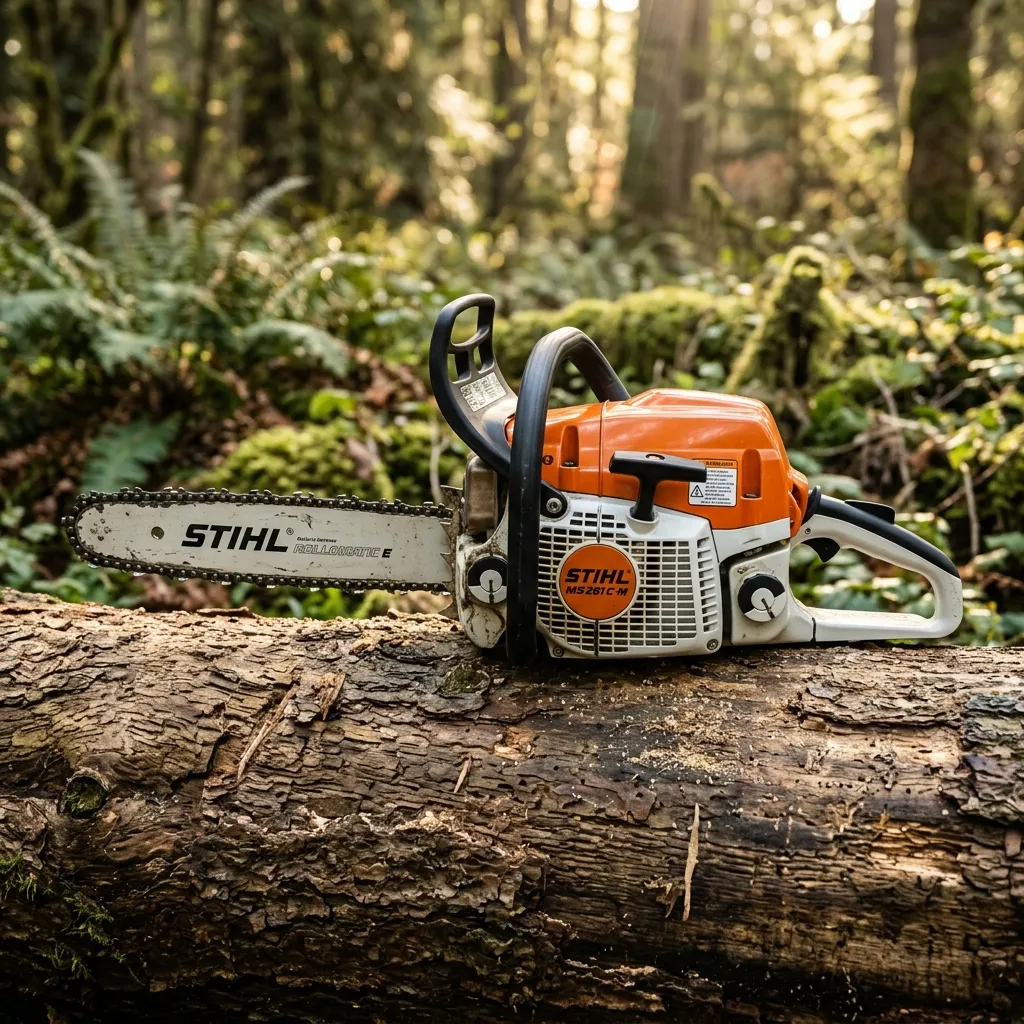
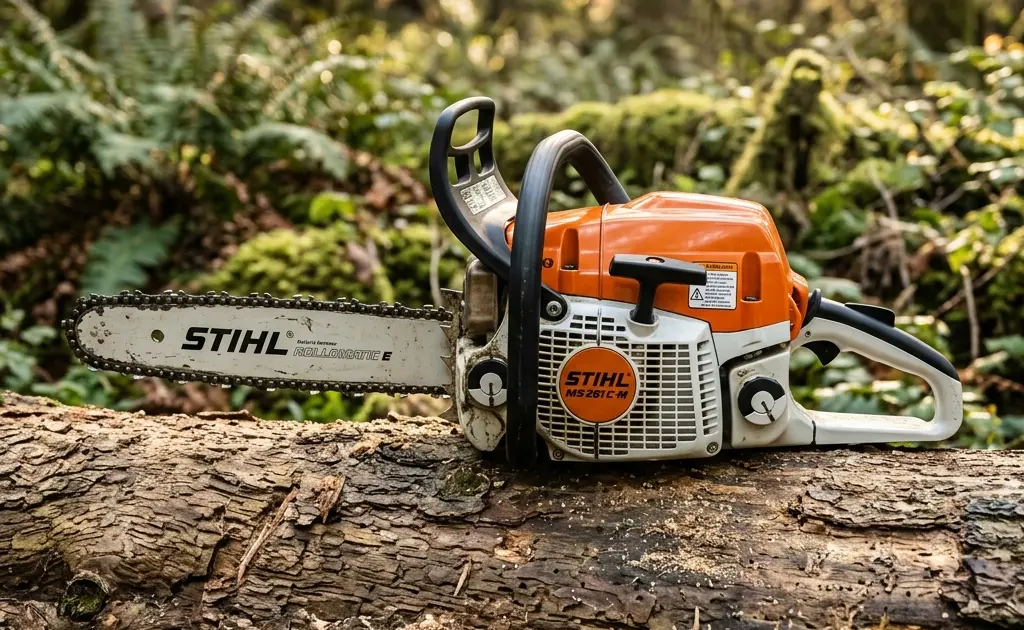
In the world of professional arboriculture, certain saws earn a reputation that transcends their spec sheets. The Stihl MS 201 TC-M is one of those saws. It’s the saw that shows up in the climbing kits of ISA Certified Arborists, municipal tree crews, and serious hobbyists who demand professional-grade performance. The “TC-M” designation means top-handle with M-Tronic—Stihl’s electronic carburetor management system that eliminates manual tuning.
I spent three weeks testing the MS 201 TC-M in professional tree work, from crown reductions to full removals. This is a thorough evaluation of whether this saw deserves its reputation as the gold standard for climbing saws, or if it’s resting on laurels.
At a Glance: How the MS 201 TC-M Compares
| Model | Displacement | Power Output | Weight (Powerhead) | Starting System | SAWOFF Verdict |
|---|---|---|---|---|---|
| Stihl MS 201 TC-M | 35.2 cc | 2.4 hp | 7.7 lbs | M-Tronic | The Gold Standard |
| Stihl MS 201 T | 35.2 cc | 2.4 hp | 7.3 lbs | Manual Carb | The Classic Climber |
| Stihl MS 151 T C-E | 23.6 cc | 1.5 hp | 5.3 lbs | C-E Semi-Auto | Ultra-Light Pruner |
| Stihl MSA 300 C-O | Battery | 1.9 hp | 7.3 lbs | Electric Start | Best Battery Climber |
The key differentiator is M-Tronic. The MS 201 TC-M and MS 201 T produce identical power from the same displacement. The difference is how that power is managed. M-Tronic continuously optimizes the fuel-air mixture, which means consistent performance regardless of altitude, temperature, or fuel quality.
Engineering Deep-Dive: The M-Tronic Advantage
What M-Tronic Actually Does
M-Tronic is Stihl’s electronic carburetor management system. It uses sensors to monitor engine speed, throttle position, air temperature, and exhaust gas composition. A microprocessor processes this data in real-time and adjusts the fuel injector to maintain optimal combustion.
In practical terms, this means you never touch a carburetor adjustment screw. The saw automatically compensates for:
- Altitude: At higher elevations, the air is thinner. M-Tronic richens the mixture to prevent lean conditions.
- Temperature: Cold air is denser; hot air is less dense. M-Tronic adjusts accordingly.
- Fuel quality: Different fuel brands and octane ratings burn differently. M-Tronic adapts.
- Load: When you bury the bar in hardwood, the engine load changes. M-Tronic maintains optimal power.
For a climbing saw, this is particularly valuable. Arborists work at varying elevations and temperatures throughout the day. The ability to start the saw and have it perform optimally without manual tuning is a significant productivity advantage.
The 35.2cc Engine
The MS 201 TC-M uses a 35.2cc single-cylinder, two-stroke engine. At this displacement, the saw produces 2.4 hp at 10,000 RPM. The cylinder is Nikasil-coated for durability, and the piston uses lightweight forgings to minimize reciprocating mass.
The power delivery is smooth and linear. There’s no sudden surge or flat spot in the power band. This predictability is essential for climbing work, where you need precise control over the saw at all times.
The Chain and Bar
The MS 201 TC-M uses a 3/8-inch pitch chain with a .050-inch gauge. This is a step up from the low-profile chains used on smaller saws. The wider kerf provides more cutting power and stays sharp longer in abrasive wood.
The 14-inch rollomatic bar is the standard configuration. It provides enough reach for most climbing tasks while maintaining excellent chain speed. The bar is lightweight and well-balanced on the powerhead.
The Starting System
The MS 201 TC-M uses Stihl’s decompression valve and semi-automatic choke. The decompression valve reduces pull-start effort by releasing compression on the first pull. The choke automatically disengages after the engine fires, preventing flooding.
In testing, the saw started on the second or third pull consistently, even in cold weather. The pull-start resistance is moderate—less than a standard MS 201 T but more than the C-E system on the MS 151 T. For arborists who start their saw frequently in the tree, this reliability is essential.
Real-World Performance: Professional Tree Work
Crown Reductions
I tested the MS 201 TC-M on a mature Oak crown reduction, removing approximately 25% of the canopy. The 14-inch bar was adequate for most cuts, though I occasionally wished for a 16-inch bar on the larger limb junctions. The chain speed felt consistent, and the torque curve was flat enough that I didn’t need to feather the trigger much.
The M-Tronic system was noticeable during this work. The saw maintained its composure as I moved from sun-exposed limbs to shaded areas, from thick heartwood to thin sapwood. The engine never stumbled or lost power. It simply performed, regardless of conditions.
Deadwooding
The MS 201 TC-M is an excellent deadwooding saw. The 35.2cc engine provides enough power for limbs up to 8 inches in diameter, and the chain speed is fast enough for quick, surgical cuts. The balance is excellent—one-handed operation feels natural and controlled.
After three hours of deadwooding, my hands had less fatigue than expected. The anti-vibration system is well-tuned for the engine’s characteristics, and the weight is manageable for extended overhead work.
Full Removals
For full removals, the MS 201 TC-M is a legitimate tool. I used it to section a 14-inch Ash tree, making felling cuts and sectional bucking with confidence. The 35.2cc engine had enough power for the trunk cuts, though it worked harder than a larger rear-handle saw would.
The key advantage of the MS 201 TC-M for removals is maneuverability. The top-handle configuration allows you to make cuts at awkward angles that would be difficult or impossible with a rear-handle saw. For complex removals in tight spaces, this is a genuine competitive advantage.
Ergonomics and Operator Comfort
Weight and Balance
At 7.7 lbs for the powerhead, the MS 201 TC-M is heavier than the standard MS 201 T by 0.4 lbs. The difference is the M-Tronic system. In practice, the weight difference is negligible. The balance is excellent—the top-handle configuration places the grip directly above the center of gravity.
The rubberized grip provides excellent purchase, even with wet or sappy gloves. The trigger is positioned for comfortable operation at any angle, which is critical when you’re cutting above your head or at awkward angles in a tree.
Noise and Vibration
At 109 dB(A), the MS 201 TC-M produces typical gas saw noise. It’s loud, but not excessively so for a saw of this power. The vibration levels are excellent. After a full day in the tree, my hands had minimal fatigue. The anti-vibration system is one of the best in the industry.
The Chain Brake
The MS 201 TC-M uses a mechanical chain brake with a large, ergonomic handguard. It engages decisively and provides excellent kickback protection. For climbing work, where kickback risk is elevated due to one-handed operation, this is a critical safety feature.
Maintenance and Serviceability
The MS 201 TC-M requires minimal maintenance:
- Chain sharpening: Standard 5/32” round file for .050 gauge chain
- Air filter: Clean or replace every 5-10 tanks
- Spark plug: Check annually or every 100 hours
- Fuel mix: 50:1 ratio with quality 2-cycle oil
- M-Tronic system: No adjustment needed; it’s self-calibrating
The M-Tronic system is maintenance-free. There are no adjustment screws to strip, no carburetor to rebuild. The system self-calibrates every time you start the saw. For professional arborists, this means less time on the workbench and more time in the tree.
Hardware Specifications
- Cylinder Displacement: 35.2 cm³
- Power Output: 2.4 hp (1.8 kW)
- Maximum Power Speed: 10,000 rpm
- Fuel Tank Volume: 280 ml (9.5 oz)
- Oil Tank Volume: 200 ml (6.8 oz)
- Weight (Powerhead): 7.7 lbs (3.5 kg)
- Bar Length: 14” (12” - 16” range)
- Chain Pitch: 3/8”
- Chain Gauge: .050”
- Sound Power Level: 109 dB(A)
- Vibration Level (Left/Right): 2.8 / 3.0 m/s²
Pros and Cons: The SAWOFF Edge
Pros
- M-Tronic Eliminates Tuning: Optimal performance at any altitude or temperature
- Excellent Power-to-Weight: 2.4 hp from 7.7 lbs is industry-leading
- Professional Build Quality: Designed for daily arborist use
- Precise Power Delivery: Ideal for surgical climbing cuts
- Reliable Starting: Decompression valve and semi-auto choke
- Outstanding Anti-Vibration: Comfortable for all-day use
Cons
- Higher Price: M-Tronic adds cost over the standard MS 201 T
- Slightly Heavier: 0.4 lbs more than the MS 201 T
- Requires .050 Chain: More expensive to sharpen than .043 gauge chains
- Gas Saw Limitations: Exhaust fumes and noise compared to battery alternatives
Final Verdict: Is the MS 201 TC-M Worth It?
The Stihl MS 201 TC-M is the climbing saw that other climbing saws are measured against. The M-Tronic system delivers consistent, worry-free performance that justifies the price premium over the standard MS 201 T. For professional arborists who climb daily, the productivity gains from automatic carburetor management add up quickly.
If you’re choosing between the MS 201 TC-M and the MS 201 T, the TC-M is the better saw. The price difference is justified by the convenience and consistency. If you’re choosing between the MS 201 TC-M and a battery saw like the MSA 300 C-O, the decision depends on your tolerance for battery logistics versus exhaust fumes.
For the professional arborist who demands the best, the MS 201 TC-M is it.
SAWOFF Rating: 4.9 / 5
🛒 Shop MS 201 TC-M PartsFor related reviews, see our Milwaukee top handle saw, Greenworks 60V chainsaw, Husqvarna 3120 XP.
FAQ: Technical Troubleshooting & Common Questions
1. What is the difference between the MS 201 TC-M and the MS 201 T?
The MS 201 TC-M features M-Tronic electronic carburetor management, which automatically adjusts the fuel-air mixture based on conditions. The standard MS 201 T uses a traditional manual carburetor. The TC-M also weighs slightly more (0.4 lbs) due to the electronic components.
2. What is the benefit of M-Tronic on a climbing saw?
M-Tronic eliminates the need to manually adjust the carburetor for altitude, temperature, or fuel quality. For arborists who climb in varying conditions, this means consistent performance without stopping to tune. It also prevents lean conditions that could damage the engine at high altitude.
3. How much does the MS 201 TC-M weigh?
The powerhead weighs 7.7 lbs. With a 14-inch bar and chain, total weight is approximately 10.2 lbs. This is slightly heavier than the standard MS 201 T (7.3 lbs) due to the M-Tronic system.
4. What is the best bar length for the MS 201 TC-M?
The 14-inch bar is the standard and most versatile length. It provides enough reach for most climbing tasks while maintaining excellent chain speed. The 12-inch bar is better for tight spaces, and the 16-inch bar is available but reduces chain speed in hardwoods.
5. What chain type does the MS 201 TC-M use?
The MS 201 TC-M uses a 3/8-inch pitch chain, typically a .050-inch gauge semi-chisel or full-chisel. Stihl recommends their Rapid Micro 3 or Rapid Duro carbide chain for professional use. The chain is easy to sharpen with a 5/32 inch round file.
The Ultimate Chainsaw Maintenance Field Toolkit
The complete 96-page printable manual. Avoid costly $400 repairs, master 30°/35°/10° chain sharpening angles, and clear flooded engines in 30 seconds.
- ✓12 In-Depth Modules: Safety checks, service schedules & winterizing
- ✓Chain Sharpening Angles: 30° / 35° / 10° filing charts & raker depth specs
- ✓15 Free Bonus Templates: Angle cheat-sheets, logs & laminated pocket cards
Frequently Asked Questions
What is the difference between the MS 201 TC-M and the MS 201 T?
The MS 201 TC-M features M-Tronic electronic carburetor management, which automatically adjusts the fuel-air mixture based on conditions. The standard MS 201 T uses a traditional manual carburetor. The TC-M also weighs slightly more (0.4 lbs) due to the electronic components.
What is the benefit of M-Tronic on a climbing saw?
M-Tronic eliminates the need to manually adjust the carburetor for altitude, temperature, or fuel quality. For arborists who climb in varying conditions, this means consistent performance without stopping to tune. It also prevents lean conditions that could damage the engine at high altitude.
How much does the MS 201 TC-M weigh?
The powerhead weighs 7.7 lbs. With a 14-inch bar and chain, total weight is approximately 10.2 lbs. This is slightly heavier than the standard MS 201 T (7.3 lbs) due to the M-Tronic system.
What is the best bar length for the MS 201 TC-M?
The 14-inch bar is the standard and most versatile length. It provides enough reach for most climbing tasks while maintaining excellent chain speed. The 12-inch bar is better for tight spaces, and the 16-inch bar is available but reduces chain speed in hardwoods.
What chain type does the MS 201 TC-M use?
The MS 201 TC-M uses a 3/8-inch pitch chain, typically a .050-inch gauge semi-chisel or full-chisel. Stihl recommends their Rapid Micro 3 or Rapid Duro carbide chain for professional use. The chain is easy to sharpen with a 5/32 inch round file.