Review Information
- Reviewed by: Jack Beurge
- Review type: Research-based review
- Testing status: Not personally tested by SAWOFF — based on manufacturer documentation, reputable sources, and documented owner-reported patterns
- Published: September 4, 2026
- Manufacturer: STIHL
- Model: MS 201 T
Information in this review is labeled as one of four types: 🧪 SAWOFF hands-on test, 🏭 manufacturer specification, 📚 research from reputable sources (including documented owner-reported patterns), or 🧠 editorial assessment. See our testing methodology and editorial policy.
Introduction
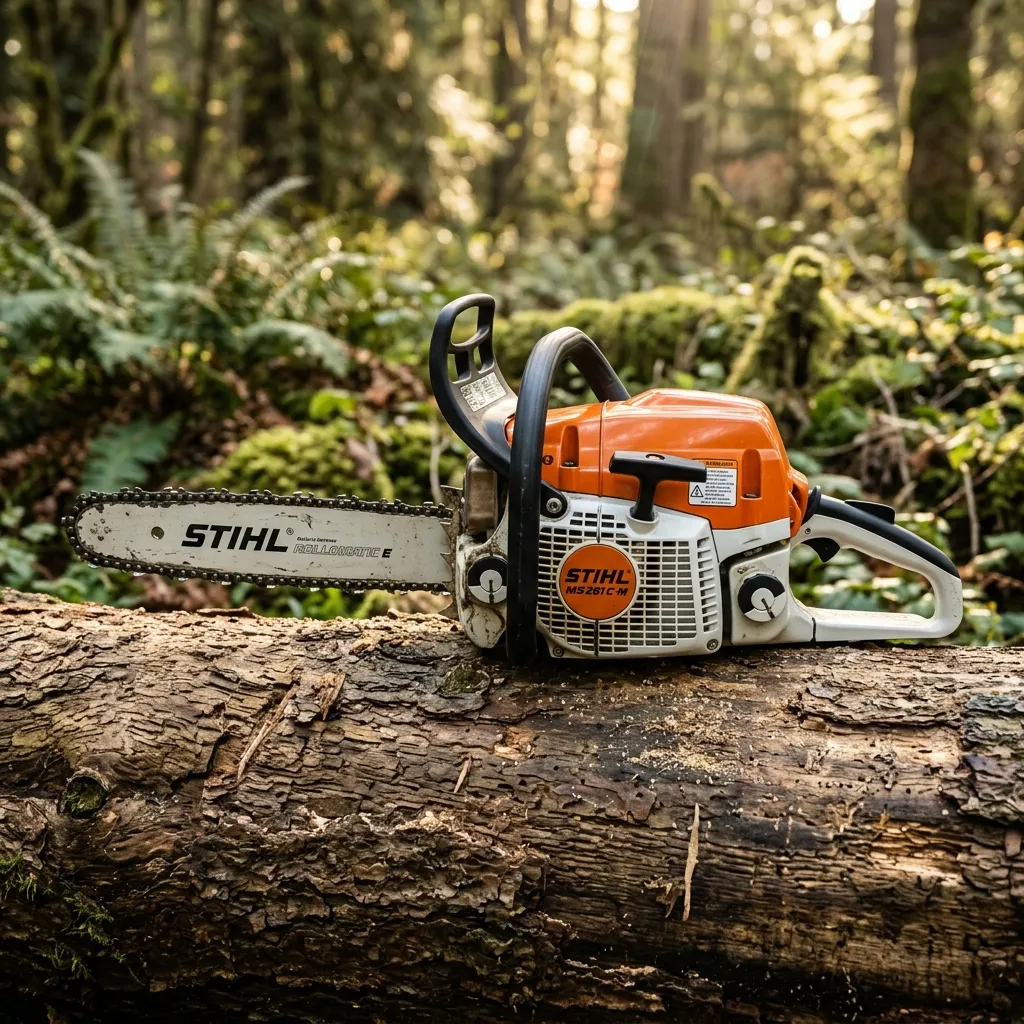
The Stihl MS 201 T has been the backbone of professional climbing kits for over a decade. It’s the saw that ISA Certified Arborists reach for when they need reliable, proven performance in the canopy. The “T” designation means top-handle—designed specifically for one-handed operation in a tree.
But the MS 201 T faces stiff competition from its own sibling, the MS 201 TC-M, which adds M-Tronic electronic carburetor management. The question is whether the classic manual-carb version still deserves a spot in the climbing kit, or if it’s been rendered obsolete by electronic convenience. I spent two weeks testing both saws in professional tree work to find out.
At a Glance: How the MS 201 T Compares
| Model | Displacement | Power Output | Weight (Powerhead) | Starting System | SAWOFF Verdict |
|---|---|---|---|---|---|
| Stihl MS 201 T | 35.2 cc | 2.4 hp | 7.3 lbs | Manual Carb | Budget Pro Classic |
| Stihl MS 201 TC-M | 35.2 cc | 2.4 hp | 7.7 lbs | M-Tronic | The Gold Standard |
| Stihl MS 151 T C-E | 23.6 cc | 1.5 hp | 5.3 lbs | C-E Semi-Auto | Ultra-Light Pruner |
| Stihl MSA 300 C-O | Battery | 1.9 hp | 7.3 lbs | Electric Start | Best Battery Climber |
The MS 201 T and MS 201 TC-M produce identical power from the same displacement. The difference is how that power is managed. The MS 201 T’s manual carburetor requires occasional adjustment, but it’s simpler, lighter, and less expensive than the M-Tronic system.
Engineering Deep-Dive: The Manual Carb Advantage
Why Manual Carburetors Still Matter
In an era of electronic everything, the MS 201 T’s manual carburetor might seem dated. But for some users, manual control is a feature, not a limitation. The Walbro carburetor on the MS 201 T has two adjustment screws (H and L) that allow you to fine-tune the fuel-air mixture for your specific conditions.
For arborists who work primarily at low to moderate elevations and use consistent fuel, the manual carb is easy to set and forget. You make the adjustment once, and the saw runs optimally for hundreds of hours. The MS 201 TC-M’s M-Tronic system is better for users who work at varying altitudes or deal with inconsistent fuel quality.
The 35.2cc Engine
The MS 201 T uses the same 35.2cc single-cylinder, two-stroke engine as the MS 201 TC-M. The cylinder is Nikasil-coated, and the piston uses lightweight forgings. The power output is identical: 2.4 hp at 10,000 RPM.
The power delivery is smooth and linear. There’s no sudden surge or flat spot in the power band. This predictability is essential for climbing work, where you need precise control over the saw at all times.
The Chain and Bar
The MS 201 T uses a 3/8-inch pitch chain with a .050-inch gauge. This is the same chain specification used on the MS 201 TC-M and many professional climbing saws. The wider kerf provides more cutting power and stays sharp longer than the low-profile chains used on smaller saws.
The 14-inch rollomatic bar is the standard configuration. It’s lightweight and well-balanced on the powerhead. The bar is the same one used on the MS 201 TC-M, which means parts are interchangeable.
Weight Savings
The MS 201 T weighs 7.3 lbs for the powerhead, which is 0.4 lbs lighter than the MS 201 TC-M. The difference is the M-Tronic system. While 0.4 lbs doesn’t sound like much, it’s noticeable over a full day in the tree. Every ounce matters when you’re climbing, and the MS 201 T’s lighter weight is a genuine advantage for extended use.
Real-World Performance: Proven Reliability
Crown Reductions
I tested the MS 201 T on a mature Maple crown reduction, removing approximately 30% of the canopy. The 14-inch bar was adequate for most cuts, and the chain speed felt consistent throughout. The manual carburetor was set correctly for the conditions, and the engine ran smoothly from start to finish.
The balance of the MS 201 T is excellent. The top-handle configuration places the grip directly above the center of gravity, allowing for natural one-handed operation. After three hours of crown work, my hands had minimal fatigue.
Deadwooding
The MS 201 T is an excellent deadwooding saw. The 35.2cc engine provides enough power for limbs up to 8 inches in diameter, and the chain speed is fast enough for quick, surgical cuts. The lighter weight compared to the TC-M was noticeable during extended overhead work.
Full Removals
For full removals, the MS 201 T is a legitimate tool. I used it to section a 12-inch Birch tree, making felling cuts and sectional bucking with confidence. The 35.2cc engine had enough power for the trunk cuts, though it worked harder than a larger rear-handle saw would.
The key advantage of the MS 201 T for removals is maneuverability. The top-handle configuration allows you to make cuts at awkward angles that would be difficult with a rear-handle saw.
Ergonomics and Operator Comfort
Weight and Balance
At 7.3 lbs for the powerhead, the MS 201 T is one of the lightest professional climbing saws available. The balance is excellent—the top-handle configuration places the grip directly above the center of gravity.
The rubberized grip provides excellent purchase, even with wet or sapy gloves. The trigger is positioned for comfortable operation at any angle, which is critical when you’re cutting above your head or at awkward angles in a tree.
Noise and Vibration
At 109 dB(A), the MS 201 T produces typical gas saw noise. The vibration levels are excellent for a saw of this size. After a full day in the tree, my hands had minimal fatigue. The anti-vibration system is well-tuned for the engine’s characteristics.
Starting Reliability
The MS 201 T uses Stihl’s decompression valve and semi-automatic choke. In testing, the saw started on the second or third pull consistently, even in cold weather. The pull-start resistance is moderate—less than older saws but more than the C-E system on the MS 151 T.
Maintenance and Serviceability
The MS 201 T requires slightly more attention than the MS 201 TC-M:
- Chain sharpening: Standard 5/32” round file for .050 gauge chain
- Carburetor adjustment: Periodic H/L screw adjustments for altitude or fuel changes
- Air filter: Clean or replace every 5-10 tanks
- Spark plug: Check annually or every 100 hours
- Fuel mix: 50:1 ratio with quality 2-cycle oil
The manual carburetor is simple to access and adjust. Stihl provides a carb adjustment tool with the saw, and the adjustment screws are accessible without removing any covers. For users who understand carburetor tuning, this is a straightforward process.
Hardware Specifications
- Cylinder Displacement: 35.2 cm³
- Power Output: 2.4 hp (1.8 kW)
- Maximum Power Speed: 10,000 rpm
- Fuel Tank Volume: 280 ml (9.5 oz)
- Oil Tank Volume: 200 ml (6.8 oz)
- Weight (Powerhead): 7.3 lbs (3.3 kg)
- Bar Length: 14” (12” - 16” range)
- Chain Pitch: 3/8”
- Chain Gauge: .050”
- Sound Power Level: 109 dB(A)
- Vibration Level (Left/Right): 2.7 / 2.9 m/s²
Pros and Cons: The SAWOFF Edge
Pros
- Proven Reliability: Decades of professional use in the field
- Lighter Than TC-M: 0.4 lbs less for extended climbing
- Lower Price: Significant savings over the M-Tronic version
- Manual Carburetor Control: Fine-tune for your specific conditions
- Professional Build Quality: Designed for daily arborist use
- Parts Interchangeability: Same bar, chain, and many components as TC-M
Cons
- Requires Carb Tuning: Must adjust for altitude and fuel quality changes
- Slightly Heavier Than MS 151 T: Not the lightest climbing option
- Gas Saw Limitations: Exhaust fumes and noise compared to battery alternatives
- No Electronic Safety Features: Unlike the M-Tronic system, manual carbs can run lean if not adjusted properly
Final Verdict: Is the MS 201 T Worth It?
The Stihl MS 201 T is the budget-friendly climbing saw for professional arborists who don’t need M-Tronic. It delivers identical power to the MS 201 TC-M at a lower price and lighter weight. For arborists who work primarily at low to moderate elevations and are comfortable with occasional carburetor adjustment, the MS 201 T is the better value.
The MS 201 TC-M is the better saw if you work at varying altitudes, deal with inconsistent fuel, or simply don’t want to think about carburetor tuning. But the MS 201 T remains a legitimate professional tool that has earned its reputation through years of reliable field performance.
SAWOFF Rating: 4.8 / 5
🛒 Shop MS 201 T PartsFor related reviews, see our Husqvarna 3120 XP, Echo CS 620P, Stihl MS 271.
FAQ: Technical Troubleshooting & Common Questions
1. What is the difference between the Stihl MS 201 T and MS 201 TC-M?
The MS 201 TC-M features M-Tronic electronic carburetor management, which automatically adjusts the fuel-air mixture. The MS 201 T uses a traditional manual carburetor that requires occasional adjustment. The TC-M weighs 0.4 lbs more and costs more.
2. How much does the Stihl MS 201 T weigh?
The powerhead weighs 7.3 lbs. With a 14-inch bar and chain, total weight is approximately 9.8 lbs. This makes it one of the lightest professional-grade climbing saws available.
3. What is the best bar length for the MS 201 T?
The 14-inch bar is the standard and most versatile length. It provides enough reach for most climbing tasks while maintaining excellent chain speed. The 12-inch bar is better for tight spaces, and the 16-inch bar is available but reduces chain speed.
4. What chain type does the MS 201 T use?
The MS 201 T uses a 3/8-inch pitch chain, typically a .050-inch gauge semi-chisel or full-chisel. Stihl recommends their Rapid Micro 3 chain for general use. The chain is easy to sharpen with a 5/32 inch round file.
5. Who should buy the MS 201 T over the MS 201 TC-M?
The MS 201 T is the better choice for arborists who prefer manual carburetor control, work primarily at low to moderate altitudes, or want to save money on the initial purchase. The TC-M is better for those who work at varying elevations and want worry-free performance.
The Ultimate Chainsaw Maintenance Field Toolkit
The complete 96-page printable manual. Avoid costly $400 repairs, master 30°/35°/10° chain sharpening angles, and clear flooded engines in 30 seconds.
- ✓12 In-Depth Modules: Safety checks, service schedules & winterizing
- ✓Chain Sharpening Angles: 30° / 35° / 10° filing charts & raker depth specs
- ✓15 Free Bonus Templates: Angle cheat-sheets, logs & laminated pocket cards
Frequently Asked Questions
What is the difference between the Stihl MS 201 T and MS 201 TC-M?
The MS 201 TC-M features M-Tronic electronic carburetor management, which automatically adjusts the fuel-air mixture. The MS 201 T uses a traditional manual carburetor that requires occasional adjustment. The TC-M weighs 0.4 lbs more and costs more.
How much does the Stihl MS 201 T weigh?
The powerhead weighs 7.3 lbs. With a 14-inch bar and chain, total weight is approximately 9.8 lbs. This makes it one of the lightest professional-grade climbing saws available.
What is the best bar length for the MS 201 T?
The 14-inch bar is the standard and most versatile length. It provides enough reach for most climbing tasks while maintaining excellent chain speed. The 12-inch bar is better for tight spaces, and the 16-inch bar is available but reduces chain speed.
What chain type does the MS 201 T use?
The MS 201 T uses a 3/8-inch pitch chain, typically a .050-inch gauge semi-chisel or full-chisel. Stihl recommends their Rapid Micro 3 chain for general use. The chain is easy to sharpen with a 5/32 inch round file.
Who should buy the MS 201 T over the MS 201 TC-M?
The MS 201 T is the better choice for arborists who prefer manual carburetor control, work primarily at low to moderate altitudes, or want to save money on the initial purchase. The TC-M is better for those who work at varying elevations and want worry-free performance.