Stihl Chainsaws Ultimate Guide: Every Model, System & Buying Decision Explained
I’ve spent the better part of two decades with a Stihl chainsaw in my hands. From the frozen hardwood forests of the Northeast to the storm-ravaged canopies of the Gulf Coast, I’ve buried bars in every species of wood this continent can throw at you. If you’re reading this, you already know Stihl is the gold standard. But the question is never “Is Stihl good?” — it’s “Which Stihl is mine?”
The modern Stihl lineup is broader and more complex than ever. Gas, battery, top-handle, rear-handle, M-Tronic, 2-MIX, Ematic, Quickstop — the vocabulary alone can feel like a foreign language. That’s why this guide exists. This is the single resource that connects every Stihl topic into one coherent picture.
Below, you’ll find the master overview. Click through to any cluster article for the full deep-dive on that specific topic.
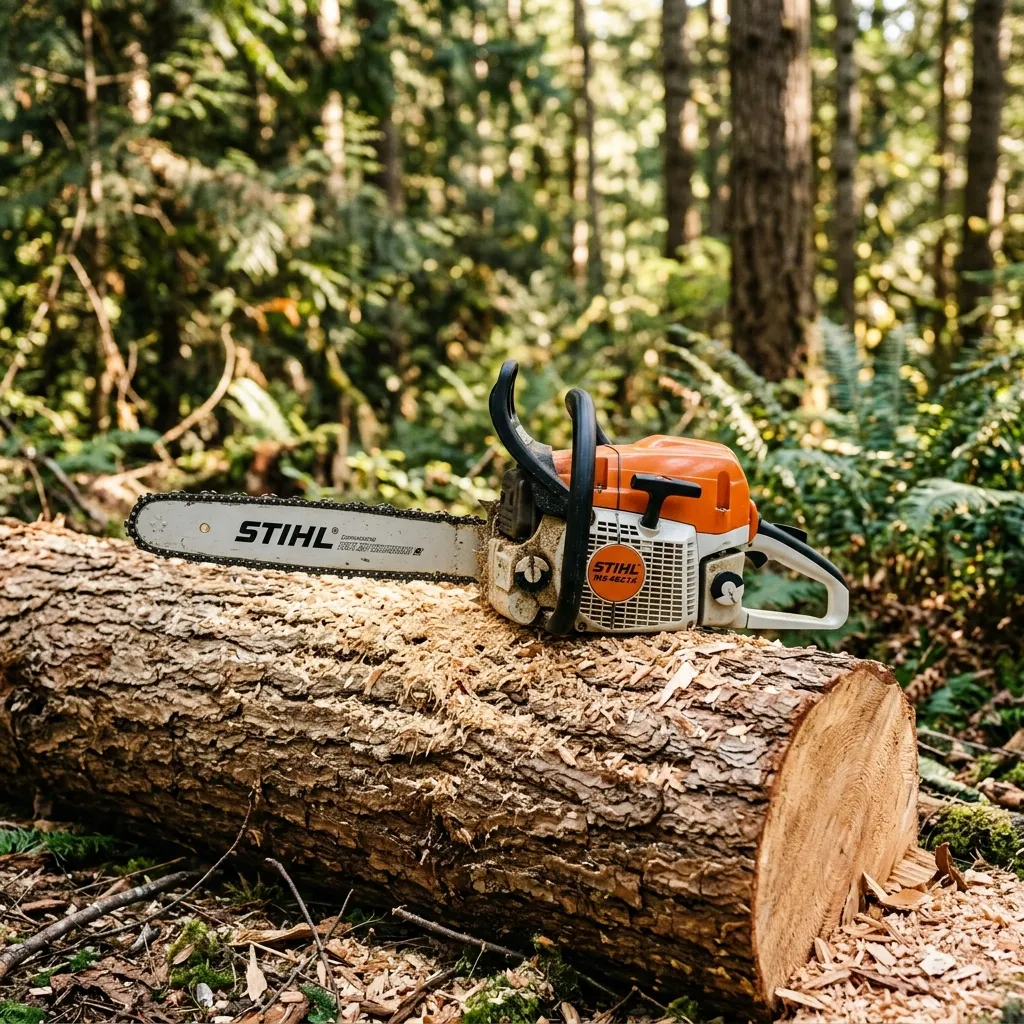
The Stihl Ecosystem at a Glance
Before we descend into the engineering, let’s map the entire Stihl landscape. Every saw falls into one of four tiers, each with its own design philosophy, materials, and intended duty cycle.
| Tier | Models | Power Source | Crankcase | Typical Bar | Price Range | Best For |
|---|---|---|---|---|---|---|
| Homeowner | MS 170, MS 180, MS 211, MS 250 | Gas (2-MIX) | Polymer Clamshell | 12”-16” | $180-$350 | Light pruning, storm cleanup, occasional yard work |
| Farm & Ranch | MS 251 Wood Boss, MS 271 Farm Boss, MS 291 | Gas (2-MIX) | Polymer/Metal Hybrid | 16”-20” | $350-$500 | Firewood, fencing, large property maintenance |
| Professional | MS 261, MS 362, MS 391, MS 400, MS 462 | Gas (2-MIX, M-Tronic) | Magnesium | 16”-28” | $600-$1,300 | Daily arborist work, logging, tree service |
| Pro Heavy-Duty | MS 500i, MS 661, MS 881 | Gas (EFI / M-Tronic) | Magnesium | 20”-41” | $1,400-$2,200 | Big timber felling, milling, production logging |
| Battery (MSA) | MSA 120, MSA 140, MSA 161 T, MSA 200, MSA 220, MSA 300 | Battery (AK / AP) | Polymer/Composite | 10”-20” | $180-$700 | Noise-sensitive areas, light-medium duty, in-tree work |
1. Gas vs Battery: The Power Source Decision
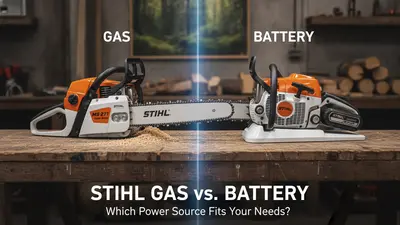
The most fundamental choice you’ll make is power source. Stihl now offers two parallel universes — gas and battery — and each has evolved to a point where the “right” answer depends entirely on your use case.
Gas still rules when you need sustained high power for hours on end. A saw like the Stihl MS 261 C-M will run all day on a tank of premix, through thick and thin, in freezing temperatures or blistering heat. The energy density of gasoline is simply unmatched — one gallon of 50:1 mix contains roughly 50x the energy of a fully charged AP 500 S battery.
Battery has closed the gap dramatically. The Stihl MSA 300 C-O with an AP 500 S battery produces 3.0 kW in boost mode — genuinely competitive with the MS 261. The instant torque of an EC motor means no spool-up lag, no warm-up, no pull-cord fatigue. For noise-sensitive residential work or quick in-tree cuts, battery is often the superior tool.
The hybrid reality: Most working arborists I know now run both. Gas for the big felling and all-day production; battery for the quick limbing, the early-morning residential jobs, and the work near noise ordinances. Stihl’s AP battery system is shared across the lineup, making the ecosystem investment worthwhile.
For the full breakdown, read: Stihl Gas vs Battery Chainsaw: Which Power Source Fits Your Needs?
🛒 Shop Stihl Gas Chainsaws 🛒 Shop Stihl Battery Chainsaws2. Homeowner Chainsaws: What the Casual User Needs
If you’re clearing fallen branches after a storm, trimming limbs around the property, or cutting a few cords of firewood per year, you’re in the homeowner category. This doesn’t mean “low quality” — it means optimized for your duty cycle.
The Stihl MS 170 is the entry point at 8.6 lbs and 30.1cc. It’s the saw I recommend to anyone who needs a chainsaw fewer than 20 times a year. It starts easily, the 2-MIX engine sips fuel, and the 14-inch bar handles 90% of what a homeowner will encounter.
Step up to the MS 250 if you have more land or consistently cut wood up to 16 inches in diameter. At 45.4cc and 10.1 lbs, it has the torque to pull through hardwood without bogging. The MS 251 Wood Boss adds the 2-MIX engine to this displacement class for better fuel efficiency and lower emissions.
For those who want zero maintenance and instant start, the MSA 140 C-B battery saw with the AK system delivers a surprisingly capable 14-inch cut in a 5.7-lb package.
Read the full guide: The Best Stihl Chainsaws for Homeowners and Yard Maintenance
3. Professional Models: The Arborist & Logger Standard
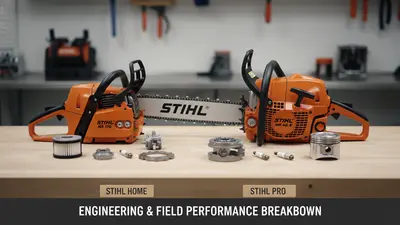
When you cross into the white-handle, magnesium-crankcase territory, you’ve entered Stihl’s professional realm. These saws are engineered for 8-hour workdays, 6 days a week, with rebuildable engines and field-serviceable components.
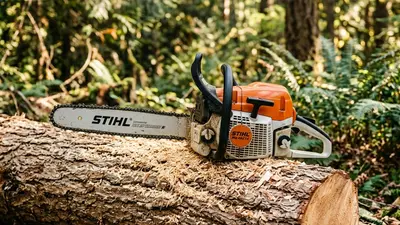
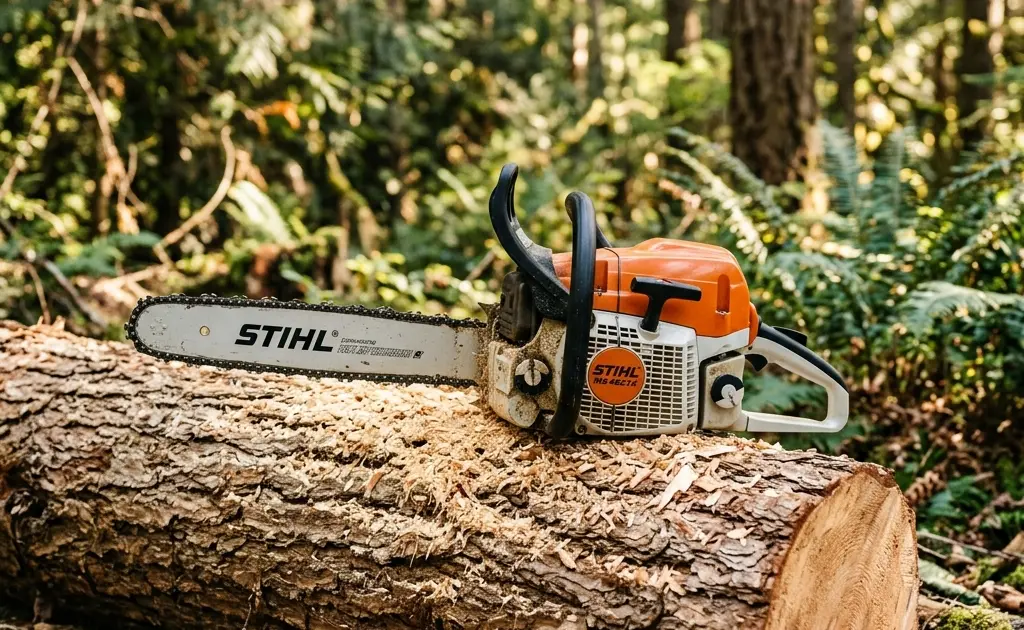
The Stihl MS 261 C-M is the backbone of the professional lineup. At 50.2cc with M-Tronic 3.0 electronic engine management, it’s the saw that defined the modern mid-range pro category. It’s light enough for limbing (10.8 lbs) but torquey enough for felling medium timber. I’ve owned mine for seven years and it has never failed to start.
The MS 462 C-M is the sweet spot for production loggers who need more displacement (72.2cc) without jumping to the heavy 90cc class. It pulls a 25-inch bar effortlessly and weighs just 13.2 lbs — an astonishing power-to-weight ratio.
The MS 500i is the technological flagship, with electronic fuel injection that eliminates the carburetor entirely. The throttle response is instantaneous — no bog, no hesitation. For a production feller, that translates directly into more board feet per day.
At the top sits the MS 881 — a 91.1cc monster built for the biggest timber and milling operations. It’s not a saw for the faint of heart; it’s a tool for professionals who make their living in the woods.
Full analysis: Stihl Professional Chainsaw Models: The Complete Arborist & Logger Guide
4. Decoding Model Numbers: What MS, MSA, MSE, and Suffixes Mean
Stihl’s naming convention is logical once you understand the system. Every character communicates something about the saw’s architecture, power source, and intended use.
Prefixes:
- MS — Motosäge (motor saw), the standard gas-powered line
- MSA — Motosäge Akku, battery-powered (the “A” means Akku, German for battery)
- MSE — Motosäge Elektro, corded electric
Displacement Digits: The number (170, 261, 500i, etc.) generally indicates the engine displacement or model generation. Higher numbers = larger engines. The “i” in MS 500i denotes fuel injection.
Key Suffixes:
- C — Comfort, usually incorporating elastomer anti-vibration mounts and a more ergonomic handle
- M — M-Tronic (electronic engine management)
- T — Top-handle design (primarily for arborists climbing in trees)
- B — Battery (on MSA models) or “bump” oiler on gas models
- E — Easy2Start (reduced pull-force recoil starter)
- Q — Quickstop Plus (chain brake engages when rear handle is released)
Understanding these codes lets you decode any Stihl model instantly. The MS 261 C-M, for example, is a gas saw with M-Tronic and comfort features. The MSA 161 T is a battery, top-handle saw.
Full decoder: Stihl Chainsaw Model Numbers Explained
5. Farm & Ranch: The Wood Boss and Farm Boss Deep-Dive
The “Boss” series occupies Stihl’s most important category — the prosumer sweet spot. These saws deliver professional-grade torque in a package that doesn’t require a magnesium-crankcase budget.
The MS 251 Wood Boss (45.6cc, 3.0 bhp, 10.8 lbs) is the modern successor to the legendary MS 250, with the addition of Stihl’s 2-MIX engine technology. It’s the ideal saw for the landowner who cuts 5-15 cords of firewood per year. The polymer clamshell design keeps weight down and cost manageable.
The MS 271 Farm Boss (50.2cc, 3.5 bhp, 12.3 lbs) steps up in displacement and torque. The defining feature is the pre-separation air filtration system — the flywheel uses centrifugal force to eject dust before it reaches the filter. In practical terms, this means you can run the saw for hours in dirty conditions without cleaning the filter. For fencing, clearing brush, and heavy firewood cutting, this is the gold standard.
Both saws share the 2-MIX stratified scavenging architecture, giving them roughly 20% better fuel economy than their predecessors. Neither has M-Tronic (that’s reserved for the pro line), so you’ll need a screwdriver for carb adjustments at altitude.
Complete review: Stihl Farm and Ranch Chainsaws: Heavy-Duty Wood Boss & Farm Boss Review
🛒 Check MS 271 Farm Boss Price6. The Lightest Stihl Models: Pruning, Carving & Overhead Work
Weight matters. When you’re working above your shoulders for hours, every gram translates directly into fatigue. Stihl’s lightweight lineup is engineered with this reality in mind.
The MS 151 C-E is the lightest gas chainsaw Stihl makes at just 5.7 lbs (powerhead). The 23.6cc 2-MIX engine is paired with a 1/4-inch PM3 chain that delivers surgical precision. This is the saw for carvers, detail pruners, and arborists who need maximum maneuverability. The Easy2Start system means the pull force is reduced by roughly 50%.
The MS 194 T (7.3 lbs, 31.8cc) is the standard for professional climbing arborists. It uses a magnesium crankcase in a compact top-handle form factor. With a 12-inch bar and 3/8-inch P chain, it balances power and weight perfectly for limbing and medium pruning in the canopy.
On the battery side, the MSA 161 T matches the 194 T’s form factor but weighs even less. The EC motor delivers instant torque with no warm-up — ideal for the quick cuts required during a removal.
For the weight-conscious homeowner, the MS 170 at 8.6 lbs is the lightest full-size rear-handle option, and it remains one of the best values in the lineup.
See the full lightweight breakdown: The Lightest Stihl Chainsaws: Best Options for Pruning, Carving & Light Use
7. Battery Buying Guide: MSA Series & AP/AK Systems
Stihl’s battery ecosystem is built around two platform tiers: AK (compact, lower power) and AP (professional, high power). Understanding the difference is critical before you invest.
AK System (12V): Designed for the homeowner and light-user MSA models (MSA 120, MSA 140). These batteries are smaller, lighter, and less expensive. The AK 30 battery weighs about 2.6 lbs and provides roughly 30 minutes of intermittent cutting. For suburban pruning and occasional limb cleanup, this is a cost-effective entry point into battery power.
AP System (36V): The professional battery platform. The AP 300 S (4.6 Ah) and AP 500 S (6.9 Ah) deliver the power needed for sustained cutting. The MSA 220 C-B and MSA 300 C-O run on AP batteries. The MSA 300 in boost mode with an AP 500 S produces 3.0 kW — genuinely competitive with a gas MS 261.
Real-world runtime: Under heavy continuous cutting, an AP 500 S lasts about 35-45 minutes on the MSA 300. Under light pruning, expect 60-90 minutes. The charger takes roughly 60 minutes for a full charge. Most pros carry 3-4 batteries for a full day’s work.
The ecosystem advantage: AP batteries work across Stihl’s entire professional outdoor power lineup — blowers, hedge trimmers, pole saws, and more. If you’re already invested in the AP system, adding an MSA chainsaw is a natural expansion.
Full MSA series guide: Stihl Battery Chainsaw Buying Guide: MSA Series Performance & Battery Options
🛒 Shop Stihl MSA Battery Saws8. Price Guide: What Every Stihl Model Costs
Let’s talk numbers. Stihl pricing follows a clear hierarchy based on displacement, crankcase material, and electronic features. Here’s what you’ll realistically pay at a dealer (prices fluctuate by region):
| Model | Tier | Typical Price Range | Key Cost Driver |
|---|---|---|---|
| MS 170 | Homeowner | $199 - $219 | Entry-level 2-MIX |
| MS 180 C-BE | Homeowner | $249 - $279 | Easy2Start + Comfort |
| MS 250 | Homeowner | $349 - $379 | 45cc torque in a light package |
| MS 251 Wood Boss | Farm & Ranch | $379 - $419 | 2-MIX efficiency |
| MS 271 Farm Boss | Farm & Ranch | $420 - $460 | Pre-sep filtration, higher torque |
| MS 291 | Farm & Ranch | $439 - $479 | Larger displacement (56.5cc) |
| MS 261 C-M | Professional | $640 - $680 | M-Tronic electronics |
| MS 362 C-M | Professional | $750 - $820 | Mid-range pro power |
| MS 400 C-M | Professional | $950 - $1,050 | High power-to-weight |
| MS 462 C-M | Professional | $1,100 - $1,250 | Production logging sweet spot |
| MS 500i | Pro Heavy-Duty | $1,450 - $1,600 | Electronic fuel injection |
| MS 661 C-M | Pro Heavy-Duty | $1,400 - $1,550 | Big timber standard |
| MS 881 | Pro Heavy-Duty | $1,950 - $2,200 | Maximum displacement |
| MSA 120 C-B | Battery (AK) | $180 - $230 | Entry-level battery |
| MSA 220 C-B | Battery (AP) | $350 - $450 | Prosumer battery |
| MSA 300 C-O | Battery (AP) | $500 - $700 | Professional battery flagship |
| AP 300 S Battery | Accessory | $120 - $150 | 4.6 Ah professional |
| AP 500 S Battery | Accessory | $180 - $220 | 6.9 Ah professional |
The value equation: A $200 MS 170 will cut wood just fine for 50 hours a year. An $1,500 MS 500i is ten times the saw — magnesium crankcase, fuel injection, rebuildable, designed for 5,000+ hours. Buy for the duty cycle you actually have.
Full pricing breakdown: Stihl Chainsaw Price List: Cost Guide and Value Analysis
9. Safety Features: Quickstop, Ematic, and the Engineering of Protection
Stihl’s safety engineering is as sophisticated as their engine design. These systems are invisible until you need them — and then they’re the difference between a close call and a trip to the ER.
Quickstop Chain Brake: The cornerstone of Stihl safety. A spring-loaded steel band wraps around the clutch drum. During a kickback, inertia or hand contact triggers the brake, stopping the chain in under 0.1 second. The Quickstop Plus (Q suffix) adds automatic engagement when the rear handle is fully released — an operator-presence system that’s invaluable when moving through brush.
Ematic Lubrication System: A three-component system comprising the Ematic bar, Oilomatic chain, and matched oil pump. Oil is delivered directly to the drive link sliding surfaces and rail grooves via a ramped oil hole in the bar. This reduces oil consumption by up to 50% while keeping the bar cool enough to prevent heat-related chain failure.
Master Control Lever: Single-lever operation combines choke, starting throttle lock, and stop switch. Your hand never leaves the handle during startup, eliminating the risk of accidental throttle engagement.
Anti-Vibration System: Elastomer AV mounts isolate the handles from the powerhead. Pro models use four-point mounting for maximum vibration reduction at both idle and full throttle. Reduced vibration means reduced hand-arm vibration syndrome (HAVS) risk over years of professional use.
Chain Catcher: A metal bolt below the bar that catches a broken or derailed chain before it can whip back toward the operator’s right hand.
Read the deep-dive: Understanding Stihl Chainsaw Safety Features: Quickstop, Ematic & More
10. Bar Size Guide: Matching Bar and Chain to Your Model
The bar is the interface between the saw and the wood. Running the wrong bar length or chain pitch is one of the most common mistakes I see in the field.
The golden rule of bar length: Never exceed the manufacturer’s recommended maximum bar length. An over-bared saw will bog down, overheat the clutch, and potentially damage the oil pump. The engine needs to reach its powerband RPM to cool itself via the flywheel fan — an oversized bar prevents this.
SAWOFF sweet spot recommendations:
| Model | Recommended Range | Sweet Spot | Chain Pitch | Gauge |
|---|---|---|---|---|
| MS 170 / MS 180 | 12” - 16” | 14” | 3/8-inch P | .043” |
| MS 250 / MS 251 | 14” - 18” | 16” | .325” | .063” |
| MS 271 / MS 291 | 16” - 20” | 18” | .325” | .063” |
| MS 261 C-M | 16” - 20” | 18” | .325” | .050” |
| MS 362 C-M | 18” - 25” | 20” | .325” or 3/8-inch | .050” |
| MS 400 C-M | 18” - 25” | 20” | 3/8-inch | .050” |
| MS 462 C-M | 20” - 28” | 25” | 3/8-inch | .050” |
| MS 500i | 20” - 36” | 25” | 3/8-inch | .050” |
| MS 661 C-M | 25” - 36” | 28” | 3/8-inch | .063” |
| MS 881 | 28” - 41” | 36” | .404” | .063” |
Chain types: Full-chisel chain (square-cornered cutters) is fastest in clean wood but dulls quickly in dirty conditions. Semi-chisel (rounded cutters) lasts longer in soil-contact work. Skip-tooth chain reduces cutter count for bigger saws on long bars, allowing the engine to maintain RPMs in the cut.
For the complete bar reference: Stihl Chainsaw Bar Size Guide
🛒 Shop Stihl Bars & Chains on AmazonHow to Choose Your Stihl: A Decision Framework
All the information above can feel overwhelming. Here’s a simple decision tree based on 15 years of real-world feedback:
Step 1: Assess your duty cycle.
- Less than 20 hours/year → Homeowner tier (MS 170, MS 180, or MSA 120)
- 20-100 hours/year → Farm & Ranch tier (MS 251, MS 271)
- 100-500 hours/year → Professional tier (MS 261, MS 362, MSA 300)
- 500+ hours/year → Pro Heavy-Duty (MS 462, MS 500i, MS 661)
Step 2: Choose your power source.
- All-day production cutting, remote locations, below-freezing temps → Gas
- Noise-sensitive areas, quick jobs, in-tree work, light-medium duty → Battery
- Best of both worlds → One gas saw for heavy work + one battery saw for light work
Step 3: Match the bar to the wood.
- Pruning, 6” and under → 12”-14” bar
- Firewood, 6”-16” diameter → 16”-18” bar
- Felling, 16”-30” diameter → 20”-25” bar
- Big timber, 30”+ → 28”-36” bar
Step 4: Decide on electronic features.
- Want automatic tuning and consistent performance? → Choose M-Tronic (C-M)
- Don’t mind adjusting a carb? → Save money with a non-M-Tronic model
Maintenance That Extends Saw Life
A well-maintained Stihl will outlast three cheap saws. Here’s the abbreviated maintenance protocol I follow:
Every use: Check chain tension, inspect the bar rails for burrs, confirm oil flow (point the bar at a light-colored surface and rev — you should see a line of oil), clean the air filter.
Every 10 hours: Remove the bar and clean the oil hole and bar groove with a compressed air gun or bar groove tool. Rotate the bar to distribute rail wear evenly. Check the sprocket for wear.
Every 50 hours: Pull the spark plug and inspect for carbon buildup. Check the fuel filter inside the tank. Inspect the AV mounts for cracks. Torque the cylinder head bolts.
Annually: Replace the fuel line, impulse line, and fuel filter. Clean the spark arrestor screen. Professional sharpen the chain or replace it. Rebuild the carburetor (or have a dealer service M-Tronic).
Final Thoughts
Choosing a Stihl chainsaw is a decision that rewards patience and research. There is no single “best” Stihl — there is only the best Stihl for you. The MS 170 that serves a homeowner for a decade is a perfect tool. The MS 500i that pays for itself in board feet every month is a perfect tool. Know your use case, understand the engineering, and buy the saw that matches your reality.
Every article linked above dives deeper into its specific topic. Use this pillar page as your home base, and navigate to the cluster content that addresses your specific questions.
Stay safe out there. Keep the chain sharp and the rakers set.
— The SAWOFF Technical Editorial Team
Frequently Asked Questions
What do Stihl model numbers like MS, MSA, MSE mean?
MS stands for Motosäge (motor saw) — Stihl's gas-powered line. MSA designates battery-powered saws (the 'A' stands for Akku, German for battery). MSE indicates corded electric models. Suffixes like C-M (M-Tronic), C-B (battery), and T (top-handle) further define the saw's features and form factor.
Which Stihl chainsaw is best for a homeowner?
The Stihl MS 170 is the best entry-level homeowner saw — lightweight at 8.6 lbs, 30.1cc, and ideal for light pruning and limbing. For larger properties with firewood needs, step up to the MS 251 Wood Boss (45.6cc) or MS 271 Farm Boss (50.2cc). The battery-powered MSA 120 C-B is also excellent for quiet, low-maintenance yard work.
What is Stihl's Quickstop safety feature?
Quickstop is Stihl's inertia-activated chain brake system that stops the chain in under one-tenth of a second during a kickback event. It uses a spring-loaded band around the clutch drum, triggered either by your hand hitting the front guard or by the inertia of the saw pivoting upward.
How do I choose the right bar size for my Stihl chainsaw?
Match bar length to engine displacement: 12-16 bars for saws under 40cc, 16-20 for 40-60cc mid-range saws, and 20-36 for 60cc+ professional models. Running too long a bar starves the engine of RPMs and overheats the clutch. The sweet spot for most homeowners is 14-16; pros often run 18-25.
Are Stihl battery chainsaws as powerful as gas?
Stihl's top-tier battery saws like the MSA 300 C-O with an AP 500 S battery produce up to 3.0 kW in boost mode — competitive with a gas MS 261. However, runtime is limited to roughly 30-60 minutes under heavy load. For light-to-medium duty and noise-sensitive areas, battery is now a legitimate alternative; for all-day felling, gas still dominates.
What is the difference between Stihl MS 251 Wood Boss and MS 271 Farm Boss?
The MS 251 Wood Boss (45.6cc, 3.0 bhp, 10.8 lbs) is lighter and more maneuverable for property upkeep. The MS 271 Farm Boss (50.2cc, 3.5 bhp, 12.3 lbs) has more displacement and torque for heavier firewood cutting and fence-line work. The 271 also features Stihl's pre-separation air filtration system for dustier conditions.
What does M-Tronic mean on a Stihl chainsaw?
M-Tronic (denoted by C-M suffix) is Stihl's electronic engine management system. It automatically adjusts ignition timing and fuel metering based on temperature, altitude, and fuel quality — eliminating the need for manual carburetor tuning. The result is consistent throttle response, easier starting, and optimized fuel efficiency.
What is the lightest Stihl chainsaw available?
The Stihl MS 151 C-E is the lightest gas model at just 5.7 lbs (powerhead), with a 23.6cc 2-MIX engine designed for precision pruning and carving. The battery MSA 140 C-B also weighs 5.7 lbs without battery. Both are ideal for arborists doing extended overhead work.
How much does a Stihl chainsaw cost?
Stihl chainsaw prices range from approximately $199-$219 for the MS 170 (homeowner), $420-$460 for the MS 271 Farm Boss (prosumer), $640-$680 for the MS 261 C-M (professional), and up to $1,950-$2,200 for the MS 881 (heavy logging). Battery saws range from $180-$350 for the MSA 120 C-B to $500-$700 for the MSA 300 C-O.
What are the key safety features on a Stihl chainsaw?
Key Stihl safety features include: Quickstop chain brake (inertia-activated, stops chain in <0.1 second), Ematic lubrication system (reduces friction and heat), Master Control single-lever operation (prevents accidental throttle), anti-vibration system (AV mounts reduce fatigue), chain-catcher bolt, and side-access chain tensioning.