Review Information
- Reviewed by: Jack Beurge
- Review type: Research-based review
- Testing status: Not personally tested by SAWOFF — based on manufacturer documentation, reputable sources, and documented owner-reported patterns
- Published: September 2, 2026
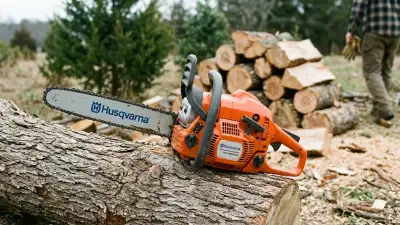
- Manufacturer: Husqvarna
- Model: 450 Rancher
Information in this review is labeled as one of four types: 🧪 SAWOFF hands-on test, 🏭 manufacturer specification, 📚 research from reputable sources (including documented owner-reported patterns), or 🧠 editorial assessment. See our testing methodology and editorial policy.
Pick the Husqvarna 450 Rancher for firewood, the 455 Rancher for mixed farm work, or the 460 Rancher for bigger hardwood on a 20-inch bar. That one sentence settles most shopping questions, but the three Rancher chainsaws overlap enough around the edges that the details matter — chain sizes, oilers, and weight all shift between them.
First, what “Rancher” actually means. On a Husqvarna, the Rancher badge marks the mid-range landowner line: saws built for firewood bucking, occasional felling, and general farm use, priced between the homeowner saws (the 135 and 435) and the professional XP models. “Rancher” has meant the same thing since the late-1980s Rancher line first wore it: a tougher saw than a homeowner machine, tuned for volume without pro-service demands. This guide compares the trio spec by spec and sorts the choice by user type. I run all three through oak and pine every season, and the gap that surprises people is rarely power — it’s oiler control and bar reach.
Husqvarna 450 vs 455 vs 460 Rancher: The Master Table
Everything decisive about the current Rancher lineup lives in this table. The Husqvarna 450 Rancher is the firewood benchmark, the 455 Rancher splits the middle, and the 460 Rancher tops the range.
| Spec | Husqvarna 450 Rancher | Husqvarna 455 Rancher | Husqvarna 460 Rancher |
|---|---|---|---|
| Displacement | 50.2cc | 55.5cc | 60.8cc |
| Power | 3.2 hp | 3.5 hp | 3.68 hp |
| Powerhead weight | ~11.3 lb | ~13.2 lb | ~13.4 lb |
| Chain pitch | .325” | 3/8” low profile | 3/8” low profile |
| Gauge | .050” | .050” | ~.058” |
| Default bar | 18” (max 20”) | 18” | 20” (max 24”) |
| Oiler | Fixed flow | Adjustable | Adjustable |
| Technology | X-Torq | X-Torq | X-Torq |
| Street price range | $439–499 | $570–650 | $700–770 |
Two things jump out. The 450 weighs a full two pounds less than the 455 despite only 5cc less displacement — that’s the difference between carrying a saw all morning and carrying one that complains by lunch. And the 455 and 460 share the 3/8-inch low-profile chain system, so one chain supply covers both if you end up with siblings in the shed.
Bottom line: the 450 Rancher wins on power-to-weight, the 455 on oiler control, and the 460 on bar reach — the right answer depends on what’s stacked in the truck bed.
Husqvarna Rancher History: Where the Name Comes From
The Rancher lineage runs deeper than the three current models, and knowing it explains why the badge still commands a premium on the used market. Husqvarna introduced the Rancher designation in the late 1980s on mid-range saws like the 61 Rancher — landowner machines with pro-flavored features at homeowner prices. Through the 1990s, the lineage passed through the 51 and 268 generations, but the 55 Rancher became the definitive model of that era: a 53cc workhorse that collectors still restore.
The next wave brought the 350, 357, and 359 Rancher saws in the early 2000s, with noticeably better anti-vibration systems but cleaner-engine thinking still a few years out. When the 455 Rancher launched around 2005–2006, it consolidated the formula — 55.5cc, 3/8-inch chain, adjustable oiler — and sold so well that the whole badge became shorthand for “the good mid-range Husqvarna.” The 460 Rancher joined shortly after for a 20-inch bar, and the X-Torq engines of the 2010s brought the 450 in as the lighter sibling.
That history matters for one practical reason: fitment. The 55 and 357 Rancher generations standardized many of the bar and chain conventions the current saws still use, so an old Rancher and a new one likely share accessories — the full cross-reference, including which chains from the older generations still fit current bars, lives in the chain-fitment section below.
Bottom line: “Rancher” has meant the same thing on a Husqvarna for 40 years — the landowner sweet spot — and the current trio inherits a fitment ecosystem that stretches back two decades.
Husqvarna 450 Rancher Review Snapshot
The 450 Rancher is the saw I hand to anyone who says they’re “just doing firewood,” because that phrase undersells every winter that follows. Its 50.2cc X-Torq engine makes 3.2 hp, and the ~11.3-pound powerhead swings an 18-inch bar through seasoned hardwood with real authority. In years of bucking with this saw — oak rounds, punky pine, the occasional windfall — the pattern holds: it’s fast enough that you stop watching the clock, and light enough that you still feel your hands at the end of the day. Third pull on a cold morning is my honest starting average with fresh fuel and a clean plug.
450 Rancher Spec Snapshot
- 50.2cc X-Torq engine, 3.2 hp
- ~11.3 lb powerhead — lightest of the three
- .325” pitch, .050” gauge, 72 drive links (18”)
- 18” sweet-spot bar, runs a 20” max
- Fixed-flow oiler
- Typically $439–499 street
The fixed oiler is the one real compromise. Bar oil consumption is set regardless of chain load, so a 12-inch pine can drain the oil tank slower than the fuel, while a 20-inch hardwood cuts the reverse. It’s manageable, and the workaround is simple — check oil level every second fill — but buyers who switch bar lengths constantly should lean toward the 455.
Bottom line: the Husqvarna 450 Rancher is the best chainsaw for firewood in the lineup, full stop — unless your rounds run heavier than 14 inches.
Husqvarna 455 Rancher Review Snapshot
The 455 Rancher is the middle child that earns its keep on mixed property. At 55.5cc and 3.5 hp, it out-pulls the 450 by a half horsepower, and the adjustable oiler fixes the 450’s one shortcoming — you can dial oil flow to match a longer bar or drier conditions. The 13.2-pound powerhead is heavier, and you notice it during limbing overhead, but on straight bucking work the extra mass actually tracks the kerf well.
455 Rancher Spec Snapshot
- 55.5cc X-Torq engine, 3.5 hp
- ~13.2 lb powerhead
- 3/8” low-profile chain, .050” gauge
- 18” default bar
- Adjustable oiler
- Typically $570–650 street
Where the 455 makes sense: a farm property cutting firewood in three species, clearing fence line, dropping the occasional dead ash. Its 3/8 chain also wears more forgivingly than .325 pitch under dirty conditions because the taller cutter links hold their edge differently in barky wood. The 455 is the Rancher for people whose saw works every weekend of the year, not just firewood season.
Bottom line: the 455 Rancher is the general-purpose farm saw in this trio — one cc step up, an oiler you control, and a chain system shared with the 460.
Husqvarna 460 Rancher Review Snapshot
The 460 Rancher answers a specific question: what if your wood is bigger than the bar? Its 60.8cc, 3.68 hp engine spins a 20-inch default bar with room for a 24-inch max, and the adjustable high-output oiler is weighted toward exactly the big-bar cutting that would starve a fixed pump.
460 Rancher Spec Snapshot
- 60.8cc engine, 3.68 hp — the torque leader here
- ~13.4 lb powerhead
- 3/8” low-profile chain, ~.058” gauge
- 20” default bar, 24” max
- Adjustable oiler with high output
- Typically $700–770 street
In bigger hardwood — 18-to-22-inch red oak, dead maple with bark still holding — the 460 simply finishes cuts the other two grind through. It is not an XP saw, so don’t mill with it daily or fall timber commercially; but for a landowner with mature hardwood and a wood burner that never gets turned off, the 460 matches the work. The trade-offs: it carries a real price premium, and the ~.058 gauge chain is stocked at fewer counters than .050. The ~13.4-pound body is only a hair over the 455’s, so the weight penalty for the extra engine is small.
Bottom line: the Husqvarna 460 Rancher is the big-wood answer in this family — its 60.8cc engine and 20-inch bar cover hardwood the 450 and 455 labor through.
Husqvarna Rancher vs XP Saws: Where the Landowner Line Ends
Rancher and XP sit on opposite sides of one line, and the line is mostly about engine and service parts. An XP saw — the 562 or 572, say — runs a higher-performance top end with revised porting, a magnesium crankcase orientation closer to full commercial spec, and a filter system sized for daily professional felling. A Rancher uses a durable but homeowner-serviceable engine, plastic-friendly design for weight savings, and an air system that assumes weekly use rather than daily abuse.
That explains the price gap: a 562 XP typically costs $300 more than a 455 Rancher and earns it through top-end life. But it also explains why buying an XP saw is overkill for most Rancher shoppers. If you cut under ten cords a year, the Rancher engine does every job you’ll ever ask it to. If you win commercial contracts or mill daily, nothing in the Rancher line belongs in that conversation — jump straight to our Husqvarna professional saw guide.
| Question | Buy Rancher | Buy XP |
|---|---|---|
| Annual wood volume | Under ~10 cords | Daily crew work |
| Usage pattern | Weekends, firewood season | Every working day |
| Parts budget | Homeowner-tier OK | Commercial rebuild cycle |
| Felling diameter | Up to 24” | 30”+ hardwood |
Bottom line: Rancher saws are built for serious landowners; XP saws are built for people who get paid to hold one — the advice is to spend Rancher money until a paycheck depends on the saw.
Rancher Chain and Bar Fitment: Pitch, Gauge, Drive Links
Chain confusion is the number one post-purchase question on these saws, so here’s the honest short version. The 450 Rancher uses .325-inch pitch at .050 gauge; the 455 and 460 use 3/8-inch low profile, with the 455 at .050 gauge and typical 460 bars at about .058. Drive-link counts change with bar length, and the two 3/8-inch saws share far more hardware with each other than either shares with the 450.
| Saw / Bar | Pitch | Gauge | 18” drive links | 20” drive links |
|---|---|---|---|---|
| 450 Rancher | .325” | .050” | 72 | 72 (20” bar) |
| 455 Rancher | 3/8” low profile | .050” | typically 68 | typically 72 |
| 460 Rancher | 3/8” low profile | ~.058” | typically 68 (18” bar, if fitted) | typically 72 |
A few practical notes from cutting with all three. First, always count drive links on the old chain or read the stamp on a drive link rather than ordering “18-inch chain,” because aftermarket bars occasionally shift the count by one or two links. Second, mixing .050 chain into a .058 bar groove will wobble and cut crooked, so match gauge to bar, not habit. Third, the full cross-reference — every Husqvarna bar length against every Rancher model — is laid out with tables in the complete Husqvarna chain guide, which also covers the H-series chain families and X-Cut options for all three saws. If you’re comparing chains broadly across brands rather than within Husqvarna, the best chainsaw chain round-up puts Oregon and others side by side.
Bottom line: the 450 is a .325/.050 saw with 72 drive links at 18 inches; the 455 and 460 run 3/8-inch low-profile chains — match pitch, gauge, and drive-link count, never just bar length.
Rancher Maintenance Quick-Wins
These three saws are forgiving, but a few habits separate a Rancher that lasts a decade from one that dies in year three. Run 50:1 premix in fresh fuel — X-Torq engines punish stale mix with carbon buildup shorter than any owner expects. Check the rim sprocket every time you swap a chain; a worn sprocket eats a new chain’s teeth in a month, which is the most expensive way to waste $25 worth of cutter.
Flip the bar each time you sharpen so the groove wears evenly. Clean the air filter weekly in oak dust — the Rancher’s centrifugal pre-cleaner buys you margin, not immunity. And keep bar oil topped with fresh oil, never drain-back from old jugs, because the oiler systems on the 455 and 460 are adjustable but not forgiving of sludge. The chainsaw maintenance checklist walks the full routine, and it takes about fifteen minutes a month on any Rancher.
Sharpening discipline matters more than owners admit. By the time you’re leaning on the saw, you’ve already cooked the bar. File after every two tanks in hardwood.
Bottom line: 50:1 premix, a flipped bar, a clean filter, and sharpening every two tanks keep a Rancher alive long past the warranty — the saws fail from neglect, not design.
Which Husqvarna Rancher Should You Buy?
The answer sorts cleanly by wood and weekend. For firewood-first buyers bucking under six cords of mixed rounds a year, buy the Husqvarna 450 Rancher: it’s the lightest, the cheapest, and adequate at 18 inches for nearly every species short of well-seasoned elm, typically at $439–499. Homeowners torn between Rancher and other brands should check our STIHL-vs-Husqvarna comparison — the equivalents run close.
For the farm-and-acreage owner whose saw clears brush, drops ash, and buck the winter stack on alternating weekends, the 455 Rancher is the sweet spot at $570–650: adjustable oiler, 3/8-inch chain ecosystem, and torque that forgives bigger wood, and it bucks the winter stack on alternating weekends without complaint. For buyers stacking 20-inch red oak rounds or processing storm blowdown on mature property, the 460 Rancher at $700–770 is the honest tool, and its 24-inch max bar buys real reach when a big oak dictates it.
If none of those three feels big enough, or you cut for income, stop comparing Ranchers and step up to the XP line instead — the 562, 572, 395XP, and the 118.8cc 3120XP milling king are ranked for exactly that buyer in the professional guide linked below. And if the Rancher idea interests you but the budget doesn’t, the value plays below Rancher are compared with the same criteria in Best Husqvarna Chainsaws, where the 435 and 135 models earn their own value verdicts. Whatever you pick from the current Husqvarna Rancher line, the odds are good: every saw in this family shares the same tuning habits, the same 50:1 discipline, and the same long service record that made the badge worth asking about in the first place.
Bottom line: Husqvarna’s Rancher saws remain the best value in the mid-range gas market — 450 for firewood, 455 for the mixed farm, 460 for 20-inch hardwood — and Best Chainsaws of 2026 keeps the rest of the market honest if those don’t fit.
The Ultimate Chainsaw Maintenance Field Toolkit
The complete 96-page printable manual. Avoid costly $400 repairs, master 30°/35°/10° chain sharpening angles, and clear flooded engines in 30 seconds.
- ✓12 In-Depth Modules: Safety checks, service schedules & winterizing
- ✓Chain Sharpening Angles: 30° / 35° / 10° filing charts & raker depth specs
- ✓15 Free Bonus Templates: Angle cheat-sheets, logs & laminated pocket cards
Frequently Asked Questions
Is the Husqvarna 450 Rancher enough for firewood?
Yes, for most homeowners. The 450 Rancher's 50.2cc, 3.2 hp engine pulls an 18-inch bar through seasoned oak and pine rounds up to about 14 inches wide, which covers a three-to-five-cord winter for most households. Anyone bucking more than six cords a year or working dense hardwood daily would feel the ceiling.
Which is better, the 455 Rancher or the 460 Rancher?
The 455 Rancher is the better farm-all-rounder: 55.5cc, 3.5 hp, about a pound lighter, and cheaper. The 460 Rancher's 60.8cc, 3.68 hp engine with a 20-inch default bar handles bigger diameter hardwood and longer bar reach. Pick the 455 unless you regularly cut wood above 16 inches in diameter.
What chain fits a Husqvarna 450 Rancher?
The 450 Rancher runs .325-inch pitch, .050-inch gauge. An 18-inch bar uses a 72-drive-link chain, typically the Husqvarna H30 class such as H30-72. A 20-inch bar also uses 72 drive links in .325 pitch on the stock bar.
Is a Rancher a professional saw?
No. Rancher saws are prosumer landowner tools with durable builds but homeowner-tier parts and no XP-level top-end. Husqvarna marks its true professional line with XP — the 562, 572, and 395XP — which costs more and lasts longer in daily commercial use.
How many hours will a Husqvarna Rancher last?
With 50:1 premix, clean filters, and honest maintenance, a 450 Rancher commonly reaches 250–400 hours of cutting before a fresh top end, and well-kept 455 and 460 Ranchers are similar. Weekend firewood users often stretch that across a decade or more of ownership.