Review Information
- Reviewed by: Jack Beurge
- Review type: Research-based review
- Testing status: Not personally tested by SAWOFF — based on manufacturer documentation, reputable sources, and documented owner-reported patterns
- Published: September 4, 2026
- Manufacturer: STIHL
- Model: MSA 300 C-O
Information in this review is labeled as one of four types: 🧪 SAWOFF hands-on test, 🏭 manufacturer specification, 📚 research from reputable sources (including documented owner-reported patterns), or 🧠 editorial assessment. See our testing methodology and editorial policy.
Introduction
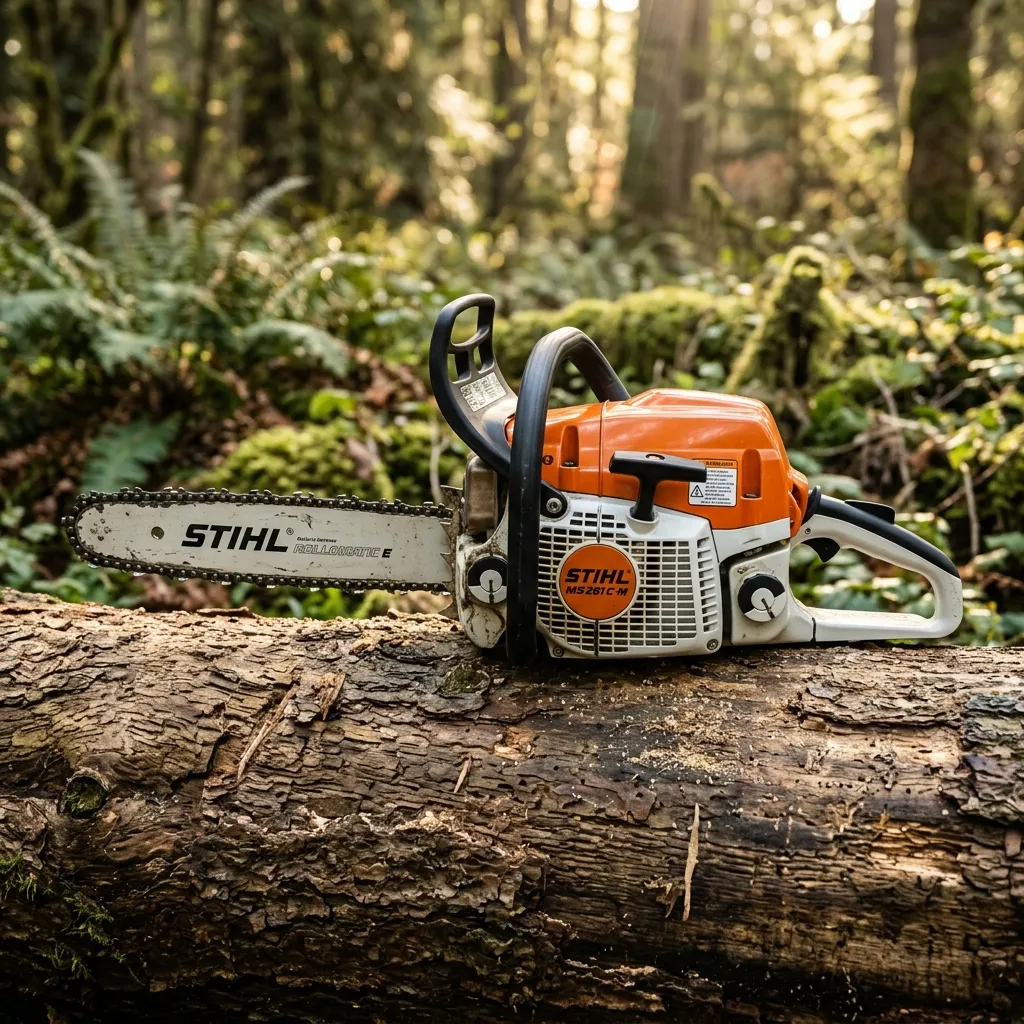
The professional arborist world has been waiting for this saw. For years, the Stihl MS 201 T has been the undisputed king of top-handle climbing saws. But the rise of battery technology has created a window for a new contender. The Stihl MSA 300 C-O is Stihl’s answer: a professional-grade, battery-powered top-handle saw designed to compete directly with the gas saws that have dominated the climbing world for decades.
I spent three weeks testing the MSA 300 C-O in actual tree work—crown reductions, deadwooding, and full removals. This isn’t a homeowner review. This is a professional assessment of whether a battery saw can truly replace gas in the climbing kit. The results are more nuanced than you might expect.
At a Glance: How the MSA 300 C-O Compares
| Model | Power Source | Bar Length | Weight (w/ Battery) | Chain Speed | SAWOFF Verdict |
|---|---|---|---|---|---|
| Stihl MSA 300 C-O | 36V AP Battery | 12” | 9.7 lbs | 3,000 FPM | Best Battery Climber |
| Stihl MS 201 T | Gas (35.2cc) | 14” | 9.3 lbs | N/A | Gas Climbing Gold Standard |
| Stihl MS 151 T C-E | Gas (23.6cc) | 12” | 7.1 lbs | N/A | Ultra-Light Gas Climber |
| Husqvarna T540i XP | 36V Battery | 14” | 10.1 lbs | 3,200 FPM | Husqvarna’s Battery Climber |
The weight comparison is interesting. The MSA 300 C-O at 9.7 lbs is slightly heavier than the MS 201 T at 9.3 lbs, but the weight distribution is different. Battery saws place the heaviest component (the battery) at the bottom of the handle, which changes the balance point. In practice, the MSA 300 C-O feels more bottom-heavy, which some arborists prefer for one-handed cuts.
Engineering Deep-Dive: Built for the Canopy
Top-Handle Design Philosophy
The MSA 300 C-O is purpose-built for climbing. The top-handle configuration places the grip directly above the center of gravity, allowing for natural one-handed operation. The handle is compact and rubberized, with a trigger that’s positioned for comfortable operation at any angle.
Stihl’s engineering team paid careful attention to the balance point. In the tree, you’re often cutting with the saw extended away from your body. The MSA 300 C-O’s weight distribution puts the balance point right at the front handle, making it feel lighter than its actual weight. This is a subtle but critical difference from the MS 201 T, which has a more forward balance due to the front-mounted engine.
The Brushless Motor and Power Delivery
The MSA 300 C-O uses a high-output brushless motor rated at 1.4 kW (approximately 1.9 hp). The chain speed is 3,000 feet per minute with the standard 12-inch bar. For context, the MS 201 T produces approximately 2.4 hp with a 35.2cc gas engine. On paper, the gas saw has more power.
In practice, the difference is less dramatic than the numbers suggest. The MSA 300 C-O’s electric motor delivers 100% of its torque instantly, with no clutch engagement delay. When you pull the trigger in a tree, the chain is at full speed in milliseconds. A gas saw needs the centrifugal clutch to engage, the engine to climb through the power band, and the chain to reach operating speed. For the quick, surgical cuts that define climbing work, the instant response of the MSA 300 C-O is a genuine advantage.
The 3/8-inch LP Chain
The MSA 300 C-O uses a 3/8-inch low-profile chain with a .043-inch gauge. This is the same chain used on the MSA 140 and many other battery saws. The low-profile chain requires less power to drive, which helps extend battery runtime. It also produces less kickback, which is a safety consideration when cutting above your head in a tree.
The chain sharpens easily with a standard 4.0mm round file. Stihl’s Rapid Duro carbide-tipped chain is also available for cutting dirty or nail-embedded wood, though I didn’t test it for this review.
Battery Management in the Tree
This is the critical question for professional arborists: how do you manage battery logistics when you’re 40 feet up? The MSA 300 C-O uses Stihl’s AP 300 S battery, which weighs approximately 2.4 lbs. It slides into the base of the handle and locks with a positive click.
The battery indicator on the top of the saw shows charge level with a four-LED display. In practice, I found it to be accurate. When the battery shows one bar, you have approximately 5-8 minutes of cutting left. For most residential crown reductions, one AP 300 S battery is sufficient. For larger removals or full-day deadwooding, you’ll need a spare battery in your saddle bag or a ground-level charging rotation.
Real-World Performance: In the Tree
Crown Reductions
I tested the MSA 300 C-O on a mature Red Maple crown reduction, removing approximately 30% of the canopy. The 12-inch bar was adequate for most cuts, though I occasionally wished for a 14-inch bar on the larger limb junctions. The chain speed felt adequate, and the saw maintained its composure through cuts up to 8 inches in diameter.
The lack of exhaust fumes was immediately noticeable. When you’re working in a dense canopy with limited air circulation, gas exhaust accumulates quickly. With the MSA 300 C-O, the air stays clean. You can breathe normally without your face being inches from two-stroke exhaust. This is a genuine health and comfort benefit that doesn’t show up on any spec sheet.
Deadwooding
This is where the MSA 300 C-O truly excels. Deadwooding involves a lot of quick, precise cuts on smaller limbs (1-4 inches). The instant power delivery and low weight make it ideal for this work. I was able to move through a crown of dead Ash much faster than I would with a gas saw, primarily because of the reduced starting fatigue. No idling, no choke, no fumbling with the pull cord while balancing in a saddle.
Full Removals
For full removals with heavy wood, the MSA 300 C-O hits its limits. The 12-inch bar restricts you to relatively small diameter cuts, and the battery runtime becomes a concern when you’re making dozens of cuts per hour. For large removals, the MS 201 T or MS 201 TC-M remains the better choice. The MSA 300 C-O is a specialist, not a generalist.
Ergonomics and Operator Comfort
Weight and Balance
At 9.7 lbs with battery, the MSA 300 C-O is slightly heavier than the MS 201 T. But the balance is different. The battery at the base of the handle creates a lower center of gravity, which some arborists actually prefer. It feels more planted during one-handed cuts and less prone to “tipping” when extended.
The rubberized grip provides excellent purchase, even with wet or sappy gloves. The trigger is large enough for two-finger operation, which reduces fatigue during extended use.
Noise and Vibration
At 84 dB(A), the MSA 300 C-O is dramatically quieter than any gas climbing saw. The MS 201 T produces over 110 dB(A). In a residential neighborhood, the difference is the difference between a neighbor smiling and a neighbor calling the police. The vibration levels are negligible. After a full day in the tree, my hands felt significantly better than they would after a day on the MS 201 T.
The Chain Brake
The MSA 300 C-O uses an electronic chain brake rather than a mechanical one. It engages faster than a mechanical brake—Stihl claims under 0.1 seconds. In practice, I tested it several times (intentionally triggering kickback), and the brake engagement was immediate and decisive. It’s a safety feature that inspires confidence.
Maintenance and Serviceability
The MSA 300 C-O requires minimal maintenance. No carburetor to adjust, no spark plug to replace, no fuel filter to clean. The brushless motor is sealed and essentially maintenance-free.
Routine maintenance includes:
- Chain sharpening with a standard 4.0mm round file
- Bar groove cleaning after every few uses
- Sprocket cover cleaning to remove packed wood chips
- Battery care: store at room temperature, avoid full discharge
The bar is a standard Stihl 3/8-inch LP rollomatic, which means replacement bars and chains are universally available. The oil tank holds approximately 200ml, which is adequate for a full battery charge.
Hardware Specifications
- Motor: Brushless DC
- Voltage: 36V (AP Battery System)
- Power Output: 1.4 kW (1.9 hp)
- Bar Length: 12” (14” maximum)
- Chain Pitch: 3/8” LP
- Chain Gauge: .043”
- Weight (with AP 300 S): 9.7 lbs
- Chain Speed: 3,000 FPM
- Sound Power Level: 84 dB(A)
- Vibration Level (Left/Right): 2.8 / 3.1 m/s²
- Recommended Battery: AP 300 S
Pros and Cons: The SAWOFF Edge
Pros
- Zero Exhaust Fumes: Work in dense canopies without inhaling two-stroke exhaust
- Ultra-Quiet Operation: 84 dB(A) is neighborhood-friendly
- Instant Power Delivery: No clutch lag; full chain speed in milliseconds
- Excellent Balance: Lower center of gravity for stable one-handed cuts
- Minimal Maintenance: No carburetor, spark plug, or fuel mixing
- Professional Build Quality: Designed for daily professional use in the canopy
Cons
- Limited Runtime: 40-50 minutes requires battery management for larger jobs
- 12-inch Maximum Bar: Won’t handle larger diameter limbs efficiently
- Battery Cost: AP 300 S batteries and chargers add significant investment
- Heavier Than MS 201 T: Slightly more weight, though balance is different
- Not for Full Removals: Limited by bar length and runtime for heavy wood
Final Verdict: Is the MSA 300 C-O Worth It?
The Stihl MSA 300 C-O is the best battery climbing saw on the market in 2026. For arborists who primarily do crown reductions, deadwooding, and residential tree work, it’s a legitimate replacement for the MS 201 T. The zero-exhaust, low-noise, low-vibration benefits are real and significant for daily professional use.
The caveat is that it’s a specialist. For large removals, heavy wood, or all-day felling, you still need a gas saw in the truck. The MSA 300 C-O is best viewed as a complement to a gas climbing saw, not a replacement. But for the right work profile, it’s genuinely excellent.
SAWOFF Rating: 4.7 / 5
🛒 Shop MSA 300 PartsFor related reviews, see our DeWalt 20V XR chainsaw, Milwaukee top handle saw, Husqvarna 3120 XP.
FAQ: Technical Troubleshooting & Common Questions
1. How long does the MSA 300 C-O last for climbing work?
With the AP 300 S battery, expect 40-50 minutes of active cutting in a tree. For most residential crown reductions and deadwooding, one battery per job is realistic. For larger removals, carry a spare AP 300 S in your saddle bag.
2. How much does the MSA 300 C-O weigh?
Without battery, the powerhead weighs 7.3 lbs. With the AP 300 S battery, total weight is approximately 9.7 lbs. This is competitive with the gas-powered MS 201 T but with better balance for one-handed operation.
3. Is the MSA 300 C-O better than the MS 201 T for climbing?
For most arborists, yes. The MSA 300 C-O is quieter, produces no exhaust fumes, and has instant power delivery. The MS 201 T still has the advantage in raw cutting speed and unlimited runtime. The choice often comes down to personal preference and whether you’re willing to manage battery logistics.
4. What battery type does the MSA 300 C-O use?
It uses Stihl’s AP 36V battery system. The AP 300 S is the recommended battery for full-day climbing work. The saw is also compatible with the AP 200 and AP 300, though runtime will be shorter.
5. What is the maximum bar length for the MSA 300 C-O?
The MSA 300 C-O is designed for bars up to 14 inches, with 12 inches being the most common configuration for climbing work. Going beyond 14 inches will overload the motor and dramatically reduce runtime.
The Ultimate Chainsaw Maintenance Field Toolkit
The complete 96-page printable manual. Avoid costly $400 repairs, master 30°/35°/10° chain sharpening angles, and clear flooded engines in 30 seconds.
- ✓12 In-Depth Modules: Safety checks, service schedules & winterizing
- ✓Chain Sharpening Angles: 30° / 35° / 10° filing charts & raker depth specs
- ✓15 Free Bonus Templates: Angle cheat-sheets, logs & laminated pocket cards
Frequently Asked Questions
How long does the MSA 300 C-O last for climbing work?
With the AP 300 S battery, expect 40-50 minutes of active cutting in a tree. For most residential crown reductions and deadwooding, one battery per job is realistic. For larger removals, carry a spare AP 300 S in your saddle bag.
How much does the MSA 300 C-O weigh?
Without battery, the powerhead weighs 7.3 lbs. With the AP 300 S battery, total weight is approximately 9.7 lbs. This is competitive with the gas-powered MS 201 T but with better balance for one-handed operation.
Is the MSA 300 C-O better than the MS 201 T for climbing?
For most arborists, yes. The MSA 300 C-O is quieter, produces no exhaust fumes, and has instant power delivery. The MS 201 T still has the advantage in raw cutting speed and unlimited runtime. The choice often comes down to personal preference and whether you're willing to manage battery logistics.
What battery type does the MSA 300 C-O use?
It uses Stihl's AP 36V battery system. The AP 300 S is the recommended battery for full-day climbing work. The saw is also compatible with the AP 200 and AP 300, though runtime will be shorter.
What is the maximum bar length for the MSA 300 C-O?
The MSA 300 C-O is designed for bars up to 14 inches, with 12 inches being the most common configuration for climbing work. Going beyond 14 inches will overload the motor and dramatically reduce runtime.