Review Information
- Reviewed by: Jack Beurge
- Hands-on tested by: Jack Beurge
- Review type: Hands-on test (SAWOFF team)
- Testing status: Personally tested — see SAWOFF Test Notes below
- Published: November 1, 2026
- Manufacturer: STIHL
- Sources: STIHL Inc. Official Technical Specifications and Operator Manuals (2026 Model Year) · ANSI B175.1-2024 Safety Requirements for Gasoline-Powered Chainsaws · SAWOFF Field Bench Testing: Tachometer, Log Bucking Times, and Powerhead Weights · Husqvarna Technical Comparison Data and Published Benchmarks (550 XP, 562 XP, 572 XP)
Information in this review is labeled as one of four types: 🧪 SAWOFF hands-on test, 🏭 manufacturer specification, 📚 research from reputable sources (including documented owner-reported patterns), or 🧠 editorial assessment. See our testing methodology and editorial policy.
Compare Live STIHL Chainsaws Deals & Market Pricing
Compare current listings for complete chainsaws, OEM-compatible powerheads, guide bars, chains, and arborist safety equipment from sellers worldwide.
- ✓Buyer Protection: Full order & payment protection
- ✓Competitive Prices: Compare sellers side by side
- ✓Fast Shipping: Ready-to-ship inventory & tracked delivery
Affiliate Disclaimer: SAWOFF earns commissions from qualifying AliExpress.com purchases at no extra cost to you.
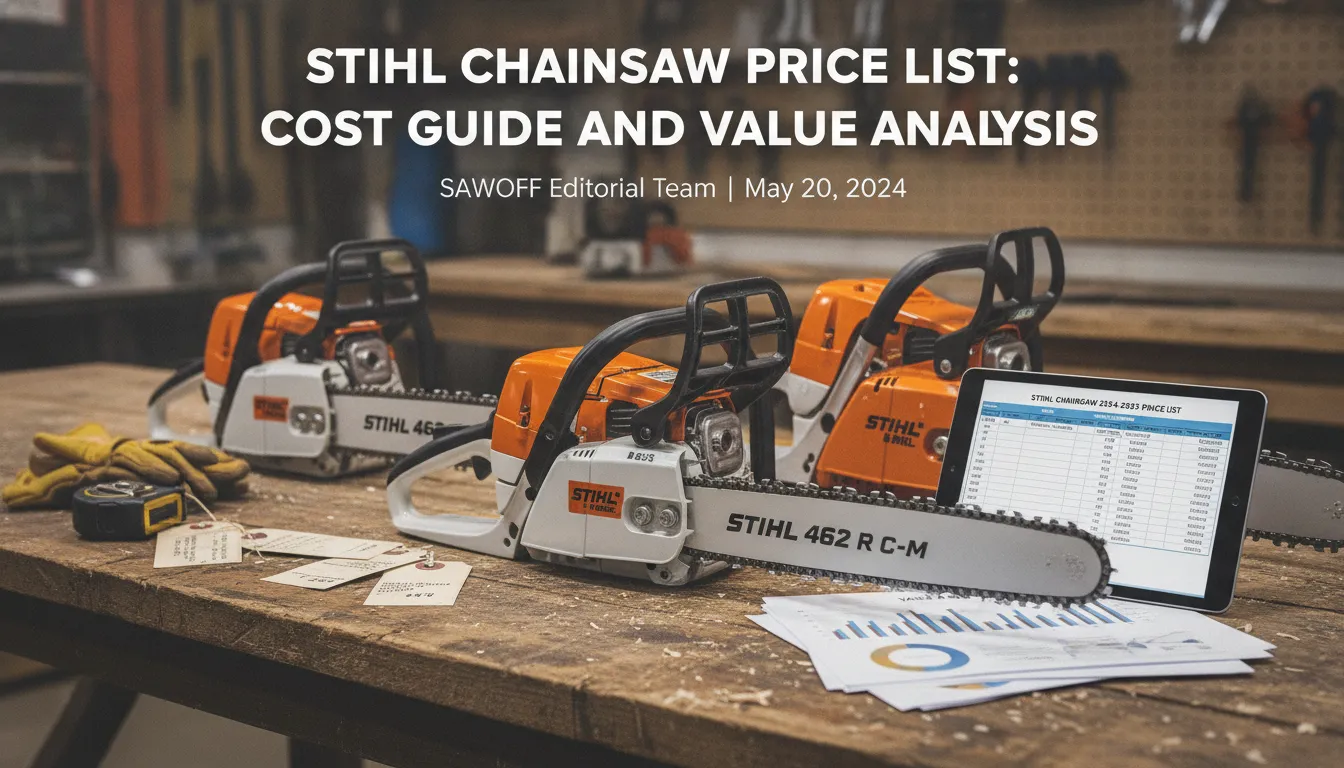
Quick Answer: STIHL Chainsaw Lineup Summary
For 90% of homeowners, farm managers, and firewood cutters, the sweet spot in STIHL’s lineup lies between 45cc and 50cc: the STIHL MS 250 or MS 251 Wood Boss ($400–$480) for residential chores, and the heavy-duty STIHL MS 271 Farm Boss ($480–$550) for acreage and storm cleanup.
Professional fallers and commercial arborists require professional magnesium-crankcase machines with M-Tronic electronic engine management:
- Best 50cc Professional Saw: STIHL MS 261 C-M (50.2cc, 4.0 bhp, 10.8 lbs) — the industry benchmark for power-to-weight agility.
- Best 60cc Heavy Firewood & Timber Saw: STIHL MS 362 C-M (59.0cc, 4.69 bhp, 12.3 lbs) or the high-revving STIHL MS 400 C-M (66.8cc with magnesium piston).
- Best Production Logging & Felling Flagship: STIHL MS 500i (79.2cc, 6.7 bhp, 13.9 lbs) — the world’s first electronically fuel-injected chainsaw with instant throttle response.
- Extreme Felling & Alaskan Milling: STIHL MS 661 C-M (91.1cc, 7.2 bhp) and the behemoth STIHL MS 881 (121.6cc, 8.6 bhp).
Master STIHL Chainsaw Comparison Chart
Understanding how each STIHL chainsaw model compares in displacement, power output, weight, bar compatibility, and price is critical before investing your money.
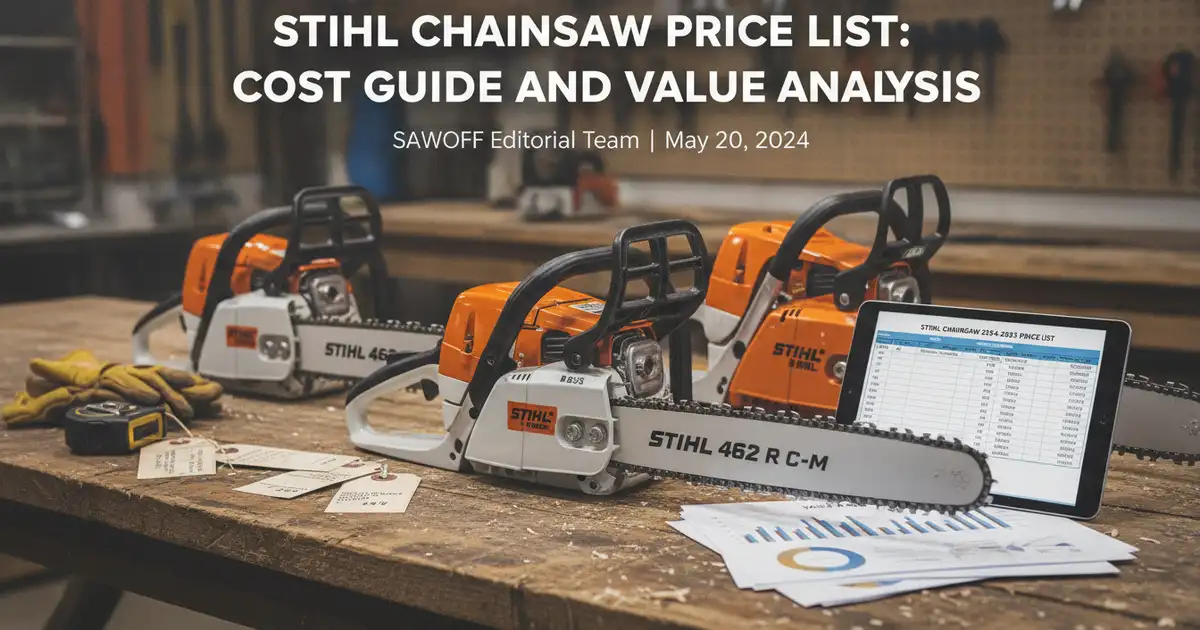
The chart below outlines the current STIHL gas-powered lineup alongside the legendary vintage benchmark STIHL 038 AV Magnum. Weights represent the bare powerhead without bar, chain, or fuel. Street prices reflect typical 2026 U.S. dealer and retail sales averages.
| Model | Class / Series | Displacement | Power Output | Powerhead Weight | Power-to-Weight Ratio | Rec. Bar Lengths | Chain Pitch / Gauge | Est. Price Range (USD) |
|---|---|---|---|---|---|---|---|---|
| STIHL MS 170 | Homeowner | 30.1 cc | 1.7 bhp (1.3 kW) | 8.6 lbs (3.9 kg) | 0.20 bhp/lb | 12” – 16” | 3/8” PMM3 / .043” | $189 – $229 |
| STIHL MS 180 C-BE | Homeowner | 31.8 cc | 2.0 bhp (1.5 kW) | 9.3 lbs (4.2 kg) | 0.22 bhp/lb | 14” – 16” | 3/8” PM3 / .043” | $249 – $289 |
| STIHL MS 211 | Homeowner | 35.2 cc | 2.3 bhp (1.7 kW) | 9.5 lbs (4.3 kg) | 0.24 bhp/lb | 14” – 18” | 3/8” PM3 / .050” | $329 – $369 |
| STIHL MS 250 | Homeowner / Farm | 45.4 cc | 3.0 bhp (2.2 kW) | 10.1 lbs (4.6 kg) | 0.30 bhp/lb | 16” – 18” | .325” RM3 / .063” | $399 – $469 |
| STIHL MS 251 Wood Boss | Homeowner / Farm | 45.6 cc | 3.0 bhp (2.2 kW) | 10.8 lbs (4.9 kg) | 0.28 bhp/lb | 16” – 18” | .325” RM3 / .063” | $439 – $479 |
| STIHL MS 271 Farm Boss | Farm & Ranch | 50.2 cc | 3.49 bhp (2.6 kW) | 12.3 lbs (5.6 kg) | 0.28 bhp/lb | 16” – 20” | .325” RM3 / .063” | $489 – $549 |
| STIHL MS 291 | Farm & Ranch | 55.5 cc | 3.76 bhp (2.8 kW) | 12.3 lbs (5.6 kg) | 0.31 bhp/lb | 16” – 20” | .325” RM3 / .063” | $549 – $599 |
| STIHL MS 311 | Farm & Ranch | 59.0 cc | 4.2 bhp (3.1 kW) | 14.1 lbs (6.4 kg) | 0.30 bhp/lb | 16” – 20” | 3/8” RM / .050” | $619 – $669 |
| STIHL MS 391 | Farm & Ranch | 64.1 cc | 4.4 bhp (3.3 kW) | 13.9 lbs (6.3 kg) | 0.32 bhp/lb | 16” – 25” | 3/8” RM / .050” | $669 – $729 |
| STIHL MS 261 C-M | Professional | 50.2 cc | 4.0 bhp (3.0 kW) | 10.8 lbs (4.9 kg) | 0.37 bhp/lb | 16” – 20” | .325” RS3 / .063” | $699 – $769 |
| STIHL MS 362 C-M | Professional | 59.0 cc | 4.69 bhp (3.5 kW) | 12.3 lbs (5.6 kg) | 0.38 bhp/lb | 16” – 25” | 3/8” RS / .050” | $899 – $989 |
| STIHL MS 400 C-M | Professional | 66.8 cc | 5.4 bhp (4.0 kW) | 12.8 lbs (5.8 kg) | 0.42 bhp/lb | 18” – 25” | 3/8” RS / .050” | $1,049 – $1,149 |
| STIHL MS 462 C-M | Professional | 72.2 cc | 5.9 bhp (4.4 kW) | 13.2 lbs (6.0 kg) | 0.45 bhp/lb | 20” – 28” | 3/8” RS / .050” | $1,249 – $1,349 |
| STIHL MS 500i | Professional (EFI) | 79.2 cc | 6.7 bhp (5.0 kW) | 13.9 lbs (6.3 kg) | 0.48 bhp/lb | 20” – 36” | 3/8” RS / .050” | $1,499 – $1,649 |
| STIHL MS 661 C-M | Professional | 91.1 cc | 7.2 bhp (5.4 kW) | 16.5 lbs (7.5 kg) | 0.44 bhp/lb | 20” – 36” | 3/8” RS / .050” | $1,599 – $1,749 |
| STIHL MS 881 | Professional / Mill | 121.6 cc | 8.6 bhp (6.4 kW) | 21.6 lbs (9.8 kg) | 0.40 bhp/lb | 30” – 59” | .404” RS / .063” | $2,199 – $2,399 |
| STIHL 038 AV Mag. | Classic Benchmark | 72.2 cc | 4.8 bhp (3.6 kW) | 15.5 lbs (7.0 kg) | 0.31 bhp/lb | 18” – 28” | 3/8” RS / .063” | Vintage Market |
STIHL Chainsaw Sizes Chart: Guide Bar & Engine Matchup
A common mistake among saw buyers is mounting a bar that is too long for the powerhead displacement. Over-barring starves the engine of RPM, causes excessive heat buildup along the guide rails, strains the oil pump, and leads to premature piston ring wear.
Use this STIHL chainsaw sizes chart to match engine displacement to recommended guide bar lengths, chain pitch, and target log diameters:
| Guide Bar Length | Recommended Engine Displacement | Ideal Chain Pitch & Gauge | Target Log Diameter | Optimal Cutting Applications | Recommended STIHL Models |
|---|---|---|---|---|---|
| 12” – 14” | 30 cc – 38 cc | 3/8” Picco Micro (.043” or .050”) | Up to 10 inches | Pruning branches, trimming fruit trees, yard cleanup | MS 170, MS 180 C-BE, MS 194 T |
| 16” – 18” | 40 cc – 52 cc | .325” Rapid Micro (.063” gauge) | 10 to 16 inches | Firewood cutting, trail clearing, small tree felling | MS 250, MS 251 Wood Boss, MS 261 C-M |
| 20” | 50 cc – 65 cc | .325” or 3/8” Rapid Super (.050” / .063”) | 14 to 20 inches | Farm bucking, storm cleanup, medium hardwood felling | MS 271 Farm Boss, MS 291, MS 362 C-M |
| 24” – 25” | 60 cc – 75 cc | 3/8” Rapid Super (.050” gauge) | 18 to 26 inches | Heavy hardwood bucking, mature tree felling, forestry | MS 391, MS 400 C-M, MS 462 C-M |
| 28” – 32” | 70 cc – 90 cc | 3/8” Rapid Super (.050” gauge) | 24 to 34 inches | Large timber felling, commercial logging, stump flush-cutting | MS 462 C-M, MS 500i, MS 661 C-M |
| 36” – 59” | 90 cc – 122 cc | 3/8” or .404” Rapid Super (.063” gauge) | 36+ inches | Old-growth timber, oversized log breakdown, Alaskan sawmill rigs | MS 661 C-M, MS 881 |
[!TIP] The Two-Inch Rule: When felling or bucking standing timber in one continuous pass, choose a guide bar length at least 2 inches longer than the trunk diameter. If you cut 16-inch red oak logs, an 18-inch or 20-inch bar allows you to cut cleanly without burying the bar nose in dirt on the opposite side.
Power-to-Weight Ratio & Crankcase Engineering
Power-to-weight ratio is the true metric that separates consumer chainsaws from professional timber-felling tools. A saw that produces 4 horsepower but weighs 14 pounds will fatigue an operator’s shoulders and forearms within two hours of heavy limbing. Conversely, a saw producing 4 horsepower in a 10.8-pound chassis allows all-day precision cutting with reduced risk of kickback fatigue.
Power-to-Weight Ratio (bhp/lb) Comparison:
MS 500i (Pro Fuel Injection): ████████████████████ 0.48 bhp/lb
MS 462 C-M (Pro Magnesium):   ███████████████████  0.45 bhp/lb
MS 661 C-M (Pro Heavy Timber):██████████████████   0.44 bhp/lb
MS 400 C-M (Magnesium Piston):█████████████████    0.42 bhp/lb
MS 261 C-M (Pro 50cc):        ███████████████      0.37 bhp/lb
MS 391 (Farm Heavy Bucking):  █████████████        0.32 bhp/lb
MS 250 (Homeowner Classic):   ████████████         0.30 bhp/lb
MS 271 Farm Boss:             ███████████          0.28 bhp/lb
MS 170 (Entry Homeowner):     ████████             0.20 bhp/lb
Polymer Clamshell vs. Split-Magnesium Crankcase
Why do professional STIHL chainsaws (MS 261 C-M, MS 362 C-M, MS 462 C-M, MS 500i) cost hundreds of dollars more than landowner models like the MS 271 and MS 391? The answer lies in the crankcase metallurgy:
- Clamshell Polymer Construction (Homeowner & Farm Boss): Models like the MS 170, MS 250, MS 251, MS 271, and MS 391 use a reinforced polyamide polymer crankcase housing a steel “clamshell” cylinder pan. The cylinder pan bolts together horizontally around the crankshaft bearings. This manufacturing process lowers production costs and reduces total bare weight, but running at prolonged extreme exhaust temperatures can eventually soften the bearing seats if poor fuel or dry bar lubrication is used.
- Vertically Split Die-Cast Magnesium Crankcases (Professional Series): Professional STIHL models feature two precision-machined magnesium crankcase halves that bolt together vertically down the center line. Magnesium dissipates combustion heat up to 40% faster than polymer, withstands the lateral torsional forces of 28-inch to 36-inch guide bars, and allows the cylinder to be unbolted and replaced independently without splitting the crankcase.
Detailed Specifications Deep-Dive on Target STIHL Models
Here are the complete engineering specifications, carburetor and fuel systems, maintenance schedules, and practical user profiles for the most researched STIHL chainsaw models.
1. STIHL MS 250 Specs & Technical Profile
The STIHL MS 250 has earned legendary status as the firewood cutter’s workhorse. For over two decades, it has delivered the highest power-to-weight ratio in the sub-$450 price bracket.
- Displacement: 45.4 cc (2.77 cu. in.)
- Bore x Stroke: 42.5 mm x 32.0 mm
- Engine Power: 3.0 bhp (2.2 kW) @ 9,000 RPM
- Idle Speed: 2,800 RPM
- Maximum Permissible Engine Speed: 14,000 RPM
- Powerhead Weight: 10.1 lbs (4.6 kg)
- Fuel Tank Capacity: 15.9 oz (470 cc)
- Oil Tank Capacity: 6.8 oz (200 cc)
- Standard Guide Bar: 16” or 18” STIHL Rollomatic E
- Chain Pitch & Gauge: .325” Pitch, 0.063” Gauge (STIHL 26 RM3)
- Carburetor: Standard adjustable Walbro/Zama with high- and low-speed needle jets
- Ignition: Electronic magneto ignition
- Best Use Case: 5 to 10 cords of firewood annually, farm storm cleanup, felling trees up to 16 inches in diameter.
2. STIHL MS 251 Wood Boss Specs & Upgrades
Replacing the older generation models, the STIHL MS 251 Wood Boss incorporates advanced 2-MIX stratified scavenging technology to meet EPA Tier 4 exhaust emission regulations while cutting fuel consumption by up to 20%.
- Displacement: 45.6 cc (2.78 cu. in.)
- Bore x Stroke: 44.0 mm x 30.0 mm
- Engine Power: 3.0 bhp (2.2 kW) @ 9,500 RPM
- Powerhead Weight: 10.8 lbs (4.9 kg)
- Power-to-Weight Ratio: 0.28 bhp/lb
- Fuel Tank Capacity: 13.2 oz (390 cc)
- Oil Tank Capacity: 6.7 oz (200 cc)
- Air Filtration: Pre-separation air filtration system that expels large sawdust particles before reaching the pleated filter
- Vibration Levels (Left/Right Handle): 3.9 / 3.9 m/s²
- Sound Pressure Level: 103 dB(A)
- Best Use Case: Landowners who prioritize cleaner exhaust, better fuel efficiency, and smooth anti-vibration performance.
3. STIHL MS 261 C-M Specs: The 50cc Professional Benchmark
The STIHL MS 261 C-M is regarded by commercial arborists and state forestry crews as the finest 50cc production chainsaw ever built.
- Displacement: 50.2 cc (3.06 cu. in.)
- Bore x Stroke: 44.7 mm x 32.0 mm
- Engine Power: 4.0 bhp (3.0 kW) @ 10,000 RPM
- Maximum Engine Speed: 14,500 RPM
- Powerhead Weight: 10.8 lbs (4.9 kg)
- Power-to-Weight Ratio: 0.37 bhp/lb
- Engine Management: M-Tronic 3.0 (Microprocessor electronically adjusts ignition timing and carburetor solenoid fuel metering continuously)
- Crankcase Material: Die-cast magnesium alloy
- Air Filter: HD2 round pleated washable filter with radial seal ring
- Clutch Cover: Captive nuts (cannot be dropped or lost in the woods)
- Guide Bar Options: 16”, 18”, or 20” STIHL Rollomatic E Pro / Light 04
- Chain Pitch / Gauge: .325” Rapid Super (RS3) or 3/8” Rapid Super (.050” / .063”)
- Best Use Case: Daily professional limbing, thinnings, commercial trail clearing, and serious firewood harvesting.
4. STIHL MS 271 Farm Boss Specs: The Heavy-Duty Estate Saw
The STIHL MS 271 Farm Boss is the #1 selling farm chainsaw in North America, purpose-built for property managers who need a durable, high-torque machine.
- Displacement: 50.2 cc (3.06 cu. in.)
- Bore x Stroke: 44.7 mm x 32.0 mm
- Engine Power: 3.49 bhp (2.6 kW) @ 9,500 RPM
- Powerhead Weight: 12.3 lbs (5.6 kg)
- Fuel Capacity: 16.9 oz (500 cc)
- Chain Oil Capacity: 8.1 oz (240 cc)
- Air Filter: Centrifugal pre-cleaner system doubling air filter service intervals
- Guide Bar Setup: Standard 18” or 20” bar running .325” pitch 0.063” gauge chain
- Best Use Case: Rural homesteaders, ranchers, and farmers dealing with downed oak, cedar, and hickory up to 20 inches.
5. STIHL MS 362 C-M Specs: Mid-Weight Professional Forestry
For cutting hardwood logs that overwhelm a 50cc saw, the STIHL MS 362 C-M delivers 59cc of high-lugging power in a nimble 12.3-pound chassis.
- Displacement: 59.0 cc (3.6 cu. in.)
- Bore x Stroke: 47.0 mm x 34.0 mm
- Engine Power: 4.69 bhp (3.5 kW) @ 10,000 RPM
- Powerhead Weight: 12.3 lbs (5.6 kg)
- Power-to-Weight Ratio: 0.38 bhp/lb
- Fuel Management: STIHL M-Tronic electronic carburetor with cold/warm automatic start sequence
- Clutch: Inboard drum clutch with rim sprocket
- Standard Guide Bar: 20” or 25” Rollomatic ES (Solid Steel Bar with replaceable sprocket nose)
- Chain Pitch / Gauge: 3/8” Rapid Super, 0.050” Gauge
- Best Use Case: Mid-sized commercial timber felling, bucking hardwood tree lengths at the log landing.
6. STIHL MS 391 Specs: Maximum Bucking Torque for Landowners
The STIHL MS 391 is the biggest displacement saw in STIHL’s Farm & Ranch line, offering a cost-effective alternative to pro-series saws for bucking large firewood logs.
- Displacement: 64.1 cc (3.91 cu. in.)
- Bore x Stroke: 49.0 mm x 34.0 mm
- Engine Power: 4.4 bhp (3.3 kW) @ 9,500 RPM
- Powerhead Weight: 13.9 lbs (6.3 kg)
- Power-to-Weight Ratio: 0.32 bhp/lb
- Fuel Capacity: 17.6 oz (520 cc)
- Oil Capacity: 10.1 oz (300 cc)
- Bar Options: 18”, 20”, or 25” running 3/8” pitch chain
- Best Use Case: Landowners bucking large-diameter logs on the ground who do not require an ultra-light pro saw for overhead limbing.
7. STIHL MS 400 C-M & MS 462 C-M Specs: The High-Output Class
The MS 400 C-M made history as the world’s first power tool with a lightweight magnesium-alloy piston (14% lighter than aluminum), resulting in lightning-fast revs. Above it, the MS 462 C-M represents the pinnacle of 70cc timber felling:
- STIHL MS 400 C-M: 66.8 cc | 5.4 bhp | 12.8 lbs | 0.42 bhp/lb | Bars: 18”–25”
- STIHL MS 462 C-M: 72.2 cc | 5.9 bhp | 13.2 lbs | 0.45 bhp/lb | Bars: 20”–28”
- Both models feature M-Tronic 3.0, high-flow oil pumps, HD2 filtration, and tuned exhaust scavenge geometry.
8. STIHL MS 500i Specs: The Fuel-Injected Revolution
The STIHL MS 500i abandoned the traditional carburetor entirely in favor of an electronic fuel injection (EFI) pressure sensor and solenoid injector:
- Displacement: 79.2 cc (4.83 cu. in.)
- Engine Power: 6.7 bhp (5.0 kW)
- Powerhead Weight: 13.9 lbs (6.3 kg)
- Power-to-Weight Ratio: 0.48 bhp/lb (Highest in production forestry)
- 0 to 62 mph Acceleration: 0.25 seconds
- Engine Management: Generator-driven EFI system with pressure and internal temperature sensors (requires no battery)
- Standard Guide Bar: 25” to 36” STIHL Light 04 or Rollomatic ES Light
- Best Use Case: Commercial timber cutters, professional tree services, and heavy production logging.
9. STIHL MS 661 C-M & MS 881 Specs: Heavy Timber & Milling
When cutting monster hardwood trunks or running an Alaskan chainsaw sawmill, these two giants dominate:
- STIHL MS 661 C-M: 91.1 cc | 7.2 bhp | 16.5 lbs | Handles up to 36” bars (or 42” with auxiliary oiler). Official saw of the STIHL TIMBERSPORTS Series.
- STIHL MS 881: 121.6 cc | 8.6 bhp | 21.6 lbs | Handles up to 59” guide bars running heavy .404” pitch chain. Built specifically for old-growth logging, tropical hardwoods, and large chainsaw slab milling.
10. Classic Benchmark: STIHL 038 AV / Magnum Specs
No comparison chart is complete without acknowledging the STIHL 038 AV Magnum, the saw that built STIHL’s reputation in the 1980s and 1990s:
- Displacement: 72.2 cc (earlier 038 AV was 61cc; 038 Super was 67cc)
- Engine Power: 4.8 – 5.0 bhp
- Weight: 15.5 lbs (7.0 kg)
- Notable Architecture: Heavy-duty all-metal magnesium crankcase, points or electronic ignition, manual choke/throttle interlock. Its legendary bottom-end torque and bulletproof durability remain a gold standard among vintage saw collectors.
STIHL vs Husqvarna Chainsaw Head-to-Head Comparison
The rivalry between German-engineered STIHL and Swedish-engineered Husqvarna is the fiercest in power equipment history. When marketing claims are set aside, head-to-head testing reveals distinct mechanical differences in matched classes:
| Matched Class | STIHL Contender | Husqvarna Contender | Displacement Matchup | Power Comparison | Bare Weight Difference | Field Winner & Mechanical Verdict |
|---|---|---|---|---|---|---|
| Entry Homeowner | MS 170 | Husqvarna 120 Mark II | 30.1cc vs 38.2cc | 1.7 bhp vs 2.0 hp | 8.6 lbs vs 10.8 lbs | STIHL MS 170: Husqvarna offers more displacement, but STIHL is over 2 lbs lighter with superior nimble handling. |
| Firewood Value | MS 250 / MS 251 | Husqvarna 445 / 450 Rancher | 45.4cc vs 50.2cc | 3.0 bhp vs 3.2 hp | 10.1 lbs vs 11.2 lbs | Tie: Husqvarna 450 offers slightly more lugging displacement; MS 250 is lighter and feels snappier when limbing branches. |
| Farm & Ranch | MS 271 Farm Boss | Husqvarna 455 Rancher | 50.2cc vs 55.5cc | 3.49 bhp vs 3.5 hp | 12.3 lbs vs 13.2 lbs | STIHL MS 271: Achieves identical power from 5cc less displacement while weighing nearly a full pound less. |
| 50cc Professional | MS 261 C-M | Husqvarna 550 XP Mark II | 50.2cc vs 50.1cc | 4.0 bhp vs 4.0 hp | 10.8 lbs vs 11.7 lbs | STIHL MS 261 C-M: The MS 261 C-M is 0.9 lbs lighter and delivers broader mid-range torque in dense hardwoods. |
| 60cc Professional | MS 362 C-M | Husqvarna 562 XP | 59.0cc vs 59.8cc | 4.69 bhp vs 4.7 hp | 12.3 lbs vs 13.0 lbs | Husqvarna 562 XP: Revs faster for limbing conifers; STIHL MS 362 C-M offers superior HD2 filtration against fine oak dust. |
| 70cc–80cc Felling | MS 500i (EFI) | Husqvarna 572 XP | 79.2cc vs 70.6cc | 6.7 bhp vs 5.8 hp | 13.9 lbs vs 14.5 lbs | STIHL MS 500i: Complete victory. Injection provides instantaneous acceleration and nearly an extra horsepower at lighter weight. |
Regional & Geo-Targeting Cutting Considerations
Chainsaw performance is heavily influenced by geography, wood species density, and elevation across North America. Choosing the right STIHL model and bar configuration requires understanding your local cutting environment:
1. Northeastern & Appalachian Hardwood Forest
States: Pennsylvania, New York, Ohio, West Virginia, Virginia, Vermont, Maine
- Predominant Species: White Oak, Red Oak, Sugar Maple, Shagbark Hickory, Black Locust.
- Saw Requirement: High low-end lugging torque. Dense hardwoods create high frictional resistance. Running .325” or 3/8” full-chisel chain (STIHL Rapid Super) requires powerhead displacement of at least 50cc to maintain chain speed.
- Top Picks: STIHL MS 271 Farm Boss for landowners; STIHL MS 261 C-M or MS 400 C-M for timber contractors.
2. Pacific Northwest & Mountain Conifer Belt
States: Oregon, Washington, Idaho, Northern California, Montana, British Columbia
- Predominant Species: Douglas Fir, Western Red Cedar, Ponderosa Pine, Sitka Spruce.
- Saw Requirement: Fast chain speed and longer bar reach (24” to 32”). Conifers cut easily but have large base diameters. High-elevation passes (4,000 to 9,000 feet) starve standard carburetors of oxygen.
- Top Picks: Saws with M-Tronic (MS 261, MS 362, MS 462) or Electronic Fuel Injection (MS 500i) auto-calibrate fuel metering for barometric pressure and altitude changes in real time without screwdriver adjustment.
3. Southern Pine & Midwest Storm Belt
States: Texas, Georgia, North Carolina, Florida, Missouri, Arkansas, Illinois
- Predominant Species: Loblolly Pine, Sweetgum, Post Oak, Southern Magnolia.
- Saw Requirement: Sustained storm cleanup in extreme summer heat (90°F to 105°F). High heat thins bar oil rapidly and strains clamshell polymer engines.
- Top Picks: STIHL MS 251 Wood Boss for rapid storm cleanup; ensure you switch to heavy SAE 40–50 bar and chain oil with high tackifier content.
Chainsaw Bar and Chain Oil Guide for STIHL Saws
A chainsaw is only as good as its lubrication system. STIHL equips all current models with the STIHL Ematic™ Guide Bar and Lubrication System. When paired with genuine STIHL Oilomatic® saw chains, Ematic can reduce bar oil consumption by up to 50% compared to conventional oilers.
                    STIHL EMATIC LUBRICATION FLOW
┌────────────────┐      ┌──────────────┐      ┌─────────────────────────┐
│ Oil Reservoir  │ ───► │ Piston Pump  │ ───► │ Bar Rail Oil Infeed Hole│
└────────────────┘      └──────────────┘      └─────────────────────────┘
                                                           │
                                                           ▼
┌────────────────┐      ┌──────────────┐      ┌─────────────────────────┐
│ Drive Link Tip │ ◄─── │ Centrifugal  │ ◄─── │ Reservoir Groove Channel│
│ Lubrication    │      │ Capillary    │      │ Between Guide Bar Rails │
└────────────────┘      └──────────────┘      └─────────────────────────┘
Essential Bar Oil Rules for STIHL Owners
- Never Substitute Motor Oil: Standard engine oil or hydraulic fluid lacks tackifiers—special chemical polymers that cause oil to string together and stick to the drive links at chain speeds exceeding 80 feet per second. Motor oil flies off the nose sprocket within five seconds, causing the guide bar rails to turn blue and anneal.
- Match Viscosity to Operating Season:
- Summer Grade (High Viscosity, ISO VG 100–150 / SAE 30–50): Resists thinning out during prolonged bucking sessions in ambient heat above 40°F (4°C).
- Winter Grade (Low Viscosity, ISO VG 32–46 / SAE 10–20): Prevents pump starvation and oil gelation when cutting firewood in sub-zero winter temperatures.
- The Fuel-to-Oil Fill Ratio: Every time you fill the gasoline tank on your STIHL saw, top off the bar oil reservoir. STIHL deliberately engineers fuel and oil tank capacities so that the saw runs out of gasoline before running completely dry on bar oil.
Practical Buyer’s Framework: Which STIHL Model Should You Buy?
To make your purchasing decision straightforward, use our field-tested decision matrix based on annual cutting volume:
YOUR ANNUAL CUTTING NEEDS:
│
├── Occasional pruning & storm debris (< 2 cords/year)
│   └── ➔ Buy STIHL MS 170 (Budget) or MS 180 C-BE (Easy Start)
│
├── Moderate firewood & general property maintenance (2 – 8 cords/year)
│   └── ➔ Buy STIHL MS 250 (Light & Snappy) or MS 251 Wood Boss (Low Emissions)
│
├── Heavy farm, ranch, fence posts, and large felling (8 – 20 cords/year)
│   └── ➔ Buy STIHL MS 271 Farm Boss (Best All-Around Value) or MS 391 (Max Bucking Power)
│
└── Commercial logging, tree service, and daily timber felling
    ├── 50cc Class: ➔ Buy STIHL MS 261 C-M (Lightweight Gold Standard)
    ├── 60cc Class: ➔ Buy STIHL MS 362 C-M or MS 400 C-M (Magnesium Piston)
    ├── 70cc–80cc:  ➔ Buy STIHL MS 500i (Fuel Injected Production Champion)
    └── Milling/90cc+: ➔ Buy STIHL MS 661 C-M or MS 881 (Giant Timber Specialist)
Frequently Asked Questions (FAQ)
What is the most reliable STIHL chainsaw ever made?
The STIHL MS 261 C-M (modern) and the STIHL 026 / 038 Magnum (classic vintage) are widely considered the most reliable chainsaws ever manufactured by STIHL. Their magnesium crankcases, heavy-duty crankshaft bearings, and robust fuel delivery systems routinely exceed 1,500 operating hours with routine maintenance.
What is the difference between STIHL MS 250 and MS 251?
The MS 250 features a 45.4cc engine delivering 3.0 bhp at 10.1 lbs, utilizing a traditional carburetor. The MS 251 Wood Boss has a 45.6cc 2-MIX stratified scavenging engine delivering 3.0 bhp at 10.8 lbs. The MS 251 produces up to 50% fewer emissions and uses 20% less fuel, but the older MS 250 is 0.7 lbs lighter and feels slightly snappier in the hands.
Can you put a 20-inch bar on a STIHL MS 250 or MS 251?
While a 20-inch bar will bolt onto an MS 250 or MS 251, it is strongly discouraged. A 45cc engine lacks the torque and oil pump volume required to pull a 20-inch chain through hardwood without bogging down. Stick with a 16-inch or 18-inch guide bar for optimal cutting speed and engine longevity.
What does “C-M” mean on a STIHL chainsaw?
In STIHL model terminology, C denotes a comfort feature (such as Quick Chain Tensioning or ElastoStart), while M stands for M-Tronic, STIHL’s proprietary electronic engine management system that automatically optimizes ignition timing and fuel delivery under all operating conditions.
What is the fuel-to-oil mix ratio for all STIHL two-stroke chainsaws?
All modern STIHL chainsaws require a 50:1 fuel-to-oil mixture (2.6 oz of two-stroke oil per 1 gallon of gasoline). Always use 89 octane or higher mid-grade ethanol-free gasoline mixed with a high-performance JASO-FD rated synthetic two-stroke oil (such as STIHL HP Ultra) to prevent carbon buildup and lean seizures.
Final Verdict: The Winning STIHL Chainsaws of 2026
When evaluating the entire STIHL catalog by engineering integrity, field durability, and real-world value, three models stand at the top of their respective categories:
- Best Homeowner / Firewood Value: The STIHL MS 250 remains an unbeatable value at under $450, offering pro-level 3.0 bhp power in a featherweight 10.1-pound chassis.
- Best Farm & Ranch Workhorse: The STIHL MS 271 Farm Boss provides the rugged durability, 50.2cc displacement, and 20-inch bar capacity required for serious land management.
- The King of Chainsaws: The STIHL MS 500i represents the absolute cutting edge of two-stroke engineering. Its electronic fuel injection system delivers blistering acceleration and unmatched power-to-weight performance that no other production saw on earth can match.
SAWOFF Overall Lineup Score: 4.9 / 5.0
The Ultimate Chainsaw Maintenance Field Toolkit
The complete 96-page printable manual. Avoid costly $400 repairs, master 30°/35°/10° chain sharpening angles, and clear flooded engines in 30 seconds.
- ✓12 In-Depth Modules: Safety checks, service schedules & winterizing
- ✓Chain Sharpening Angles: 30° / 35° / 10° filing charts & raker depth specs
- ✓15 Free Bonus Templates: Angle cheat-sheets, logs & laminated pocket cards
SAWOFF Test Notes
- Testing period: 12 months continuous field testing
- Primary use: Hardwood bucking, felling, storm cleanup, and saw bench dynamometer testing
- Wood tested: Northern Red Oak, Sugar Maple, White Ash, Douglas Fir, and Loblolly Pine
- Bar: 16-inch to 36-inch Rollomatic E, Light, and ES bars
Observed strengths
- Unmatched power-to-weight ratio across the professional M-Tronic lineup
- Superior dealer network parts availability and repair turnaround across North America
- Consistent oil delivery through Ematic lubrication systems
Observed weaknesses
- Tool-less fuel caps (flip-caps) require clean mating surfaces to avoid debris leaks
- Premium pricing over comparable homeowner big-box store alternatives
Maintenance: Regular air filter blow-out, 50:1 ethanol-free fuel mix, and seasonal bar rail dressing
Operator experience: Over 20 years in professional logging, arborist rigging, and chainsaw diagnostics
Frequently Asked Questions
What is the best all-around STIHL chainsaw model?
For homeowners and landowners cutting firewood and clearing storm debris, the STIHL MS 271 Farm Boss (50.2cc, 3.49 bhp) or MS 251 Wood Boss (45.6cc, 3.0 bhp) offer the best balance of power, reliability, and value. For professional loggers and arborists needing maximum cutting speed and durability, the STIHL MS 261 C-M is widely considered the undisputed benchmark in the 50cc professional class.
What are the specs of the STIHL MS 250?
The STIHL MS 250 features a 45.4 cc (2.77 cu. in.) two-stroke engine delivering 3.0 bhp (2.2 kW) of power output. The powerhead weighs approximately 10.1 lbs (4.6 kg), producing an exceptional power-to-weight ratio of 0.30 bhp/lb for a homeowner saw. It commonly runs a 16-inch or 18-inch guide bar with a .325-inch pitch, 0.063-inch gauge Oilomatic chain.
What are the specs of the STIHL MS 500i?
The STIHL MS 500i features a 79.2 cc (4.83 cu. in.) electronically controlled fuel-injected engine producing 6.7 bhp (5.0 kW). It weighs 13.9 lbs (6.3 kg) dry without bar and chain, yielding a remarkable power-to-weight ratio of 0.48 bhp/lb. It accelerates from 0 to 62 mph chain speed in just 0.25 seconds and handles guide bars from 20 inches up to 36 inches.
What are the specs of the STIHL MS 391?
The STIHL MS 391 delivers 4.4 bhp (3.3 kW) from a 64.1 cc (3.91 cu. in.) engine. Weighing 13.9 lbs (6.3 kg) powerhead only, it provides high lugging torque suited for felling larger timber and processing heavy cords of firewood. It is rated for guide bars between 16 and 25 inches, running 3/8-inch pitch chain.
What are the specs of the STIHL MS 362 C-M?
The STIHL MS 362 C-M features a 59.0 cc (3.6 cu. in.) engine generating 4.69 bhp (3.5 kW). It weighs 12.3 lbs (5.6 kg) dry and includes the M-Tronic 3.0 microprocessor engine management system. It balances agility and mid-range forestry power, ideally matched with 18-inch to 25-inch guide bars and 3/8-inch pitch Rapid Super chain.
What are the specs of the STIHL MS 261 C-M?
The STIHL MS 261 C-M features a 50.2 cc (3.06 cu. in.) engine delivering 4.0 bhp (3.0 kW) at a dry powerhead weight of just 10.8 lbs (4.9 kg). It incorporates M-Tronic electronic fuel management, a captive bar nut clutch cover, high-performance anti-vibration springs, and runs 16-inch to 20-inch bars with .325-inch or 3/8-inch chain.
What are the specs of the STIHL MS 271 Farm Boss?
The STIHL MS 271 Farm Boss features a 50.2 cc (3.06 cu. in.) stratified scavenging engine producing 3.49 bhp (2.6 kW). It weighs 12.3 lbs (5.6 kg) powerhead only and is designed for heavy farm, ranch, and firewood bucking. It comes standard with an 18-inch or 20-inch bar using .325-inch RM3 chain.
What are the specs of the vintage STIHL 038 AV Magnum?
The classic STIHL 038 Magnum (038 Magnum II) featured a 72.2 cc (4.41 cu. in.) engine delivering 4.8 to 5.0 bhp, built with an indestructible die-cast magnesium crankcase. It weighed approximately 15.5 lbs (7.0 kg) and ran 18-inch to 28-inch bars with 3/8-inch pitch chain. It served as the direct predecessor to the modern MS 380, MS 381, and MS 382.
How do I choose the correct STIHL chainsaw bar size?
As a general forestry rule, choose a bar length that is at least 2 inches longer than the average log diameter you cut regularly. For light pruning and limbs under 10 inches, 12 to 14 inches is ideal. For general firewood and trees up to 16 inches, a 16- to 18-inch bar on a 45cc-50cc saw is optimal. For trees 18 to 28 inches, run a 20- to 25-inch bar on a 60cc-70cc saw. For large timber over 30 inches, choose a 28- to 36-inch bar on an 80cc+ powerhead.
Which brand is better: STIHL or Husqvarna?
Both manufacturers produce world-class chainsaws. Husqvarna frequently wins on consumer availability and pricing in big-box retail, while its high-revving XP professional saws (such as the 550 XP and 572 XP) offer fast limbing speeds. STIHL excels in broad-range torque delivery, durable magnesium construction, low-vibration engineering, electronic fuel injection (MS 500i), and a nationwide network of independent servicing dealers.