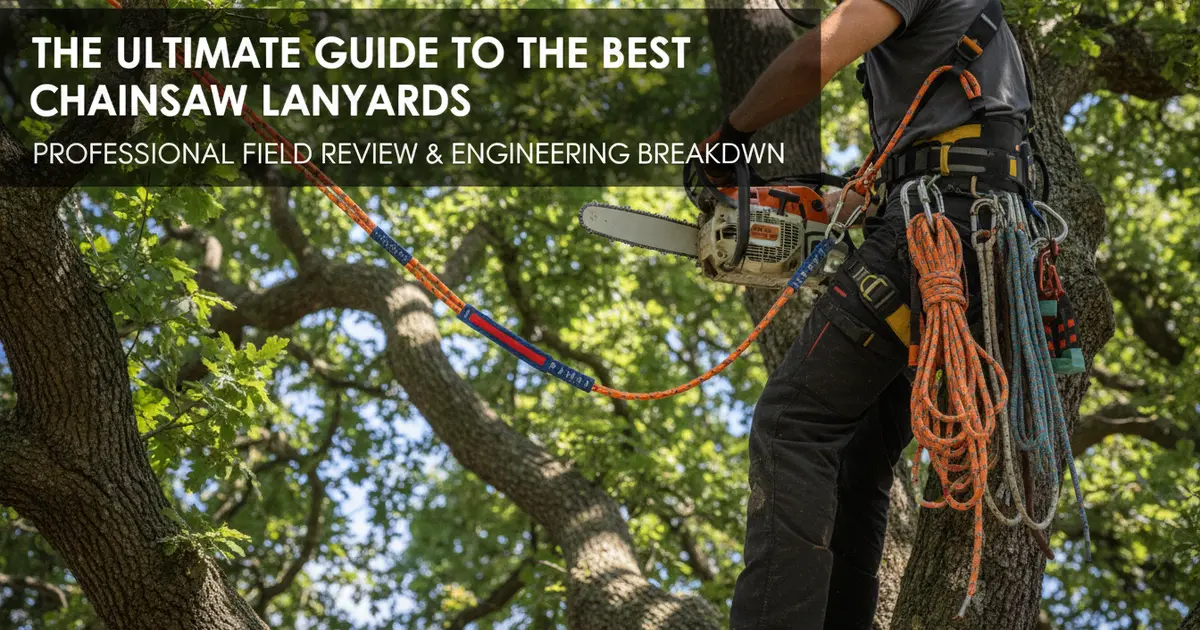
The Ultimate Guide to the Best Chainsaw Lanyards: Professional Field Review & Engineering Breakdown
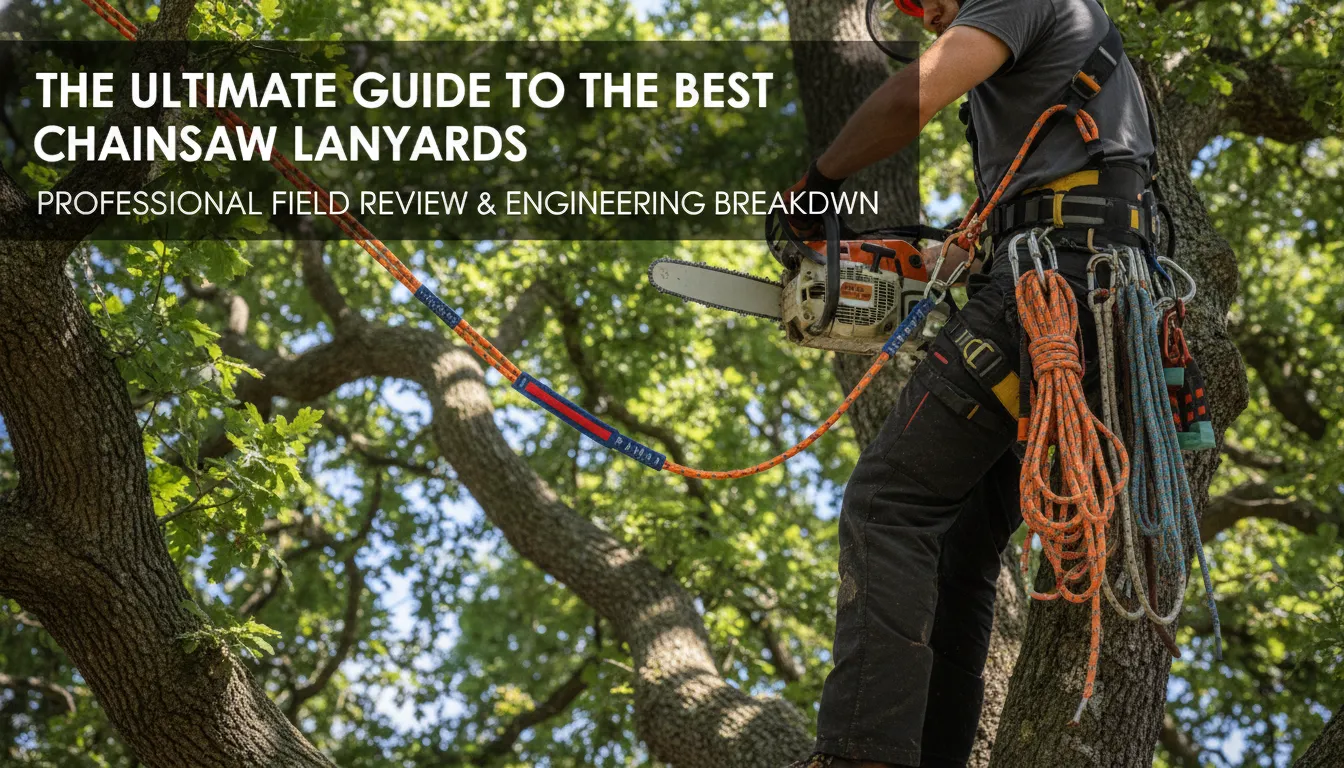
If you’ve ever spent six hours 40 feet up in a swaying white oak, you know your chainsaw isn’t just a tool — it’s an extension of your body that happens to be heavy, sharp, and eager to meet the ground. I’ve been in the tree care industry for over 15 years, and I’ve seen it all: guys using paracord daisy chains that snap like dental floss, and stiff bungees that make reaching for a limb feel like wrestling a giant rubber band.
Choosing the best chainsaw lanyard isn’t about finding the cheapest piece of nylon. It’s about lugging power, engineering specs, and gear that doesn’t fail when a saw kicks or drops. When you’re transitioning between a nimble top-handle and a beefier saw, the physics of your tether changes entirely.
Strategic Comparison: The Heavy Hitters of the Canopy
| Model | Type | Max Load (Rating) | Best For | Check Price |
|---|---|---|---|---|
| Teufelberger Anti-Shock | Tear-Away Bungee | 15.5 lbs (SWL) | Professional Production | 🛒 View on Amazon |
| Notch Bungee Lanyard | Standard Bungee | 10 lbs (SWL) | Mid-Sized Saws | 🛒 View on Amazon |
| Weaver Leather 7’ | Heavy Duty Webbing | 15 lbs (SWL) | Ground & Bucket Work | 🛒 View on Amazon |
| Petzl LEVISTO | Elasticized | 12 lbs (SWL) | Ergonomic Precision | 🛒 View on Amazon |
Technical Engineering Deep-Dive: The Anatomy of a Tether
Elastic Memory and Bungee Architecture. Most modern lanyards use a bungee design. Inside that high-vis sleeve is a core of elastic polymers. The quality of this core determines the memory of the lanyard. Cheap lanyards lose elasticity after a few dozen drops. Professional-grade tethers use high-tenacity latex or synthetic rubber cores designed for thousands of cycles.
Tubular Webbing & Abrasion Resistance. The outer shell is heavy-duty nylon or polyester tubular webbing. Tubular allows the elastic core to slide freely while providing double the surface area for abrasion resistance. One-inch width webbing is the sweet spot — wide enough to distribute force, narrow enough to stay lightweight. Look for a minimum of 1000D nylon for professional use.
The Tear-Away/Breakaway Physics. This is the most misunderstood part of lanyard engineering. A tear-away lanyard is designed to fail at a specific force (usually 150-200 lbs). If your saw gets jammed in a falling limb, you don’t want it pulling you out of the tree with it. The engineering involves specific sacrificial stitching programmed to pop under high dynamic loads.
Real-World Performance Analysis: Into the White Oak
The Drop Factor Test. When a saw falls, you’re dealing with kinetic energy, not just static weight. I dropped a Husqvarna 435 from shoulder height. The Teufelberger Anti-Shock was the clear winner. The anti-shock feature acts as a decelerator — a progressive stretch that absorbs energy. It felt less like a bungee cord and more like a high-end climbing rope.
Reach and Retraction. The Notch Bungee provides an excellent 60-inch reach when fully extended but retracts to a manageable 32 inches. This compression ratio is key for ergonomics.
Ergonomics & Operator Comfort
Handle Geometry and Attachment Points. Where you attach the lanyard to the saw matters as much as the lanyard itself. Most top-handle saws have a dedicated D-ring. For rear-handle saws, a girth hitch around the rear handle works best. The Petzl LEVISTO’s keylock nose carabiner prevents webbing from catching in the gate during high-stress transitions.
Vibration Damping. A bungee lanyard absorbs micro-vibrations of an idling saw hanging from your side, preventing that buzzing sensation in your hip that leads to nerve fatigue after an 8-hour shift.
Historical Context & Brand Heritage
Back in the 90s, we didn’t have lanyards. We had a piece of 3-strand rope and a bowline knot. It was dangerous, didn’t stretch, and if your saw got hung up, you were going for a ride.
European companies like Teufelberger and Petzl applied mountaineering physics to the equation, treating the chainsaw lanyard as a PPE component rather than just a leash. This shift — from agricultural utility to life-safety engineering — is why modern lanyards are so reliable.
Maintenance & Serviceability: When to Retire Your Tether
The Field Inspection Protocol
- The UV Check — if your bright orange lanyard has faded to a dull peach, UV rays have compromised the nylon fibers.
- The Oil Saturation — chainsaw bar oil is a solvent. Over time it breaks down the elastic core. If the lanyard feels gummy or doesn’t snap back, it’s dead.
- The Stitching — look at the tear-away zone. If you see a single broken thread in the load-bearing box-X stitch, retire it immediately.
Don’t throw your lanyard in the washing machine. Use lukewarm water and mild detergent, and air dry away from direct sunlight.
Hardware Specs: The Technical Breakdown
- MBS (Minimum Breaking Strength): Usually around 5,000 lbs for the webbing itself, but the system is rated much lower (the breakaway force)
- SWL (Safe Working Load): Typically 10-15 lbs
- Extended Length: 50” to 65” standard
- Retracted Length: 30” to 40” ideal
- Material: UV-resistant tubular polyester or nylon
Pros & Cons: The SAWOFF Edge
Teufelberger Anti-Shock Pros: Superior shock absorption; highest build quality; excellent bungee core memory. Cons: Expensive; can feel bulky on smaller saddles.
Notch Bungee Pros: Perfect length-to-weight ratio; aggressive snap-back keeps the saw tight; affordable. Cons: Breakaway force can be inconsistent in extreme cold; webbing snags on rough bark.
Final Verdict
If you’re a professional climber, buy the Teufelberger Anti-Shock. The way it manages the weight of a pro saw is unparalleled.
If you’re a homeowner using a saw for light limbing, the Notch Bungee is the best value on the market.
SAWOFF Rating: 4.8 / 5 (Teufelberger Anti-Shock)
Chainsaw Safety
Never confuse a tool tether with life support. Read our Chainsaw Safety Guide before you head up. Your lanyard keeps your saw close — your safety habits keep you alive.
Get out there and cut. Safely.
Frequently Asked Questions
Can I use a chainsaw lanyard for my own fall protection?
Absolutely not. Chainsaw lanyards are designed to break away at forces far lower than what is required to catch a human. They are tool-tethers, not life-support.
My lanyard is covered in bar oil. Is it still safe?
If it's just a light coating, it's probably fine. But if the webbing is saturated and the stretch feels stiff or crunchy, the oil has degraded the internal rubber. Replace it.
What is the difference between a bungee and a ripple lanyard?
Bungee lanyards use an internal elastic cord. Ripple lanyards use the geometry of the webbing (sewn folds) to provide stretch. Ripples are more durable but have a much shorter reach.
How do I attach a lanyard to a saw without a D-ring?
Most arborists use a girth hitch. Pass the loop of the lanyard around the rear handle of the saw, then pass the carabiner through the loop. Ensure it doesn't interfere with the throttle trigger or chain brake.
Why did my tear-away lanyard snap when I drop-started my saw?
You likely have a heavy drop-start technique. The dynamic force generated can exceed the 150lb breakaway limit, especially with a heavy saw.
Do I need a locking carabiner on my lanyard?
Yes. Non-locking gate carabiners can easily roll out if they rub against a branch. A screw-lock or triple-action carabiner is much safer.
What's the best way to store my lanyard?
Hang it up. Don't leave it at the bottom of a damp gear bag where it can grow mold or get exposed to leaked fuel and oil.
Can I use a lanyard with a top-handle electric saw?
Yes, and you should. Even though electric saws are often lighter, they still pose a major ground-hazard if dropped. Just ensure the lanyard isn't so heavy that it makes the light saw feel unbalanced.