The Definitive Guide to Chainsaw Lanyard Rings and Climbing Setups
If you’ve ever dangled 60 feet in the air from a zigzag and a friction hitch, you know your chainsaw isn’t just a tool — it’s an extension of your body that happens to be a high-velocity cutting machine. But here’s the cold hard truth: a saw is only as useful as your ability to carry it. I’ve seen more pro setups fail due to a $5 hardware store ring than I care to count.
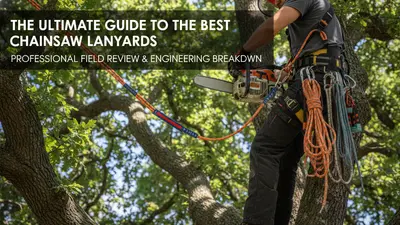
When we talk about chainsaw lanyard rings and setups, we aren’t just talking about a piece of bent metal. We’re talking about the critical interface between your harness and your powerhead.

The Hierarchy of Attachment: Top-Handle vs. Ground Saws
| Model | Attachment Type | Ring Durability | Best For | Gear Link |
|---|---|---|---|---|
| Echo CS-2511T | Integrated Molded | High | Ultra-light Pruning | 🛒 Check Echo Price |
| Husqvarna T540XP | Fold-away Steel | Excellent | Professional Removal | 🛒 Check Husqvarna Price |
| Stihl MS 201T C-M | Fixed Steel Loop | Industrial | All-day Production | 🛒 Check Stihl Price |
Technical Engineering Deep-Dive
Metallurgy and Structural Integrity. A lanyard ring has to survive a drop-shock. If the saw slips from your hand, the force exerted on the ring isn’t just the weight of the saw — it’s the kinetic energy of the fall. Most professional top-handle rings are made of high-tensile stainless steel or reinforced polymers, bolted directly into the magnesium crankcase with heavy-duty fasteners.
If you’re retrofitting a saw for occasional climbing use, the mounting point must handle at least 500 lbs of peak force. I’ve seen aftermarket rings rip through cheap plastic handles during a drop, sending a running saw hurtling toward the groundman.
Ring Placement. Engineers place rings carefully. If too close to the air intake, the lanyard obstructs centrifugal air cleaning. If too far back, the saw hangs nose-heavy and the bar pokes your calves. A perfectly engineered ring allows the saw to hang at a slight inward angle, keeping the bar tucked behind your leg.
Real-World Performance
I spent a week clearing frozen Siberian Elms testing a breakaway lanyard setup.
The Breakaway Concept. You want a setup that breaks if the saw gets pinched in a falling log. If the log takes the saw and the saw is tethered with an unbreakable steel cable, guess who goes down with it? The ring on the saw should never be the point of failure — it should be the strongest part of the chain.
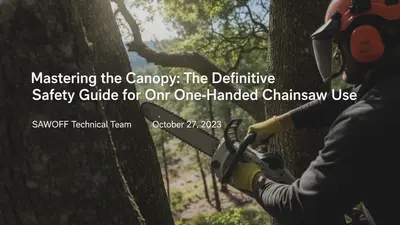
Bucking and Limbing from a Rope. On a top-handle saw with an integrated ring tucked near the center of gravity, I barely feel it until I need it. The saw sits on my hip at the perfect angle.
Ergonomics and Operator Comfort
After four hours of bucking limbs, vibration is bad enough without a poorly placed ring digging into your thumb or wrist. A ring positioned even half an inch off-center causes the saw to roll on your gear loop.
Handle Geometry. Some saws use hidden rings that pop out (Husqvarna style), others use fixed loops (Stihl style). I find pop-out rings a bit flimsy for heavy production work. Frozen sawdust can jam the mechanism.
Historical Context
Back in the day, we used to girth-hitch accessory cord around the back handle. It was dangerous, ruined balance, and melted against the muffler. The industry shifted when manufacturers realized arborists were a massive market. We saw the transition from plastic clip-on points to integrated magnesium castings.
Maintenance and Serviceability
- Check for Play — does the ring wiggle? Use blue Loctite on the mounting bolt.
- Inspect for Stress Fractures — white stress marks in plastic mean the housing is failing.
- Smooth the Burrs — metal rings develop sharp burrs from carabiner friction. A fine file fixes this.
Pros & Cons
Integrated Fixed Rings (Stihl Approach) Pros: Indestructible; consistent balance; easy clipping by feel. Cons: Snags on brush during ground work; adds a few grams.
Folding/Retractable Rings (Husqvarna Approach) Pros: Streamlined; tucks away for ground work. Cons: Mechanical failure possible; hard to operate with thick gloves.
Final Verdict
If you’re a serious climber, don’t compromise on your lanyard ring. It’s the only thing keeping your $600 saw from becoming a lethal projectile. If your saw doesn’t have a factory-integrated steel ring, look into a dedicated arborist saw.
SAWOFF Rating: 4.8 / 5 (For Integrated Steel Ring Systems)
Chainsaw Safety
Your lanyard setup is a safety system. Read our Chainsaw Safety Guide and our best chainsaw lanyards guide for more.
Get out there and cut. Safely.
Frequently Asked Questions
Can I just use a heavy-duty keychain ring?
Absolutely not. A keychain ring is designed to hold ounces, not pounds. In a drop-shock situation, a keychain ring will straighten out instantly. Use only hardware-rated rings or manufacturer-supplied attachment points.
My saw doesn't have a ring. Where should I attach my lanyard?
If you must tether a rear-handle saw, the best point is through the rear handle's handguard or a dedicated saddle attachment. Never attach to the wrap handle as this interferes with your grip and chain brake.
How often should I replace my chainsaw lanyard?
Replace every season, or immediately if showing fraying, glazing, or after surviving a significant drop. The lanyard is cheaper than the saw.
What's the best oil mixture for a saw that spends time hanging?
The mixture stays the same (50:1), but hanging a saw vertically can lead to puddling in the carb if needles aren't seating perfectly. If the saw is hard to start after hanging, that's likely why.
Does the lanyard affect the anti-vibration mounts?
If the lanyard is too tight, it puts tension on the AV springs, increasing vibration. Always ensure some slack in your tether while cutting.
Should I use a bungee or a fixed lanyard?
For most climbers, a bungee lanyard is superior. It keeps the saw close while climbing but stretches for full reach during cuts. Fixed lanyards are only useful for very heavy saws where bounce is unwanted.
Is it safe to hang an electric saw?
Yes. Many new pro-grade electrics have integrated climbing rings. Just remember that batteries add weight, which affects how the saw hangs on your harness.
What is the breakaway concept in lanyard setups?
Breakaway lanyards are designed to fail at around 200-300 lbs of force. If the saw gets pinched in a falling limb, the breakaway releases before you get pulled out of the tree.