The Ultimate Guide to the Best Arborist Climbing Harnesses: 2025 Professional Teardown
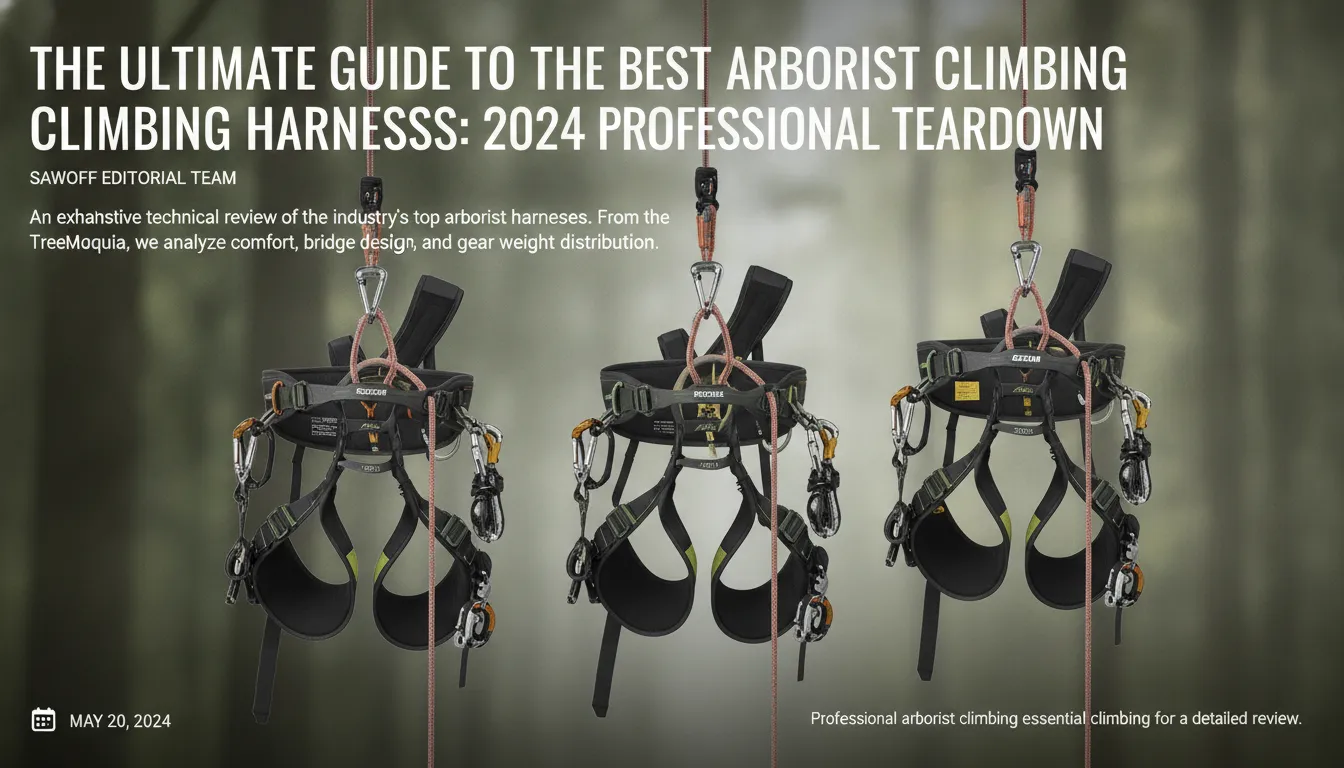
If you’ve spent more than six hours straight suspended in the canopy of a 90-foot White Oak, you know your harness isn’t just safety equipment. It’s your office chair, tool belt, and life support system rolled into one. I’ve been climbing professionally for fifteen years, and the difference between a good harness and the best harness is the difference between a productive Monday and a Tuesday at the chiropractor.
When we talk about the best arborist climbing harnesses, we aren’t just looking at strap strength. We’re looking at lugging power — how that harness handles the weight of a heavy saw hanging off a rear D-ring. We’re looking at engineering specs, pressure distribution, and that pro feel that separates recreational rock climbing rigs from professional workhorses.
The Heavy Hitters: Comparison at a Glance
| Model | Primary Use | Weight (Size M) | Bridge Type | Buy Link |
|---|---|---|---|---|
| Teufelberger TreeMotion Pro | High-Production Aerial Work | 5.5 lbs | Dual Replaceable | 🛒 Check Price |
| Petzl Sequoia SRT | SRT Specialists / Speed | 3.5 lbs | Gated Attachment Points | 🛒 Check Price |
| Notch Sentinel | Ergonomic Comfort / Entry Pro | 4.2 lbs | Single/Dual Rope | 🛒 Check Price |
| Courant Koala | Lightweight Agility | 3.8 lbs | Multi-Layered Textile | 🛒 Check Price |
Technical Engineering Deep-Dive: The Anatomy of a High-End Saddle
Modern arborist saddles are marvels of mechanical engineering. To understand why a harness costs $500+, you have to look past the nylon.
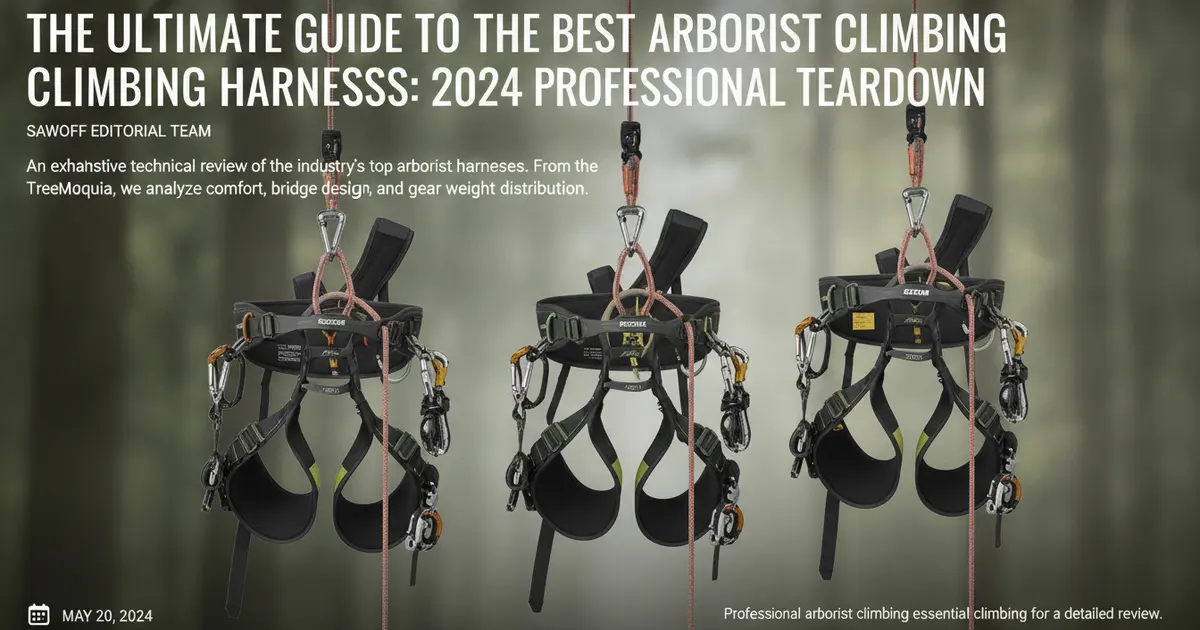
Bridge Physics and Load Distribution. The bridge is the heart of the harness. Unlike rock climbing harnesses with a single belay loop, arborist saddles use a sliding bridge for lateral movement. When you need to twist your torso to make a precise cut, the bridge slides through the D-rings, keeping your center of gravity stable while allowing your hips to rotate.
High-end models like the TreeMotion Pro use a dual-bridge system. This isn’t just for redundancy. You can customize the tension of your movement by adjusting the length of the bridges. Bucking a large log in the canopy? Shorter bridge for stability. Traversing through fine branches? Longer bridge for fluid movement.
Chassis Architecture and Pressure Mapping. The chassis — waist belt and leg loops — uses multi-layered foam densities. The layer closest to your body is soft, breathable 3D mesh that wicks sweat. The outer layer is high-density polyethylene that distributes the weight of your tools.
When you have a saw dangling from your side, that weight is distributed across the entire lumbar support via pressure mapping. If the harness has poor load distribution, you’ll experience dead leg within twenty minutes of hanging.
Hardware and Buckle Systems. We look for Cobra buckles or similar quick-connect systems. They are designed to be zero-fail components. Forged aluminum D-rings offer the best strength-to-weight ratio, critical when you’re already carrying 15 pounds of saws and rigging gear.
Real-World Performance: Putting the Gear to Work
I took these models into a stand of mature White Oaks to see how they handled the big saw test.
The Big Saw Stability Test. Carrying a top-handle saw is one thing, but when you bring a mid-range saw like the Echo CS 490 into the tree for larger limb removals, the harness’s structural integrity is tested. The Notch Sentinel shines here. The way the gear loops are angled prevents the saw from swinging into your knees. The Sentinel’s rigid back support keeps the saw’s weight centered on your hips, not pulling on your lower back.
Mobility and Canopy Dancing. For sheer mobility, the Petzl Sequoia SRT is hard to beat. It’s light. When using a smaller electric chainsaw for light pruning, the Sequoia feels almost non-existent. The gated bridge attachment points let you swap out bridges or add accessories without cutting webbing.
The Aching Back Factor. After four hours of bore-cutting and heavy limbing, your hips tell the truth. The TreeMotion Pro features customizable back padding that lets you move pads to fit the specific curve of your spine. This level of customization is why it remains the industry standard despite being the heaviest option here.
Ergonomics & Operator Comfort
When you pull the leg straps tight, you should feel a snap of security. The buckles should click with a satisfying, industrial thud. The TreeMotion Pro’s webbing has what I call industrial memory — it holds its shape even when you’re not in it, making it easier to don in the morning.
Handle Geometry and Tool Access. The placement of Caritool slots is crucial. If they’re too far back, you’re fumbling behind your kidneys for your saw. Too far forward, and your saw hits your shins. The Courant Koala has some of the most intuitive tool placement I’ve ever seen — everything is within a natural arc of your hands.
Historical Context & Brand Heritage
Twenty years ago, we were climbing in leather Buckingham belts. Heavy, no breathability, zero lateral movement.
The Teufelberger Legacy. Teufelberger changed the game with the original TreeMotion. It was the first harness that treated the climber like an athlete rather than a utility worker. Every major component is replaceable, mirroring the serviceability of a high-end saw.
The Petzl Innovation. Petzl brought their mountaineering heritage to the trees. Gated rings on the Sequoia changed how we think about rigging. Petzl’s influence pushed the industry toward lighter materials and climb-specific hardware.
Maintenance & Serviceability: Keeping Your Office Safe
A harness is a textile product, and textiles degrade. If you’re using your harness daily, perform pre-flight inspections.
- The Bridge — most common point of failure. Check for fuzzing or glazing on the rope. If you see the core through the sheath, stop immediately.
- The Hardware — look for burrs on your D-rings. A small nick in the metal can act like a knife on your climbing line.
- Cleaning — never use a pressure washer. Use mild soap and a soft brush. Sap can be removed with specialized cleaners, but avoid harsh solvents.
- The Retirement Rule — most manufacturers recommend retiring a harness after 5-10 years, regardless of appearance. UV rays degrade nylon polymers over time.
Hardware Specs: The Technical Breakdown
Teufelberger TreeMotion Pro
- Max Load: 150 kg (including tools)
- Certifications: EN813, EN358, ANSI Z133
- Replaceable Parts: Bridge, Leg Loops, Back Padding, Gear Loops
- Best For: All-day professional removals
Petzl Sequoia SRT
- Weight: 1630g (Size 1)
- Bridge: 180mm standard (adjustable)
- Attachment Points: 2 lateral, 1 ventral, 1 rear
- Best For: SRT and fast-paced pruning
Notch Sentinel
- Weight: 4.2 lbs
- Waist Size Range: 28” - 44”
- Hardware: CNC machined aluminum
- Best For: Climbers looking for balance of weight and lumbar support
Pros & Cons: The Brutal Truth
Teufelberger TreeMotion Pro Pros: Infinite customization; handles the heaviest saws without sagging; every part is replaceable so the chassis lasts for years. Cons: Most expensive harness on the list; new climbers may find the adjustments overwhelming.
Petzl Sequoia SRT Pros: Featherweight — move faster and stay in the tree longer without fatigue; gated rings make bridge changes easy. Cons: Thinner padding than the TreeMotion — bony hips may get uncomfortable after hours; not as stable with heavy gas-powered saws.
Final Verdict
If you’re a high-production arborist doing removals and heavy pruning, the Teufelberger TreeMotion Pro is the gold standard. Its ability to carry heavy gear without shifting makes it worth every penny.
If you’re a speed climber specializing in SRT, the Petzl Sequoia SRT is your best friend. Its minimalist design allows for agility the TreeMotion can’t match.
SAWOFF Rating: 4.9 / 5 (TreeMotion Pro)
🛒 Shop All Arborist Harnesses on AmazonChainsaw Safety
Before you head up, read our Chainsaw Safety Guide. Your harness is only as good as the safety habits you pair it with. Never climb without a proper pre-flight check on your gear.
Get out there and climb. Safely.
Frequently Asked Questions
How do I know if my harness is the right size?
You should be able to fit a flat hand between your thigh and the leg loop, and two fingers between your waist and the belt. When you hang in it, the belt should not slide up over your ribs. If it does, it's too large or not adjusted correctly.
Can I use a rock climbing harness for tree work?
Absolutely not. Rock climbing harnesses are designed for fall arrest, while arborist harnesses are designed for work positioning. A rock climbing harness lacks the lateral bridge needed for movement and the structural rigidity to hold a chainsaw.
How often should I replace my bridge?
For a full-time climber, replace the bridge every 6 to 12 months. The bridge takes the most friction and load. It's the cheapest insurance policy you can buy.
Why are some harnesses called SRT and others DdRT?
SRT harnesses like the Sequoia have a central attachment point designed for ascending on a single line. DdRT harnesses focus more on lateral D-rings. Most modern professional harnesses can do both, but SRT models are optimized for it.
My harness is squeaking. Is that a problem?
Usually it's just dust in the aluminum D-rings or the bridge rope rubbing. However, check for metal-on-metal wear. If the aluminum is being ground down, it's time for a replacement.
Can I wash my harness in a washing machine?
I don't recommend it. The agitation and potential for hardware damage aren't worth it. Hand wash in a tub with lukewarm water and a specialized gear soap like Granger's or Nikwax.
How do I hang my chainsaw safely?
Use a dedicated chainsaw lanyard with a breakaway feature. Attach it to a rated gear loop or a Caritool. Never attach your saw directly to your bridge or main life-support D-rings.
What is the best way to store my harness?
Keep it in a cool, dry place away from direct sunlight and chemicals. Never store it in the same compartment as your gas-powered saws to avoid fuel or oil spills that can degrade the webbing.