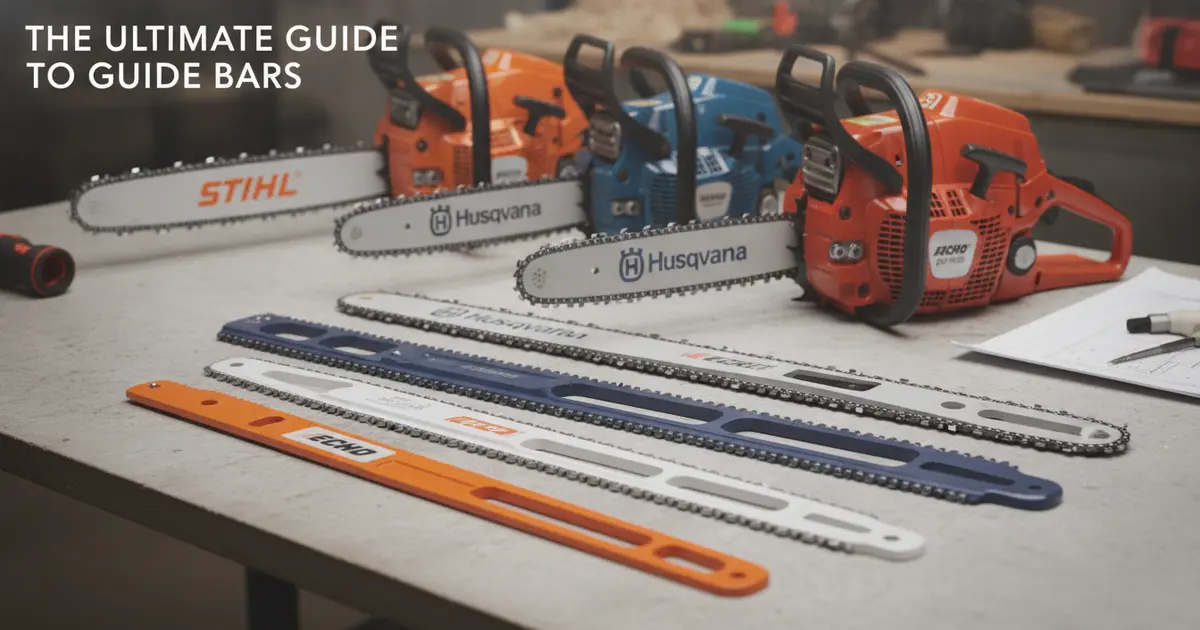
The Ultimate Guide to the Best Guide Bars for Top Handle Saws
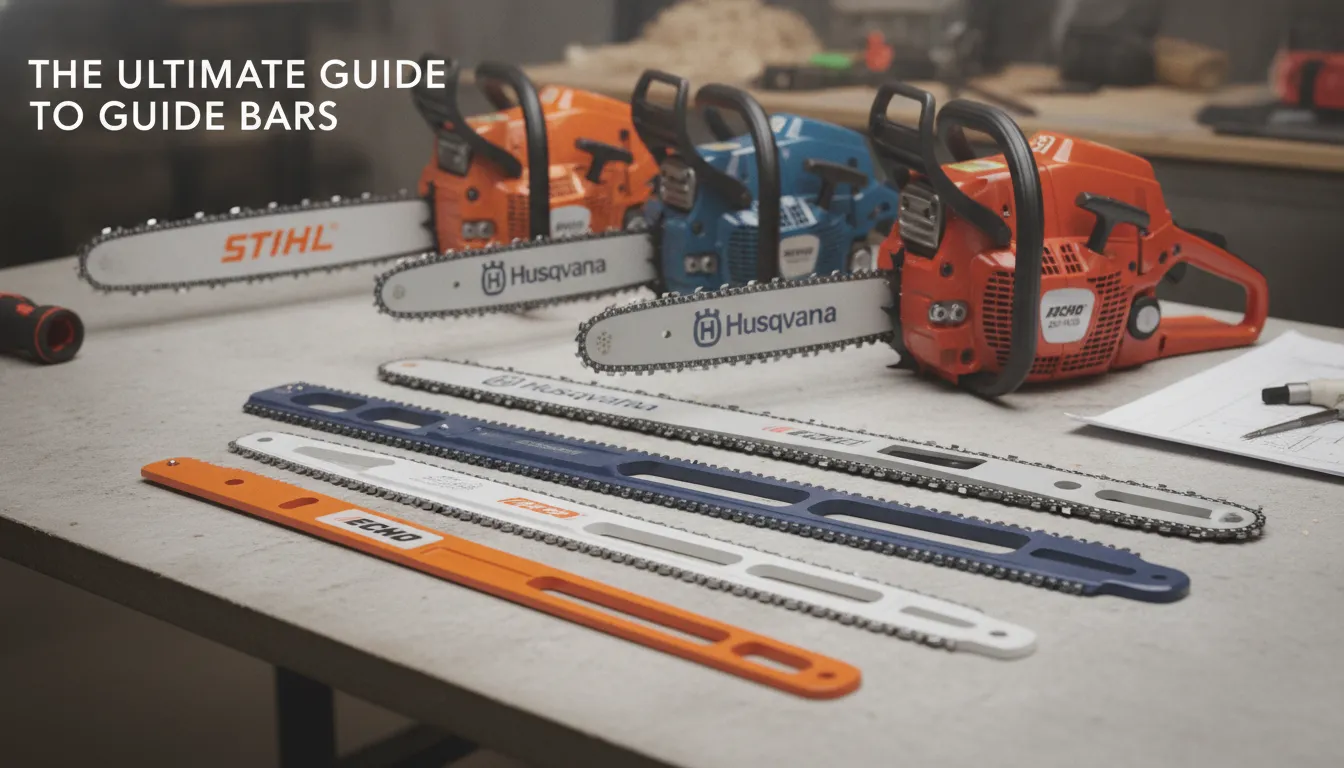
When you’re sixty feet up in a sprawling white oak, tied in and leaning out to make a precision snap-cut, the last thing you want to fight is the balance of your saw. Most guys focus on the engine — but I’m here to tell you that the guide bar is what defines the pro feel vs. true surgical precision.
A top handle saw is a specialized tool. Unlike ground saws, these are designed for extreme maneuverability. The guide bar acts as the scalpel’s blade. If it’s too heavy, the saw nose-dives, causing forearm fatigue. If it’s too flimsy, you get rail spread and poor tracking.
Strategic Comparison: The Heavy Hitters
| Model | Construction Type | Best For | Compatibility | Link |
|---|---|---|---|---|
| Sugihara Light Type | Solid Steel (CNC Skeletal) | Ultimate Precision | Stihl, Husqvarna, Echo | 🛒 Check Sugihara Price |
| Oregon SpeedCut Nano | Laminated / Narrow Kerf | Battery & Small Gas | Echo CS-2511T, Stihl 151 | 🛒 Check Oregon Price |
| Tsumura Light Weight | Solid Steel / Resin Insert | Durability & Balance | Husqvarna T540XP, Stihl 201T | 🛒 Check Tsumura Price |
| Stihl Rollomatic E Mini | Laminated Steel | Budget Replacement | Stihl MS 170 / MS 194T | 🛒 Check Stihl Price |
Technical Engineering Deep-Dive: Why Most Bars Fail the Pro Test
The Metallurgy of Rigidity. Standard bars are usually laminated — three pieces of steel spot-welded together. They’re cheap but have a fatal flaw for arborist work: heat dissipation. When making repeated small cuts during limbing, friction builds up. Laminated bars can develop soft spots where the rails pinch or spread.
Professional lightweight bars are typically solid Chrome-Molybdenum steel. Manufacturers like Sugihara CNC-mill out the center and fill it with resin, maintaining stiffness while cutting weight by up to 25%. When bucking down a heavy spar, that stiffness means zero bar flex.
The Bearing and Sprocket Nose Geometry. The nose of the bar is where the most mechanical stress occurs. In top handle saws, we often use the nose for boring or technical V-cuts. A high-end bar features a high-carbon steel sprocket with a heavy-duty roller bearing. Cheap bars use fewer rivets on the nose — I’ve seen them literally explode when pinched in reactive wood.
Narrow Kerf: The Hidden Power Boost. By making the bar and chain thinner (.043” gauge vs .050”), the saw moves less wood to make the same cut. This is essentially free horsepower. It’s why even an electric chainsaw can feel punchy — it’s all about kerf efficiency.
Real-World Performance: Field Notes from the Canopy
I swapped the stock bar on an Echo CS-2511T for an Oregon SpeedCut Nano. The difference wasn’t just noticeable — it was transformative.
When limbing, a heavy bar creates a pendulum effect. If the bar is too long, the center of gravity shifts forward and your wrist works double-time to keep the tip from dipping. On a recent job, I used a 12-inch Sugihara Light on a Stihl MS 201T. The balance point was exactly at the top handle. I could flick the saw from branch to branch.
Bore-Cutting Capabilities. A bar with a poor nose design kicks back violently. Safety bars on entry-level saws have a very small radius nose to prevent kickback, but this makes bore-cutting nearly impossible. A pro bar finds the middle ground — enough radius to plunge, with high-quality bearings to handle the heat.
Ergonomics & Operator Comfort
We don’t talk enough about vibration frequency. Every bar/chain combo has a resonant frequency. Cheap, thin bars vibrate at a high frequency that causes Hand-Arm Vibration Syndrome. Solid-core lightweight bars have better damping characteristics. When paired with a saw that has a good anti-vibration system, the experience is night and day.
If the bar is pulling the saw’s nose down, you end up gripping tighter, which bypasses the saw’s built-in AV springs and sends that energy straight into your elbow.
Historical Context: Why Japan Rules the Bar Market
Sugihara and Tsumura are Japanese. There’s a reason for this. The Japanese forestry industry centers around steep, technical terrain where small, high-performance saws are a necessity. While Stihl and Husqvarna make incredible powerheads, they often build bars to a good-enough standard to keep kit prices down. Japanese boutique manufacturers produce bars that are essentially industrial art.
Maintenance & Serviceability: Keeping the Rails True
- Flip Every Day — every time you sharpen or refuel, flip the bar. Ensures even wear on the rails.
- Deburr the Rails — as the chain moves, it mushrooms the edges of the steel rails. Use a flat-file or bar dresser to remove burrs.
- Clean the Oil Hole — if that oil hole is plugged, your bar heats up, paint burns off, and you ruin the steel’s temper.
- Check the Groove — use a depth gauge tool. If the drive links bottom out, the bar is spent.
For saws that see heavy use, checking these four points weekly is the difference between a bar that lasts 5 years and one that’s scrap in 12 months.
Pros & Cons
Sugihara/Tsumura Lightweight Bar Pros: Unmatched balance; incredible durability; replaceable sprocket noses. Cons: Expensive (often 3x the price of stock); harder to find locally.
Oregon SpeedCut Nano (Narrow Kerf) Pros: Increases cutting speed by up to 20%; reduces strain on the engine. Cons: Thinner chain more prone to snapping if pinched.
The SAWOFF Edge: Buy a Sugihara 12-inch Light bar. It is the single best ROI for any arborist saw. It transforms the ergonomics and makes the saw feel like an extension of your arm.
Final Verdict
The best guide bar isn’t a single product but a philosophy of matching your bar to your saw’s power and task. For pure performance, the Sugihara Light Type is the gold standard. For revitalizing a smaller or battery-powered saw, the Oregon SpeedCut Nano is a game-changer.
Avoid cheap, unbranded laminated bars from discount sites. They are a safety hazard in the canopy.
SAWOFF Rating: 4.9 / 5 (Sugihara/Tsumura Lightweight Class)
Chainsaw Safety
Your bar choice affects safety. A poorly matched bar increases kickback risk. Read our Chainsaw Safety Guide and our bar size guide for more.
Get out there and cut. Safely.
Frequently Asked Questions
Can I put a 16-inch bar on my 25cc top handle saw?
You can, but you shouldn't. A 25cc saw lacks the lugging power to pull a 16-inch chain through a full cut. It will overheat the engine and make the saw dangerously nose-heavy. Stick to 10 or 12 inches for 25cc-30cc saws.
Why is my bar getting hot even though there's oil in the tank?
Check the oiler hole on the bar itself. It's likely clogged. Also check chain tension — a chain that's too tight creates immense friction. You should see exactly three drive links partially out of the groove.
What oil mixture should I use for high-performance top handle saws?
For pro saws, always use high-quality synthetic 50:1 mix. Better yet, use ethanol-free canned fuel (MotoMix or Aspen) to prevent small carburetors from gumming up.
How do I know if my bar is bent?
Sight down the bar from the tail to the nose. If you see even a slight S curve, it's toast. Do not try to bend it back — the steel's structural integrity is compromised.
Why does my chain keep jumping off the bar?
This is usually rail spread — the groove has become too wide, allowing the chain to rock and hop out. It can also be caused by a worn drive sprocket on the engine.
Can I use a Stihl bar on a Husqvarna saw?
Generally no. The mount patterns (slots and oil holes) are different. Some companies make adapters, but it's always safer to buy the bar designed for your specific mount pattern.
What is the snap I hear when I start my saw?
That's often the ElastoStart handle or decompression valve seating. If it's a crunchy snap, check your starter pawls.
Is there a difference between arborist bars and ground bars?
Mostly in weight and nose radius. Arborist bars are optimized for weight balance and precision cutting. Ground bars are built for raw durability and bucking.