The Definitive Guide to the Best Handsaws for Arborists: A Pro’s Field Manual
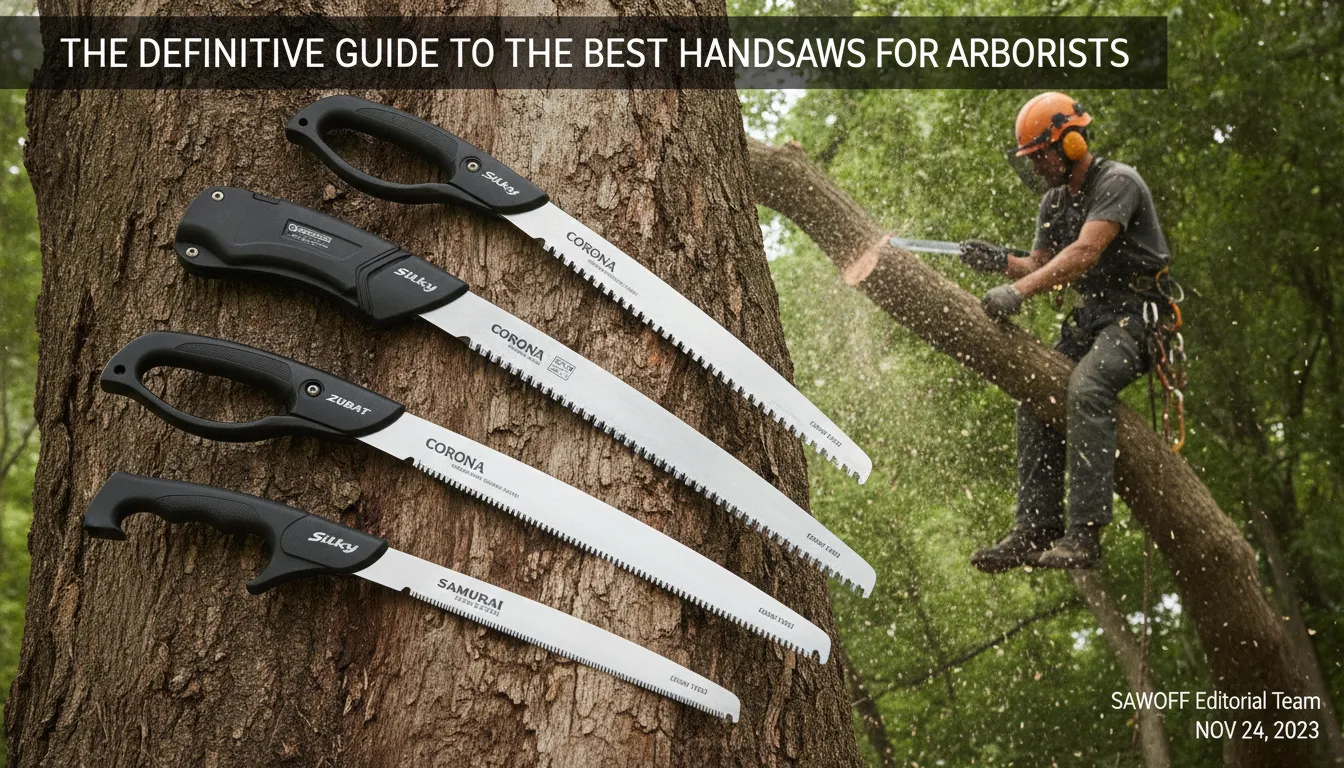
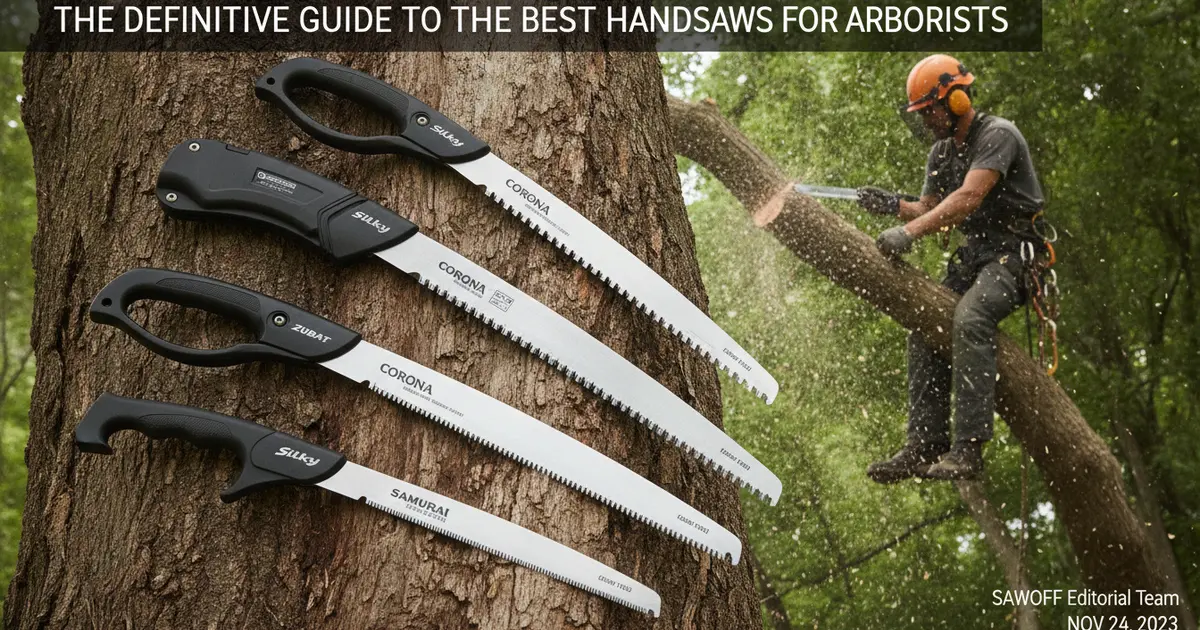
I’ve spent fifteen years suspended sixty feet in the air, leaning out over a white oak limb. In that time, I’ve learned one immutable truth: your handsaw is not just a tool — it’s an extension of your nervous system. While many homeowners think of a handsaw as a five-dollar hardware store item, a professional arborist knows better.
When you’re deep in the canopy, you need lugging power — even from a manual tool. You need a blade that clears chips with efficiency but weighs less than a pound. The physics of a pull-stroke saw, the metallurgy required to prevent snapping in sub-zero temperatures, and the ergonomics that prevent carpal tunnel after a ten-hour day — this is what separates pro-grade equipment from toys.
Strategic Comparison: The Heavy Hitters
| Model | Blade Length | Tooth Style | Primary Use | SAWOFF Rating | Link |
|---|---|---|---|---|---|
| Silky Zubat 330 | 330mm | Large (7.5/30mm) | All-around Pruning | 4.9/5 | 🛒 Check Zubat Price |
| Silky Sugoi 360 | 360mm | Extra Large (6.5/30mm) | Large Limb Removal | 4.8/5 | 🛒 Check Sugoi Price |
| Samurai Ichiban | 330mm | Tapered / Non-set | Precision Pruning | 4.6/5 | 🛒 Check Ichiban Price |
| Notch T-Rex | 350mm | Aggressive Tri-edge | Heavy Utility | 4.4/5 | 🛒 Check Notch Price |
Technical Engineering Deep-Dive: The Anatomy of a Perfect Blade
Metallurgy and Heat Treatment. Most high-end arborist saws use SK-4 high-carbon steel. But it’s the impulse hardening that changes the game. Only the teeth are hardened via high-frequency heating, leaving the body flexible enough to absorb shock while the teeth stay razor-sharp for months.
Chrome plating prevents resin and pitch from bonding to the steel. When thinning sappy White Pine last July, the chrome-plated Zubat kept sliding through like a hot knife through butter, while my groundman’s unplated hardware store special kept binding.
Tooth Geometry. Professional arborist saws almost exclusively use non-set teeth. The blade is taper-ground — thicker at the teeth and thinner at the spine. This reduces friction because only the teeth contact the wood. The 4-RETSUME technology in high-end Silky models provides a mirrored finish on the cut, which heals faster and reduces fungal infection risk for the tree.
The Pull-Stroke Philosophy. Japanese-style saws cut on the pull. Because the blade is under tension during the cutting stroke, it can be made thinner without buckling. A thinner blade means a thinner kerf, which means you remove less wood per stroke. Pure efficiency.
Real-World Performance
I took the Silky Zubat 330 and Samurai Ichiban into frozen Sugar Maple last February.
Bucking and Limbing. The Zubat’s large teeth caught the grain immediately — no skating across the bark. In about six vigorous pull strokes, I was through a 3-inch maple limb. The vibration frequency was minimal thanks to the GOM rubber handle, which mimics the anti-vibration mounts on a pro-grade saw.
Bore-Cutting and Tight Crotches. Sometimes you need to get into a tight V crotch where even a top-handle chainsaw would be dangerous. The taper-ground blade excels here. I made a precision bypass cut that would have been impossible with a wider-profile tool.
Ergonomics & Operator Comfort
The curve of a Zubat handle keeps your wrist in a neutral position. After 4 hours of heavy pruning, saws with straight handles lead to significant ulnar nerve fatigue. The rubberized grips are tacky enough to use with sweaty leather gloves.
The Scabbard. A professional scabbard must have dual rollers to prevent teeth from sawing through the plastic, positive locking with an audible click, and leg strap versatility to keep the saw tight against your leg.
Historical Context
We moved from heavy, straight-blade steel saws that required constant sharpening to the disposable-but-superior Japanese blades of today. Silky, out of Ono, Japan, has been manufacturing saws since 1919. Their dominance isn’t just marketing — it’s a century of metallurgy.
Comparing a modern Silky Zubat to a legacy handsaw from the 1970s is like comparing a modern chainsaw to a crosscut saw from the 1920s. Induction hardening created teeth that stay sharp 3-5 times longer.
Maintenance & Serviceability
Unlike a chainsaw, a handsaw’s maintenance is purely about cleanliness.
- Pitch Removal — use citrus-based cleaner or WD-40. Letting sap bake onto the blade increases friction.
- The Pivot Bolt — professional saws like the Zubat use a heavy-duty bolt and nut. Check it every Monday.
- Scabbard Cleaning — sawdust and muck accumulate at the bottom. If it gets wet, it holds moisture against the blade causing surface rust.
Pros & Cons
Pros: Insane cutting speed; lightweight enough for all-day carry; curved blade creates natural bite; chrome plating resists sap acids. Cons: Replacement cost is $40-$60 per blade; teeth so sharp they’ll cut through a climbing line instantly; scabbard straps often wear out before the blade.
Final Verdict
The Silky Zubat 330 remains the gold standard. It strikes the perfect balance between packability and raw cutting power. It’s the saw every other manufacturer tries to copy.
SAWOFF Rating: 4.9 / 5
Chainsaw Safety
Even with a handsaw, safety matters. Read our Chainsaw Safety Guide for climbing protocols and PPE requirements.
Get out there and cut. Safely.
Frequently Asked Questions
Can I sharpen my Silky Zubat with a diamond file?
Technically you can touch up the edges, but because the teeth are impulse-hardened, you're removing the hardest layer of steel. Once filed, the teeth dull significantly faster. It's usually more cost-effective to replace the blade.
Why choose a curved blade over a straight blade?
Curved blades are designed for above-shoulder work. The curve helps the teeth dig into the wood without pulling down and back at the same time. If you do mostly bench or ground-level pruning, a straight blade may feel more natural.
How do I stop my saw from binding in a heavy limb?
Binding usually happens because of internal tension in the wood. Apply slight upward pressure on the limb with your free hand, or make an undercut first. Also ensure your blade is clean of sap.
Is there a specific oil mixture to clean the blade?
No mixture needed. Use a dedicated resin remover or a bit of diesel on a rag. Avoid heavy greases — they attract sawdust and create grinding paste that wears down your scabbard.
What do I do if I bend my blade?
If it's minor, you can flex it back, but the memory of high-carbon steel is usually compromised. A bent blade never cuts straight again. Replace it.
How does the kerf of a handsaw compare to a small chainsaw?
A chainsaw kerf is usually 1/4 to 3/8 of an inch. A professional handsaw kerf is less than 1/16 of an inch. The handsaw removes significantly less material, which is why it cuts so fast despite being hand-powered.
Is the Samurai Ichiban a legitimate alternative to Silky?
Absolutely. Samurai uses a different taper-grinding technique. Many arborists prefer the Ichiban for its more aggressive initial bite and slightly lower price, though some find the handle ergonomics less refined than the Silky Zubat.
How long does a professional handsaw blade last?
With regular use in a professional setting, expect 3-6 months before the blade needs replacement. Chrome-plated blades last longer by resisting sap and corrosion.