Mastering Pruning Techniques with Top Handle Saws: The Arborist’s Bible
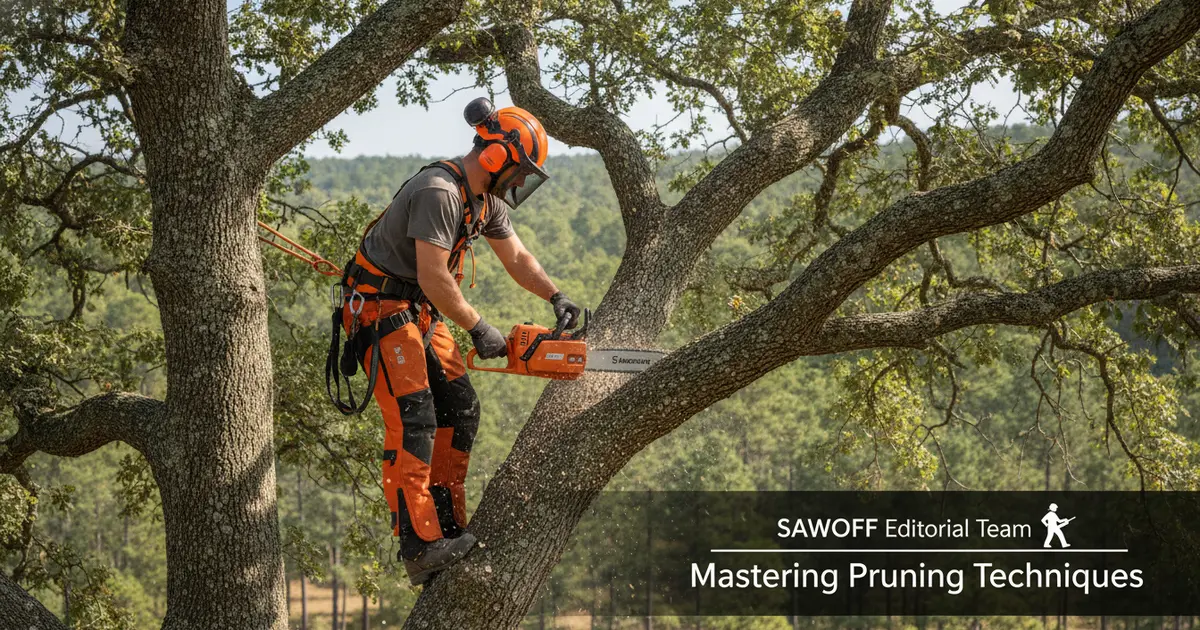
I remember the first time I hauled a saw up a 60-foot White Oak. My harness was digging into my hips, and the wind was swaying the canopy just enough to make my stomach do flips. Back then, we were using modified rear-handle saws that were a nightmare to balance. When the modern top-handle chainsaw hit the market, it didn’t just change the game—it reinvented the sport.
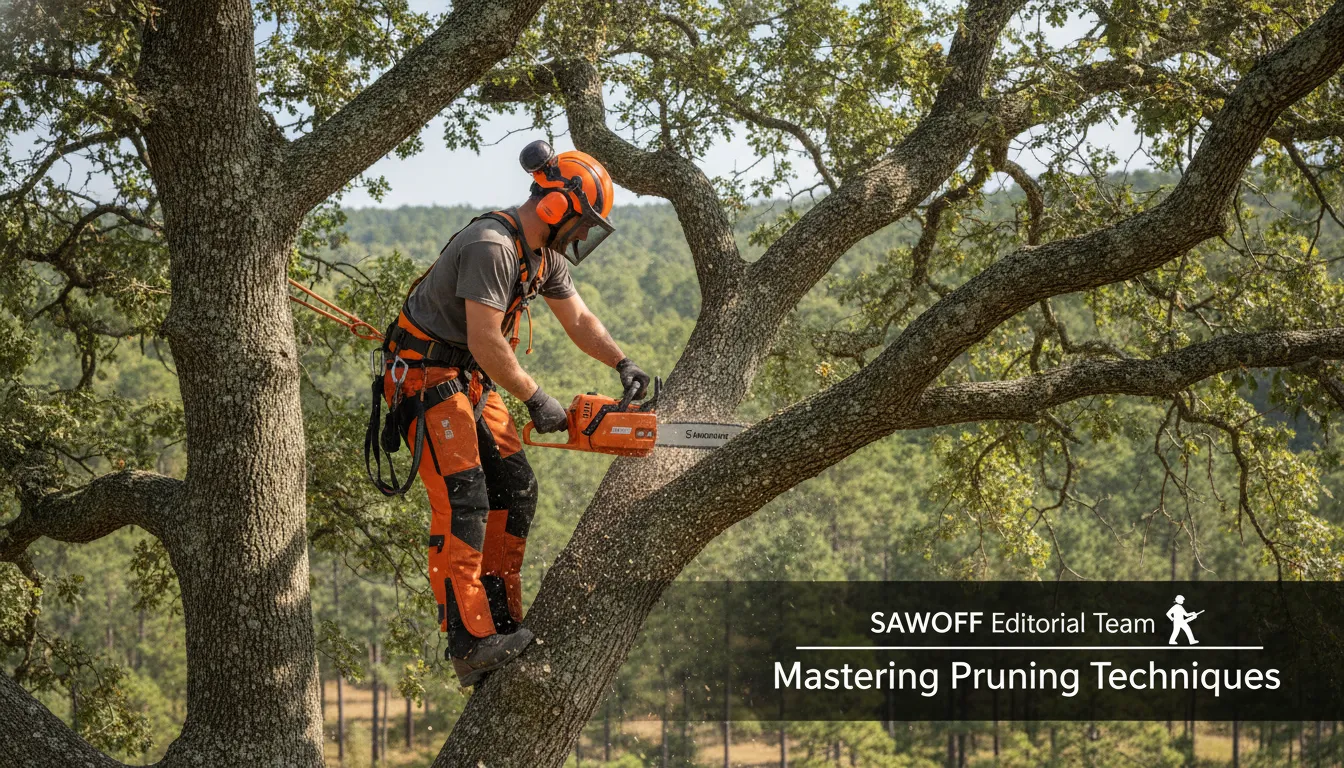
A top-handle saw is a specialist’s scalpel. It’s designed with a compact footprint, a narrow profile, and a center of gravity that sits directly beneath the hand. This isn’t your average “lumberjack” tool. We’re talking about high-RPM machines built for “Lugging Power” in tight quarters where a standard Husqvarna 435 would be too cumbersome. In this deep-dive, we aren’t just looking at how to cut a branch; we’re dissecting the engineering, the physics, and the gritty reality of life in the canopy.
The Strategic Pruning Arsenal
Before we climb, let’s look at how the top-handle specialists stack up against the general-purpose ground saws you might already have in your shed. While a Stihl MS 250 is a legend on the ground, in the tree, you need something that feels like an extension of your forearm.
| Model Category | Representative Model | Best Use Case | SAWOFF Verdict |
|---|---|---|---|
| The Gold Standard | Stihl MS 201 T C-M | Professional Canopy Work | The ultimate precision tool. |
| Battery Powerhouse | Husqvarna T540i XP | Noise-Sensitive Areas | Insane torque, zero fumes. |
| Lightweight Champ | Echo CS-2511T | All-day Pruning | The lightest saw on the planet. |
| Ground Support | Echo CS 490 | Chipping & Bucking | Great companion for ground crews. |
Technical Engineering Deep-Dive: The Anatomy of a Climbing Saw
To understand pruning techniques, you have to understand the beast in your hand. A top-handle saw isn’t just a small chainsaw; the entire engine architecture is inverted or shifted to accommodate the top-mounted grip.
Engine Architecture & Fuel Layering
Most pro-grade top-handle saws today utilize advanced fuel layering systems, like Stihl’s 2-MIX or Husqvarna’s X-Torq. When I cracked open a T540XP last month, the scavenger loss reduction was evident in the piston crown design. These engines use a layer of pure air to push out exhaust gases before the fresh fuel-air mixture enters the combustion chamber. This results in a “snap” of throttle response that is vital when you’re making a precision limb-removal cut. You don’t want a saw that “bogs” or “hunts” for idle; you need immediate, high-torque engagement the moment your finger touches the trigger.
Filtration and Centrifugal Air Cleaning
Working in a canopy, especially when dead-wooding, creates a massive amount of fine dust that stays suspended in the air. Traditional filters would clog in thirty minutes. Top-tier saws now use centrifugal air cleaning systems. The flywheel acts as a fan, using centrifugal force to eject larger dust and debris particles before they even reach the air filter. I’ve gone three full days of pruning dusty cedar without needing to tap out my filter, a feat that would be impossible with a budget saw like the Husqvarna 120.
The Magnesium Crankcase & Heat Dissipation
Weight is the enemy of the arborist. Every gram you carry is a gram that fights your endurance. To combat this, manufacturers use high-pressure die-cast magnesium crankcases. Magnesium offers a superior strength-to-weight ratio compared to the polymer housings found in prosumer models. Furthermore, magnesium acts as a heat sink. When you’re making repeated back-to-back pruning cuts on heavy maple limbs, the engine builds up heat fast. A magnesium chassis dissipates that heat, preventing vapor lock and protecting the crankshaft bearings from premature failure.
Anti-Vibration Mounts (AV)
If you’ve ever spent eight hours in a bucket truck, you know the “white finger” feeling. Modern pruning saws utilize steel springs or high-density cell-polymer buffers to decouple the engine from the handles. I’ve noticed that Husqvarna’s LowVib system tends to feel a bit “softer,” which is great for wrist fatigue, while Stihl’s spring-based system provides a more “connected” feel to the bar, allowing for slightly better feedback during delicate notch cuts.
Real-World Performance Analysis: The Three-Cut Method
Pruning isn’t just about removing a limb; it’s about ensuring the tree can heal. The most critical technique we use with a top-handle saw is the Three-Cut Method (or the “Jump Cut”).
- The Undercut: I position the saw about 12 inches from the trunk. I make a shallow undercut—about 1/3 of the way through the branch. This prevents the bark from tearing down the side of the tree when the limb falls.
- The Top Cut: I move the bar an inch or two further out on the limb and cut from the top down. The limb will snap cleanly between the two cuts.
- The Finishing Cut (The Branch Collar): Now that the weight is gone, I go back to the branch collar. I identify the “branch bark ridge” and make a clean, vertical cut.
Using a saw with a high chain speed is vital here. If the chain is dull or the saw lacks “Lugging Power,” the wood will fiberize and shred, leaving the tree vulnerable to pests and fungus. When I’m bucking smaller limbs in the canopy, I often find that an Electric Chainsaw Guide is becoming increasingly relevant, as the instant torque of a motor prevents the “bounce” often associated with gas engines.
Ergonomics & Operator Comfort: The One-Handed Dilemma
Let’s address the elephant in the room: one-handed operation. While every manual says “use two hands,” the reality of arborist work often involves using one hand to steady yourself or move a limb while the other operates the saw.
The handle geometry of a top-handle saw is designed for this balance. The distance between the front wrap-handle and the rear trigger is minimized. When I hold an Echo CS-2511T, the pivot point is right at my wrist. This reduces the “rotational inertia” of the saw, making it easier to flick the bar tip exactly where it needs to be. However, this also makes kickback significantly more dangerous. Since your hands are closer together, you have less leverage to stop the saw if the tip hits a knot or a hidden wire.
I always tell my crew: if you can’t see the tip of the bar, don’t squeeze the trigger.
🛒 Get the Best Arborist Climbing GearHistorical Context: The Evolution of the “Top Handle”
Historically, we used whatever we had. In the 70s and 80s, climbing with a saw was a brutal affair. Saws were heavy, leaked oil on your gear, and had primitive chain brakes. The introduction of the Stihl 020T was a watershed moment. It was the first saw that truly felt “balanced” for the climb.
Compared to a modern beast like the Stihl MS 311—which is a phenomenal felling saw—the evolution of the top handle has moved toward miniaturization without sacrificing compression. We’ve seen a shift from 40cc saws down to 25cc-35cc saws that somehow produce nearly the same effective cutting speed through better porting and electronic carburation.
Maintenance & Serviceability: Keeping the Scalpel Sharp
A top-handle saw lives a hard life. It’s dropped, bumped against trunks, and covered in sap.
- Sprocket Maintenance: I check the needle bearing on the clutch drum every weekend. A little high-temp grease goes a long way. If the drum is blue, you’re slipping the clutch too much.
- The Air Filter: Most pro saws have a tool-less entry. Flip the toggle, pull the shroud. In the field, I use a small brush to clean the pleats. Never blow compressed air from the outside in; you’ll just drive the grit deeper.
- Bar Groove Cleaning: I use a specialized tool (or a thin screwdriver) to scrape the “muck” out of the bar rails. If the oil holes are plugged, you’ll burn up your bar and chain in one afternoon of pruning dry oak.
Hardware Specifications
If you’re looking to add a top-handle to your fleet, these are the specs you should be chasing:
- Displacement: 25cc (Ultra-light) to 40cc (Heavy Duty).
- Power Output: Look for at least 1.5 kW for serious wood.
- Weight: Anything over 8 lbs (powerhead only) is going to feel heavy by 2:00 PM.
- Chain Pitch: 1/4-inch or 3/8-inch Extended (Picco) are standard for clean pruning cuts.
- Fuel System: Electronic Fuel Injection (EFI) or Auto-Carb (M-Tronic/AutoTune) is preferred for varying altitudes in the canopy.
Pros & Cons: The SAWOFF Edge
The Pros:
- Unmatched Maneuverability: You can reach into “V” crotches that would be impossible with a rear-handle saw.
- High Power-to-Weight Ratio: These saws punch way above their weight class.
- Climbing Integrated: Built-in lanyard rings make attaching to your saddle seamless.
The Cons:
- Kickback Risk: The short wheelbase makes kickback faster and harder to control.
- Price: You will pay a premium for the compact engineering. A pro top-handle often costs more than a larger Stihl MS 250.
- Steep Learning Curve: Not for beginners. If you haven’t mastered ground-sawing, stay out of the tree.
Final Verdict: Is it Worth the Investment?
If you are a “prosumer” or a professional arborist, a top-handle saw is not optional—it is the foundation of your craft. For the average homeowner, stick to a Husqvarna 435. But if you have a large property with mature hardwoods that require regular maintenance, the precision of a top-handle saw will save you time and preserve the health of your trees.
SAWOFF Rating: 4.8 / 5 (Specific to Professional Pruning Applications)
🛒 View Best-Selling Echo Top Handle SawsFAQ: Pruning & Top Handle Technicals
1. Why shouldn’t I just use a pole saw for pruning?
Pole saws are great for “low-hanging fruit,” but they lack the precision of a hand-held saw. You can’t see the branch collar properly from 15 feet below, and you certainly can’t make an accurate undercut. For structural pruning, you need to be at the cut.
2. Can I run a longer bar on a top-handle saw?
Most are designed for 10” to 14” bars. I’ve seen guys put 16” bars on an MS 201 T, but it throws off the balance. A top-handle is about precision, not reach. If you need a 16” bar, you probably need a bigger saw on the ground.
3. What is the best fuel mix for these high-RPM engines?
I never use anything less than 91-93 octane ethanol-free gas. Mix it with a high-quality synthetic oil like Stihl HP Ultra or Husqvarna XP at a strict 50:1 ratio. These engines run hot and fast; cheap oil will lacquer the cylinder walls in a heartbeat.
4. How do I prevent the saw from falling if I drop it?
Always use a “breakaway” lanyard. This attaches the saw to your harness. If the saw gets caught on a falling limb, the lanyard will “break away” at a specific force so you don’t get pulled out of the tree with it.
5. My top-handle saw is “stuttering” at full throttle. What’s wrong?
It’s likely a partially clogged spark arrestor screen in the muffler. These saws spend a lot of time at “half-throttle” during delicate work, which can lead to carbon buildup. Pull the screen, torch it clean, and it should scream again.
6. Is it worth getting a battery-powered top-handle saw?
Absolutely. For residential pruning, the lack of noise is a massive selling point. The Electric Chainsaw Guide covers this, but in short: the torque is instant, and not having to pull-start a saw while hanging upside down is a luxury you didn’t know you needed.
7. How often should I sharpen the chain?
In the canopy, I “touch up” the chain every time I refuel. A sharp chain requires less pressure, which means less fatigue and a lower chance of the saw slipping. I use a 5/32” file for most Picco chains.
8. What is “dead-wooding”?
Dead-wooding is the process of removing only the dead, dying, or diseased branches from a tree. This is the most common use for a top-handle saw. It improves the tree’s health and reduces the risk of falling limbs during storms.
Frequently Asked Questions
Why shouldn't I just use a pole saw for pruning?
Pole saws lack the precision needed for structural pruning. You can't see the branch collar properly from 15 feet below, making accurate undercuts impossible. For proper pruning, you need to be at the cut with a top-handle saw.
Can I run a longer bar on a top-handle saw?
Most top-handle saws are designed for 10 to 14 inch bars. While some users install 16 inch bars, it throws off the balance. These saws are built for precision, not reach—if you need a longer bar, consider a larger ground saw.
What is the best fuel mix for high-RPM top-handle engines?
Use 91-93 octane ethanol-free gas mixed with high-quality synthetic oil like Stihl HP Ultra or Husqvarna XP at a strict 50:1 ratio. These engines run hot and fast, so cheap oil will lacquer the cylinder walls quickly.
How do I prevent the saw from falling if I drop it in a tree?
Always use a breakaway lanyard that attaches the saw to your harness. If the saw gets caught on a falling limb, the lanyard will break away at a specific force so you don't get pulled out of the tree with it.
What causes a top-handle saw to stutter at full throttle?
A stuttering saw at full throttle is typically caused by a partially clogged spark arrestor screen in the muffler. Top-handle saws spend time at half-throttle during delicate pruning, leading to carbon buildup. Removing and cleaning the screen usually resolves the issue.
Is it worth getting a battery-powered top-handle saw?
Battery-powered top-handle saws are excellent for residential pruning due to their quiet operation and instant torque. They eliminate the hassle of pull-starting while hanging in a tree and provide sufficient power for most pruning tasks.