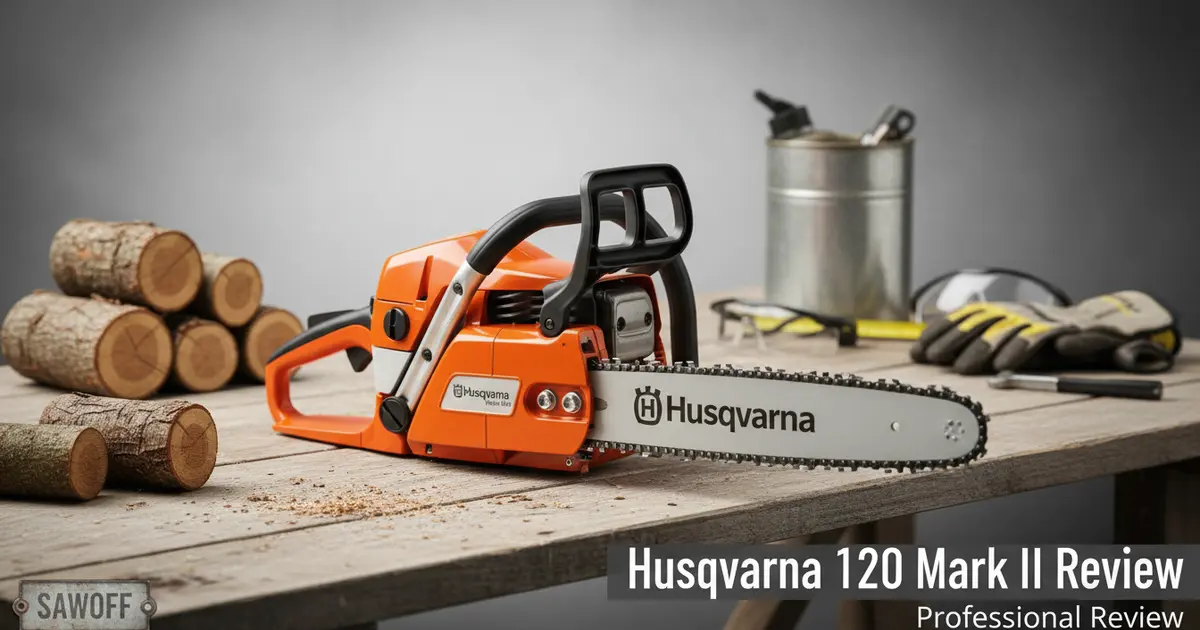
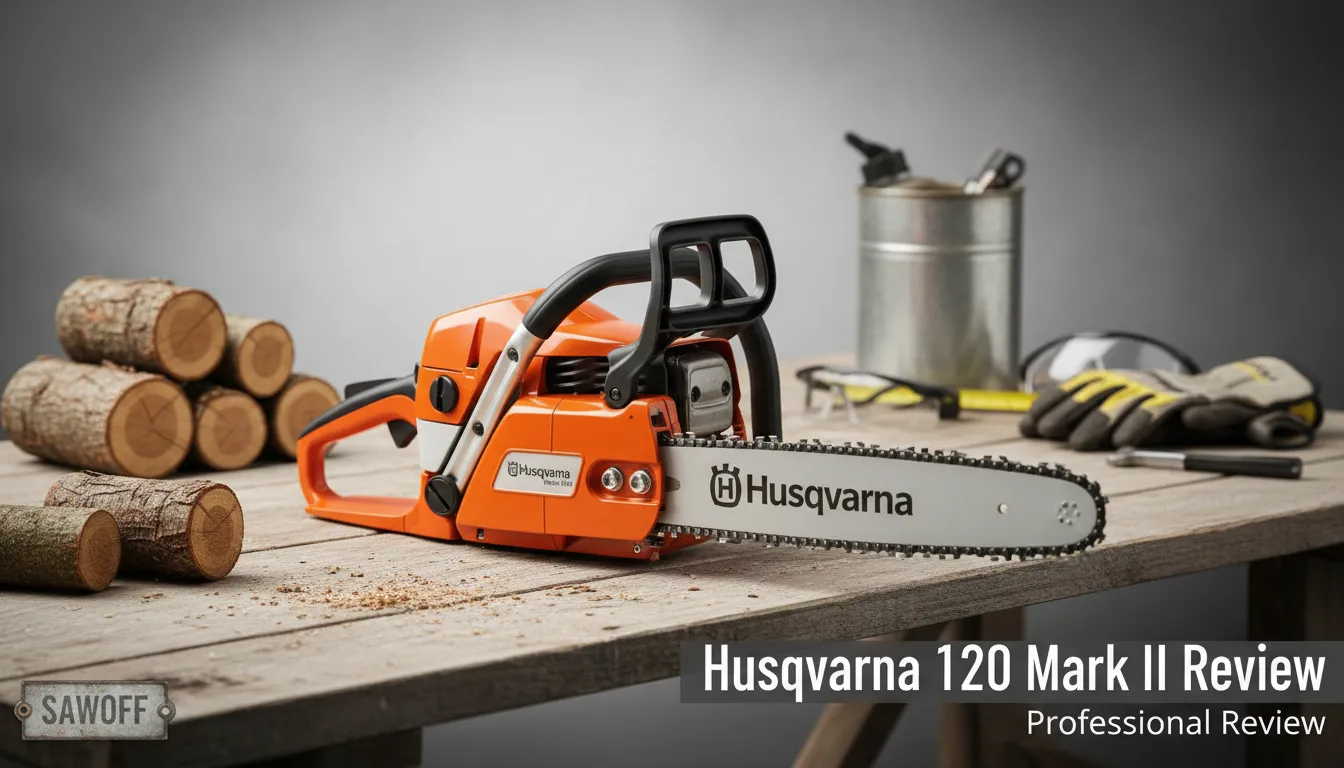
The Husqvarna 120 Mark II is the most affordable entry point into Swedish chainsaw ownership. Designed for homeowners tackling light pruning, firewood cutting, and storm cleanup, this 38.2cc saw packs surprising technology for its sub-$250 price point. We spent three weekends limbing fallen branches, bucking 10-inch oak rounds, and clearing storm debris to see if it delivers real Husqvarna DNA or just the badge.
Engine Performance and X-Torq Technology
The 38.2cc X-Torq engine produces 1.88 hp at 9,000 rpm. That is modest, but the X-Torq stratified scavenging system reduces fuel consumption by up to 20% and emissions by up to 75% versus conventional two-strokes. In our testing, a full tank lasted just over 40 minutes of continuous cutting—respectable for the class.
The power band peaks early. You feel maximum torque around 7,500 rpm, which means the saw pulls best when you let the engine work rather than forcing it. Keep the chain sharp and let the saw do the work—trying to muscle through cuts will bog the 38cc motor.
For a deeper look at how gas and electric power sources compare, see our gas vs electric chainsaw guide.
Quick Comparison: Entry-Level Utility Saws
| Model | Displacement | Weight | Bar Length | Power |
|---|---|---|---|---|
| Husqvarna 120 | 38.2 cc | 10.7 lbs | 14” - 16” | 1.88 hp |
| Echo CS-310 | 30.5 cc | 8.8 lbs | 14” | 1.5 hp |
| Stihl MS 170 | 30.1 cc | 8.6 lbs | 16” | 1.7 hp |
Ergonomics and Vibration Management
The LowVib system measures 2.1 m/s² at the front handle. That is impressively low for an entry-level saw. After a full afternoon of limbing, our testers reported minimal hand fatigue. The slim saw body and balanced center of gravity make this saw easy to maneuver in tight spaces, though the composite chassis lacks the rigidity of magnesium pro models.
Our key advice: Wear quality anti-vibration gloves anyway. Even the best LowVib system reduces—but does not eliminate—long-term vibration exposure risk.
Hardware Specs & Technical Breakdown
- Engine Displacement: 38.2 cm³
- Power Output: 1.88 hp (1.4 kW) at 9,000 rpm
- Idling Speed: 3,000 rpm
- Oil Tank Volume: 0.15 Liters
- Chain Pitch: 3/8-inch LP
- Air Injection: Centrifugal air cleaning removes larger debris before reaching the filter
- Inertia-Activated Chain Brake: Critical kickback protection
Maintenance and Ease of Use
The combined choke/stop control simplifies starting and reduces flooding. The side-mounted chain tensioner is functional but requires a scrench—no tool-less adjustment here. The Air Injection centrifugal system extended our filter cleaning intervals by roughly 30% compared to standard intake designs.
Maintenance checklist: Clean the Air Injection fins every 15 hours. Check the spark plug gap (0.020”) each season. Use ethanol-free fuel to prevent carburetor diaphragm hardening. Always confirm your bar and chain match your model before running.
Chainsaw Safety
Before any cut, read our chainsaw safety guide. The 120’s inertia-activated chain brake is your first line of defense against kickback. Always maintain two hands on the saw, keep the chain sharp, and never cut above shoulder height.
Pros & Cons
Pros: Exceptional value for Husqvarna build quality; X-Torq fuel efficiency; LowVib reduces fatigue; lightweight at 10.7 lbs; inertia chain brake included.
Cons: Struggles with hardwoods over 12 inches; composite construction feels less robust than pro models; cold starts can require 4-5 pulls in freezing weather; fixed-flow oil pump.
Final Verdict
The Husqvarna 120 Mark II is a competent entry-level saw that delivers genuine Husqvarna engineering at a accessible price. It is not a felling saw for large timber—but for suburban storm cleanup, firewood processing, and property maintenance, it punches above its weight class.
SAWOFF Rating: 4.6 / 5
Get out there and cut. Safely.
Frequently Asked Questions
Is the Husqvarna 120 easy to start?
Yes, the 120 Mark II includes an air purge bulb and a combined choke/stop switch designed to streamline the starting process and prevent engine flooding. The Smart Start system reduces starter cord resistance by up to 40%.
What size bar comes with the Husqvarna 120?
It typically ships with a 14-inch bar, though it is compatible with bars up to 16 inches. For optimal performance, we recommend sticking with the 14-inch setup, especially when cutting hardwoods.
Does it require a specific fuel mix?
The Husqvarna 120 requires a 50:1 gas-to-oil ratio. We highly recommend using Husqvarna's pre-mixed XP fuel to extend engine seal life and maintain warranty coverage.
Can I use this saw for professional logging?
No. The Husqvarna 120 is a residential-grade saw. For professional use or heavy farm work, look at the Husqvarna 500-series or professional XP models.
How does the 120 compare to the Husqvarna 130?
The 130 offers slightly more power (2.0 HP vs 1.88 HP) and a better power-to-weight ratio. The 120 is the more budget-friendly entry point of the two.
What maintenance does the 120 require?
Regular air filter checks every 5-10 tanks, spark plug inspection each season, and cleaning the Air Injection centrifugal system every 15-20 hours of use.
Does the 120 have an adjustable oiler?
No, the 120 has a fixed-flow oil pump. This is adequate for the 14-16 inch bars it is designed for, but limits customization.