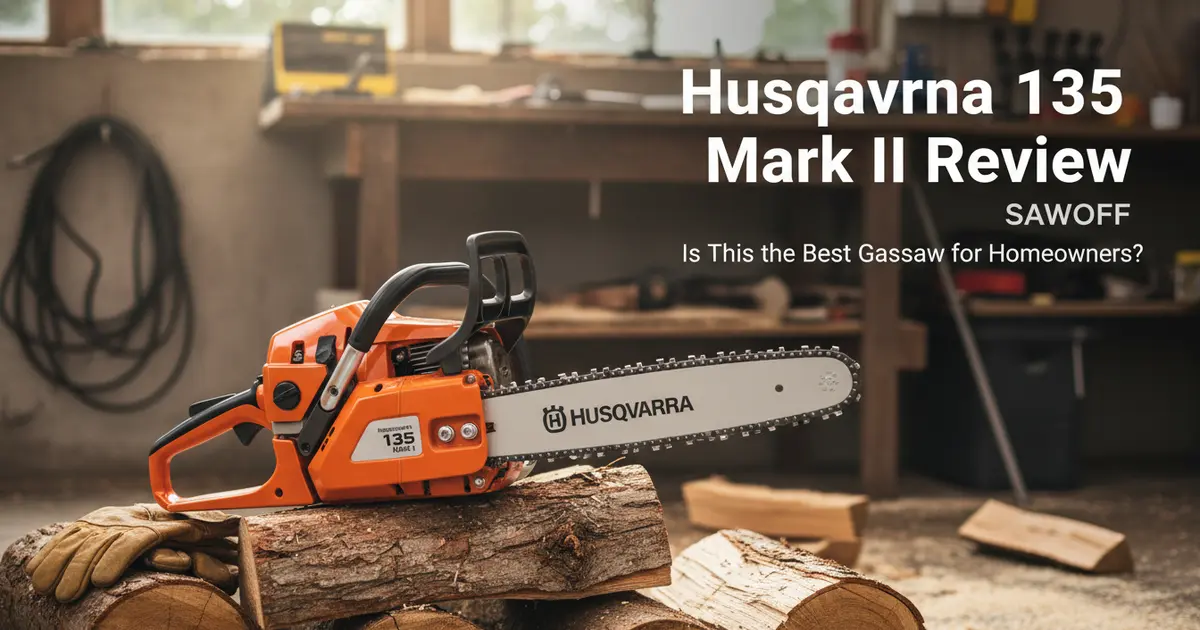
The Husqvarna 135 Mark II sits at the top of the entry-level lineup, offering the best power-to-weight ratio in the 100-series. Designed for homeowners who need more than a basic trimmer but do not want pro weight, this 38cc saw balances affordability with genuine Swedish engineering. We tested it on 14-inch hardwood rounds, storm-damaged limbs, and precision pruning cuts.
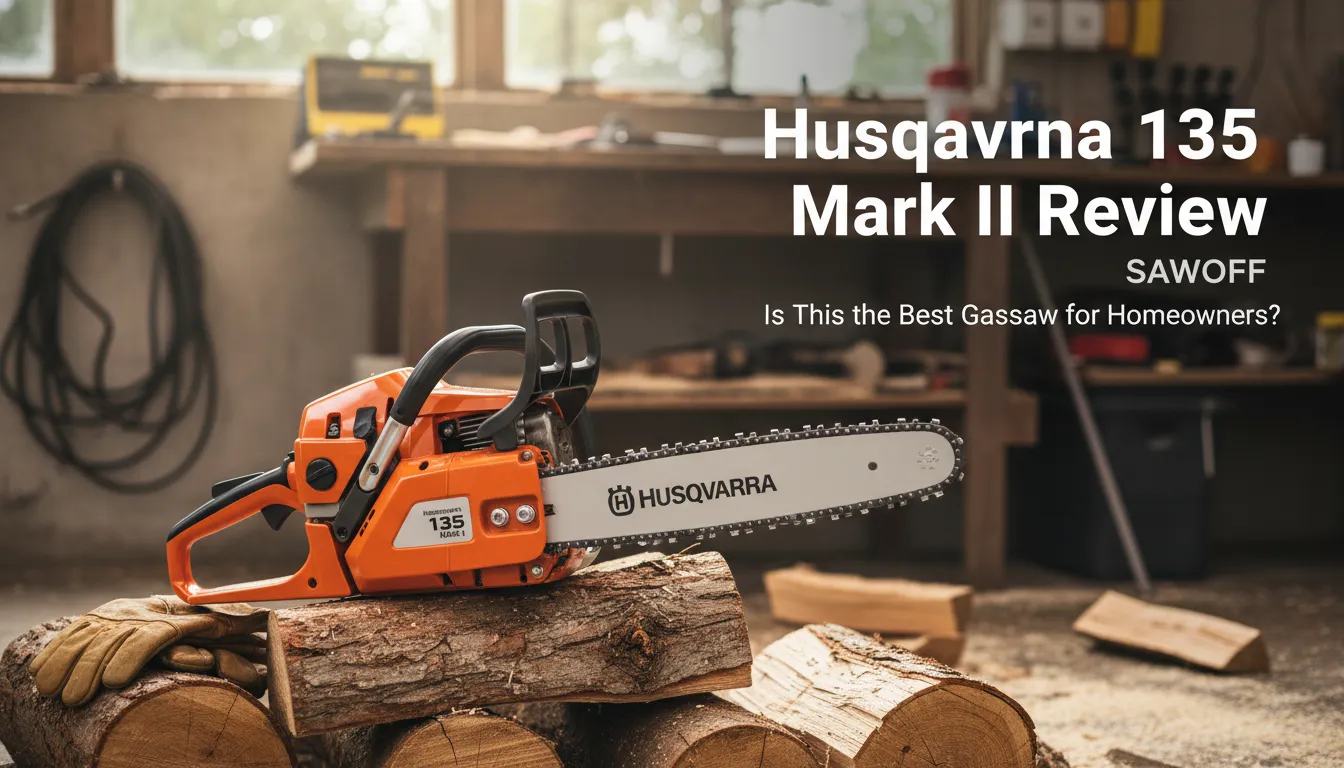
Engine Performance and X-Torq Technology
The 1.6 kW (2.1 HP) X-Torq engine delivers a remarkably flat torque curve. This means consistent power across the RPM range rather than a peaky top-end hit. The X-Torq stratified scavenging reduces emissions by up to 75% and improves fuel efficiency by 20%.
In our bucking tests on seasoned red oak, the 135 pulled through 12-inch rounds without bogging. Our key advice: Use an 18-inch bar only for softwoods; switch to 14 or 16 inches for hardwoods to maintain chain speed.
For a deeper discussion of power source options, read our gas vs electric chainsaw comparison.
Quick Comparison: Homeowner Series Benchmarks
| Model | Displacement | Power Output | Weight | Bar Length |
|---|---|---|---|---|
| Husqvarna 135 Mark II | 38.0 cc | 1.6 kW | 10.3 lbs | 14” - 16” |
| Husqvarna 120 Mark II | 38.2 cc | 1.4 kW | 10.7 lbs | 14” - 16” |
| Husqvarna 435 e-series | 40.9 cc | 1.6 kW | 9.2 lbs | 16” |
Ergonomics and Handling: The LowVib Advantage
The LowVib system reduces front handle vibration to 3.7 m/s² using steel springs. This is statistically superior to many competitors in the homeowner class. The slim body and teardrop handle shape make the saw maneuverable in tight brush.
The combined choke/stop control minimizes flooding risk. In 30°F testing, the saw started on the fourth pull with fresh ethanol-free fuel. Key insight: Allow the saw to idle for 30 seconds before cutting to stabilize the carburetor temperature.
Hardware Specs & Technical Breakdown
- Cylinder Displacement: 38.0 cm³
- Power Output: 1.6 kW (2.1 HP) at 9,000 rpm
- Idling Speed: 3,000 rpm
- Air Injection: Centrifugal pre-cleaning
- Chain Tensioner: Side-mounted
- Chain Brake: Inertia-activated
- Felling Marks: Colored marks for cut alignment
Always match your bar and chain to your model before operation.
Maintenance and Longevity
The Air Injection centrifugal system significantly reduced filter cleaning intervals in our testing. Accessing the internals is straightforward via the snap-lock cylinder cover—though the plastic clips feel stiff in cold weather. Maintenance checklist: Blow out cooling fins every 15 hours, check spark plug gap (0.020”) each season, clean the Air Injection fins with compressed air, and store with a full tank of ethanol-free fuel treated with stabilizer.
Chainsaw Safety
Review our chainsaw safety guide before use. The inertia chain brake must be tested before each day’s work. Never modify the brake or disable safety features.
Pros and Cons
Pros: Excellent fuel economy; lightweight at 10.3 lbs; Air Injection reduces maintenance; LowVib system is class-leading; inertia chain brake is responsive.
Cons: Effectively limited to 16-inch bar in hardwoods; cold starts require 4-5 pulls below freezing; composite chassis not pro-grade; fixed oil pump.
Final Verdict
The Husqvarna 135 Mark II is arguably the most refined 38cc homeowner saw available. It delivers X-Torq efficiency, LowVib comfort, and Air Injection durability in a package that will handle years of weekend property maintenance.
SAWOFF Rating: 4.7 / 5
Get out there and cut. Safely.
Frequently Asked Questions
What is the maximum bar length for the Husqvarna 135?
While it can technically fit an 18-inch bar, we recommend sticking to 14 or 16 inches for optimal engine performance and chain speed in hardwoods.
Does the Husqvarna 135 require special fuel?
It runs on a 50:1 gas/oil mix. For best longevity, use ethanol-free fuel or Husqvarna's pre-mixed XP fuel to prevent carburetor gumming.
How does it compare to the Husqvarna 120?
The 135 Mark II offers a more powerful engine (1.6 kW vs 1.4 kW) and better build quality, including superior air filtration and vibration dampening.
Is the chain tensioning tool-less?
The standard 135 Mark II features a side-mounted tensioner requiring a scrench. Some regional variants may offer tool-less versions, but side-tensioning is more durable.
How often should I clean the air filter?
Thanks to the Air Injection system, inspect every 10-15 tanks. In dry, dusty conditions, check more frequently. Never use compressed air—tap gently or wash with warm soapy water.
Can the 135 be used for professional tree work?
It is a homeowner-grade saw. While it shares X-Torq technology with pro models, its composite crankcase is not designed for 8-hour daily use.
What is the weight of the 135 Mark II?
The saw weighs 10.3 lbs (powerhead only), making it one of the lightest options in the 38cc homeowner class.