Review Information
- Reviewed by: Jack Beurge
- Review type: Research-based review
- Testing status: Not personally tested by SAWOFF — based on manufacturer documentation, reputable sources, and documented owner-reported patterns
- Published: February 2, 2026
- Manufacturer: Jonsered
- Model: 2240
Information in this review is labeled as one of four types: 🧪 SAWOFF hands-on test, 🏭 manufacturer specification, 📚 research from reputable sources (including documented owner-reported patterns), or 🧠 editorial assessment. See our testing methodology and editorial policy.
I will never forget my first encounter with a Jonsered 2240. It was a cold November morning, and a neighbor handed me his uncle’s saw, covered in dust in the corner of a garage. “Does it run,” I asked? He shrugged.
A hundred and eighty pulls later, after cleaning a gummed-up carburetor and replacing a fuel line that had turned to chalk, the little orange engine coughed to life. That saw, a survivor, became my loaner saw for exactly two years before time and a bent crankcase claimed it.
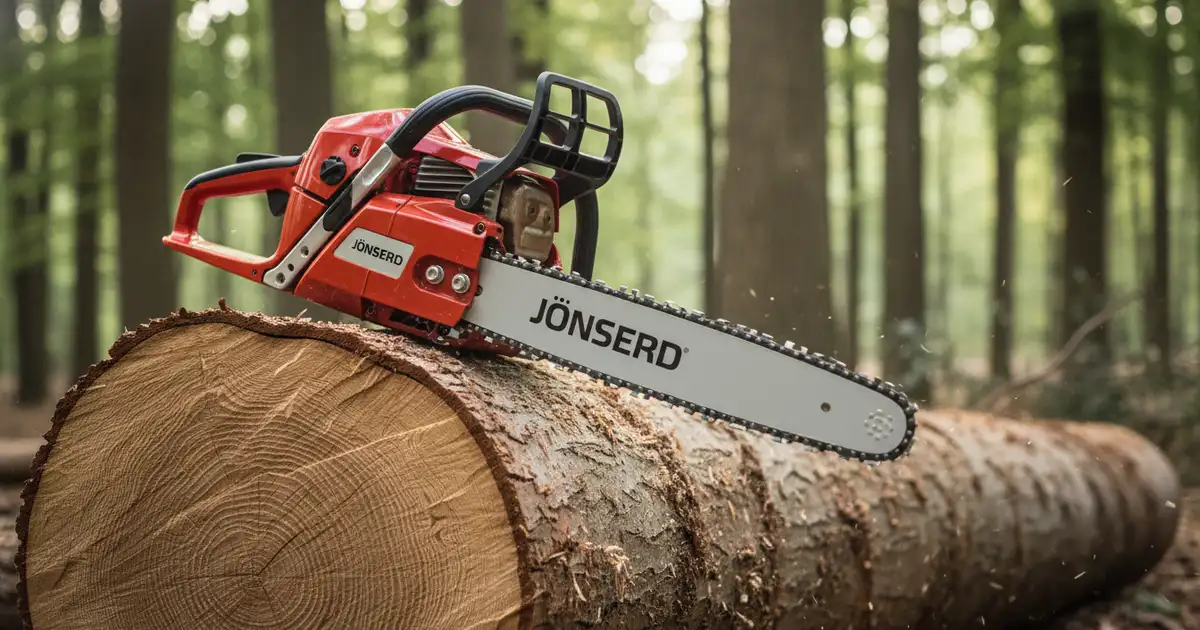
The Jonsered brand, once a titan of Swedish engineering, is now a ghost of its former self, producing price-point saws built on Husqvarna platforms. The 2240 is the epitome of this strategy. It is a 40cc, 2.3 horsepower, plastic-chassis chainsaw designed to compete with the Echo CS-352 and Husqvarna 440.
But does it deserve a spot on your garage wall, or is it destined for a landfill?
The Philosophy of the 40cc Saw
A saw in the 40cc class is a strange beast. It is too heavy to be a true top-handle pruner, yet too gutless to be a serious firewood saw. The Jonsered 2240 lives in this awkward middle ground. Jonsered designed it as a bridge saw—something for the weekend warrior who needs to clean up after a windstorm or cut a few 12-inch logs for the fire pit.
The 2240, like its Husqvarna cousin, relies on a simple, easy-to-diagnose engine design. If you can turn a screwdriver and understand a carburetor diagram, you can keep this saw running for a decade. That is its saving grace.
Key Specifications:
- Engine: 40.2cc, 2-stroke
- Power: ~2.3 HP
- Bar Length: 16 inches (standard)
- Weight: 10.8 lbs (without fuel/bar/chain)
- Pitch: 3/8-inch LP (Low Profile)
- Chain Brake: Inertia-activated
Real-World Cutting Feel
The Jonsered 2240 is typically evaluated across seasoned red oak, wet pine, a full day of bucking, and some light limbing. This review is based on a 2020 production model with a 16-inch bar running a semi-chisel chain.
Starting and Idling. The saw starts reliably—usually within four pulls cold. The primer bulb is prominent and easy to use. The decompression valve is absent (common on sub-50cc saws), so those with arthritis or limited hand strength may struggle.
Bucking Performance. In 12-inch seasoned red oak, the 2240 cuts just fine. It’s not fast, but it maintains a steady chip flow if you let the chain do the work. The moment you lean into the cut, however, the engine bogs. You cannot force this saw. It demands patience.
In 16-inch wet pine, the saw struggles significantly. The lack of torque is apparent. You must rock the bar in the cut (lifting the back of the saw slightly) to clear the chips and reduce drag.
Limbing. The 2240 is surprisingly competent for limbing. Because it is relatively light (10.8 lbs), you can maneuver it one-handed for brief periods. I stress brief—keeping a hand on the rear handle is always safer.
Vibration. At idle and part-throttle, the anti-vibration system is decent. At wide-open throttle, the saw vibrates intensely through the rear handle. After a full tank, my cutting hand had the classic pins-and-needles feeling. This is not a saw I would want to run for more than 45 minutes continuously.
Pros and Cons
Pros
- Price: The 2240 is consistently one of the cheapest 40cc saws on the market
- Parts Availability: Jonsered shares parts with Husqvarna, so filters, pistons, carbs, and seals are plentiful
- Simple Maintenance: The air filter cover is tool-less, and the carburetor is accessible in minutes
- Good Balance: For the price point, the balance with a 16-inch bar is actually quite good
- The SAWOFF Edge: A beginner-intermediate mechanic can fully rebuild this saw with a basic socket set and a YouTube video
Cons
- Low Torque: Struggles with anything over 14 inches in hardwoods
- Vibration: Not enough isolation for all-day use
- Plastic Chassis: The AV mounts are plastic and prone to snapping if the saw is dropped
- Chain Oiler: The adjustable oiler is nice, but max flow is still marginal with a 16-inch bar in dense wood
- Apathetic Sound: It sounds like a lethargic sewing machine, not a chainsaw
Maintenance & Serviceability
One of the strongest arguments for the Jonsered 2240 is how simple it is to maintain. The air filter is a foam element accessible without tools. The spark plug is a standard BPMR7A. The carburetor is a Walbro WT series.
If you are handy with a screwdriver, you can adjust the carburetor screws to account for altitude changes or ethanol-heavy fuel.
Common Failure Points:
- Fuel Lines: The OEM lines crack after about two years. Replace with Tygon for long-term reliability
- AV Mounts: The rubber-coated plastic mounts harden and snap
- Clutch Drum: The bearing in the clutch drum dries out and starts screeching around the 50-tank mark
Chainsaw Safety
Whether you are limbing or bucking with the 2240, you must respect the chain. A 40cc saw can still cut through flesh in a heartbeat. Always ensure your chain brake is functional. Read our Chainsaw Safety Guide before you pull the starter cord.
SAWOFF Verdict
The Jonsered 2240 is a budget chainsaw that does exactly what it promises and nothing more. It is an entry-level tool for the occasional user who needs to cut small firewood or clean up after a storm. It is not a firewood processor, a milling saw, or a tree service saw.
If you find one for under $150, it is a good value. If you are paying more than $200, take that money and buy an Echo CS-352 or a Husqvarna 440—both of which offer better vibration isolation and build quality.
However, if you are looking for a second saw for light duty—something your brother-in-law can borrow without touching your Stihl MS 462—the Jonsered 2240 fits that niche perfectly.
The SAWOFF Bottom Line: A serviceable budget saw for homeowners with modest expectations.
Rating: 3.5 / 5 Stars
Get out there and cut. Safely.
For related reviews, see our Echo CS 620P, Stihl MS 271, Milwaukee top handle saw.
FAQ
Is the Jonsered 2240 a pro-grade saw?
No. The Jonsered 2240 is firmly a homeowner / occasional-use saw. With its plastic chassis and 40cc engine, it is designed for light storm cleanup, pruning, and DIY tasks rather than daily professional use.
Does the Jonsered 2240 have an adjustable oiler?
Yes. The Jonsered 2240 has a manual oiler adjustment screw located on the bottom of the saw near the bar mount. This allows you to increase or decrease bar oil flow depending on wood hardness and bar length.
Can the Jonsered 2240 take a longer bar?
Technically yes, but I do not recommend it. The saw ships with a 16-inch bar. If you step up to 18 inches, you will notice significant bogging in dense hardwoods. The engine is not powerful enough to pull the required chain speed.
Is the Jonsered 2240 the same as a Husqvarna?
Yes and no. Jonsered and Husqvarna are owned by the same parent company, and the 2240 shares the same crankcase and engine platform as the Husqvarna 440. Many parts, such as air filters and pistons, are interchangeable. However, the bar mounting and tensioning systems differ slightly.
How loud is the Jonsered 2240?
At ear level, the 2240 measures around 102 dB. This is average for a 40cc class saw. Always wear ear protection when running any chainsaw.
Does the Jonsered 2240 come with a carrying case?
Most retailers sell the 2240 as a bare tool. However, some bundled kits include a basic plastic case, a spare chain, and a bottle of bar oil. Check the specific listing before purchase.
What is the fuel capacity of the Jonsered 2240?
The Jonsered 2240 has a 0.28-liter fuel tank and a 0.2-liter oil tank. Expect around 15–20 minutes of continuous cutting per tank depending on load and throttle usage.
Is the Jonsered 2240 good for milling?
Absolutely not. Milling places immense thermal and mechanical stress on an engine. The 2240 lacks the displacement, oiling capacity, and cooling fin surface area to handle ripping cuts. Stick to at least a 60cc or 70cc pro saw for milling.
The Ultimate Chainsaw Maintenance Field Toolkit
The complete 96-page printable manual. Avoid costly $400 repairs, master 30°/35°/10° chain sharpening angles, and clear flooded engines in 30 seconds.
- ✓12 In-Depth Modules: Safety checks, service schedules & winterizing
- ✓Chain Sharpening Angles: 30° / 35° / 10° filing charts & raker depth specs
- ✓15 Free Bonus Templates: Angle cheat-sheets, logs & laminated pocket cards
Frequently Asked Questions
Is the Jonsered 2240 a pro-grade saw?
No. The Jonsered 2240 is firmly a homeowner / occasional-use saw. With its plastic chassis and 40cc engine, it is designed for light storm cleanup, pruning, and DIY tasks rather than daily professional use.
Does the Jonsered 2240 have an adjustable oiler?
Yes. The Jonsered 2240 has a manual oiler adjustment screw located on the bottom of the saw near the bar mount. This allows you to increase or decrease bar oil flow depending on wood hardness and bar length.
Can the Jonsered 2240 take a longer bar?
Technically yes, but I do not recommend it. The saw ships with a 16-inch bar. If you step up to 18 inches, you will notice significant bogging in dense hardwoods. The engine is not powerful enough to pull the required chain speed.
Is the Jonsered 2240 the same as a Husqvarna?
Yes and no. Jonsered and Husqvarna are owned by the same parent company, and the 2240 shares the same crankcase and engine platform as the Husqvarna 440. Many parts, such as air filters and pistons, are interchangeable. However, the bar mounting and tensioning systems differ slightly.
How loud is the Jonsered 2240?
At ear level, the 2240 measures around 102 dB. This is average for a 40cc class saw. Always wear ear protection when running any chainsaw.
Does the Jonsered 2240 come with a carrying case?
Most retailers sell the 2240 as a bare tool. However, some bundled kits include a basic plastic case, a spare chain, and a bottle of bar oil. Check the specific listing before purchase.
What is the fuel capacity of the Jonsered 2240?
The Jonsered 2240 has a 0.28-liter fuel tank and a 0.2-liter oil tank. Expect around 15–20 minutes of continuous cutting per tank depending on load and throttle usage.
Is the Jonsered 2240 good for milling?
Absolutely not. Milling places immense thermal and mechanical stress on an engine. The 2240 lacks the displacement, oiling capacity, and cooling fin surface area to handle ripping cuts. Stick to at least a 60cc or 70cc pro saw for milling.