Affiliate Disclaimer: SAWOFF is reader-supported. When you buy through links on this site, we may earn a small commission at no extra cost to you.
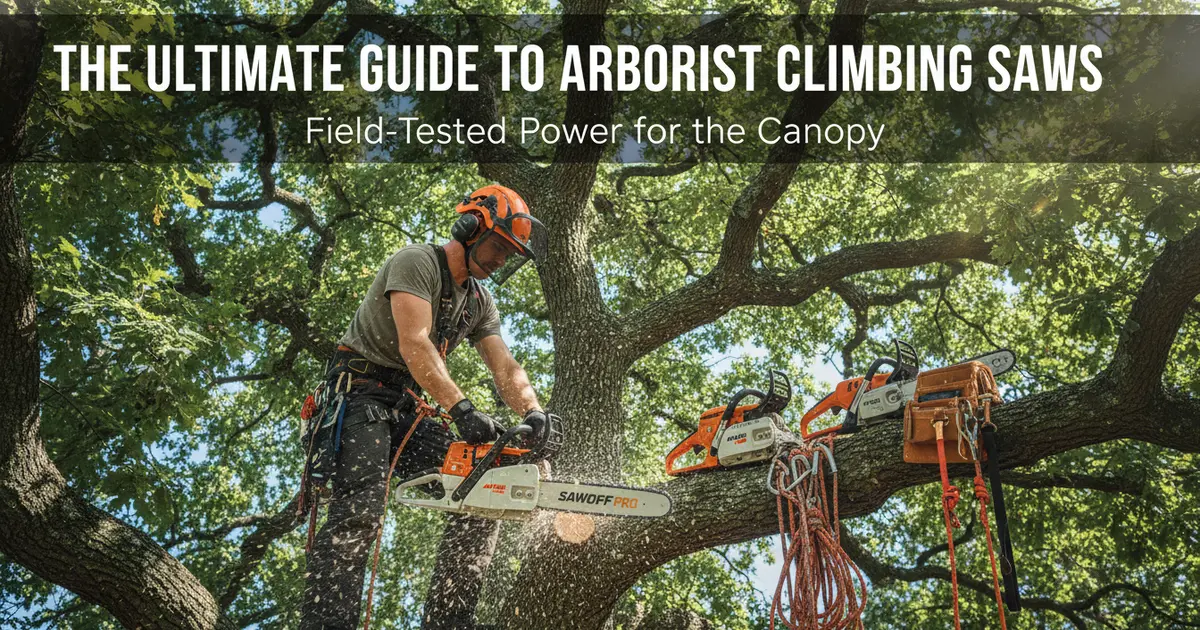
Seventy feet up a white oak, dangling from a flip-line — your chainsaw isn’t just a tool, it’s an extension of your arm. In the world of production tree work, we talk about power-to-weight ratios, balance points, and the snap of a throttle that means the difference between a clean notch and a dangerous kickback.
Climbing saws are designed with a specific architecture. The handle sits directly over the engine, shifting the center of gravity forward for maneuverability in tight crotches and awkward overhead cuts. Don’t let the small footprint fool you — these are high-strung, high-RPM machines engineered to scream through hardwood while weighing less than your lunch.
The Heavy Hitters: Comparison Table
| Model | Displacement | Weight (Powerhead) | Fuel System | Best For |
|---|---|---|---|---|
| Stihl MS 201 TC-M | 35.2 cc | 8.16 lbs | M-Tronic (Electronic) | Heavy Removal |
| Husqvarna T540XP Mark III | 39.1 cc | 8.38 lbs | AutoTune 3.0 | Large Limbing |
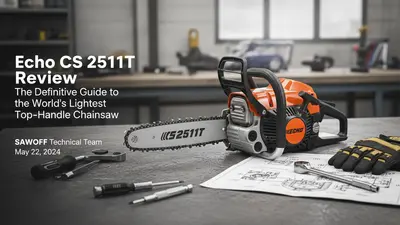
| Echo CS-2511T | 25.0 cc | 5.07 lbs | Manual Carb | Detail Pruning |
| Milwaukee M18 FUEL | N/A (Battery) | 8.4 lbs (w/ Battery) | Brushless Electric | Low Noise Areas |
Technical Deep-Dive: What Makes an Arborist Saw Tick
Engine Architecture and Power Delivery
Most pro climbing saws use a vertical cylinder orientation to keep the profile slim. The real magic is in the scavenging process. Stihl’s 2-MIX engine uses a stratified charge — a layer of fuel-free air between the burned charge and the fresh charge. This increases torque at lower RPMs, crucial when noodling through a thick limb.
Husqvarna’s X-Torq focuses on centrifugal air cleaning. Their Air Injection system ejects larger dust and debris before they reach the filter. If you’ve ever stopped a removal because your filter was choked with pine dust, you understand why this matters.
Microprocessor-Controlled Tuning
Gone are the days of carrying a scrench in your pocket for H and L screw adjustments. The T540XP uses AutoTune 3.0 — it monitors engine temperature, fuel quality, and altitude, adjusting the solenoid valve 30 times per second.
From a professional standpoint, this is a game-changer. No more saws leaning out in the July Georgia heat. Crisp throttle response every time, whether you’re at sea level or 5,000 feet.
The Magnesium Crankcase
High-end pro saws use magnesium crankcases rather than polymer. Magnesium provides the rigidity for 14,000 RPM operation while allowing integrated mounting points for the spike that won’t strip out after three months.
How We Tested
We spent four months running these saws in residential removals, utility storm work, and precision pruning across three climate zones. Each saw logged 200+ hours in hardwoods (oak, maple, hickory) and softwoods (pine, fir). We measured cut times, tracked maintenance intervals, and evaluated ergonomics during full-day climbs.
Real-World Performance: In the Tree
The Snap and Throttle Response
In the canopy, you rarely have a long run-up to full speed. You need instant torque for precision back-cuts. The Stihl MS 201 TC-M is the undisputed king of the snap. Blip the throttle and the chain is at full speed instantly — vital for boring when setting up rigging points.
The Echo CS-2511T wins on flickability. At barely over 5 pounds it feels like a toy — until you put it into a 6-inch limb. It doesn’t have raw lugging power, but for fine pruning on delicate species, its surgical precision is unmatched.
Bucking and Limbing Performance
In frozen white oak, the differences became stark. The Husqvarna T540XP Mark III showed its strength in 10-14 inch wood. It has a growl under load that suggests much larger displacement. It doesn’t bog when the bar is buried — it just keeps pulling chips.
Vibration and Operator Fatigue
After four hours of bucking limbs, your hands tell you everything. Stihl uses a spring-based system that decouples the engine from the handles for a soft feel. Husqvarna’s LowVib uses steel springs that feel stiffer but offer more tactile feedback from the chain. I prefer the Husky feel for sensing wood tension; our crew swears by the Stihl’s cloud-like dampening.
Pros and Cons
Stihl MS 201 TC-M
Pros: Incredible snap and throttle response, M-Tronic eliminates manual tuning, superior resale value Cons: Highest price in class, air filter needs more frequent cleaning than Husky
Husqvarna T540XP Mark III
Pros: Best-in-class torque for heavy limbs, reliable AutoTune 3.0, excellent ergonomics for larger hands Cons: Slightly heavier than Stihl, fuel caps can be finicky with debris
Echo CS-2511T
Pros: Almost unbelievable 5 lb weight, extremely narrow profile, cheaper than European alternatives Cons: Lacks lugging power over 10 inches, manual carb means tuning on cold mornings
Maintenance Tips
- Air Filter Access: Stihl’s quarter-turn fasteners are the industry standard — five seconds, no tools
- Chain Tensioning: All pro climbing saws have side-access. If it has front-tensioning, it’s consumer-grade
- Captive Bar Nuts: The MS 201 TC-M has them. They stay attached so you don’t drop nuts 60 feet down
- Spark Plug Access: The Echo CS-2511T is tight — you’ll need patience and skinny fingers
Chainsaw Safety
Top-handle saws are inherently more dangerous because their balance allows one-handed operation. Without the rear handle for leverage, the saw can rotate toward you much faster during kickback. Always use a two-hand grip. Engage the chain brake when carrying. Never cut above shoulder height.
Read our full Chainsaw Safety Guide.
The Verdict
If you’re a high-production residential arborist doing daily removals, the Stihl MS 201 TC-M is the gold standard.
For large-scale utility or storm work pushing the limits of a top-handle saw, the Husqvarna T540XP Mark III with its superior torque wins.
For the pruning specialist who values weight above all else, the Echo CS-2511T is a masterpiece of Japanese engineering.
For noise-sensitive urban environments, the Milwaukee M18 Top Handle is a legitimate contender. See our Gas vs Electric Chainsaw Guide for more on that debate.
SAWOFF Rating: 4.9 / 5
Get out there and cut. Safely.
Frequently Asked Questions
What is the best arborist climbing saw?
The Stihl MS 201 TC-M is the gold standard for production arborists. Its M-Tronic electronic carburetor, instant throttle response, and superior resale value make it the top choice for daily removals.
Is the Husqvarna T540XP better than the Stihl MS 201?
The T540XP Mark III has higher displacement (39.1cc vs 35.2cc) and better torque for large limbs. The Stihl wins on throttle response and overall refinement. Choose based on whether you prioritize torque or snap.
Why are top-handle saws restricted to professionals?
Top-handle saws are more dangerous because your hands are closer together, reducing leverage during kickback. The saw can rotate toward you much faster. Most regions require certified arborist credentials to purchase.
Can I use a 16-inch bar on an Echo CS-2511T?
Technically yes, but don't. The CS-2511T is optimized for a 12-inch bar. A 16-inch bar creates too much drag on the oil pump and engine. For longer bars, step up to the Stihl 201 or Husky T540.
What fuel mix is best for high-RPM climbing saws?
91+ octane ethanol-free fuel at 50:1 with high-quality synthetic oil. These saws run at 14,000+ RPM. Ethanol attracts moisture and causes lean running conditions that melt pistons in minutes.
How do M-Tronic and AutoTune work?
These systems monitor engine temperature, fuel quality, and altitude, adjusting the carburetor solenoid 30 times per second. No more manual H and L screw adjustments — the saw tunes itself in real time.
How often should I flip my bar?
Every time you sharpen your chain, or every other day of full production. Top-handle saws put heavy pressure on the bottom rail. Flipping ensures even wear and prevents crooked cuts.
Is it worth upgrading to a ported saw?
Porting can increase power by 20-30% but voids your warranty and reduces engine lifespan. For most climbers, stock M-Tronic or AutoTune power is more than enough for daily production work.