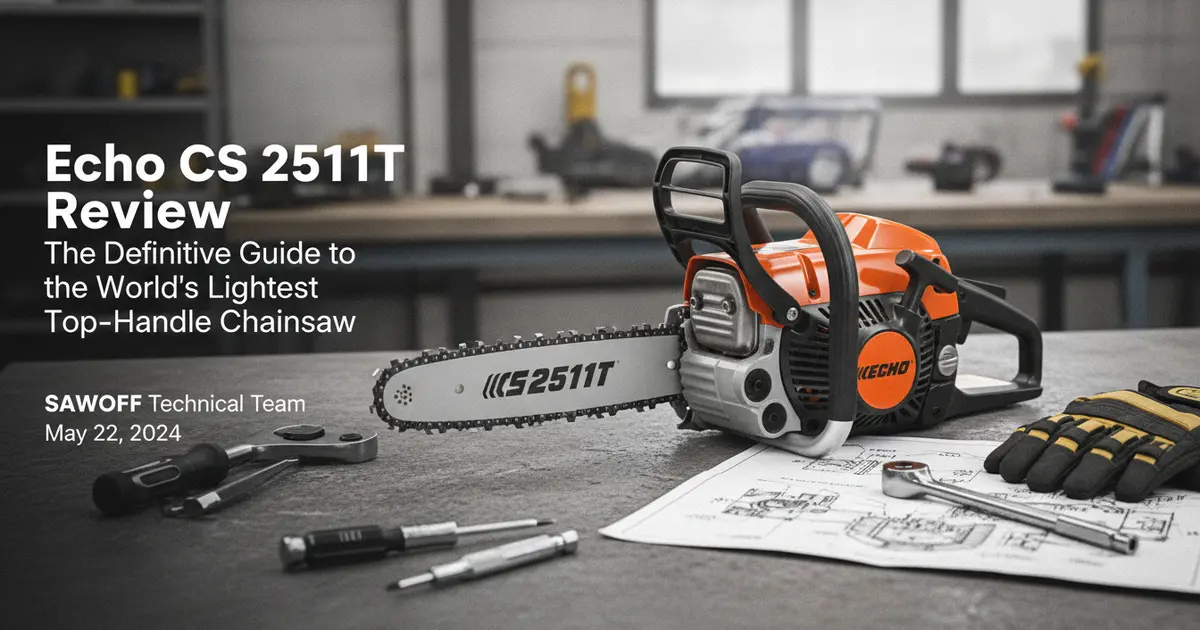
Echo CS 2511T Review: The Definitive Guide to the World’s Lightest Top-Handle Chainsaw
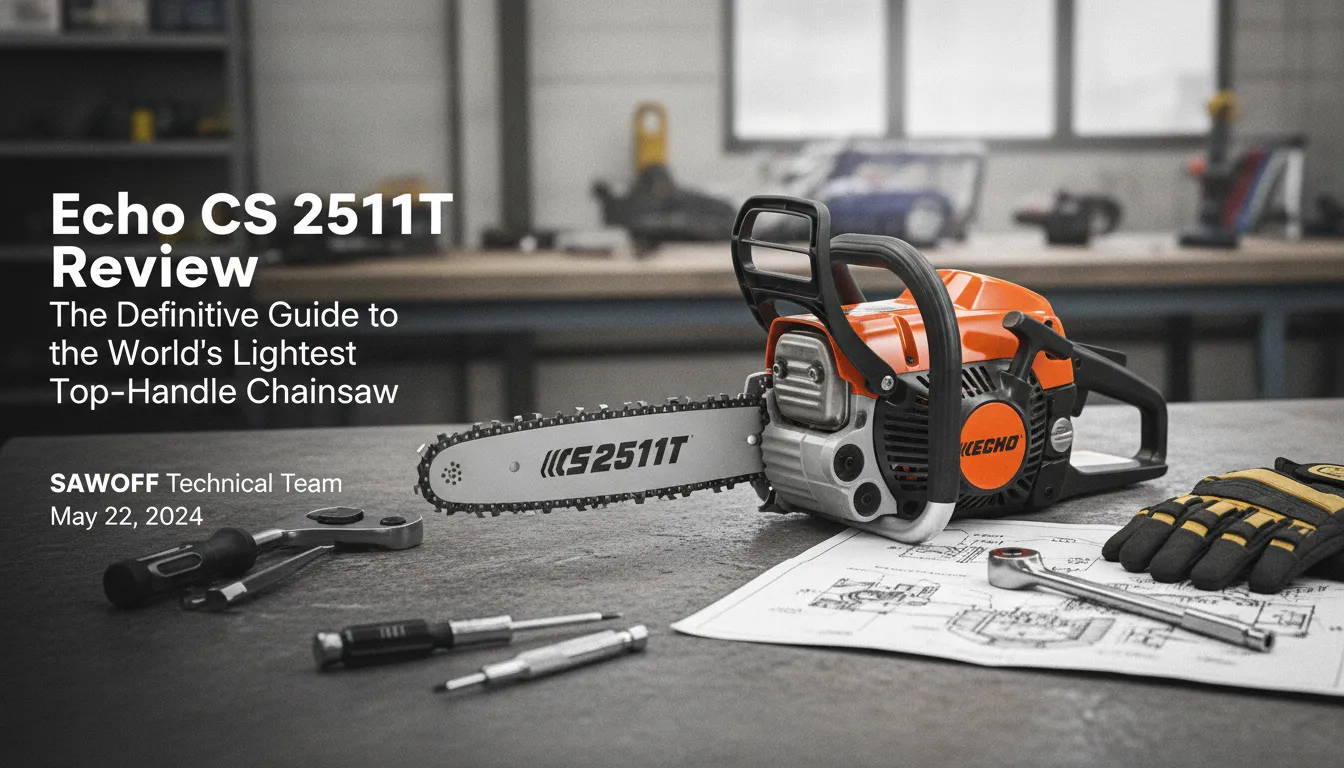
If you spend eight hours a day strapped into a saddle thirty feet above the pavement, weight isn’t just a spec — it’s a health and safety metric. Every extra ounce taxes your rotator cuff and drains your stamina. When Echo dropped the CS 2511T, they didn’t just release another saw; they challenged the laws of physics. At 5.2 pounds dry powerhead weight, this machine redefined what a sub-compact professional saw could do.
I’ve carried this saw through frozen canopy removals and humid summer dead-wooding sessions. It’s often called a surgical tool, and that’s the most accurate description I can give. Don’t let the feathery weight fool you. This isn’t a homeowner’s pruning toy. It’s a precision-engineered beast for the professional arborist who demands high-RPM performance and surgical accuracy.
Key Advice: Swap the stock safety chain for a non-safety yellow label chain or a 1/4-inch setup immediately. The factory chain is the saw’s biggest bottleneck.
The Top-Handle Landscape: How the 2511T Compares
| Feature | Echo CS 2511T | Stihl MS 151 TC-E | Husqvarna T525 | Echo CS 355T |
|---|---|---|---|---|
| Displacement | 25.1 cc | 23.6 cc | 27.0 cc | 35.8 cc |
| Weight (Dry) | 5.2 lbs | 5.7 lbs | 5.95 lbs | 8.0 lbs |
| Power Output | ~1.5 hp | 1.4 hp | 1.5 hp | 2.1 hp |
| Starting System | i-30 Starter | ErgoStart | Smart Start | ES-Start |
| Best For | Extreme Mobility | Fine Pruning | Mid-Range Power | Large Removals |
Technical Engineering Deep-Dive
When you hold the 2511T, your brain expects it to feel like a toy. It doesn’t. There’s a density to the build that speaks to its magnesium crankcase — a rarity in saws this small. Most manufacturers use a full plastic clamshell to save weight, but Echo knew heat dissipation and structural integrity are non-negotiable for a pro saw.
Engine Architecture and Fuel Flow
The heart is a 25.1cc professional-grade two-stroke. The scavenging design meets tightening emissions standards without adding the massive weight of a 4-mix or heavily stratified engine. Piston speed is impressively high, allowing the saw to scream in the cut. When you’re limbing softwoods or medium-hardwoods like maple, the chain speed compensates for lower torque.
The diaphragm-style Walbro carb features an integrated primer bulb and easy-access idle screw. One thing I’ve noticed: the 2511T is sensitive to fuel quality. The jets are so small that anything less than ethanol-free pre-mix or high-octane pump gas with premium oil will gum up the carb by next season.
G-Force Engine Air Pre-Cleaner
This isn’t marketing fluff. The system uses centrifugal force to pull dust and chips away from the air filter intake. On a saw this small, filter surface area is limited. Without G-Force, you’d stop every three tanks to brush off the pleated filter. After a full day of dirty removals, my main filter remained remarkably clear.
Ignition and Starting Dynamics
Echo’s i-30 starting system reduces pulling effort by 30%. In the bucket, you often find yourself in awkward positions where you can’t get a full shoulder-length pull. The i-30 allows a short, crisp snap that fires the saw almost every time. The digital ignition adjusts timing dynamically, making the saw much less prone to kick-back during starting.
Vibration Isolation
The trade-off of a lightweight saw is often vibration. Echo countered this with a robust spring-based anti-vibration system rather than rubber bushings. With a 12-inch bar, harmonics are well-managed. If you’re pushing through larger 8-10 inch oak limbs, you’ll feel a high-frequency buzz rather than a low-frequency throb — less fatiguing over long periods.
Real-World Performance: In the Canopy
We took the 2511T into a stand of mature White Oak and oversized White Pine to find the wall.
Limbing and Small Wood
This is where the 2511T is undisputed king. For 1-4 inch material, it’s a hot knife through butter. The balance is so perfect you can flick the saw with one hand to reach awkward lateral branches. Throttle response is instantaneous — no lag while the carb catches up.
Bucking and Bore-Cutting
At 8-10 inch oak, the 25.1cc engine shows its displacement limit. You cannot dog in with this saw like you would a Stihl MS 201T. Apply too much pressure and the chain stalls. The secret is letting high RPMs do the work. Use a light touch, keep the chain sharp, and it will get through anything.
Bore-cutting for a directional hinge on a small spar is surprisingly doable. The narrow bar nose reduces kickback potential during the initial plunge. The lack of grunt means you need precise throttle control to avoid bogging mid-plunge.
Ergonomics & Operator Comfort: Built for the Saddle
Top-handle ergonomics differ fundamentally from rear-handle ground saws. The 2511T features a narrow body that lets you see exactly where the bar enters the wood. This line of sight is critical for precision pruning.
The top handle is textured but not aggressive, shaped for thick climbing gloves. The palm-activated safety switch feels a bit clicky and stiff on some units. The trigger has a nice progressive feel.
The saw is slightly nose-heavy with a 12-inch bar, perfectly balanced with a 10-inch. For fine pruning, drop to the 10-inch bar for exponentially better maneuverability. It feels like an extension of your forearm.
The chain brake is snappy — inertia-activated with a perfectly positioned manual override. The chain catcher is metal, which I appreciate; plastic catchers on lightweight saws break once and become useless.
Chainsaw Safety
Before you take any saw into the tree, read our Chainsaw Safety Guide. Top-handle saws require specific training — they’re more kickback-prone due to the short handle-to-handle distance. Always use two hands, maintain a firm grip, and never cut above shoulder height.
Maintenance & Serviceability
I’ve spent as much time wrenching on these as pulling the trigger. The 2511T is a mixed bag.
- Air Filter Access: Tool-less design with a thumb screw. 10/10.
- Spark Plug: Tucked in tight. You’ll need a thin-walled scrench.
- Chain Tensioning: Side-access. Anyone still putting tensioners between the bar and muffler should be banned from the industry.
- Oil/Fuel Caps: Large with high-leverage tabs. Usable with gloves — a rare feat on a saw this small.
The Weak Point: The air filter cover feels flimsy. Drop the saw or hit a spar and that plastic tab is the first thing to go. Keep a spare cover in the truck.
Comparison Table: Top-Handle Class
| Model | Displacement | Weight | Power | Price Range |
|---|---|---|---|---|
| Echo CS 2511T | 25.1 cc | 5.2 lbs | 1.5 hp | $$ |
| Stihl MS 201T | 35.2 cc | 8.16 lbs | 2.41 hp | $$$ |
| Husqvarna T525 | 27.0 cc | 5.95 lbs | 1.5 hp | $$$ |
| Echo CS 355T | 35.8 cc | 8.0 lbs | 2.1 hp | $$ |
Hardware Specs
- Engine Displacement: 25.1 cc (1.53 cu. in.)
- Power Output: 1.52 hp
- Dry Weight: 5.2 lbs (2.4 kg)
- Fuel Capacity: 6.4 fl. oz. (190 ml)
- Oil Capacity: 4.7 fl. oz. (140 ml)
- Bar Lengths: 12” (Standard) or 14”
- Chain Pitch: 3/8-inch Low Profile (or 1/4-inch conversion)
- Chain Gauge: .050”
- Oiling System: Automatic/Adjustable (Clutch-Driven)
For more on choosing the right bar and chain for your saw, check our Stihl Chainsaw Bar Size Guide — the principles apply to Echo saws too.
Pros & Cons
Pros
- Weight: In a class of its own. Nothing else feels this light.
- Nimbleness: Exceptional for precision pruning and surgical removals.
- Starting: The i-30 system is reliable and requires very little effort.
- Build Quality: Magnesium crankcase ensures a long professional lifespan.
- Visibility: Narrow body design offers superior line of sight.
Cons
- Torque: It’s a 25cc saw. It will bog if you treat it like a 40cc machine.
- Stock Chain: The safety chain it ships with is garbage. Swap it immediately.
- Small Fluid Tanks: You will refuel often. The price of compact size.
- Sensitivity: The carb needs high-quality fuel and regular cleaning.
Final Verdict
The Echo CS 2511T is not a do-it-all saw. If you need one saw for ground work and climbing, look at the CS 355T or Stihl MS 201T. But if you’re a professional climber who needs a dedicated pruning and small-wood removal tool, the 2511T is the best investment you can make. It saves your body, increases your speed in the tree, and starts every time.
We’ve discussed power sources extensively in our Gas vs Electric Chainsaw guide. The 2511T proves gas still dominates the ultra-lightweight pro niche.
SAWOFF Rating: 9.6 / 10
Get out there and cut. Safely.
Frequently Asked Questions
Is the Echo CS 2511T powerful enough for big removals?
No. It is designed for limbing and pruning. While it can cut through a 10-inch limb, it isn’t efficient for that. If you find yourself consistently cutting wood larger than 6-8 inches, step up to a 35cc or 40cc saw.
Why do people convert the 2511T to a 1/4-inch chain pitch?
The 1/4-inch pitch chain has more teeth and a smaller bite, resulting in a much smoother cut and less vibration. Because the 2511T has lower torque, the 1/4-inch chain allows it to maintain higher RPMs more easily in the cut.
What fuel mix should I use for the 2511T?
Echo recommends a 50:1 ratio. Use high-quality synthetic oil and ethanol-free 90+ octane gasoline. Small-displacement carburetors are easily clogged by the moisture and deposits found in ethanol fuels.
Can a homeowner buy this saw for yard work?
Legally, yes. Practically, be careful. Top-handle saws are designed for trained professionals. They are inherently more dangerous because of the short distance between the handles, which makes them easier to kick back.
How often should I clean the G-Force air cleaner?
The system is self-cleaning to an extent, but check the internal pleated filter every 5-10 hours of use. If cutting very dry, dusty wood, check it daily.
The saw won’t start when hot. What’s wrong?
This is usually vapor lock or a carburetor adjustment issue. Don’t over-prime when the engine is warm. Also check the spark arrestor screen in the muffler; if clogged with carbon, backpressure will prevent hot starts.
How does it compare to the battery-powered Echo DCS-2500T?
The DCS-2500T is the battery equivalent and is surprisingly close in performance. However, the 2511T still wins on instant power and weight once you factor in the heavy battery pack. For long days where swapping batteries isn’t feasible, the 2511T remains the choice.
Frequently Asked Questions
Is the Echo CS 2511T powerful enough for big removals?
No. It is designed for limbing and pruning. While it can cut through a 10-inch limb, it isn't efficient for that. If you find yourself consistently cutting wood larger than 6-8 inches, step up to a 35cc or 40cc saw.
Why do people convert the 2511T to a 1/4" chain pitch?
The 1/4" pitch chain has more teeth and a smaller bite, resulting in a much smoother cut and less vibration. Because the 2511T has lower torque, the 1/4" chain allows it to maintain higher RPMs more easily in the cut.
What fuel mix should I use for the 2511T?
Echo recommends a 50:1 ratio. Use high-quality synthetic oil and ethanol-free 90+ octane gasoline. Small-displacement carburetors are easily clogged by the moisture and deposits found in ethanol fuels.
Can a homeowner buy this saw for yard work?
Legally, yes. Practically, be careful. Top-handle saws are designed for trained professionals. They are inherently more dangerous because of the short distance between the handles, which makes them easier to kick back.
How often should I clean the G-Force air cleaner?
The system is self-cleaning to an extent, but check the internal pleated filter every 5-10 hours of use. If cutting very dry, dusty wood, check it daily.
The saw won't start when hot. What's wrong?
This is usually vapor lock or a carburetor adjustment issue. Don't over-prime when the engine is warm. Also check the spark arrestor screen in the muffler; if clogged with carbon, backpressure will prevent hot starts.
How does it compare to the battery-powered Echo DCS-2500T?
The DCS-2500T is the battery equivalent and is surprisingly close in performance. However, the 2511T still wins on instant power and weight once you factor in the heavy battery pack. For long days where swapping batteries isn't feasible, the 2511T remains the choice.