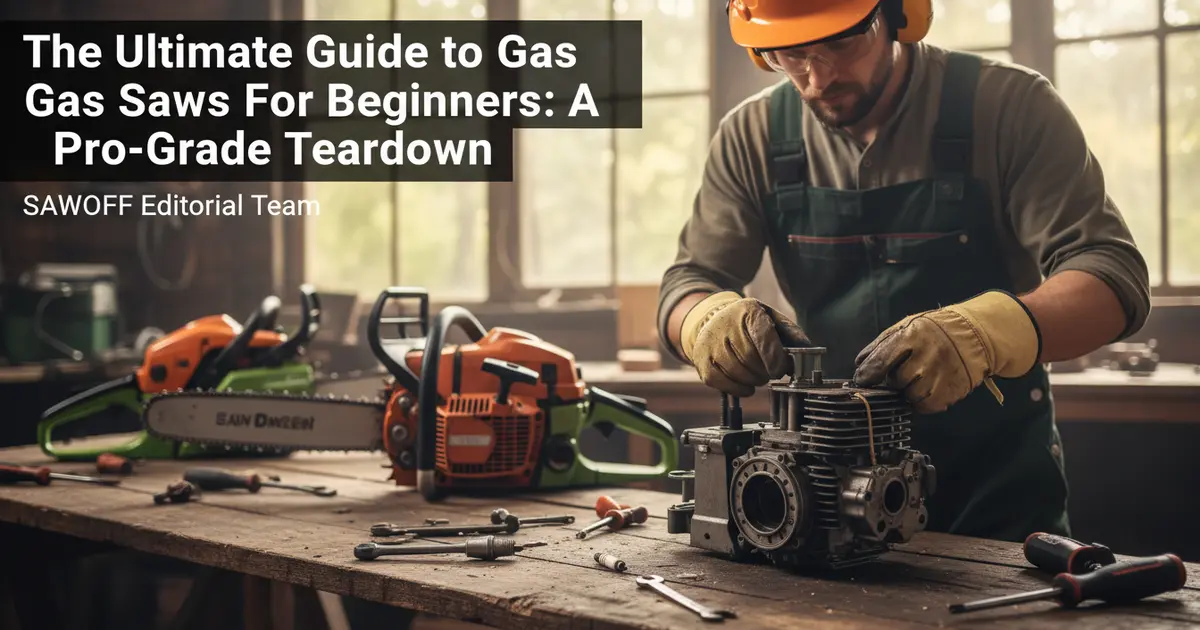
The Ultimate Guide to Gas Saws For Beginners: A Pro-Grade Teardown
I remember the first time I pulled the cord on a real gas-powered saw. It wasn’t the polite whir of a battery unit; it was a visceral, chest-thumping growl. For a beginner, that transition from yard tool to forestry equipment is intimidating. You aren’t just buying a motor and a chain — you’re buying into a legacy of internal combustion engineering.
If you’re reading this, you’re likely tired of the limitations of corded tools or fading battery power. You want the lugging power that only a two-stroke engine can provide. But you also don’t want a saw that rips your shoulder out or spends more time in the shop than in the woods.
The Top Contenders: Side-by-Side
| Model | Displacement | Weight (Powerhead) | Bar Length | Best For | Link |
|---|---|---|---|---|---|
| Echo CS-400 | 40.2 cc | 10.1 lbs | 18” | All-Rounder | 🛒 Check Price |
| Poulan Pro PR5020 | 50.0 cc | 15.5 lbs | 20” | Heavy Bucking | 🛒 Check Price |
| Stihl MS 170 | 30.1 cc | 8.6 lbs | 16” | Light Trimming | 🛒 Check Price |
| Craftsman S165 | 42.0 cc | 12.0 lbs | 16” | Budget Entry | 🛒 Check Price |
The Engineering Deep-Dive
Engine Architecture and Fuel Layering. Most modern beginner gas saws utilize stratified scavenging (Stihl’s 2-MIX, Husqvarna’s X-Torq). Traditional two-strokes lose fresh fuel-air mix out the exhaust port. Stratified engines use a buffer of fresh air to push out exhaust gases before the fuel-air mix enters. For a beginner, this means 20% less fuel consumption and significantly fewer fumes.
The Filtration System. I’ve seen more beginner saws killed by sawdust ingestion than by actual woodcutting. Look for Air Injection or similar systems. If the saw has a simple flat felt filter without pre-cleaning, you’ll be cleaning it every three tanks. The Echo CS-400 uses a heavy-duty automotive-style pleated filter that’s a godsend.
Ignition and Starting Physics. The fear most beginners have is the shoulder-rip. Quality beginner saws now include Easy Start systems (spring-assisted starters) that reduce pull force by up to 40%. If the saw doesn’t have a decompression valve or spring-assist, you’ll feel it in your rotator cuff.
Real-World Performance
Bucking. A beginner saw shouldn’t bog the moment you apply pressure. You want a saw that feels gritty — when the chain engages, the RPMs dip slightly then hold steady, pulling the saw into the wood.
Limbing. Weight distribution matters. Beginner saws should be flickable with a neutral balance point directly under the top handle. The saw should feel like an extension of your arm, not a heavy pendulum.
Bore-Cutting. While I don’t recommend beginners perform bore-cuts without training, the saw must handle it without excessive vibration. This tests the anti-vibration mounts. If you feel the engine tingling in your palms after five minutes, the AV system is garbage.
Ergonomics and the Operator Experience
The inertia-activated chain brake should snap into place with the slightest flick of your wrist. On many budget saws, the brake mechanism feels mushy — that’s a dealbreaker. We want a crisp, metallic click that tells you the chain has been arrested in milliseconds.
Historical Context
We are living in the Golden Age of the small-displacement gas saw. Today’s beginner saws benefit from trickle-down technology from professional saws. The Stihl MS 362 pioneered technologies now standard in their homeowner line.
Maintenance: The Beginner’s Burden
- Fuel Management — you cannot use 87-octane pump gas with 10% ethanol. Use 91+ octane ethanol-free fuel mixed at 50:1 with high-quality 2-stroke oil.
- Chain Tensioning — new chains stretch. Get a saw with side-access chain tensioner.
- The Air Filter — check it often, especially in dry, dead wood that creates fine flour sawdust.
- Bar Care — flip your bar every few hours and check for burrs on the rails. See our bar size guide for more.
Pros & Cons
Pros: Unlimited runtime — just refuel; raw power with higher chain speeds; longevity — well-maintained gas saws last 20+ years; you’ll learn how a small engine works. Cons: Noise — you must wear hearing protection; weight — even light gas saws are heavier than battery; fluid management — gas, oil, and inevitable spills.
Final Verdict
If you’re a homeowner with more than half an acre of trees or plan on processing firewood, a gas saw is a necessity.
For the absolute beginner, I recommend the Echo CS-400. It has the best air filtration in its class, starts with a flick of the wrist, and has enough lugging power for 16-inch logs.
SAWOFF Rating: 4.8 / 5
Chainsaw Safety
Before you start, read our Chainsaw Safety Guide. Understand the Gas vs Electric debate so you know you’re making the right choice.
Get out there and cut. Safely.
Frequently Asked Questions
Why won't my gas saw start when it's hot?
This is usually vapor lock — fuel in the lines turns to gas from engine heat. Let the saw sit in the shade for 10 minutes, or hold the throttle wide open (with chain brake ON) and pull to clear the flooded cylinder.
Can I use the same gas I use for my lawnmower?
Absolutely not. Lawnmowers are 4-stroke and use straight gas. Chainsaws are 2-stroke and require a gas-oil mix. Running straight gas will seize the piston in less than 60 seconds.
How often should I sharpen the chain?
If the saw produces dust instead of chips, the chain is dull. A sharp chain pulls itself into the wood. If you're pushing down, you're doing it wrong.
What is the choke and when do I use it?
The choke restricts airflow for cold starts. Only use it for the first few pulls. Once the engine pops, move the lever to the half-throttle or run position.
Why is my chain smoking?
Either your bar oil reservoir is empty or the oiler holes are clogged. If the chain doesn't have a thin film of oil, stop immediately or you'll ruin the bar and chain.
Is it worth buying a cheap gas saw under $200?
Under $200, you're buying a disposable tool. Parts are hard to find and plastic quality is poor. Spend the extra $100 for a name brand like Echo, Stihl, or Husqvarna.
How do I tune my carburetor?
If the saw bogs at high RPMs, it's running lean. If it smokes excessively and lacks power, it's rich. Let a dealer handle the first tune-up after the break-in period.
What size bar should a beginner get?
Stick to 16-18 inches. A longer bar adds leverage that can overwhelm a beginner and puts more strain on the engine. You can always size up later.