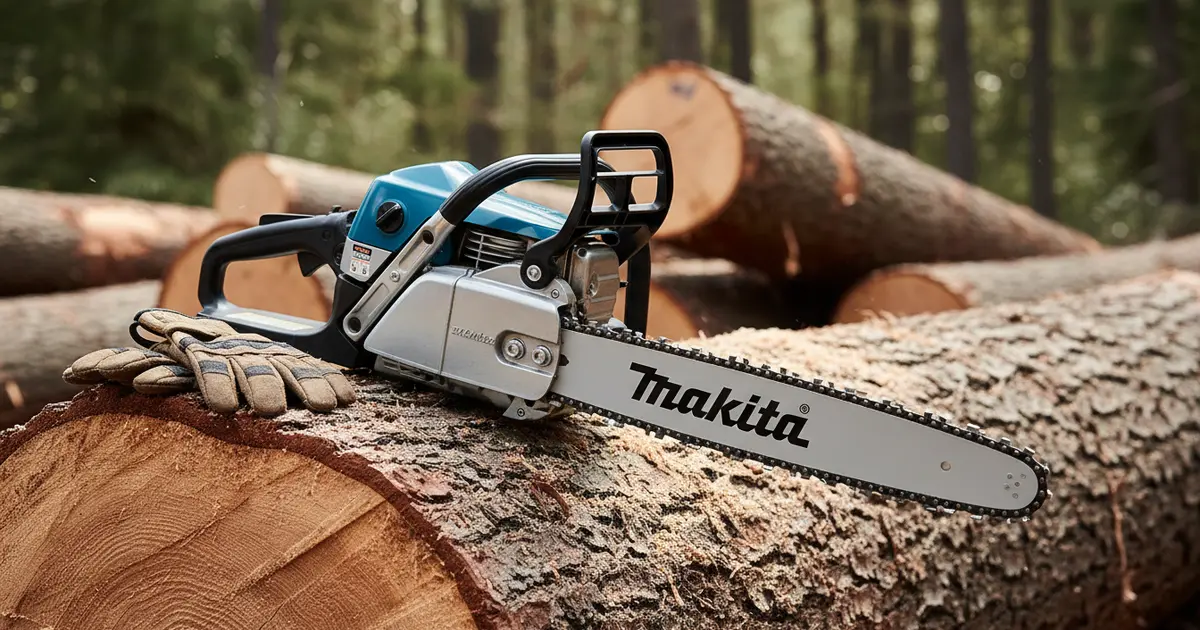
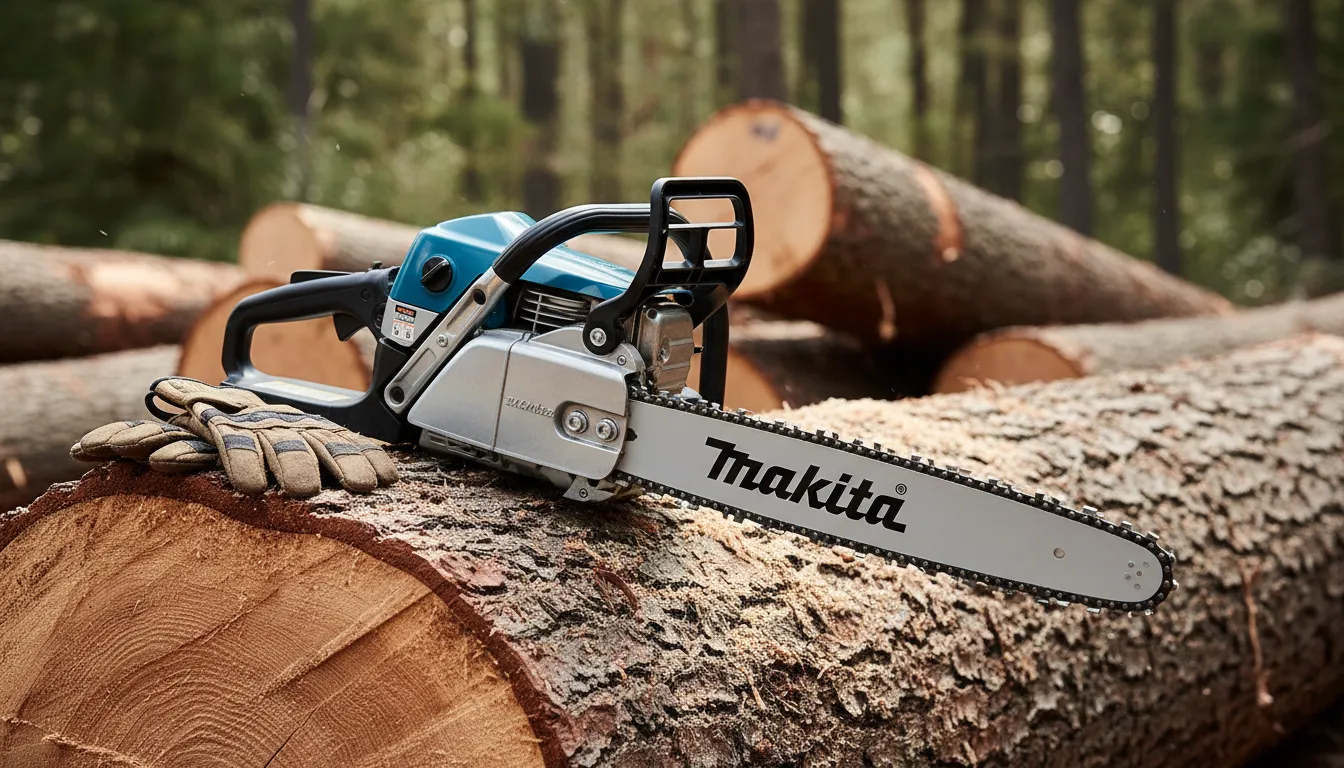
There’s a specific frequency of vibration you get used to after fifteen years of felling and bucking. Most mid-range saws have a high-pitched, buzzy resonance that leaves your hands tingling for hours after you kill the engine. When we first pulled the cord on the Makita EA6100PR, we felt a low, authoritative thrum. It felt less like power equipment and more like a precision-engineered German motor.
That makes sense because the EA6100PR is the direct descendant of the Dolmar PS-6100. At 61cc, this saw sits in the Goldilocks Zone—light enough to limb all day, but enough lugging power to rip through a 20-inch white oak trunk without RPMs dropping into the basement.
60cc Heavy Hitters Comparison
| Model | Displacement | Horsepower | Weight (Powerhead) | Construction |
|---|---|---|---|---|
| Makita EA6100PR | 61.0 cc | 4.6 HP | 13.2 lbs | Magnesium Crankcase |
| Stihl MS 391 | 64.1 cc | 4.4 HP | 13.7 lbs | Polymer/Split |
| Husqvarna 460 | 60.3 cc | 3.62 HP | 13.2 lbs | Polymer/Split |
| Echo CS 590 | 59.8 cc | 3.9 HP | 13.2 lbs | Magnesium Crankcase |
Engineering Deep-Dive
Why Makita Stuck with Adjustable Carburetors
Most modern saws are moving toward electronic carburetors (Stihl M-Tronic, Husqvarna AutoTune). Makita stayed old school with a standard adjustable carburetor. For those who know how to tune for altitude and humidity on the fly, this is a dream. You don’t need a laptop or a dealer trip to fix a bogging saw—just a tachometer and a screwdriver.
Stratified Air Scavenging (SAS)
In a standard two-stroke, unburnt fuel-air mixture escapes through the exhaust port. The EA6100PR uses a layer of clean air to push exhaust gases out before the new fuel charge enters the combustion chamber. When buried in a deep bucking cut in hickory, the torque curve stays flat. It doesn’t scream as high as some saws, but it has relentless pulling power.
Magnesium Crankcase
Let’s get one thing straight: saws like the Husqvarna 455 Rancher and Stihl MS 271 are clamshell designs with plastic housings. The EA6100PR features a full professional-grade magnesium crankcase. This isn’t just about weight—it’s about heat dissipation and longevity. A plastic housing expands and contracts at different rates than the metal engine components, leading to air leaks over years. A magnesium case provides a rigid, thermally stable foundation.
Centrifugal Air Cleaning
The air filtration is massive. Makita’s centrifugal system spins heavy dust and chips away from the intake before they hit the filter. During a dry, dusty week clearing pine, we knocked dust off the filter once every three or four days, compared to daily cleanings on other saws.
Real-World Performance
Bucking
With a 20-inch bar and full-chisel chain, the EA6100PR ate. We didn’t have to dog in and pry the saw through the wood. Just set the bar on the log, and the saw’s own weight combined with that 4.6 HP torque pulled it through. The 13,800 RPM max speed is plenty, but it’s the mid-range grunt that impresses. Compared to the Husqvarna 460 Rancher, the Makita feels significantly more violent in the cut—more raw energy transferred to the chain.
Limbing
At 13.2 lbs dry, it’s not a light saw. But for a 60cc class, it’s exceptionally well-balanced with a low center of gravity. The gyroscopic effect of the flywheel is manageable when flipping the saw 90 degrees for branches.
Bore-Cutting
Throttle response is snappy. When performing a bore cut, the saw jumps to life with almost zero lag. This is where the German Dolmar heritage shines.
Ergonomics
Makita’s M2M anti-vibration system uses heavy-duty steel springs rather than rubber buffers. Steel springs maintain their tension and effectively decouple engine vibration from the handles. After a six-hour day, we didn’t get dead-hand feeling.
The handle geometry is wide, giving better leverage for steering a large bar. One small gripe: the Touch & Stop single-lever control takes a few hours of muscle memory if you’re used to Stihl’s master control lever.
Fuel System and Maintenance
Gas saws demand regular maintenance, and the EA6100PR is no exception.
Fuel care: Use 50:1 high-quality synthetic 2-stroke oil with ethanol-free gasoline. Ethanol attracts moisture and degrades carburetor diaphragms. Run the carburetor dry before extended storage.
Air filter: The pleated heavy-duty filter is excellent, but clean it regularly in dusty conditions. The Winter/Summer shutter redirects warm air from the cylinder to the carburetor in winter to prevent icing—a clever feature we tested in 15°F January conditions, and the saw stayed consistent.
Spark plug: Accessible with the top cover off. Check and replace annually.
Chain tensioning: Lateral side-access with a scrench. Easy even with gloves. The oiler is fully adjustable, crucial when switching bar lengths or wood types.
Chainsaw Safety
The EA6100PR’s 4.6 HP at 13,800 RPM demands respect. Always wear full protective gear: chaps, helmet with face shield, hearing protection, and chainsaw gloves. The magnesium crankcase makes this saw lighter than it looks—don’t let the weight fool you into sacrificing safety. Use the inertia chain brake before any movement with a running saw. Never cut above shoulder height. Read our Chainsaw Safety Guide for a complete safety framework.
Pros and Cons
Pros
- Built like a tank. Magnesium crankcase and professional internals for a 10-year lifespan.
- Torque-heavy powerhouse. SAS provides incredible lugging power in hardwoods.
- Superior filtration. One of the best air filter designs in the industry.
- Adjustable carburetor. No AutoTune nonsense—you control how your saw runs.
- EasyStart. Spring-assisted starting reduces pulling force significantly.
Cons
- Weight. Heavier than a Stihl MS 261, leading to fatigue for those used to lighter 50cc saws.
- Dealer network. Finding a Makita OPE dealer for warranty work can be challenging in rural areas.
- Filter cover clip. Tool-less but feels like it might snap under impact.
Final Verdict
If you’re a homeowner who occasionally cuts a fallen limb, this saw is overkill. But if you’re a prosumer who heats with wood, manages a large wooded lot, or does light commercial tree work, the EA6100PR is arguably the best value in the 60cc class. It offers genuine professional construction (magnesium case, pro-grade bearings, adjustable oiler) for the price of a competitor’s plastic-cased rancher saw.
It’s a rugged, honest, German-engineered tool that relies on displacement and smart air management—not flashy electronics.
For help deciding between gas and battery, see our Gas vs Electric Chainsaw comparison. For bar and chain guidance, visit the Stihl Chainsaw Bar Size Guide (the principles apply to any brand).
SAWOFF Rating: 4.7 / 5 — The thinking professional’s 60cc choice.
Get out there and cut. Safely.
Frequently Asked Questions
What fuel mix should I use for the Makita EA6100PR?
Use a 50:1 ratio of high-quality synthetic 2-stroke oil and 89-octane (or higher) ethanol-free gasoline. Makita’s high-compression engines are sensitive to ethanol, which gums up the carburetor and causes lean running.
Can I run a 24-inch bar on the EA6100PR?
Yes, it has the oiling capacity and torque to pull a 24-inch bar, but we don’t recommend it for daily use in dry oak or hickory. It performs optimally with a 20-inch bar where balance and chain speed match the engine’s output.
My saw is hard to start when warm. What should I do?
This is often vapor lock or a slightly rich idle. Don’t use the choke when the engine is warm. If the problem persists, check the Summer/Winter shutter. If set to Winter in 80-degree weather, the carburetor gets too much heat.
How does the EA6100PR compare to the Echo CS-590 Timber Wolf?
The Echo CS-590 is a fantastic budget pro saw, but the Makita feels more refined. Anti-vibration on the Makita is superior and power delivery feels snappier. The Echo is a brute; the Makita is a surgeon.
Does this saw have an adjustable oiler?
Yes. The oiler is fully adjustable and located on the bottom of the saw. This is crucial if you switch between bar lengths or wood types—sap-heavy pine requires more oil than dry oak.
Where can I find spare parts for this saw?
Because this saw shares nearly all components with the Dolmar PS-6100, parts are widely available through specialized chainsaw retailers online and Makita’s industrial tool network.
What chain should I buy for this model?
For maximum performance, use a 3/8-inch pitch, .050-inch gauge full-chisel chain like the Oregon 72LGX. For dirty or frozen wood, a semi-chisel chain stays sharp longer but cuts slightly slower.
Does the EA6100PR have a decompression valve?
Yes. The decompression valve reduces pulling force by about 40%, making starting manageable even with the 61cc high-compression engine.