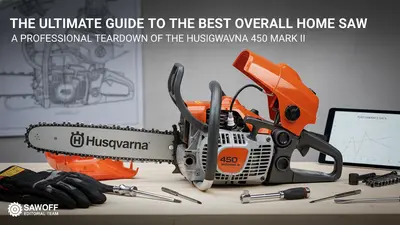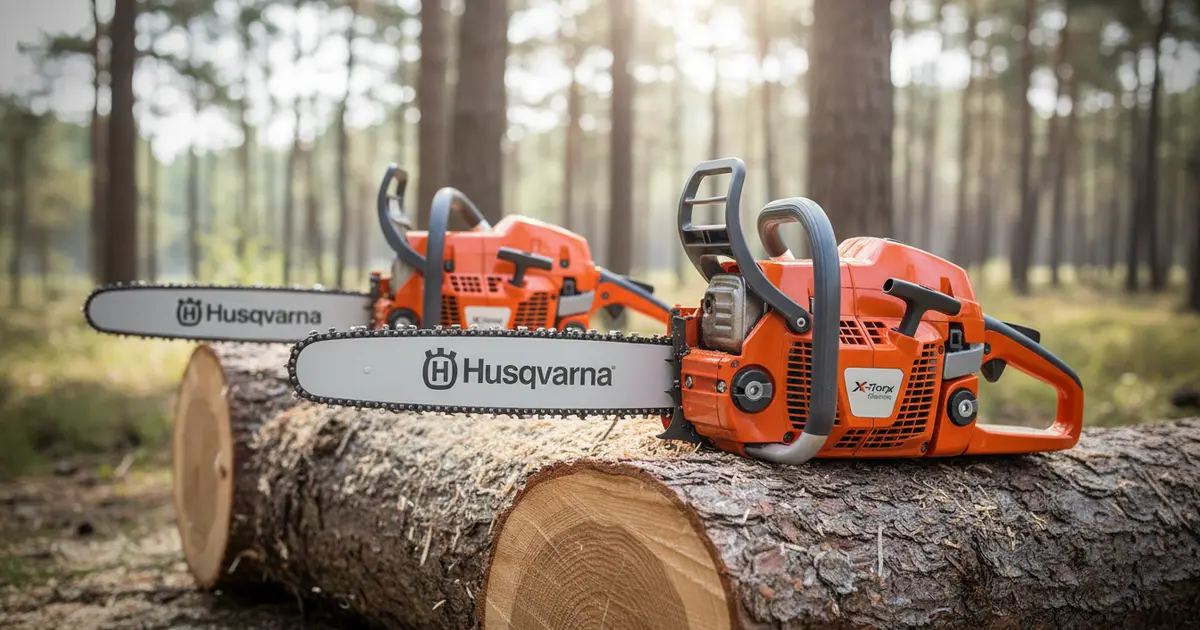
The saws that actually keep the world’s rural properties running are not the professional XP models—they are the stalwarts of the Husqvarna Home Line. Covering the entry-level 100-series (120, 130, 135) and the all-round 400-series (435, 440, 445, 450 Rancher), these saws bridge weekend warrior plastic disposables and magnesium-cased professional thoroughbreds.
We tore into the air filtration systems, analyzed the scavenging cycles, and spent days bucking hardwoods to bring you the technical truth about these saws.
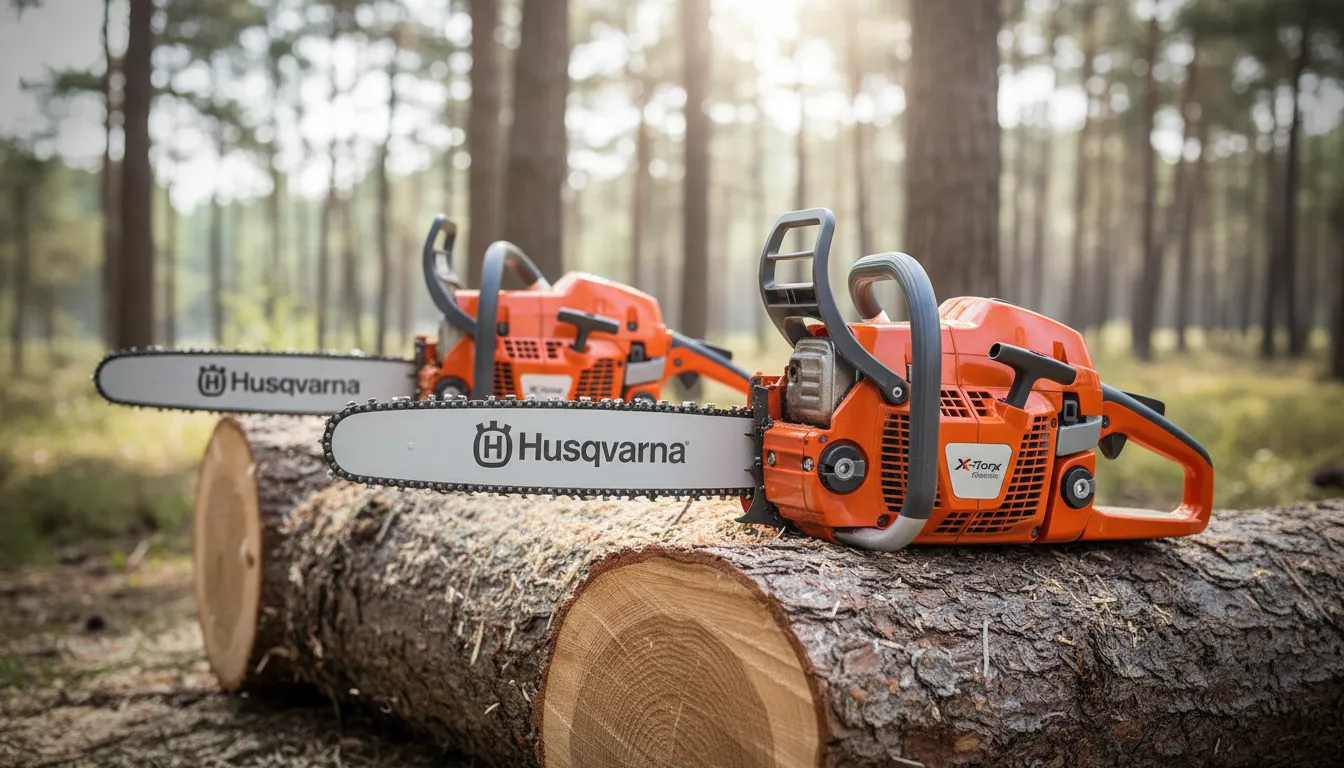
The Competitive Landscape
| Model | Displacement | Power Output | Weight | Best For |
|---|---|---|---|---|
| Husqvarna 450 | 50.2 cc | 3.2 hp | 11.2 lbs | Farm & Ranch |
| Stihl MS 261 | 50.2 cc | 4.0 hp | 10.8 lbs | Professional Limbing |
| Poulan Pro PR5020 | 50 cc | 2.1 hp | 15.5 lbs | Budget Homeowner |
Engineering Deep-Dive: X-Torq and Air Injection
The Home Line uses X-Torq stratified scavenging, where a layer of pure air acts as a barrier between exhaust and fresh fuel charge. This produces a remarkably flat torque curve—saws in the 440 and 450 series do not bog as easily when the bar gets pinched.
The centrifugal Air Injection system uses the flywheel as a centrifuge, flinging heavier dust particles away from the intake. In field testing, a 450 Rancher ran three days in dry conditions without needing filter maintenance.
Our key advice: The LowVib steel-spring system on the Home Line isolates vibration effectively. For the home user, the reduction in fatigue is a massive benefit—especially when processing firewood all weekend.
For power source considerations, see gas vs electric chainsaw.
Real-World Performance
The 440 excels at limbing—light, nimble, and high-revving. When moving to 18-inch trunks, the 450 Rancher takes over with genuine lugging power. The inertia-activated chain brake on the Home Line is top-tier, engaging instantly during kickback simulation.
Ergonomics and Operator Comfort
Handle geometry on the 400-series is angled to match the natural wrist position. The 435 and 440 models are under 10 lbs, making them excellent for older users or those new to chainsaw operation.
Our key advice on tensioning: Skip the tool-less “e” versions. The plastic knobs become brittle over time and do not provide the same locked-in security as a traditional dual-nut bar mount.
Maintenance and Serviceability
The snap-lock cover on the 400-series requires no tools for filter or spark plug access. The side-mounted chain tensioner is easy to reach. Recommended tuning: These saws benefit from a slight rich adjustment after the first 10 hours of break-in, as most come from the factory set lean for emissions.
Always verify your bar and chain match your model.
Chainsaw Safety
Read our chainsaw safety guide before operating any chainsaw. The inertia chain brake must be tested before each use.
Pros & Cons
Pros: Exceptional Air Injection filtration; best-in-class vibration dampening; excellent resale value; parts available at almost every small-engine shop in North America.
Cons: More composite materials than XP line; cold start requires precise technique; premium pricing versus budget brands.
Final Verdict
The Husqvarna Home Line is for the person with five acres, a wood-burning stove, and pride in their tools. The 450 Rancher, in particular, is the Goldilocks of chainsaws—enough power for serious work, light enough to use all day.
SAWOFF Rating: 4.7 / 5
Get out there and cut. Safely.
Frequently Asked Questions
What is the correct gas-to-oil ratio for Husqvarna Home Line saws?
The standard ratio is 50:1. Use 2.6 ounces of high-quality 2-cycle oil per 1 gallon of 89+ octane ethanol-free gasoline. Lower ratios or cheap oil will cause carbon buildup.
Can I put a 24-inch bar on my Husqvarna 450?
It will fit, but we strongly advise against it. The 50cc engine lacks the oiling capacity and torque to pull a 24-inch chain effectively through hardwood. Stay with 18-20 inches.
Why is my saw leaking bar oil when sitting in the garage?
This is caused by pressure building in the oil tank from temperature fluctuations. Slightly loosen and retighten the oil cap after use to vent the pressure.
How often should I replace the spark plug?
Check once a season and replace every 100 hours of operation. If the saw is hard to start or idles roughly, check the spark plug first.
What is the difference between the 440 and the 440e?
The 440e includes a tool-less chain tensioner and easier starting mechanism. We prefer the standard 440 for its long-term durability—plastic knobs can become brittle.
My saw starts but dies when I give it gas. What's wrong?
This is usually a clogged spark arrestor screen (in the muffler) or a dirty carburetor. Start by cleaning the spark arrestor with a wire brush.
Is the Husqvarna Home Line better than Stihl?
Stihl saws tend to have more snap off the line; Husqvarna saws tend to have better air filtration and lower vibration. Both are excellent—it often comes down to dealer proximity.
What is the most popular Home Line saw?
The Husqvarna 450 Rancher is the most popular prosumer saw in the world, occupying the middle ground between entry-level and professional XP models.