The Physics of the Fall: A Professional’s Deep Dive into Felling Techniques
I’ve spent the better part of two decades in the timber stands of the Pacific Northwest. If there’s one thing I’ve learned, it’s that a chainsaw is only as good as the physics applied to its bar. When you’re staring down a 60-foot Douglas fir with a slight lean toward a client’s roof, winging it isn’t an option. You need a surgical understanding of felling techniques and a saw that doesn’t bog down when you’re deep in the heartwood.
Strategic Comparison: The Heavy-Hitters of Felling
| Model | Displacement | Power Output | Best For | Check Price |
|---|---|---|---|---|
| Stihl MS 261 | 50.2 cc | 4.0 hp | Precision Hinge Work | 🛒 View on Amazon |
| Echo CS-590 | 59.8 cc | 3.9 hp | Raw Lugging Power | 🛒 View on Amazon |
| Husqvarna 460 | 60.3 cc | 3.62 hp | Large Diameter Felling | 🛒 View on Amazon |
| Stihl MS 311 | 59.0 cc | 4.2 hp | Mid-Range Versatility | 🛒 View on Amazon |
Technical Engineering Deep-Dive: The Heart of a Felling Saw
Engine Architecture and Fuel Layering. Modern saws like the Husqvarna 455 Rancher utilize X-Torq technology — a layer of pure air flushes out exhaust gases before fresh fuel-air mixture enters the cylinder. This increases torque across a wider RPM range, crucial when the tree settles its weight on the bar during the back cut. Stihl’s 2-MIX engines provide snappier throttle response for delicate face cuts.
Centrifugal Air Cleaning. Felling produces massive heavy chips. If your saw lacks centrifugal air cleaning, you’ll stop to clean the filter every three trees. These systems eject larger debris before it reaches the filter, maintaining the air-to-fuel ratio mid-cut.
Anti-Vibration and Ergonomics. Saws like the Echo CS-400 use heavy-duty rubber buffers or steel springs to isolate handles from the engine. A magnesium chassis provides a rigid platform that doesn’t flex under the torque of a 20-inch bar buried in oak.
Real-World Performance: The Anatomy of the Cut
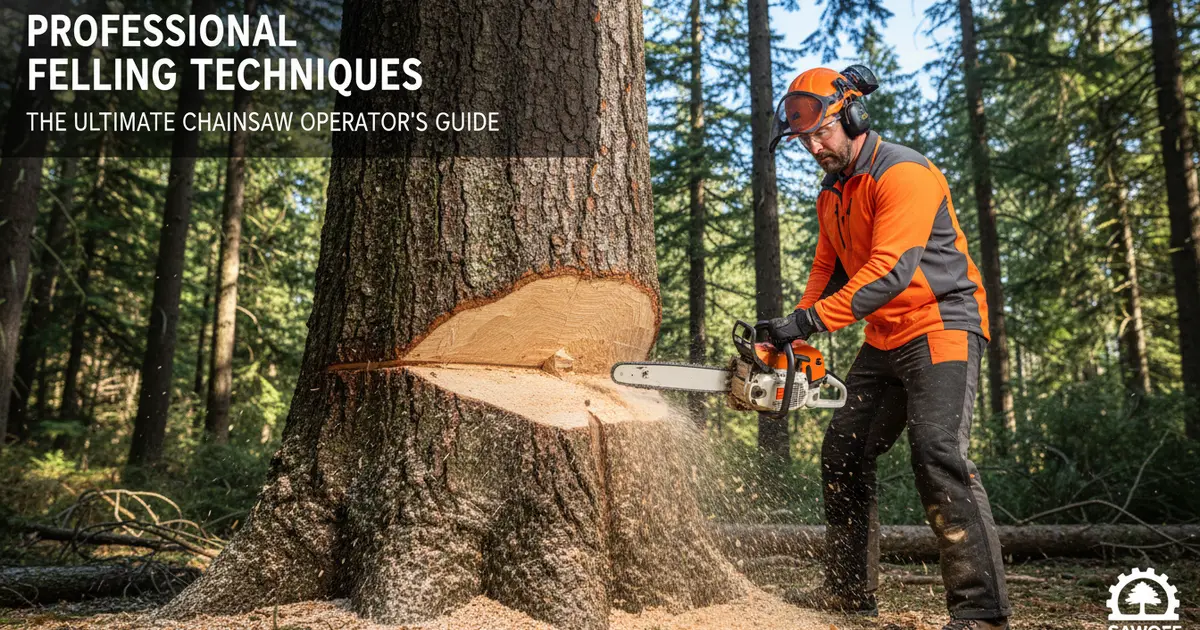
The Face Cut (Directional Notch). I prefer the open-face notch (70 to 90 degrees). The hinge stays intact until the tree is almost on the ground. Use the felling sights on the saw housing — if those are off by even a degree, a 50-foot tree could be ten feet off-target.
The Hinge (The Steering Wheel). The hinge should be 10% of the tree’s diameter in thickness. Cut through it and you lose all control. You need enough grunt to finish that back cut in one smooth motion.
The Back Cut and Bore Cutting. For trees with heavy lean, always use a bore cut. Drive the nose into the tree behind the hinge, then cut backward leaving a strap of wood. This prevents Dutchman cuts and chair-backing.
Ergonomics and Operator Safety
Weight distribution matters — a bit of weight helps the saw fall through horizontal cuts. The wrap-around handle allows you to swap hands and angles without losing grip on the chain brake. Every saw here features an inertia-activated brake. Never buy a felling saw that lacks this.
Historical Context
We’ve come a long way from two-man crosscut saws. Today’s models pack more power into a 9-pound frame than old saws did in 20 pounds. This evolution has made felling more precise but also more dangerous for the untrained.
Maintenance & Serviceability
- Bar Dressing — if your bar has a burr, felling cuts will drift. Use a flat file to keep rails square.
- Chain Tension — a loose chain during a bore cut is lethal. Check after every tank of fuel.
- Spark Plug & Air Filter — felling in hardwoods creates fine dust. Use a pre-filter wrap in dry, dead-standing timber.
Pros & Cons
Pros: Power-to-weight ratio of modern magnesium-alloy saws is incredible; inertia brakes and chain catchers save lives; efficiency — a single tank can drop a 24-inch oak. Cons: Electronic carburetors are hard to fix in the woods; EPA leaner fuel settings make saws run hotter; too many plastic parts on prosumer models.
Final Verdict
Most people buy too much saw or too little technique. If you’re dropping a 15-inch pine, you don’t need a big saw. A well-sharpened mid-range saw will do it faster with more agility.
Always over-calculate your hinge. The hinge is your only lifeline to the ground. Accuracy is everything.
SAWOFF Rating: 4.8 / 5
Chainsaw Safety
Felling is the most dangerous chainsaw operation. Read our Chainsaw Safety Guide before you make your first notch cut.
Get out there and cut. Safely.
Frequently Asked Questions
What is the best fuel mix for high-intensity felling?
50:1 ratio using high-quality synthetic oil and 91+ octane ethanol-free fuel. Ethanol attracts moisture and can cause your saw to lean out and seize during a long felling cut.
My saw bogs down in the middle of a back cut. What's wrong?
It's likely a dull chain (creating friction heat), a clogged air filter, or you're pinching the bar. If the tree is leaning back, use felling wedges to keep the kerf open.
Can I use a small saw for felling?
For trees under 8 inches, yes. For anything larger, you lack the torque to maintain a clean cut, and safety systems aren't designed for large-scale timber forces.
What is a Dutchman cut?
A mistake where the face cut doesn't meet perfectly, or an extra cut bypasses the hinge. This causes the tree to lose direction and can kick it back off the stump.
How often should I sharpen my chain when felling?
Touch up with a few file strokes every time you refuel. A sharp chain is safer because it requires less force, allowing you to focus on the tree's movement.
Why do I need felling wedges?
Wedges are your insurance policy. They prevent the tree from sitting back on your saw and can drive a tree over if it hangs up. Never fell without at least two wedges.
What's the safest way to fell a leaning tree?
The bore cut (plunge cut) is the gold standard for leaners. It allows you to set the hinge and back cut while the tree is still strapped to the stump, preventing premature splitting.
What is the ideal bar length for felling?
18 to 20 inches provides the best balance of reach and engine torque for most residential and farm felling. For larger timber, longer bars on bigger saws are needed.