The Definitive Guide to the Best Professional Chainsaws: A Field-Tested Deep Dive
If you’re reading this, you aren’t looking for a tool to trim the occasional hedge. You’re looking for a beast that lives in the back of your truck, smells of mixed gas and bar oil, and doesn’t flinch when it bites into a 30-inch trunk of frozen hickory.
In my fifteen years of dropping timber and running crews, I’ve learned that the gap between a homeowner saw and a true professional saw isn’t just about the price tag — it’s about the soul of the machine. The difference between a plastic crankcase that warps under heat and a magnesium housing that dissipates thermal energy while you’re bucking for four hours straight.
We’re looking for lugging power — that raw, unyielding torque that keeps the chain moving when you bury the bar. This is the SAWOFF definitive guide to the best pro chainsaws.

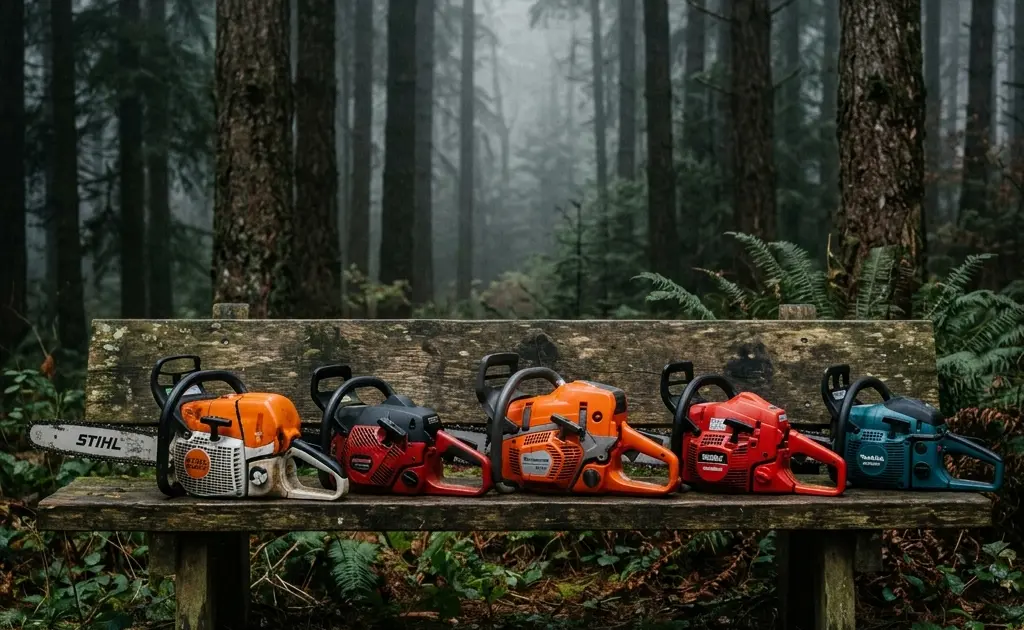
The Heavy Hitters: Comparison Table
| Model | Displacement | Weight (Powerhead) | Best For | Technical Edge | Check Price |
|---|---|---|---|---|---|
| Stihl MS 261 C-M | 50.2 cc | 10.8 lbs | All-Day Limbing | M-Tronic 3.0 | 🛒 View on Amazon |
| Husqvarna 562 XP Mark II | 59.8 cc | 13.0 lbs | Versatile Felling | AutoTune 3.0 | 🛒 View on Amazon |
| Echo CS-590 Timber Wolf | 59.8 cc | 13.2 lbs | Value Prosumer | Decompression Valve | 🛒 View on Amazon |
| Stihl MS 362 C-M | 59.0 cc | 12.3 lbs | Commercial Bucking | 2-MIX Engine | 🛒 View on Amazon |
Technical Engineering Deep-Dive: What Makes a Pro Saw?
Magnesium Crankcases and Thermal Stability. Every saw on this list features a split magnesium crankcase. Magnesium is incredibly light but more importantly handles heat cycles like a champ. A plastic chassis would flex at 14,000 RPM, leading to air leaks and a toasted piston.
Fuel Layering and Scavenging. Stratified scavenging — Stihl calls it 2-MIX, Husqvarna calls it X-Torq — uses a layer of fresh air to push out exhaust gases before the fuel charge enters. This isn’t just about EPA regs. These models are roughly 20% more fuel-efficient than legacy saws from the early 2000s.
M-Tronic vs. AutoTune. These onboard microprocessors adjust ignition timing and fuel flow 30 times per second. I took an MS 261 from a humid valley up to a 5,000-foot ridge in a single afternoon. Ten years ago, that saw would have been bogging. With M-Tronic, the throttle snap stayed crisp.
Real-World Performance
The Art of the Bore Cut. A pro saw needs to handle a bore cut without kicking back or losing RPMs. The Echo CS-590 Timber Wolf has impressive lugging power — not the high-end scream of the Husqvarna 550 XP, but a grunty feel like a diesel truck.
Limbing and Nimbleness. The Stihl MS 261 is the undisputed king here. At 10.8 lbs, it feels like an extension of your arm. The anti-vibration system uses heavy-duty steel springs rather than rubber bushings.
Bucking Large Diameter Wood. For consistent 24-inch logs, you want a saw that supports 3/8-inch pitch chain. The smaller .325” chains are great for speed, but 3/8-inch has the gullet size to move big chips out of deep cuts.
Ergonomics & Operator Comfort
Handle geometry matters. Husqvarna’s XP line features a slightly slimmer body and angled front handle for better wrist angle during felling. Pro saws feature high-tension starter cords and ElastoStart handles. All pro models feature inertia-activated brakes that trip from physical movement of the saw, not just your hand hitting the guard.
Brand Heritage
Stihl — benchmark for durability. Parts availability unmatched. Husqvarna — the race cars of the chainsaw world. High RPMs, aggressive styling, cutting-edge tech. Echo — the Toyota of chainsaws. Simple, reliable, usually cheaper.
Maintenance & Serviceability
- Captive Bar Nuts — standard on pro lines now. No more losing nuts in the leaves.
- Lateral Chain Tensioning — accessing from the side rather than the front near the sharp chain.
- Tool-less Fuel Caps — incredibly fast for refueling on the go.
Pros & Cons
Pros: Extreme power-to-weight; long-term durability with magnesium cases and chrome-lined cylinders; electronic tuning eliminates carburetor headaches. Cons: Premium pricing ($600-$1,000+); electronic module failure needs dealer diagnostics; large models are heavy for inexperienced users.
Final Verdict
For professional arborists and serious landowners managing large woodlots, the Stihl MS 261 C-M is the saw I’d bet my life on. Light, fast, bulletproof engineering.
For a one-saw-to-rule-them-all that handles massive trunks, the Husqvarna 562 XP Mark II provides that extra displacement without becoming a boat anchor.
For budget-conscious professionals, the Echo CS-590 Timber Wolf remains king of the mountain.
SAWOFF Rating: 4.8 / 5
Chainsaw Safety
Professional saws demand professional respect. Read our Chainsaw Safety Guide and understand Gas vs Electric Chainsaw for the full picture.
Get out there and cut. Safely.
Frequently Asked Questions
What fuel mix should I use for pro saws?
50:1 ratio. Always use ethanol-free gas. Ethanol attracts moisture and corrodes the delicate internals of M-Tronic or AutoTune carburetors. Use 93 octane with high-quality synthetic oil.
Why does my saw lose power when it gets hot?
This is usually vapor lock or a dirty air filter. In pro saws, it could also be a clogged spark arrestor screen in the muffler. Clean it with a torch or wire brush.
How often should I flip my guide bar?
Every time you sharpen or change the chain. If you don't flip it, one rail becomes lower than the other and the saw pulls to one side.
What is the cold start procedure for electronic carburetors?
Unlike old saws, you don't pump the primer bulb. Put it in the start position, pull until it pops, then immediately move to the run position. The computer handles the rest.
Can I use a 24-inch bar on a 50cc saw?
You can, but you shouldn't. It puts too much strain on the oiler and clutch. For 50cc saws, stick to 18 inches. For 60cc saws, 20 inches is the sweet spot.
My chain is smoking but it's sharp. What's wrong?
Check your oiler. Pro saws have adjustable oilers — crank it up for dry hardwood. Also ensure the oil hole on the bar isn't plugged with sawdust.
What's the difference between green and yellow chains?
Green is low-kickback (homeowner) chain. Yellow is professional-grade, high-performance chain. Use yellow on pro saws, but be aware it lacks extra safety links.
Is the Stihl MS 250 a pro saw?
No. The MS 250 is a legendary weekend warrior saw but uses a clamshell engine design and lacks the magnesium crankcase of the pro series.