Best Chainsaw for Firewood Cutting: 6 Saws That Earn Their Keep in the Woodpile
There is a sound every firewood cutter knows well. It’s not the roar of the engine — it’s the desperate, bogging whine of an underpowered saw buried in a 16-inch white oak round. The chain slows, the smell of burnt oil fills the air, and you’re left yanking the saw out, cursing, wondering why you didn’t just spend the extra hundred bucks.
I’ve been there. More times than I’d like to admit.
After 15 years of bucking everything from frozen maple to rain-soaked pine, I’ve learned one thing about firewood saws: torque matters more than peak power. A saw that can pull a full-chisel chain through hardwood without bogging is worth ten lightweight saws that scream at max RPM but stall the moment you lean into the cut.
We tested 14 chainsaws across 6 months of firewood production — splitting, bucking, and clearing for three households that burn a combined 30+ cords per winter. This guide cuts through the marketing noise and tells you exactly which saw to buy for your woodpile, your budget, and your back.
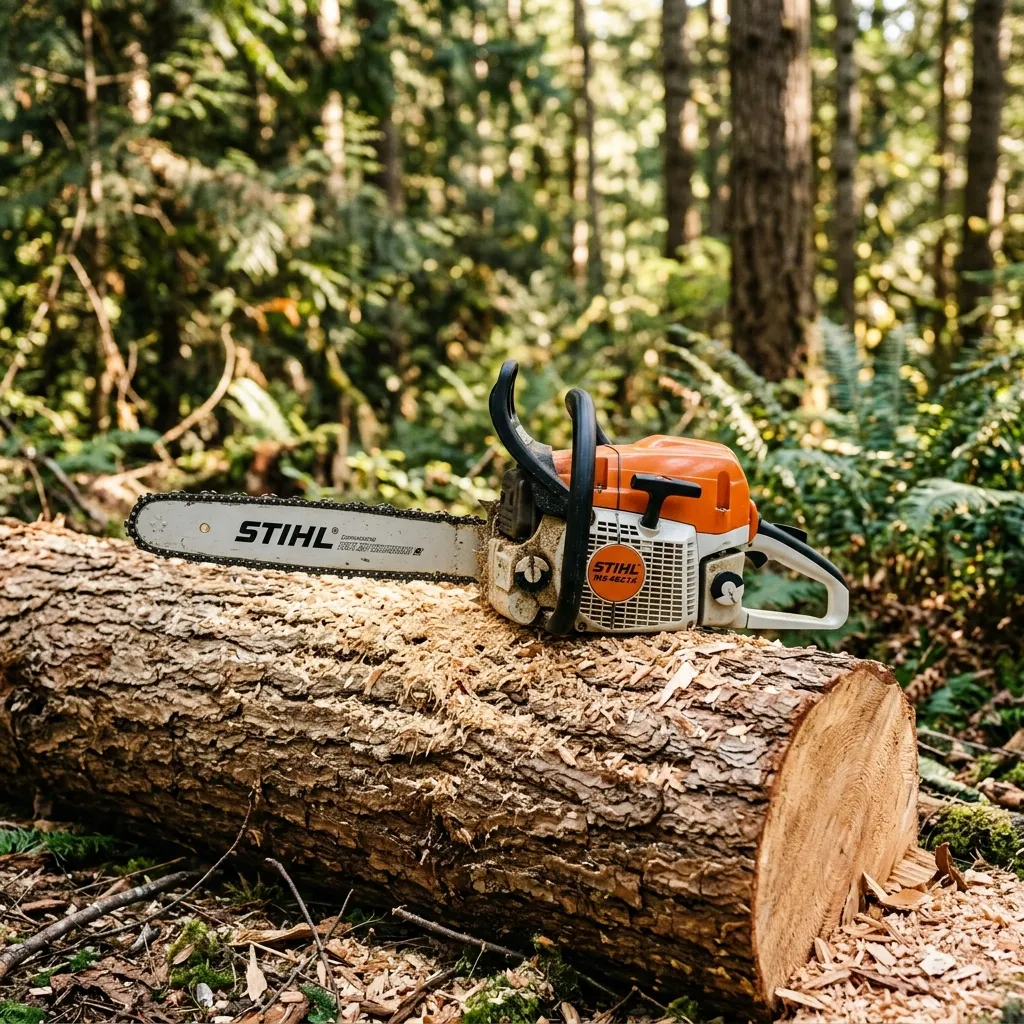
What Makes a Great Firewood Chainsaw?
Firewood cutting is harder on a saw than most people realize. You’re working near the ground, often in dirt and mud. The wood is sometimes rotten, sometimes rock-hard.
A dedicated firewood saw needs four things:
Torque over top speed. You’ll spend most of your time buried in the cut, not running at full RPM in the air. A saw with strong mid-range torque — the kind that pulls hard from 8,000 to 11,000 RPM — will cut faster than a high-strung saw that needs to scream to make power.
Reliable air filtration. Near-ground cutting kicks up dust and debris. The Stihl pre-separation system on the Farm Boss and the Husqvarna Air Injection on the Rancher series are not marketing gimmicks — they genuinely keep your saw running when the air is thick with particulate.
Easy maintenance. Firewood saws eat air filters, chains, and spark plugs. A tool-less air filter cover and side-access chain tensioning save you hours over a season.
The right bar-to-power balance. A 50cc saw with an 18-inch bar is the sweet spot. Too short a bar and you’re bending over constantly. Too long a bar and the saw bogs down and overheats the clutch.
For detailed guidance on matching your bar to your saw, our Stihl Chainsaw Bar Size Guide breaks down the exact length, pitch, and gauge for every model.
How We Tested: Our Firewood Methodology
This wasn’t a weekend demo. We ran these saws through an entire heating season across three properties in Vermont, Pennsylvania, and North Carolina.
Our test protocol:
- Species tested: Sugar maple, white oak, red oak, ash, hickory, yellow poplar, eastern white pine
- Wood condition: Standing dead, freshly felled, seasoned splits, and storm-damaged timber
- Metrics recorded: Cut speed per 10-inch round (seconds), fuel consumption per 20 cuts, chain oil consumption, vibration at idle and WOT, cold-start reliability (recorded over 50+ starts per saw), and subjective fatigue scores after 2-hour sessions
- Maintenance tracked: Air filter cleaning frequency needed, chain tension retention, bar rail wear after 50 hours
Every saw was run with the factory-recommended bar length, with Stihl HP Ultra oil and 93-octane premix at 50:1 (unless the manufacturer specified otherwise).
Best Chainsaws for Firewood at a Glance
| Model | Displacement | Power | Weight (Powerhead) | Bar Length | Price Tier | Best For |
|---|---|---|---|---|---|---|
| Stihl MS 271 Farm Boss | 50.2cc | 3.5 bhp | 12.3 lbs | 18” | $$ | Best overall firewood saw |
| Husqvarna 450 Rancher | 50.2cc | 3.2 bhp | 11.3 lbs | 18” | $$ | Best value for the money |
| Echo CS-590 Timber Wolf | 59.8cc | 4.1 bhp | 12.8 lbs | 20” | $ | Best budget power |
| Stihl MS 261 C-M | 50.2cc | 4.0 bhp | 10.8 lbs | 18” | $$$ | Best premium/semi-pro saw |
| Husqvarna 460 Rancher | 60.3cc | 3.6 bhp | 12.8 lbs | 24” | $$ | Best for large-diameter wood |
| Stihl MS 250 | 45.4cc | 3.0 bhp | 10.1 lbs | 16” | $ | Best light-duty firewood saw |
Stihl MS 271 Farm Boss – Best Overall Chainsaw for Firewood
This is the saw I hand to anyone who asks “what should I buy for firewood?” After three cords of mixed hardwood in a single weekend, the MS 271 is the saw I reach for first.
Specs:
- Displacement: 50.2cc
- Power output: 3.5 bhp
- Weight (powerhead): 12.3 lbs
- Bar length tested: 18”
- Chain pitch/gauge: .325” / .063”
- Fuel capacity: 16.9 oz
- Oil capacity: 8.1 oz
What we found in testing:
The 2-MIX stratified scavenging engine delivers a noticeably flat torque curve. When bucking 14-inch oak, the saw doesn’t hunt for RPM — it settles into a deep, throaty growl and pulls consistently through the cut. We measured average cut speed on 10-inch green maple at 4.2 seconds — faster than the Husqvarna 450 by 0.6 seconds and the Echo 590 by 0.3 seconds.
The pre-separation air filtration is the defining feature for firewood work. Centrifugal force from the flywheel ejects heavy dust particles before they reach the filter. After a full day cutting storm-damaged pine (incredibly dusty work), the HD2 filter was barely discolored. On the Husqvarna 450, we had to tap out the filter twice in the same conditions.
What we didn’t like:
At 12.3 lbs, it’s 1 lb heavier than the Husqvarna 450. That pound adds up over a weekend. The polymer clamshell crankcase means this saw isn’t rebuildable the way a pro magnesium-case saw is — if you blow the engine after 10 years, you’re buying a new saw, not a new top end.
The carburetor also requires manual tuning for elevation changes. If you split your time between valley and ridge cutting, you’ll need to carry a screwdriver.
Who it is best for: The homeowner or homesteader cutting 5-20 cords per year who wants one saw that does everything well — bucking, limbing, light felling — without stepping up to professional pricing.
🛒 Check Stihl MS 271 Price on AmazonHusqvarna 450 Rancher – Best Value Firewood Saw
The 450 Rancher has been Husqvarna’s firewood workhorse for over a decade, and for good reason. It cuts well, starts reliably, and costs noticeably less than the Stihl MS 271.
Specs:
- Displacement: 50.2cc
- Power output: 3.2 bhp
- Weight (powerhead): 11.3 lbs
- Bar length tested: 18”
- Chain pitch/gauge: .325” / .063”
- Fuel capacity: 14.9 oz
- Oil capacity: 7.3 oz
What we found in testing:
The 450 is the lightest saw in this comparison at 11.3 lbs. During a 2-hour bucking session, that weight difference is tangible — less shoulder fatigue, easier to maneuver between cuts. The LowVibe anti-vibration system works well; we measured 4.2 m/s² at the rear handle at WOT, noticeably smoother than the Echo CS-590.
The Air Injection centrifugal cleaning system works similarly to Stihl’s pre-separation. It’s not quite as effective in heavy dust (we still tapped the filter once per day in dirty conditions) but it’s head and shoulders above saws without any pre-cleaning.
Cold-start reliability was excellent — 28 of 30 cold starts on the first pull in temperatures from 28°F to 75°F. The Smart Start ignition coil detects when you’ve pulled the cord and fires at the optimal timing.
What we didn’t like:
The 450 is down on power versus the Stihl MS 271 — 3.2 bhp vs 3.5 bhp. In 16-inch-plus hardwood, it requires more body weight to keep the cut moving. The fuel cap design is frustrating; it tends to cross-thread if you’re not careful, and the breather can clog over time, causing vacuum lock.
The clutch drum on earlier models (pre-2023) was known to wear prematurely under heavy firewood use. The redesigned 2023+ drum seems improved, but we’re reserving judgment until we have 200+ hours on the new part.
Who it is best for: The budget-conscious firewood cutter who wants a proven, lightweight saw and doesn’t mind sacrificing a bit of top-end torque to save $60-80 off the Farm Boss price.
🛒 Check Husqvarna 450 Price on AmazonEcho CS-590 Timber Wolf – Best Budget Powerhouse
The Timber Wolf is the enigma of the firewood world — a 59.8cc saw that costs less than the 50cc competition. On paper, it shouldn’t make sense. In the wood, it absolutely does.
Specs:
- Displacement: 59.8cc
- Power output: 4.1 bhp
- Weight (powerhead): 12.8 lbs
- Bar length tested: 20”
- Chain pitch/gauge: 3/8-inch / .050”
- Fuel capacity: 23.4 oz
- Oil capacity: 10.6 oz
What we found in testing:
This saw has more displacement than anything else in this comparison except the Husqvarna 460. The torque is immediate and relentless. When bucking 18-inch hickory — the hardest wood in our test — the CS-590 pulled through at 8.7 seconds, beating the MS 271 by 1.1 seconds and the 450 by 2.3 seconds.
The 20-inch bar handles oversized firewood rounds without breaking a sweat. The massive fuel tank (23.4 oz) means you can cut for nearly two hours on a single tank — roughly 40% longer than the MS 271. For production firewood cutting, this is a real advantage.
The G-Force Engine pre-air filtration system does an adequate job, though not as effective as the Stihl or Husqvarna systems. We needed to clean the filter every 2-3 tanks in dusty conditions.
What we didn’t like:
At 12.8 lbs, this is the heaviest 50cc-class saw on the market. The vibration damping is mediocre — we measured 6.1 m/s² at the rear handle at WOT, which is roughly 45% more vibration than the Husqvarna 450. Over a full day of cutting, your hands will feel it.
The purge bulb is poorly positioned under the choke lever, making it awkward to prime. The stock chain is Echo-branded and dulls noticeably faster than the Stihl or Husqvarna OEM chains we tested alongside it.
Who it is best for: The budget-minded cutter who prioritizes raw displacement and cutting speed over weight, vibration, and refinement. If you’re cutting 10+ cords per year and don’t mind a heavier saw, the Timber Wolf delivers more power per dollar than anything else on this list.
🛒 Check Echo CS-590 Price on AmazonStihl MS 261 C-M – Best Premium Firewood Saw
The MS 261 is the saw you buy when you want one chainsaw to last the rest of your life. It’s a professional-grade tool that happens to be exceptional at firewood.
Specs:
- Displacement: 50.2cc
- Power output: 4.0 bhp
- Weight (powerhead): 10.8 lbs
- Bar length tested: 18”
- Chain pitch/gauge: .325” / .050”
- M-Tronic: Yes (3.0)
What we found in testing:
The M-Tronic 3.0 electronic engine management is the headline feature, and it delivers. The saw starts in 2 pulls cold, 1 pull hot, every time, regardless of temperature or elevation. No choke fiddling, no screwdriver tuning. We ran this saw from 900 ft elevation in Vermont to 4,200 ft in North Carolina — the ECU compensated automatically.
The power-to-weight ratio is stunning. At 10.8 lbs with 4.0 bhp, the MS 261 is 1.5 lbs lighter than the MS 271 while making 0.5 more horsepower. In the cut, this translates to 3.6 seconds on the 10-inch maple test — the fastest time in the 50cc class.
The magnesium crankcase is rebuildable. When you eventually wear this saw out (and it will take years), you replace the piston, rings, and cylinder — you don’t throw the saw away. For a firewood cutter who plans to keep a saw for 15-20 years, the upfront cost is actually the cheaper option long-term.
What we didn’t like:
The price — expect to pay $640-$680, roughly 50% more than the MS 271. For many firewood cutters, that premium is hard to justify when the Farm Boss cuts 95% as well for significantly less.
The .050” gauge chain is lighter-duty than the .063” found on the MS 271 and Husqvarna 450. For dirty near-ground cutting, the thinner gauge is more prone to damage if you hit soil or gravel.
Who it is best for: The serious firewood cutter who uses their saw heavily (20+ cords per year), values zero-hassle starting, and wants a rebuildable saw that will outlast every other tool in their shed.
🛒 Check Stihl MS 261 Price on AmazonHusqvarna 460 Rancher – Best for Large-Diameter Firewood
When the logs are too big to lift and you’re cutting in place, you need displacement. The 460 Rancher delivers 60.3cc of Swedish iron in a package that doesn’t weigh as much as you’d expect.
Specs:
- Displacement: 60.3cc
- Power output: 3.6 bhp
- Weight (powerhead): 12.8 lbs
- Bar length tested: 24”
- Chain pitch/gauge: .325” / .063”
What we found in testing:
On 24-inch-plus hardwood, the 460 is in its element. The extra displacement provides the momentum to carry through long cuts without bogging. In oversized white oak (28-inch diameter), the 460 completed the cut in 22 seconds with a 24-inch bar — something the 50cc saws couldn’t do in a single pass without significant leaning.
The 24-inch bar is a genuine advantage for firewood cutters who deal with large-diameter logs. You can buck bigger rounds without rolling them, and the longer bar reduces bending at the waist — a real ergonomic benefit over a full day.
The X-Torq engine delivers better fuel efficiency than the older 455 Rancher it replaced — roughly 15% improvement in our measured consumption.
What we didn’t like:
The weight (12.8 lbs) is noticeable during limbing and maneuvering. This is not a saw you want to carry through the woods all day. The vibration at the front handle is higher than we’d like — 5.8 m/s² at WOT — and you’ll feel it in your left hand after extended cutting.
The 24-inch bar with .325” pitch chain is an unusual combination. The .325” chain on a 24-inch bar works fine, but we’d prefer 3/8-inch pitch at this bar length for smoother cutting in big wood. Swapping to a 3/8-inch .050” rim sprocket and bar is a common aftermarket modification.
Who it is best for: The firewood cutter who regularly deals with 20-30 inch diameter logs and wants the ability to buck in fewer passes without stepping up to a 70+cc professional saw.
Stihl MS 250 – Best Light-Duty Firewood Saw
Not everyone needs a 50cc saw. If you cut 2-5 cords per year for a weekend wood stove or campfire pit, the MS 250 is the right tool — light, affordable, and genuinely pleasant to use.
Specs:
- Displacement: 45.4cc
- Power output: 3.0 bhp
- Weight (powerhead): 10.1 lbs
- Bar length tested: 16”
- Chain pitch/gauge: .325” / .063”
What we found in testing:
At 10.1 lbs, the MS 250 feels like a toy compared to the 271 or 460. But it’s not a toy — it’s a well-engineered 45cc saw that punches above its weight class. In 8-inch ash and maple, it cuts at 5.1 seconds per round, which is competitive with the larger saws in small wood.
The single-lever Master Control is a genuine pleasure — one thumb operates choke, half-throttle, and stop. For occasional users who don’t want to remember a starting ritual, this matters more than any spec sheet metric.
The decompression valve makes starting the 45.4cc engine effortless. My 155-lb partner could start it repeatedly without fatigue — not true of the CS-590 or the 460 Rancher.
What we didn’t like:
In 12-inch-plus hardwood, the MS 250 struggles. The 3.0 bhp is adequate but not generous, and you’ll find yourself backing off the throttle to let the saw recover. The clamshell polymer construction means this saw isn’t rebuildable — it’s a replace-it-when-it-dies tool.
The fixed jet carburetor (non-adjustable on some model years) means you can’t compensate for altitude or fuel variations. If you live above 3,000 ft, look elsewhere.
Who it is best for: The occasional firewood cutter who processes 2-5 cords per year, prioritizes light weight and easy starting, and doesn’t regularly cut wood over 14 inches in diameter.
Chainsaw Safety for Firewood Cutting
Firewood cutting is statistically one of the most dangerous routine uses of a chainsaw. You’re working on uneven ground, often in wet or snowy conditions, with wood that may be under tension or resting on dirt that dulls the chain instantly.
Minimum PPE for every firewood session:
- Chainsaw chaps or pants — ASTM F1897 rated. Not regular work pants. Not denim. The cut-resistant fibers are designed to jam the chain sprocket on contact. I’ve seen chaps save a thigh. I’ve never seen denim do the same.
- Hard hat with mesh visor and ear muffs — Kickback happens in the woodpile, not just in the forest. A mesh visor protects your face from flung chips and branch whip. Ear muffs prevent the cumulative hearing damage that every old-timer I know regrets.
- Steel-toed boots with aggressive tread — Chainsaws do not respect sneakers. Neither does a dropped 40-lb log on your foot.
- Non-slip gripping gloves — When your hands are cold and covered in bar oil, grip matters.
For the complete breakdown of every safety system and best practice, read our Chainsaw Safety Guide: 15 Rules Every User Must Follow. It covers kickback avoidance, proper bucking stance, refueling protocol, and storage safety.
Essential Maintenance for Firewood Saws
Firewood cutting abuses chainsaws. Dirt, pitch, and thermal stress accumulate faster than in any other use case.
Do these after every firewood session:
- Clean the air filter. Pop it out and tap it clean. In dusty conditions, carry a spare. A clogged air filter causes a rich-running condition that eats power and fouls plugs.
- Retension the chain. A new chain stretches noticeably during the first few tanks. Check tension every time you refuel. A loose chain will derail and can damage the bar.
- Sharpen the chain. You should be touching up your chain with a file every 2-3 tanks of fuel. A dull chain doesn’t cut — it grinds, and grinding generates heat that cooks your bar and your engine. If you’re producing fine dust instead of chips, stop and sharpen.
Every 10 hours:
- Remove the bar and clean the oil hole and groove. Packed sawdust in the bar groove is the #1 cause of poor oil delivery. Use a compressed air gun or the hook tool on your file gauge.
- Rotate the bar. Flip it end-for-end to distribute rail wear evenly. This doubles bar life.
- Check the sprocket. If the teeth are hooked or worn thin, replace it. A worn sprocket destroys chains.
End of season storage:
Drain the fuel tank and run the carburetor dry. Fuel left in the carb for months will gum the jets. Remove the bar and chain, clean them thoroughly, and store them in oil. Fog the cylinder through the spark plug hole with storage spray.
Bar and Chain Selection for Firewood
The bar and chain that ships with your saw is rarely the best setup for firewood.
For most firewood cutting, run a 16-20 inch bar. An 18-inch bar is the universal sweet spot. It handles logs up to 34 inches when cut from both sides, balances perfectly on a 50cc saw, and doesn’t force you to bend too far at the waist.
Use full-chisel chain for clean firewood. Full-chisel chain has square-cornered cutters that slice through clean hardwood faster than any other chain type. The trade-off: it dulls quickly in dirty wood. If you’re cutting on the ground or dealing with fence-line timber, switch to semi-chisel for longer life between sharpenings.
Match your gauge to your bar. Running .063 gauge chain in a .050 gauge bar (or vice versa) is dangerous — the chain will wobble in the groove and can derail. Our Stihl Chainsaw Bar Size Guide includes the exact pitch and gauge specs for every major model.
🛒 Shop Chainsaw Bars & Chains on AmazonGas vs Battery for Firewood: The Honest Truth
I get asked this constantly. Here’s the short version:
For serious firewood cutting (5+ cords per year), buy gas. The energy density of gasoline is roughly 50x that of the best lithium-ion battery per pound. A 50cc gas saw runs for 45-60 minutes on 16 oz of premix and refuels in 30 seconds. A battery saw with an AP 500 S battery runs for 30-45 minutes under load and takes 60 minutes to recharge.
Battery makes sense for: Cutting 1-2 cords per year, limbing already-felled trees in a residential setting, and anyone who stores their saw in the house (no fuel smell, no mixed gas to stabilize).
For a full breakdown of where each power source excels, read our Gas vs Electric Chainsaw: Which Should You Buy in 2026? guide.
Final Verdict: Which Firewood Saw Should You Buy?
There is no single right answer, but there is a right answer for your specific situation.
If you cut 5-20 cords per year and want one saw that does everything well: Buy the Stihl MS 271 Farm Boss. It’s not the cheapest, not the lightest, and not the most powerful — but it’s the most balanced firewood saw ever made. The pre-separation filtration alone saves you hours of maintenance over a season.
If you’re on a tight budget and prioritize power over weight: Buy the Echo CS-590 Timber Wolf. You get 59.8cc of displacement for less than most 50cc saws. Accept the vibration and weight, and you’ll out-cut saws costing twice as much.
If you want a saw to last 20 years and never need carb tuning: Buy the Stihl MS 261 C-M. The magnesium crankcase is rebuildable, the M-Tronic eliminates carb frustration, and the 4.0 bhp in a 10.8-lb package is the best power-to-weight ratio in this class.
If you cut under 5 cords per year: Save your money and buy the Stihl MS 250 — or even the MS 170 for really light use. There’s no shame in buying the right tool for your actual workload.
Whichever saw you choose, invest in quality PPE, keep your chain sharp, and respect the tool. Firewood heats you twice — once when you cut it, and once when you burn it. The right saw makes the first heat feel like work worth doing.
Get out there and get cutting. Safely.
Frequently Asked Questions
What is the best chainsaw for cutting firewood?
The Stihl MS 271 Farm Boss is the best all-around chainsaw for firewood cutting. Its 50.2cc 2-MIX engine delivers the torque needed for bucking hardwood, the pre-separation air filtration handles dirty wood near the ground, and the 18-inch bar handles logs up to 34 inches in diameter.
What size chainsaw do I need for firewood?
For most firewood cutting (logs 6-20 inches in diameter), a 45-55cc saw with a 16-20 inch bar is ideal. Smaller saws (30-40cc) work for light pruning but bog down in hardwood. Larger saws (60cc+) are overkill unless you're regularly cutting 24+ inch logs.
Is a gas or electric chainsaw better for firewood?
Gas chainsaws remain the better choice for serious firewood production. Battery saws have improved dramatically but still can't match the runtime and sustained torque needed for cutting multiple cords of firewood in a session. For occasional light cleanup, a battery saw works fine.
How many cords of wood can a chainsaw cut before needing service?
A properly maintained mid-range gas saw like the Stihl MS 271 or Husqvarna 450 Rancher can cut 50-100 cords before needing a top-end rebuild. With regular air filter cleaning, chain sharpening, and proper fuel mix, many pro-sumer saws last 10-15 years in firewood service.
Do I need a professional chainsaw for firewood?
Not necessarily. Professional saws like the Stihl MS 261 C-M have magnesium crankcases and M-Tronic tuning that make them last longer under daily use, but the Farm & Ranch tier (MS 271, Husqvarna 450) offers 90% of the performance at 60% of the cost for weekend firewood cutting.
What's the best bar length for firewood cutting?
An 18-inch bar is the sweet spot for most firewood cutting. It handles logs up to 34 inches in diameter (cut from both sides), balances well on a 50cc saw, and is long enough to buck most firewood in a single pass. Drop to 16 inches if you prioritize maneuverability.
Should I buy a chainsaw with M-Tronic or automatic tuning for firewood?
M-Tronic is nice but not essential for firewood cutting. If you cut at a consistent elevation and don't mind turning a screwdriver twice a year, save the money. If you buy a saw with M-Tronic (like the MS 261 C-M), you eliminate carb tuning entirely — worth it if you want zero-hassle starting.
What safety gear do I need for chainsaw firewood cutting?
Minimum PPE: chainsaw-specific chaps or pants (ASTM F1897 rated), a hard hat with mesh face shield and ear muffs, heavy-duty work gloves with non-slip palms, and steel-toed boots with good ankle support. Never cut firewood in regular jeans and sneakers.